
Restaurant in Kyoto, Japan
Torisho sai
290ptsCraft yakitori for the repeat visitor.

About Torisho sai
Torisho Sai holds two consecutive Michelin Plates (2024, 2025) for yakitori that takes its sourcing seriously: free-range Hinai-jidori chicken, rested to concentrate flavour, then grilled over both charcoal and wood. At the ¥¥¥ tier in Nakagyo Ward, it offers more technical depth than almost anything at the same price in Kyoto's yakitori category. Book when you want craft over spectacle.
The Verdict
If you have already eaten at one of Kyoto's grander yakitori counters and want to understand what genuine craft looks like at the ¥¥¥ price point, Torisho Sai in Nakagyo Ward is the answer. Two consecutive Michelin Plate recognitions (2024 and 2025) and a Google rating of 4.8 from reviewers confirm this is not a neighbourhood afterthought. The room is small, the format is structured, and the sourcing is specific: free-range Hinai-jidori chicken, rested in a curing house to concentrate moisture before the skewer ever meets the flame. Book here when precision matters more to you than theatre.
Coming Back to Sai
First-time visitors to Torisho Sai often arrive expecting a casual yakitori bar. Return visitors arrive with different expectations: they know the sequence starts with a single skewer of breast meat, and they know why. That opening move is a deliberate positioning statement, asking you to taste the chicken before you taste the smoke, the char, or the sauce. On a second visit, the architecture of the meal becomes legible in a way it is not the first time. The inverted-triangle skewer construction that the chef describes as both visual and technical is not decoration. It is the physical result of a philosophy the kitchen summarises as a lifetime in skewering, a lifetime in grilling.
The dual-heat approach, both charcoal and wood flames, produces a layered result that changes across cuts. Charcoal runs hotter and cleaner; wood brings aromatic complexity. The kitchen uses both deliberately, not interchangeably. For the explorer who has eaten yakitori in Tokyo at places like Yakitori Omino or worked through the Osaka counter at Torisho Ishii, the Sai approach will read as specifically Kyoto: restrained, ingredient-forward, and more interested in the chicken than in the performance of grilling it.
The Room and the Atmosphere
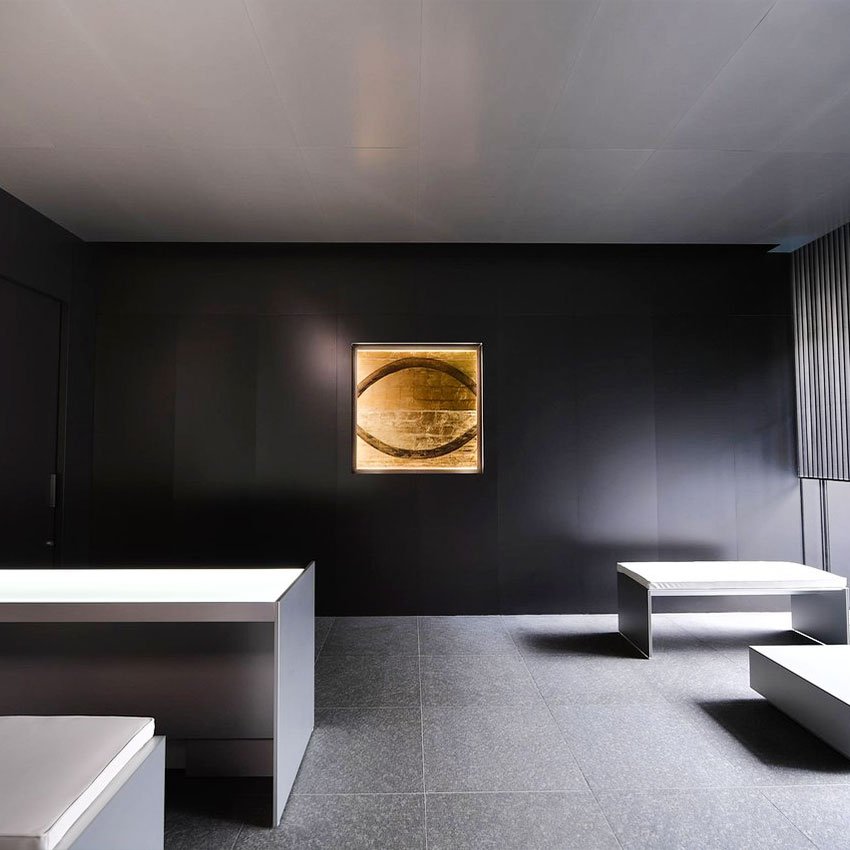
Torisho Sai sits on Kuromonnori-dori, a quiet street below Oike in Nakagyo Ward. The address alone signals something: this is not the Gion tourist circuit, and it is not trying to be. The atmosphere is settled rather than buzzy. Smoke from the grill drifts through a room where conversation happens at a pitch that does not require leaning in. The energy is calm, focused, and adult. If you are coming from a loud evening somewhere else in the city, Sai will feel like a register change. That is not a drawback; it is the point.
For solo diners, the counter format works well here. The structured service sequence gives the meal a shape without requiring you to make many decisions. For a couple marking an occasion, the progression from that opening breast skewer through the rest of the menu provides exactly the kind of deliberate pacing that makes a dinner feel considered rather than rushed. The seat count is not confirmed in available data, but the kitchen's evident focus on individual skewer construction suggests this is not a high-volume room.
Private Dining and Group Considerations
No private dining room is confirmed in available data for Torisho Sai. For groups seeking a fully separated space, the kaiseki rooms at Gion Sasaki or comparable ¥¥¥¥ venues will serve that function better. What Sai does offer a group in the main room is a shared sequence: everyone moves through the same progression of skewers, which creates a communal rhythm that is harder to achieve at a la carte venues. For groups of two to four who want a structured meal without a private-room price premium, that is a reasonable trade-off at the ¥¥¥ tier.
Larger groups should be cautious. The kitchen's evident commitment to each skewer as a constructed object, built to a specific form that reflects accumulated skill, suggests capacity is managed carefully. Contact the venue directly before assuming a group of six or more can be accommodated without prior arrangement.
Kyoto Yakitori Context
Within the Kyoto yakitori category, Torisho Sai sits at the more considered end of the ¥¥¥ tier. Nearby alternatives worth knowing: Torisaki and Yakitori Kyoto Tachibana serve the same cuisine type in the city; Hiiragitei and Sumiyakisosaitoriya Hitomi offer charcoal-forward alternatives for comparison. If you are building a longer Japan itinerary, HAJIME in Osaka, Harutaka in Tokyo, akordu in Nara, Goh in Fukuoka, 1000 in Yokohama, and 6 in Okinawa round out the regional picture across price tiers and formats.
For broader planning, see our full Kyoto restaurants guide, our full Kyoto hotels guide, our full Kyoto bars guide, our full Kyoto wineries guide, and our full Kyoto experiences guide.
Practical Details
Reservations: Booking is rated Easy — contact the venue directly, as no online booking link is confirmed. Budget: ¥¥¥ tier; exact per-head figures are not published, but the price sits meaningfully below ¥¥¥¥ kaiseki venues. Dress: No dress code is confirmed; smart-casual is appropriate for the price tier and Kyoto context. Location: Nakagyo Ward, Kuromonnori-dori below Oike. Hours: Not confirmed in available data — verify directly before visiting. Recognition: Michelin Plate 2024 and 2025; Google rating 4.8 (20 reviews).
Compare Torisho sai
| Venue | Cuisine | Price | Booking Difficulty |
|---|---|---|---|
| Torisho sai | Yakitori | ¥¥¥ | Easy |
| Gion Sasaki | Kaiseki, Japanese | ¥¥¥¥ | Unknown |
| cenci | Italian | ¥¥¥ | Unknown |
| Ifuki | Kaiseki | ¥¥¥¥ | Unknown |
| Kyokaiseki Kichisen | Japanese | ¥¥¥¥ | Unknown |
| SEN | French, Japanese | ¥¥¥¥ | Unknown |
Key differences to consider before you reserve.
Frequently Asked Questions
What are alternatives to Torisho sai in Kyoto?
Within the ¥¥¥ yakitori tier in Kyoto, Torisaki and Yakitori Ifuki are the closest comparisons. For a more elaborate multi-course format, cenci or Gion Sasaki move into kaiseki territory and a higher price point. SEN is worth considering if you want a counter experience with a different flavour profile. Torisho Sai's specific differentiator is the dual charcoal and wood flame technique applied to cured Hinai-jidori chicken, which is harder to find replicated elsewhere in the city.
What should I wear to Torisho sai?
No dress code is documented for Torisho Sai, but the ¥¥¥ price point and the precision-focused format suggest neat, understated clothing is appropriate. Avoid anything too casual. Kyoto's better counter restaurants generally expect guests to dress in a way that doesn't clash with the setting, even where no formal rule exists.
Is Torisho sai worth the price?
At the ¥¥¥ tier, yes — if technique-driven yakitori is what you are after. The Michelin Plate recognition in both 2024 and 2025 supports the quality claim, and the use of cured Hinai-jidori chicken with both charcoal and wood fire is a deliberate, high-effort approach that justifies the premium over a casual yakitori bar. If you are not specifically interested in the format or the ingredient, a kaiseki venue at a similar price point may deliver more perceived value.
Is the tasting menu worth it at Torisho sai?
The sequential format here is built around showcasing Hinai-jidori chicken: the meal opens with a breast-meat skewer specifically designed to establish the quality of the bird before moving through further cuts. That structured progression has a clear logic and rewards attention. If you want to pick and choose freely, this counter format is not the right fit — the chef's stated credo of a lifetime in skewering and grilling signals this is a chef-led sequence, not an à la carte session.
Is Torisho sai good for solo dining?
A yakitori counter is one of the better formats for solo dining in Japan, and Torisho Sai's setup on a quiet Nakagyo street suits the experience. The sequential skewer service gives a solo diner a clear through-line rather than the social pressure of a shared table. Booking is rated Easy, so securing a single seat should not be difficult.
Does Torisho sai handle dietary restrictions?
The menu is built entirely around free-range Hinai-jidori chicken, so pescatarians, vegetarians, and those avoiding poultry will find little here. No specific allergy or restriction policy is documented. check the venue's official channels before booking if you have requirements — phone is not listed publicly, so approach via the address in Nakagyo Ward or through your hotel concierge.
Is Torisho sai good for a special occasion?
For a two-person occasion where the focus is on craft and quiet atmosphere, yes — the Michelin Plate-recognised counter on a low-traffic Kyoto street fits that brief. It is not a venue with a private dining room, so large celebratory groups should look elsewhere, such as Gion Sasaki's kaiseki rooms. For an intimate dinner where the cooking itself is the event, Torisho Sai is a strong fit at the ¥¥¥ price point.
Recognized By

More restaurants in Kyoto
- OgataOgata is a 16-seat kaiseki counter in Shimogyo, Kyoto, holding two Michelin stars and ten years of Tabelog Gold recognition. Dinner runs JPY 60,000–79,999 before drinks and a 10% service charge. Booking is near impossible without months of advance planning, but for serious kaiseki at the counter, it earns its place on any shortlist.
- MizaiMizai holds three Michelin stars and a sustained Tabelog track record across nearly a decade, with dinner running to ¥80,000–¥99,999 per person all-in. Chef Hitoshi Ishihara structures the meal around the spirit of the tea ceremony in a 15-seat room inside Maruyama Park. Book for a serious special occasion; reservations are near-impossible to secure without months of advance planning.
- Kikunoi HontenThree Michelin stars and eight consecutive Tabelog Bronze awards make Kikunoi Honten one of Kyoto's most credentialed kaiseki addresses. Lunch (JPY 20,000–29,999) is the practical first visit; dinner (JPY 30,000–39,999) rewards a return. Booking is near impossible without advance planning — use a hotel concierge or specialist service. Private rooms accommodate groups of 4 to 30-plus.
Similar venues by awards
Related editorial
- Asia's 50 Best Restaurants 2026: The Chairman and Wing Go 1-2 from the Same BuildingThe Chairman takes No. 1 and Wing climbs to No. 2 at Asia's 50 Best Restaurants 2026. Both operate from the same Hong Kong building. Here's what it means.
- Four Seasons Yachts Debut: 95 Suites, 11 Restaurants, and a March 2026 Maiden VoyageFour Seasons I launches March 20, 2026, with 95 suites, a one-to-one staff ratio, and 11 onboard restaurants. Worth tracking if you want hotel-grade service at sea.
- LA Michelin Guide 2026: Seven New Restaurants from Tlayudas to Uzbek DumplingsMichelin's March 2026 California Guide update adds six LA restaurants and one Montecito newcomer, spanning Oaxacan tlayudas, Uzbek manti, and Korean-Italian pasta.
Save or rate Torisho sai on Pearl
Keep this venue in your Pearl passport, rate it after you visit, and track it alongside every other place you collect.