
Restaurant in Fort Augustus, United Kingdom
The Lovat
100ptsForaged Highland Precision

About The Lovat
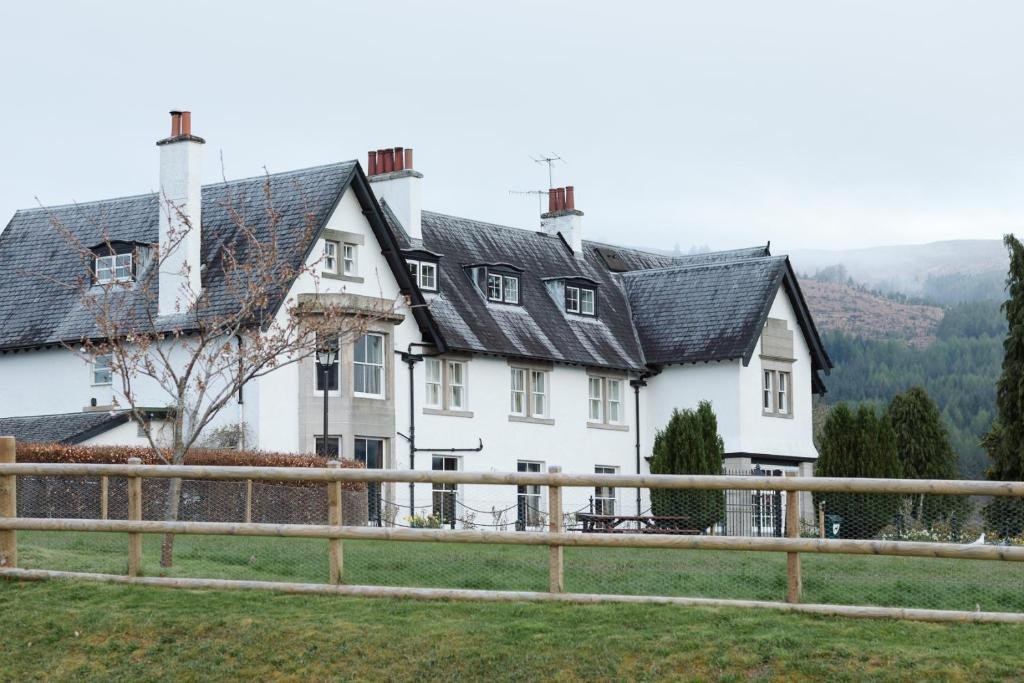
The Lovat is the only four-star hotel near Loch Ness and home to one of the most considered restaurants in the Scottish Highlands. Chef Sean Kelly builds his menus around locally foraged and sourced Scottish ingredients, producing dishes that balance technical precision with the wild character of the Great Glen. For visitors to Fort Augustus, it represents the clearest argument that serious cooking has arrived in this part of the Highlands.
Approaching Fort Augustus along the A82, the Great Glen narrows and the water of Loch Ness fills the western view. The village sits at the southern tip of the loch, where the Caledonian Canal meets a cluster of stone buildings and the kind of Highland quiet that makes the sound of gravel underfoot feel significant. The Lovat occupies a commanding position in this setting, a four-star property in a village where four-star anything would once have seemed improbable. That contrast is exactly what gives the restaurant here its editorial interest.
The Case for Serious Cooking in the Scottish Highlands
There is a pattern across rural British fine dining that has accelerated over the past decade. Properties like L'Enclume in Cartmel and Moor Hall in Aughton demonstrated that destination restaurants do not require a metropolitan postcode to attract serious diners. The same logic has reached Gidleigh Park in Chagford and hide and fox in Saltwood. What connects these places is geography used as larder rather than obstacle. The Lovat's restaurant belongs in this conversation. It is recognised as one of the leading restaurants in the Highlands region, a designation that carries more weight when you consider how thin the competition is at this level north of Inverness.
The operative question for any rural hotel restaurant is whether the cooking justifies the detour, or whether the location is doing the heavy lifting. At The Lovat, the evidence points toward the former. Chef Sean Kelly has built a menu around the specific ecology of the Great Glen, including ingredients sourced directly from the forests surrounding Fort Augustus. That foraging element is not decorative. In the Highlands, where the landscape includes ancient woodland, upland heather, and shoreline, the gap between what grows locally and what appears on the plate can be almost nothing. That proximity is what separates ingredient sourcing at this level from the kind of farm-to-table language that has become largely meaningless in urban restaurant marketing.
Where the Food Comes From
Highland sourcing operates on a different scale from, say, the intensive farm networks that supply London restaurants like The Ledbury or Midsummer House in Cambridge. Those kitchens work with established supplier relationships, often at volume and with year-round consistency. A Highland kitchen drawing from local forests and Scottish producers is working with seasonal availability that shifts sharply between months, and with ingredients that require the chef to know the land as much as the kitchen. Kelly's direct foraging, sourcing what he finds himself in the surrounding forests, places the menu in a cycle tied to what the Great Glen is actually doing at any given time.
Scottish larder at this latitude includes venison, game birds, freshwater fish from the lochs, shellfish from the west coast, and a range of foraged plants, fungi, and berries that change month to month. The emphasis on sustainability in this context is not a marketing position so much as a practical reality: the ecosystem that supplies the kitchen is also the ecosystem that draws visitors to the region. A kitchen that depletes or ignores it is undermining the very draw of the place. The Lovat's approach recognises that alignment.
The cooking is described as innovative, with presentations that carry visual weight and flavour combinations that surprise. In a region where hotel dining has historically defaulted to safe Highland classics, haggis neeps and tatties, smoked salmon, venison casserole, Kelly's willingness to recombine local ingredients through a more technical lens represents a genuine shift in what this part of Scotland can offer at the table.
Fort Augustus as a Dining Context
Fort Augustus is a small village of around 650 residents, functioning primarily as a tourist waypoint on the Loch Ness circuit. The dining options are limited in number but growing in ambition. Station Road offers a Modern British approach in the same village, and the two restaurants together suggest that Fort Augustus is beginning to develop a dining identity above its size. For a full picture of what the area offers, our Fort Augustus restaurants guide covers the current options with context.
The Lovat is the only four-star hotel in the immediate Loch Ness area. For visitors whose trip is structured around the loch and the Great Glen Way, it represents an anchor point that most Highland villages cannot provide. The hotel format means the restaurant is accessible to non-residents, but demand at this level in a small village means advance planning is advisable, particularly during the summer season when the A82 carries significant tourist traffic through Fort Augustus.
Placing The Lovat in Its Peer Set
Comparing The Lovat directly to urban fine dining, places like Opheem in Birmingham or Le Manoir aux Quat' Saisons in Great Milton, would be the wrong frame. The peer set here is rural British hotel restaurants with serious culinary intent and strong local sourcing credentials. Within that group, the distinction The Lovat holds is geographic: there is no comparable operation this far north in Scotland at this category level. For international visitors who might otherwise reference Le Bernardin in New York City or Emeril's in New Orleans as benchmarks for destination dining, the calculus here is different. The draw is specificity of place as much as technical execution.
Properties like Hand and Flowers in Marlow and Waterside Inn in Bray have built their reputations in part on translating the character of their immediate settings into food. The Lovat is attempting something similar in a considerably more remote context, and the regional recognition it has earned suggests the kitchen is delivering on that intent.
Planning a Visit
Fort Augustus sits roughly 35 miles southwest of Inverness, accessible via the A82. The route is scenic but takes longer than the mileage suggests, particularly in summer. Visitors travelling without a car face limited public transport options; the village is served by Citylink coaches on the Inverness-Fort William route, but frequencies are low. Those staying at The Lovat can treat the restaurant as an in-house option with the advantage of not needing to drive afterward. Non-residents should reserve ahead, especially for dinner service during the peak June-to-September window. For a wider view of what Fort Augustus offers beyond the restaurant, the Fort Augustus hotels guide, bars guide, wineries guide, and experiences guide provide context for building a full itinerary around this part of the Highlands.
Frequently Asked Questions
- Is The Lovat child-friendly?
- Fort Augustus is a family-oriented destination, and The Lovat, as a four-star hotel, is equipped to accommodate guests of most ages, though the restaurant's emphasis on considered tasting-format dining means younger children may find the pace and format less suited to them than a more casual setting.
- What is the atmosphere like at The Lovat?
- If you are expecting the kind of stripped-back minimalism that defines contemporary urban fine dining, this is a different register entirely. The Lovat carries the character of a Highland country house hotel: formal without being stiff, rooted in its landscape. The four-star designation and regional restaurant recognition mean the experience sits closer to occasion dining than casual dinner, and the setting along the A82 at the edge of Loch Ness adds a physical weight that urban restaurants cannot replicate.
- What do regulars order at The Lovat?
- Given Chef Sean Kelly's foraging practice and focus on locally sourced Scottish produce, the dishes most closely tied to the immediate landscape, wild and foraged ingredients prepared with technical precision, are the clearest reason to visit. The kitchen's regional recognition is built on that combination of local sourcing and innovative presentation, so dishes that reflect the current season and what is available from the surrounding forests and Scottish suppliers represent the most coherent argument for the restaurant's identity.
- Is The Lovat reservation-only?
- As the only four-star hotel and one of the leading restaurants in the Loch Ness area, demand relative to the available covers is high, particularly in summer. Booking in advance is advisable for anyone making the trip specifically to eat here; arriving without a reservation during peak season in a village this small carries meaningful risk of disappointment.
Recognized By

Related editorial
- Best Fine Dining Restaurants in ParisFrom three-Michelin-star icons to the next generation of Parisian chefs pushing boundaries, these are the restaurants that define fine dining in the world's culinary capital.
- Best Luxury Hotels in RomeFrom rooftop terraces overlooking ancient ruins to Michelin-starred hotel dining, these are the luxury hotels that make Rome unforgettable.
- Best Cocktail Bars in KyotoFrom sleek lounges to hidden speakeasies, Kyoto's cocktail scene blends Japanese precision with global influence in ways you won't find anywhere else.
Save or rate The Lovat on Pearl
Keep this venue in your Pearl passport, rate it after you visit, and track it alongside every other place you collect.