
Restaurant in Dilsen-Stokkem, Belgium
't Pure Genot
100ptsWe're Smart Seasonal Cuisine

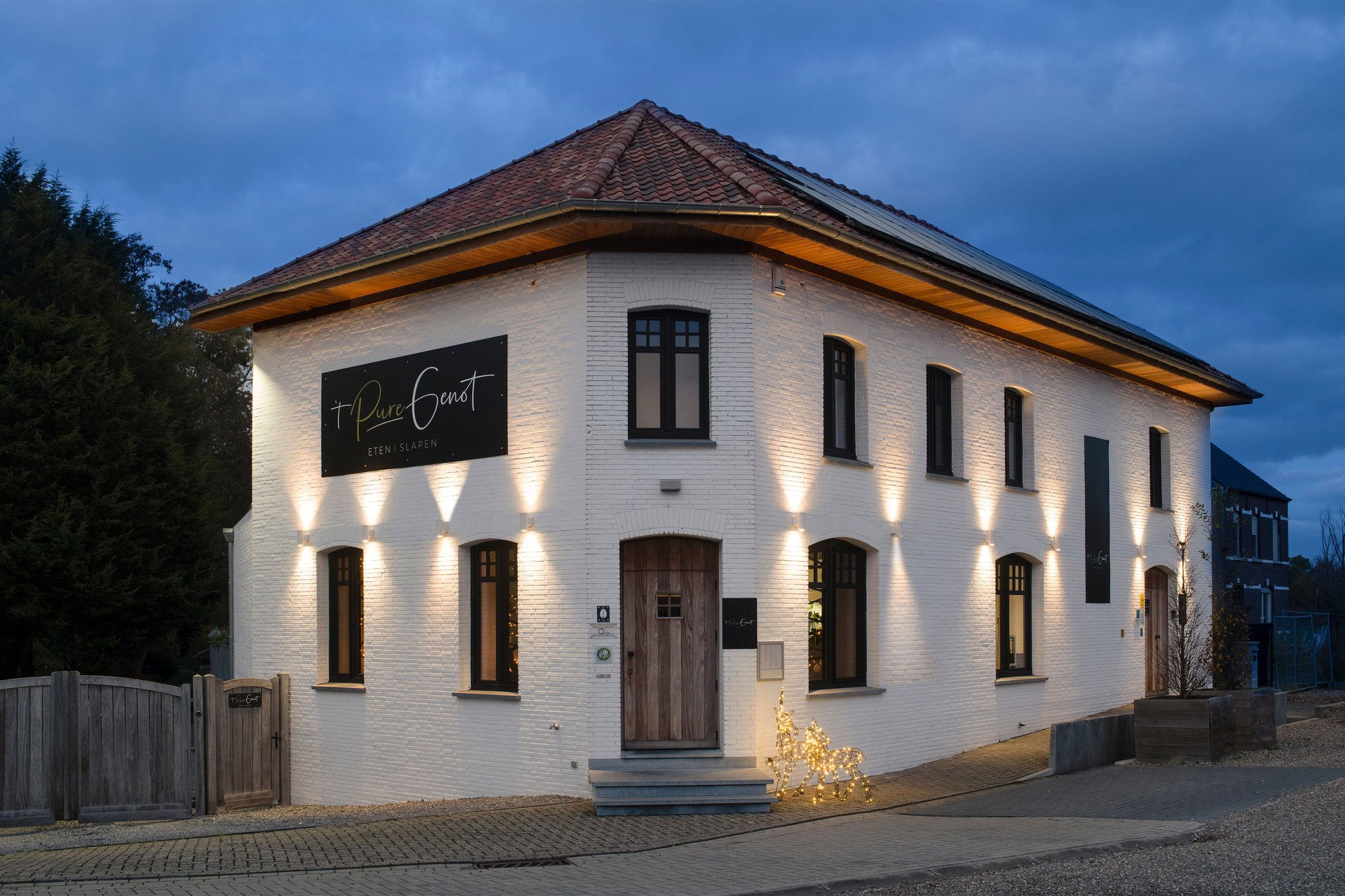
About 't Pure Genot
't Pure Genot in Dilsen-Stokkem operates within the We're Smart vegetable-forward movement, where chef An Nelissen's 'Pure Nature' menu treats seasonal produce as the primary ingredient rather than a supporting element. The kitchen's commitment to waste reduction shapes both sourcing decisions and plate composition, placing this Limburg address in the same sustainability-focused conversation as Belgium's most discussed ingredient-driven restaurants.
Where the Campine Meets the Plate
The stretch of Belgian Limburg between the Maas river and the Dutch border is not where most food travellers think to look. The region's character is agricultural and quietly industrial, shaped by decades of coal mining that ended in the 1990s and a landscape that has since been reclaiming itself through wetlands, heath, and smallholder farming. Dilsen-Stokkem sits inside this context, a municipality that reads as unhurried and provincial until you look at what a small group of producers and restaurants has been building here. Our full Dilsen-Stokkem restaurants guide maps the broader picture, but 't Pure Genot on Stationsstraat is the address that most directly connects the region's agricultural character to the plate.
The We're Smart Framework and What It Demands
Belgium's most rigorous vegetable-forward dining operates under the We're Smart certification, a framework that scores restaurants according to how prominently vegetables and fruits feature in the menu — not as sides or garnishes but as the structural logic of the cooking. The top tier of that system overlaps significantly with Belgium's wider fine dining conversation. Boury in Roeselare and Hof van Cleve in Kruishoutem have each demonstrated that seasonal produce-led cooking and formal recognition are not in tension. What the We're Smart audience looks for specifically is traceability, seasonality, and a kitchen willing to build flavour from vegetable matter rather than defaulting to protein as the anchor of every course.
Chef An Nelissen's 'Pure Nature' menu at 't Pure Genot is positioned squarely inside that conversation. The name is not incidental: the kitchen is structured around what the season makes available rather than around a fixed canon of dishes. That approach demands a different kind of sourcing discipline than most restaurant operations accept. It means supplier relationships that change across the calendar, menu decisions that follow harvest rather than precede it, and a willingness to remove a course when an ingredient falls below threshold rather than substitute with something imported. For Belgian restaurants operating in a tier below the major urban centres, that level of sourcing commitment is a meaningful distinction.
Ingredient Sourcing as Editorial Position
The phrase 'avoid unnecessary waste' in the kitchen's stated aims carries more operational weight than it might appear to at first reading. Waste reduction in a serious kitchen is not primarily about composting or portion sizing. It is a sourcing question: whole-animal and whole-vegetable purchasing, nose-to-leaf cooking, fermentation and preservation programmes that extend the useful life of seasonal produce into periods when it is no longer available fresh. Kitchens that have genuinely committed to this approach use fermentation cellars, pickling programmes, and dehydration techniques to carry summer and autumn flavours into winter menus without importing out-of-season ingredients.
Across Belgium's ingredient-focused restaurant tier, this has become a marker of seriousness. Castor in Beveren and Cuchara in Lommel both operate within a modern European framework where sourcing transparency is expected rather than optional. The difference at a restaurant aligned with We're Smart principles is that the sourcing philosophy shapes the menu architecture itself, not just the provenance notes on a printed card.
For a restaurant operating in a smaller Limburg municipality, this also has a localist dimension. The agricultural belt around Dilsen-Stokkem produces herbs, root vegetables, and orchard fruit that rarely make it into urban restaurant supply chains. A kitchen built around what grows here, in this season, is making a different set of supplier relationships than one sourcing through a national distributor. That is not a sentimental argument; it is a culinary one. Proximity shortens the time between harvest and plate, and in produce-led cooking, that gap is where flavour lives.
Placing 't Pure Genot in the Belgian Context
Belgium's serious restaurant culture concentrates heavily in Ghent, Antwerp, Brussels, and the coastal corridor. Zilte in Antwerp, Bozar Restaurant in Brussels, and Bartholomeus in Heist each operate within well-established food tourism circuits. Restaurants in Flanders' smaller municipalities have a harder case to make for destination dining, but the We're Smart alignment gives 't Pure Genot a specific audience with specific criteria. That audience is not primarily motivated by Michelin star counts or tasting menu length. It is motivated by the question of whether the kitchen's relationship with its ingredients is honest and rigorous.
Comparisons like De Jonkman in Sint-Kruis and d'Eugénie à Emilie in Baudour illustrate that Belgium's most interesting ingredient-focused cooking often happens outside the major cities, where kitchen teams can build supplier networks over years without the volume pressures that urban fine dining imposes. L'Eau Vive in Arbre operates on a similar logic in Wallonia. The pattern is consistent enough that it represents a genuine structural feature of Belgian gastronomy rather than a series of coincidences.
For international reference points, the ingredient-first philosophy that 't Pure Genot operates under is the same underlying logic found at restaurants like Le Bernardin in New York City, where the sourcing of a single category of ingredient (there, seafood; here, vegetables and seasonal produce) becomes the organising principle of the entire kitchen. The scale and price tier differ considerably, but the sourcing discipline is philosophically aligned.
Planning a Visit
't Pure Genot is located at Stationsstraat 138 in Dilsen-Stokkem, a municipality in the Belgian province of Limburg. Visitors arriving from Maastricht or Hasselt by car will find the address direct to reach; the region is less well-served by direct rail connections to major Belgian cities, so most guests driving from Antwerp or Brussels should allow roughly ninety minutes. Given the kitchen's alignment with the We're Smart audience and a menu format that follows seasonal availability, contacting the restaurant ahead of a visit to confirm current menu format and booking availability is advisable. For accommodation options in the area, our full Dilsen-Stokkem hotels guide covers the local options. Those interested in extending the visit into the wider Limburg food and drink scene will find relevant suggestions in our Dilsen-Stokkem bars guide, our wineries guide, and our experiences guide for the region. Willem Hiele in Oudenburg and Emeril's in New Orleans represent different ends of the ingredient-driven restaurant spectrum internationally, and both offer useful comparative context for understanding where 't Pure Genot sits within the broader produce-focused dining conversation.
Frequently Asked Questions
- What is 't Pure Genot known for?
- 't Pure Genot is associated with the We're Smart vegetable-forward movement through chef An Nelissen's 'Pure Nature' menu. The kitchen's defining position is seasonal produce-led cooking with an explicit commitment to minimising waste, placing it in the ingredient-transparency tier of Belgian restaurant culture rather than the classic tasting menu circuit.
- What do people recommend at 't Pure Genot?
- The 'Pure Nature' menu is the kitchen's stated offer to the We're Smart audience: flavour-forward, seasonal, and built around what is available from producers at a given point in the year. Because the menu follows the season, specific dish recommendations shift across the calendar rather than remaining constant.
- Do I need a reservation for 't Pure Genot?
- For a restaurant operating with a seasonal tasting menu format aligned with a specialist audience, advance booking is prudent. Menus structured around what the season provides rather than a fixed repertoire tend to have limited sittings, and confirming availability and current menu format before travelling from outside the region is advisable.
- Is 't Pure Genot better for a quiet night or a lively one?
- The kitchen's alignment with the We're Smart framework and a produce-led seasonal menu positions this as a considered dining experience rather than a casual evening out. In the context of Dilsen-Stokkem, where the restaurant scene is more intimate than in major Belgian cities, expect an atmosphere suited to conversation and attentive eating rather than high-energy atmosphere.
- Can I bring kids to 't Pure Genot?
- The restaurant does not publish specific family or children's policy information. Given the tasting menu format and the sustainability-focused kitchen philosophy, it is worth raising the question directly when making a reservation, particularly if the children in question have dietary preferences that might sit awkwardly against a produce-led seasonal menu with limited substitutions.
Recognized By

Related editorial
- Best Fine Dining Restaurants in ParisFrom three-Michelin-star icons to the next generation of Parisian chefs pushing boundaries, these are the restaurants that define fine dining in the world's culinary capital.
- Best Luxury Hotels in RomeFrom rooftop terraces overlooking ancient ruins to Michelin-starred hotel dining, these are the luxury hotels that make Rome unforgettable.
- Best Cocktail Bars in KyotoFrom sleek lounges to hidden speakeasies, Kyoto's cocktail scene blends Japanese precision with global influence in ways you won't find anywhere else.
Save or rate 't Pure Genot on Pearl
Keep this venue in your Pearl passport, rate it after you visit, and track it alongside every other place you collect.