
Restaurant in Los Angeles, United States
Sushi Inaba
730ptsSix seats. Book early or miss out.


About Sushi Inaba
A Michelin-starred, six-seat omakase counter inside I-naba on Beverly Blvd, Sushi Inaba is one of the stronger technical cases for high-end sushi in Los Angeles. Chef Yasuhiro Hirano's micro-seasonal, often aged seafood and two-vinegar shari set him apart from peers at the same price tier. Reservations are highly competitive: book well in advance or you will not get in.
Who Should Book Sushi Inaba
Sushi Inaba is the right choice if you are a serious omakase diner who wants technical precision over ceremony, and who is comfortable committing to a counter experience where the chef controls every variable. It is especially well-suited to solo diners and pairs who want to be close to the work. If you are bringing a larger group, looking for a conventional sushi-à-la-carte format, or need easy walk-in access, book elsewhere. This is a destination for people who treat a sushi counter the way others treat a theatre seat: you show up prepared, you pay attention, and the payoff is proportionate to both.
The Space
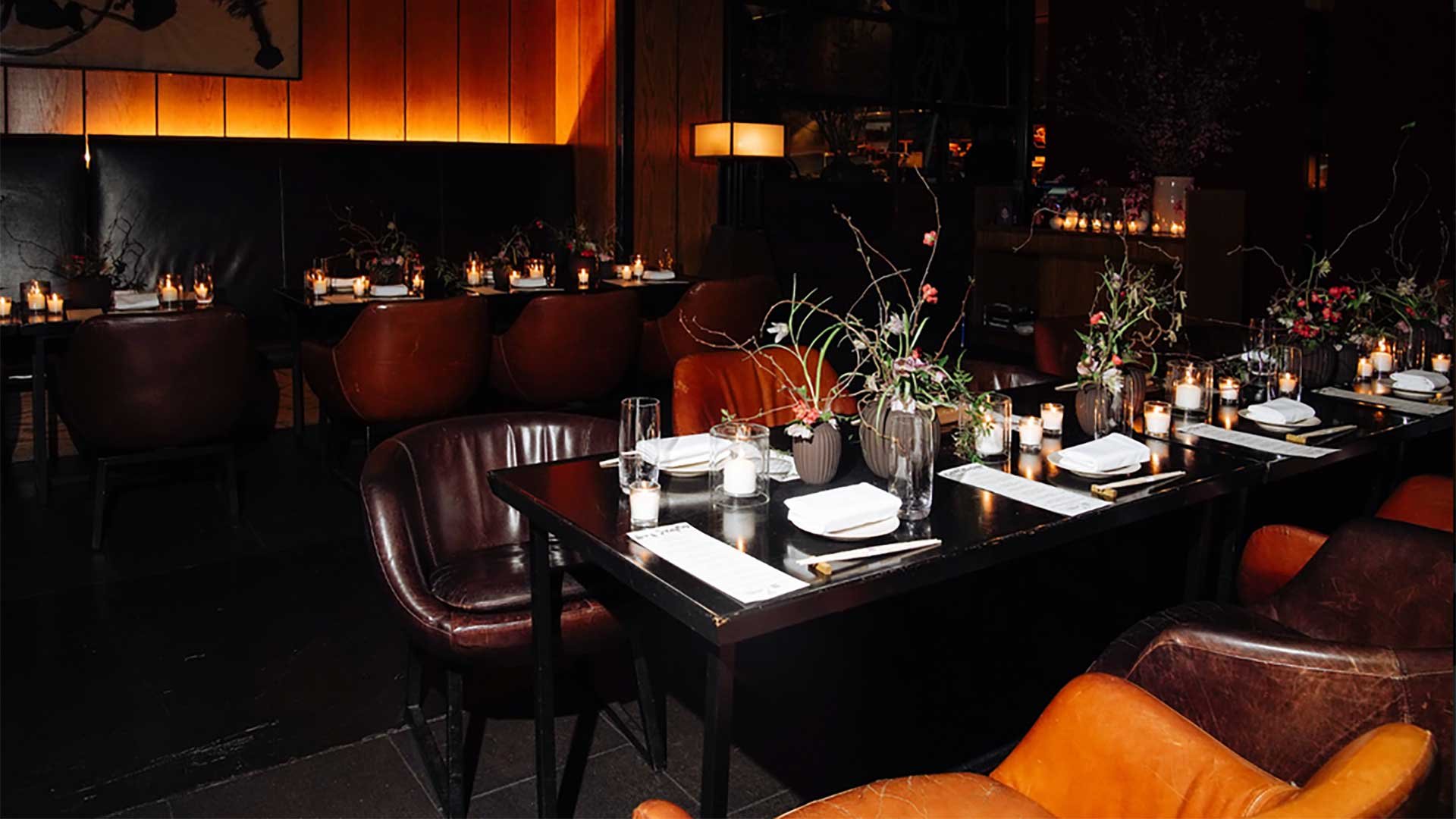
Sushi Inaba operates a six-seat counter inside I-naba Japanese Restaurant on Beverly Blvd. The physical room is minimal and framed in blond wood, with the austerity of a traditional Japanese space. That restraint is intentional: the counter format removes ambient distraction and focuses your attention on what Chef Yasuhiro Hirano is doing directly in front of you. There is nothing superfluous here, which makes the few moments of warmth, including Hirano's easy conversation and the occasional post-tamago guitar, land with more weight than they would in a larger, louder room. For a food-focused diner, that spatial economy is a feature, not a limitation. If you need a full dining room atmosphere with table service and social energy, this is not the format for you.
The Craft
Hirano holds a Michelin star (2025, and previously in 2024) and appeared at number 31 on the LA Times 101 Best Restaurants list for 2024. Those credentials are useful reference points, but the more specific case for booking here is what he does technically that peers in the same tradition do not. His shari uses two types of red vinegar, producing a rice with sharper acidity than the single-vinegar approach common across most omakase counters in Los Angeles. He works with micro-seasonal and often aged seafood, which narrows the range of ingredients but deepens the flavour profile of each piece. The komochi konbu, herring eggs on kelp soaked in dashi for days, is a direct demonstration of that patience: each tiny orb carries the full weight of his stock rather than its own neutral brine.
The iwashi maki has been noted by the LA Times as a signature moment in the meal: a small round divided into sections of silvery sardine with shiso, green chives, and pickled ginger at the centre. The shiso amplifies the vinegar cure and the ginger provides heat. It is precise without being showy. The sanma preparation, a slice of raw pike mackerel served with a small amount of "guts sauce" made from the fish's own innards cooked down with soy sauce, is the kind of thing that separates a technically confident chef from one still operating within safer conventions. It is bitter and livery, and it is entirely deliberate.
For direct comparison among LA omakase counters, Echigo offers a more accessible entry point into high-quality sushi in the city, while Kusano and Go's Mart occupy different positions in the neighbourhood sushi ecosystem. Hamasaku provides a broader Japanese menu if counter-only formats feel too restrictive. Among LA's wider fine-dining scene, Sushi Inaba sits in the same price tier as Hayato, which focuses on kaiseki rather than sushi. For sushi at a comparable level internationally, Harutaka in Tokyo and Sushi Shikon in Hong Kong are useful reference points for understanding where Hirano's work sits within the broader omakase tradition.
Booking and Practical Details
Reservations at Sushi Inaba are highly competitive. The six-seat counter means that any given service has an extremely small number of available seats, and demand consistently outpaces supply at this level of recognition. Plan to book well in advance: a few weeks minimum is a conservative estimate, and during peak periods or following renewed press coverage, the window extends further. Walk-ins are not a realistic strategy here.
The restaurant is closed on Mondays. Tuesday through Friday, lunch runs 11:30 am to 2:15 pm and dinner runs 5:30 to 9 pm. Saturday and Sunday, lunch runs 11:30 am to 2 pm and dinner runs 5 to 8:30 pm. The earlier dinner service on weekends means you need to plan arrival time carefully if you are coming from elsewhere in the city. The address is 3954 Beverly Blvd, Los Angeles, CA 90004. Pricing sits at the $$$$ tier, consistent with Michelin-starred omakase in Los Angeles. Google reviews rate the venue at 4.8 from 136 reviews, which is a high score on a small but meaningful sample for a counter of this size.
For broader context on where to eat, stay, drink, and explore while in the city, see our full Los Angeles restaurants guide, our full Los Angeles hotels guide, our full Los Angeles bars guide, our full Los Angeles wineries guide, and our full Los Angeles experiences guide. If you are planning a broader fine-dining itinerary across the US, the omakase discipline at Sushi Inaba sits in a different category from tasting-menu destinations like Alinea in Chicago, Le Bernardin in New York City, The French Laundry in Napa, Single Thread Farm in Healdsburg, Lazy Bear in San Francisco, or Emeril's in New Orleans, but it competes directly on intent: you are paying for a chef's complete vision, delivered without deviation.
Quick reference: Michelin 1 Star (2024, 2025) · LA Times 101 Best 2024 (#31) · 6-seat counter · $$$$ · Closed Monday · Book well in advance · 3954 Beverly Blvd, Los Angeles, CA 90004
FAQ
- Is Sushi Inaba good for solo dining? Yes, and it may be the format's strongest use case. A single seat at the six-seat counter gives you full access to Hirano's work and the casual conversation he brings to the service. Solo diners also have the easiest time securing a reservation, since a single seat is easier to release than a pair or group. At $$$$ pricing, solo omakase is a meaningful spend, but the counter setting delivers direct value for the money without the overhead of a multi-course tasting menu room.
- What should a first-timer know about Sushi Inaba? Arrive on time, and arrive with an open approach to unfamiliar ingredients. Hirano works with aged and micro-seasonal seafood that does not follow a conventional menu, and preparations like the sanma with guts sauce or the komochi konbu are not entry-level sushi. This is not the right first omakase if you are still calibrating your preferences: it is a strong second or third, once you know what you are comparing against. Budget for the $$$$ tier and plan the reservation weeks in advance.
- Can Sushi Inaba accommodate groups? The six-seat counter limits group size significantly. Parties of two are direct; three or four may be possible depending on availability, but the counter format means you cannot replicate a private dining room dynamic. There is no separate event space noted in available information. For groups larger than four at the $$$$ tier in Los Angeles, consider venues with private room options instead.
- Is Sushi Inaba good for a special occasion? Yes, with the right expectations. The Michelin star, the intimate counter, and Hirano's engaged service all make it a strong choice for a meaningful dinner. The space is minimal rather than romantic in the conventional sense, so if the occasion calls for candles and a full dining room, adjust accordingly. For a food-focused milestone, a birthday for someone who follows the LA dining scene, or an anniversary between two serious omakase diners, it is a well-matched choice. Book early: competitive reservations mean you cannot treat this as a last-minute special-occasion option.
- Is Sushi Inaba worth the price? At $$$$ pricing with a Michelin star and a #31 placement on the LA Times 101 Best list for 2024, the credentials support the cost. The more specific case for value is technical: the two-vinegar shari, the aged seafood approach, and preparations like the guts sauce over sanma represent a level of specificity that distinguishes Hirano from higher-volume omakase counters operating in the same price tier. If you are paying $$$$ for a counter experience in Los Angeles, Sushi Inaba delivers more technical depth per seat than most alternatives at that price point. If your preference runs toward broader Japanese menus or a less austere room, the value proposition changes, but within the omakase format it is justified.
Compare Sushi Inaba
| Venue | Cuisine | Awards | Booking Difficulty | Value |
|---|---|---|---|---|
| Sushi Inaba | Sushi | An intimate, Michelin-starred omakase experience by Chef Yasuhiro Hirano, operating a six-seat counter inside I-naba Japanese Restaurant. Hirano's seamless craft focuses on micro-seasonal, often aged seafood, distinguishing him as one of the finest sushi practitioners in the region. Reservations are highly competitive.; Michelin 1 Star (2025); LA Times 101 Best Restaurants 2024 - Ranked #31. Yasuhiro Hirano’s iwashi maki resembles a pane of stained glass, a small round neatly divided into sections of silvery sardine with a shiso-wrapped square of green chives and yellow ginger in the center. The shiso cranks up the brightness of the vinegar-cured fish and helps the pickled ginger pop with sweet heat. It’s one of the opening bites of Hirano’s omakase, equal parts whimsical and technically precise. He soaks clumps of komochi konbu (herring eggs on kelp) in dashi for days, leaving each tiny orb bursting with the smoky, marine taste of his stock. Hirano’s shari has a pleasant sharpness, a result of his using two types of red vinegar to season the rice. His unfussy ingenuity is on full display in a tiny dab of “guts sauce” served over a slice of raw sanma. Made from cooking down the innards of the pike mackerel with soy sauce, its bitter, livery smack is unparalleled. The eight-seat counter, hidden within the larger I-naba restaurant, has the austerity of a traditional Japanese space, minimal and framed in blond wood. Hirano’s demeanor may appear to match the surroundings, until he opens his mouth. He’s quick to let you know that your hat is cool and compliment your choice of sake. And if you’re lucky, he’ll bring out his guitar for a few songs post-tamago. He does a particularly entertaining rendition of Taylor Swift’s “Shake it Off.”; Michelin 1 Star (2024) | Hard | — |
| Kato | New Taiwanese, Asian | Michelin 1 Star, World's 50 Best | Unknown | — |
| Hayato | Japanese | Michelin 2 Star | Unknown | — |
| Vespertine | Progressive, Contemporary | Michelin 2 Star | Unknown | — |
| Camphor | French-Asian, French | Michelin 1 Star | Unknown | — |
| Gwen | New American, Steakhouse | Michelin 1 Star | Unknown | — |
What to weigh when choosing between Sushi Inaba and alternatives.
Frequently Asked Questions
Is Sushi Inaba good for solo dining?
A solo seat at the six-seat counter is arguably the ideal format here. You get direct access to Chef Hirano's pacing and commentary, and counter dining is built for individual attention. Book as far ahead as possible — the small seat count means solo spots disappear fast, and this is a Michelin-starred counter at $$$$ per head, so the solo commitment is real.
What should a first-timer know about Sushi Inaba?
Expect a full omakase format with no a la carte option — you eat what Hirano serves, and the menu leans into micro-seasonal and aged seafood. The counter seats inside I-naba Japanese Restaurant on Beverly Blvd, so the entry is less formal than a standalone restaurant. Reservations are highly competitive; first-timers who walk in without a booking will almost certainly be turned away.
Can Sushi Inaba accommodate groups?
The counter seats six total, so a group of four or five is technically possible if you book all available seats for a service, but coordination is difficult given how fast reservations fill. Groups of six would require buying out the counter entirely. For larger parties, Sushi Inaba is the wrong format — consider a venue with a private dining room.
Is Sushi Inaba good for a special occasion?
Yes, with the right expectations. The room is minimal and the atmosphere is low-key rather than ceremonial, but Hirano's demeanor is warm — the LA Times notes he has brought out his guitar post-tamago. If your occasion calls for a technically precise Michelin-starred meal with personality, this works well. If you need a grand dining room or tableside theatrics, look elsewhere.
Is Sushi Inaba worth the price?
At $$$$ with a Michelin star and a #31 ranking on the LA Times 101 Best Restaurants 2024, Sushi Inaba sits at the justified end of high-price omakase in LA. The value case rests on Hirano's craft — aged seafood, two-vinegar shari, and a level of technical focus that's harder to find at lower price points. If you're comparing against Hayato or Kato, the decision comes down to format preference; Sushi Inaba is the more intimate, counter-forward option.
Hours
- Monday
- Closed
- Tuesday
- 11:30 am–2:15 pm, 5:30–9 pm
- Wednesday
- 11:30 am–2:15 pm, 5:30–9 pm
- Thursday
- 11:30 am–2:15 pm, 5:30–9 pm
- Friday
- 11:30 am–2:15 pm, 5:30–9 pm
- Saturday
- 11:30 am–2 pm, 5–8:30 pm
- Sunday
- 11:30 am–2 pm, 5–8:30 pm
Recognized By


More restaurants in Los Angeles
- ProvidenceProvidence is LA's most decorated fine dining restaurant — three Michelin stars, a Green Star for sustainability, and a $325 tasting menu that changes nightly based on the day's catch. Book four to six weeks out minimum. At this price and format, it is the seafood tasting menu benchmark for the city, with service depth and sourcing discipline that justifies the spend for special occasions and returning guests alike.
- KatoKato is the No. 1 restaurant in Los Angeles by two consecutive LA Times rankings, a Michelin-starred Taiwanese-American tasting menu with a 2025 James Beard Award for Best Chef: California. The 10-course menu from Jon Yao is matched by one of the city's deepest wine programs. Book six to eight weeks out minimum — this is among the hardest reservations in the country to secure.
- HayatoHayato is the most coveted reservation in Los Angeles: a seven-seat kaiseki counter in Row DTLA where chef Brandon Hayato Go cooks directly in front of guests and narrates every course. Two Michelin stars, ranked #2 by the LA Times and #10 in North America by OAD. Near-impossible to book, but worth pursuing for a serious special occasion.
- MélisseMélisse is a two Michelin-starred, 14-seat tasting-menu counter in Santa Monica — one of Los Angeles's most technically ambitious dinners. Book if French classical technique applied to California produce is your preferred register. With only 14 seats and consistent international recognition, reservations require six to eight weeks of lead time minimum.
Related editorial
- Hwaro NYC Tasting Menu: $295, 22 Seats, Hidden Inside a SteakhouseChef Sungchul Shim's 22-seat Korean fine dining counter inside Gui is one of NYC's most personal — and most carefully considered — tasting menus at $295.
- Asia's 50 Best Restaurants 2026: The Chairman and Wing Go 1-2 from the Same BuildingThe Chairman takes No. 1 and Wing climbs to No. 2 at Asia's 50 Best Restaurants 2026. Both operate from the same Hong Kong building. Here's what it means.
- Four Seasons Yachts Debut: 95 Suites, 11 Restaurants, and a March 2026 Maiden VoyageFour Seasons I launches March 20, 2026, with 95 suites, a one-to-one staff ratio, and 11 onboard restaurants. Worth tracking if you want hotel-grade service at sea.
Save or rate Sushi Inaba on Pearl
Keep this venue in your Pearl passport, rate it after you visit, and track it alongside every other place you collect.