
Restaurant in Kyoto, Japan
Shichiku Kiko
350ptsQuiet depth, Shiga ingredients, Bib Gourmand value.

About Shichiku Kiko
Shichiku Kiko holds a Michelin Bib Gourmand for 2024 and 2025, making it one of Kyoto's most compelling value propositions for serious Japanese cooking. The kitchen sources rice, vegetables, and sake exclusively from the chef's native Shiga Prefecture, building hassun-led menus around the Omi region's seasonal produce. At ¥¥ pricing, it delivers genuine depth well below the city's kaiseki tier.
Is Shichiku Kiko worth booking in Kyoto?
Yes — and especially so if you are drawn to Japanese cooking that prioritises depth over spectacle. Shichiku Kiko holds a Michelin Bib Gourmand for 2024 and 2025, which in Kyoto's crowded dining field is a meaningful signal: this is a kitchen producing serious food at a price point well below the city's kaiseki heavyweights. At ¥¥ pricing, it sits in a bracket where value is genuinely hard to argue with. The question is not whether the food is accomplished — Michelin has answered that , but whether the format and location suit your trip.
What Shichiku Kiko Is
Shichiku Kiko sits in Kita Ward, in the Shichiku district north of central Kyoto, close to Kamigamo Shrine. The restaurant's name carries its identity: 'Kiko' combines the character 'aoi', drawn from the Futaba Aoi crest of Kamigamo Shrine, with the character for 'lake', as in Lake Biwa , the vast freshwater lake that defines Shiga Prefecture. That geographical tether is not decorative. Rice, vegetables, and sake are all sourced from the chef's native Shiga, and the cooking is built around the Omi region's produce. This is not a kitchen importing prestige ingredients from across Japan; it is a kitchen with a defined, narrow supply chain and a clear point of view about what that region tastes like.
The menu is structured around hassun platters and stewed preparations. Hassun , the second course in traditional kaiseki, which sets the seasonal theme , here becomes a lens through which ordinary ingredients are reconsidered. Nothing on the plate announces itself loudly. The chef's stated intention, documented in Michelin's own recognition, is to take modest ingredients and work them hard through time and technique, producing flavour that is deep without being elaborate. The result is food that rewards attention rather than photographs.
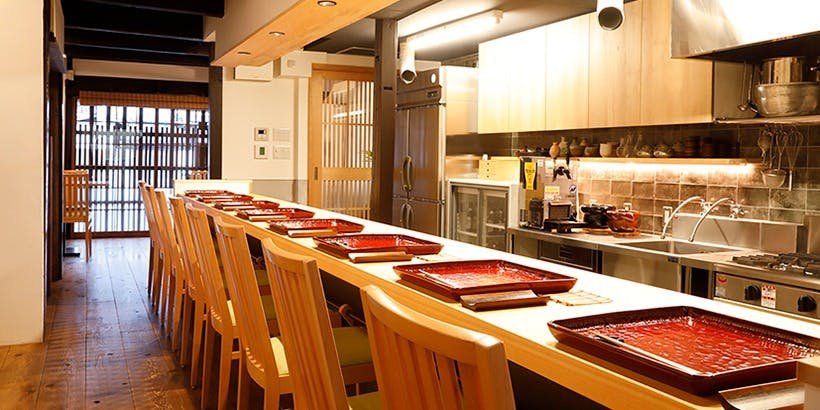
If you are arriving from central Kyoto expecting the visual theatre of a high-end tasting counter in Gion or Higashiyama, recalibrate. Shichiku Kiko's register is quieter. The mood, like the cooking, is described as reflecting the chef's humble demeanour , modest, focused, unhurried. For a food explorer seeking that quality of stillness that distinguishes the leading neighbourhood restaurants in Japan from destination dining rooms, this is exactly the right register. For a diner who measures an evening by its production values, it may not land in the same way.
The Tasting Progression
Shichiku Kiko's menu architecture is rooted in Japanese seasonal logic, with hassun as the structural anchor. In traditional kaiseki, the hassun platter is the moment when the chef most clearly declares the season , small bites arranged to reflect what the land and water are producing right now. Here, that declaration draws exclusively from Shiga: what arrives on the plate is a portrait of the Omi region at a specific point in the year. Following the hassun, stewed preparations take over as the meal's core register. Simmered and braised dishes built for depth , long cooking, quiet flavour, the kind of satisfaction that settles rather than startles , form the meal's emotional centre. The progression moves from clarity to warmth, from the seasonal signal to the comfort of slow-cooked technique. This is not a tasting menu designed to impress with range; it is designed to make you feel the coherence of a single region across multiple preparations. That is a harder thing to achieve, and when it works, it is more memorable than novelty.
Current season is worth factoring into your timing. Kyoto's autumn and early winter bring some of the most compelling produce from the Shiga region, and a menu built on seasonal ingredients from a single prefecture will read very differently in November than in July. If you have flexibility in your travel dates and are serious about the food, aim for the shoulder months when root vegetables, mushrooms, and game from the Omi region are at their peak.
Ratings and Trust Signals
- Michelin Bib Gourmand: 2024 and 2025 , two consecutive years of recognition for quality at an accessible price point
- Google rating: 4.8 from 49 reviews , a small but consistent signal of strong guest satisfaction
- Price tier: ¥¥ , positioned well below Kyoto's kaiseki tier, making it one of the more approachable serious Japanese restaurants in the city
Booking and Practical Details
Reservations: No website or phone number is listed in our current data , approach booking through a hotel concierge if you are staying in Kyoto, or via a third-party reservation platform covering Kyoto restaurants. Booking difficulty is rated Easy, which suggests availability is less pressured than at the city's starred kaiseki rooms. Budget: ¥¥ pricing puts this comfortably within reach for most travellers who would consider a mid-range dinner in Kyoto , expect a meaningful step below the outlay at ¥¥¥¥ kaiseki venues like Kyokaiseki Kichisen or Gion Matayoshi. Location: Kita Ward, Shichiku district , north of central Kyoto, near Kamigamo Shrine. Allow extra travel time from Gion or the central station. Dress: No formal dress code is recorded; smart casual is appropriate for a neighbourhood restaurant of this type in Japan. Hours: Not confirmed in our current data , verify before visiting.
How It Compares
Pearl Picks: More to Explore
If Shichiku Kiko's neighbourhood-restaurant register appeals, consider these for context and comparison across Japan. In Kyoto, Kikunoi Roan and Isshisoden Nakamura represent the city's more formal kaiseki tradition at a higher price tier, while Kodaiji Jugyuan offers another angle on Kyoto's quieter dining rooms. For serious Japanese cooking elsewhere in the country, HAJIME in Osaka, Harutaka in Tokyo, Myojaku in Tokyo, Azabu Kadowaki in Tokyo, akordu in Nara, Goh in Fukuoka, 1000 in Yokohama, and 6 in Okinawa are all worth your attention. See our full Kyoto restaurants guide, Kyoto hotels, Kyoto bars, Kyoto wineries, and Kyoto experiences for broader planning.
FAQ
- Is Shichiku Kiko worth the price? At ¥¥, it is one of the stronger value propositions for serious Japanese cooking in Kyoto. Two consecutive Michelin Bib Gourmands confirm quality that punches above its price bracket. If you are comparing it to the city's ¥¥¥¥ kaiseki rooms, you get a more intimate, produce-driven experience for considerably less outlay.
- Can Shichiku Kiko accommodate groups? Seat count is not confirmed in our data. Given the neighbourhood restaurant scale and quiet register of the cooking, this is likely better suited to parties of two to four than to large groups. Check directly when booking, ideally through a Kyoto hotel concierge.
- Is the tasting menu worth it at Shichiku Kiko? Yes, particularly if you appreciate a menu built around regional coherence rather than technical showmanship. The hassun-led structure and Shiga-sourced ingredients give the progression a clear identity. For a high-production omakase with more courses and visual drama, consider a ¥¥¥¥ kaiseki counter instead.
- Is Shichiku Kiko good for a special occasion? It works well for a meaningful dinner rather than a celebratory one. The mood is quiet and focused, not theatrical. If your occasion calls for ceremony and formal service, Kyokaiseki Kichisen or a comparable ¥¥¥¥ room will feel more fitting. If it calls for a genuinely considered meal in a neighbourhood setting, Shichiku Kiko is a strong answer.
- Is Shichiku Kiko good for solo dining? The format , counter or small-table service in a modest neighbourhood restaurant , is typically well-suited to solo diners in Japan. The unhurried pace and focused cooking make it a good choice for a solo food traveller who wants to pay attention to what is on the plate.
- What should I order at Shichiku Kiko? Specific menu items are not confirmed in our data. Based on Michelin's characterisation, the hassun platter and stewed preparations are the kitchen's signature register. In general, follow the chef's menu rather than attempting to order selectively , the progression is the point.
- What are alternatives to Shichiku Kiko in Kyoto? For a similar price-to-quality ratio with a different cuisine angle, cenci (¥¥¥, Italian) offers Kyoto-sourced ingredients through a European lens. For traditional kaiseki at a higher spend, Gion Sasaki and Ifuki (both ¥¥¥¥) are the reference points. Isshisoden Nakamura and Kikunoi Roan round out Kyoto's formal Japanese dining tier for those willing to spend more.
Compare Shichiku Kiko
| Venue | Cuisine | Awards | Booking Difficulty | Value |
|---|---|---|---|---|
| Shichiku Kiko | Japanese | Keen to make itself part of guests’ everyday lives, this restaurant takes ordinary ingredients and elevates them through time and effort. Hassun platters and stewed items are meticulously prepared, pursuing deep, satisfying flavour. Each item is simple and modest, reflecting the chef’s humble demeanour. The restaurant’s name, ‘Kiko’, brings together the character ‘aoi’, from the Futaba Aoi crest of Kamigamo Shrine near Shichiku, with the character for ‘lake’ as in ‘Lake Biwa’. Rice, vegetables and sake are all sourced from the chef’s native Shiga, expounding the virtues of the Omi region.; Michelin Bib Gourmand (2025); Michelin Bib Gourmand (2024) | Easy | — |
| Gion Sasaki | Kaiseki, Japanese | Michelin 3 Star | Unknown | — |
| cenci | Italian | Michelin 1 Star, World's 50 Best | Unknown | — |
| Ifuki | Kaiseki | Michelin 2 Star | Unknown | — |
| Kyokaiseki Kichisen | Japanese | Michelin 2 Star | Unknown | — |
| SEN | French, Japanese | Michelin 1 Star | Unknown | — |
Key differences to consider before you reserve.
Frequently Asked Questions
Is Shichiku Kiko worth the price?
Yes. At ¥¥ pricing with back-to-back Michelin Bib Gourmand recognition in 2024 and 2025, Shichiku Kiko delivers serious cooking at a fraction of what full Michelin-starred kaiseki costs in Kyoto. The focus on Shiga-sourced rice, vegetables, and sake, worked into hassun platters and slow-stewed dishes, gives the menu a coherence that punches well above its price point.
Can Shichiku Kiko accommodate groups?
No website or phone contact is listed in current data, which makes arranging a group booking harder than at restaurants with direct reservation channels. For groups, approach through a Kyoto hotel concierge or a specialist reservation service. Given the neighbourhood-restaurant scale and ethos, larger parties should confirm capacity before assuming the space fits.
Is the tasting menu worth it at Shichiku Kiko?
Yes, if seasonal Japanese cooking in a restrained, ingredient-led format appeals to you. The menu is built around hassun platters and stewed dishes, with ingredients sourced from the chef's native Shiga prefecture — that provenance gives the progression a regional specificity you won't find at more generic kaiseki venues. If you want showier or more theatrical kaiseki, Kikunoi Roan is a better fit.
Is Shichiku Kiko good for a special occasion?
It depends on what you want the occasion to feel like. Shichiku Kiko is quiet, modest, and deliberately unhurried, which suits an intimate dinner where the food itself is the event. For a grander, more ceremonially staged special occasion, a full Michelin-starred venue like Kyokaiseki Kichisen will deliver more spectacle. Shichiku Kiko is the better call if understated craft matters more than prestige signalling.
Is Shichiku Kiko good for solo dining?
Very likely yes. The restaurant's neighbourhood scale and the chef's described 'humble demeanour' point to a format that suits solo diners seeking engagement with the cooking rather than a performative group experience. Solo diners tend to fare well at counter-style or small Japanese restaurants in this register, and the Bib Gourmand price point removes the financial sting of dining alone.
What should I order at Shichiku Kiko?
The hassun platter and stewed dishes are the documented strengths of the kitchen — the Michelin recognition specifically calls out how meticulous preparation produces deep, satisfying flavour from ordinary ingredients. Rice and sake sourced from Shiga are also core to the experience and worth ordering alongside the food. Specific current menu items are not available in our data, so confirm the current format when booking.
What are alternatives to Shichiku Kiko in Kyoto?
For similar neighbourhood-scale Japanese cooking at accessible prices, Ifuki and cenci offer different registers within Kyoto. If you want to step up in formality and ceremony, Kyokaiseki Kichisen is among the most rigorous traditional kaiseki options in the city. Gion Sasaki and SEN sit closer to Shichiku Kiko's spirit of ingredient-focused cooking without the full kaiseki apparatus. Your choice depends on budget, formality, and how much regional provenance matters to you.
Recognized By

More restaurants in Kyoto
- OgataOgata is a 16-seat kaiseki counter in Shimogyo, Kyoto, holding two Michelin stars and ten years of Tabelog Gold recognition. Dinner runs JPY 60,000–79,999 before drinks and a 10% service charge. Booking is near impossible without months of advance planning, but for serious kaiseki at the counter, it earns its place on any shortlist.
- MizaiMizai holds three Michelin stars and a sustained Tabelog track record across nearly a decade, with dinner running to ¥80,000–¥99,999 per person all-in. Chef Hitoshi Ishihara structures the meal around the spirit of the tea ceremony in a 15-seat room inside Maruyama Park. Book for a serious special occasion; reservations are near-impossible to secure without months of advance planning.
- Kikunoi HontenThree Michelin stars and eight consecutive Tabelog Bronze awards make Kikunoi Honten one of Kyoto's most credentialed kaiseki addresses. Lunch (JPY 20,000–29,999) is the practical first visit; dinner (JPY 30,000–39,999) rewards a return. Booking is near impossible without advance planning — use a hotel concierge or specialist service. Private rooms accommodate groups of 4 to 30-plus.
Related editorial
- Asia's 50 Best Restaurants 2026: The Chairman and Wing Go 1-2 from the Same BuildingThe Chairman takes No. 1 and Wing climbs to No. 2 at Asia's 50 Best Restaurants 2026. Both operate from the same Hong Kong building. Here's what it means.
- Four Seasons Yachts Debut: 95 Suites, 11 Restaurants, and a March 2026 Maiden VoyageFour Seasons I launches March 20, 2026, with 95 suites, a one-to-one staff ratio, and 11 onboard restaurants. Worth tracking if you want hotel-grade service at sea.
- LA Michelin Guide 2026: Seven New Restaurants from Tlayudas to Uzbek DumplingsMichelin's March 2026 California Guide update adds six LA restaurants and one Montecito newcomer, spanning Oaxacan tlayudas, Uzbek manti, and Korean-Italian pasta.
Save or rate Shichiku Kiko on Pearl
Keep this venue in your Pearl passport, rate it after you visit, and track it alongside every other place you collect.