
Restaurant in Seoul, South Korea
Seoryung
250ptsBack-to-back Bib Gourmand. Low prices, high repeat rate.

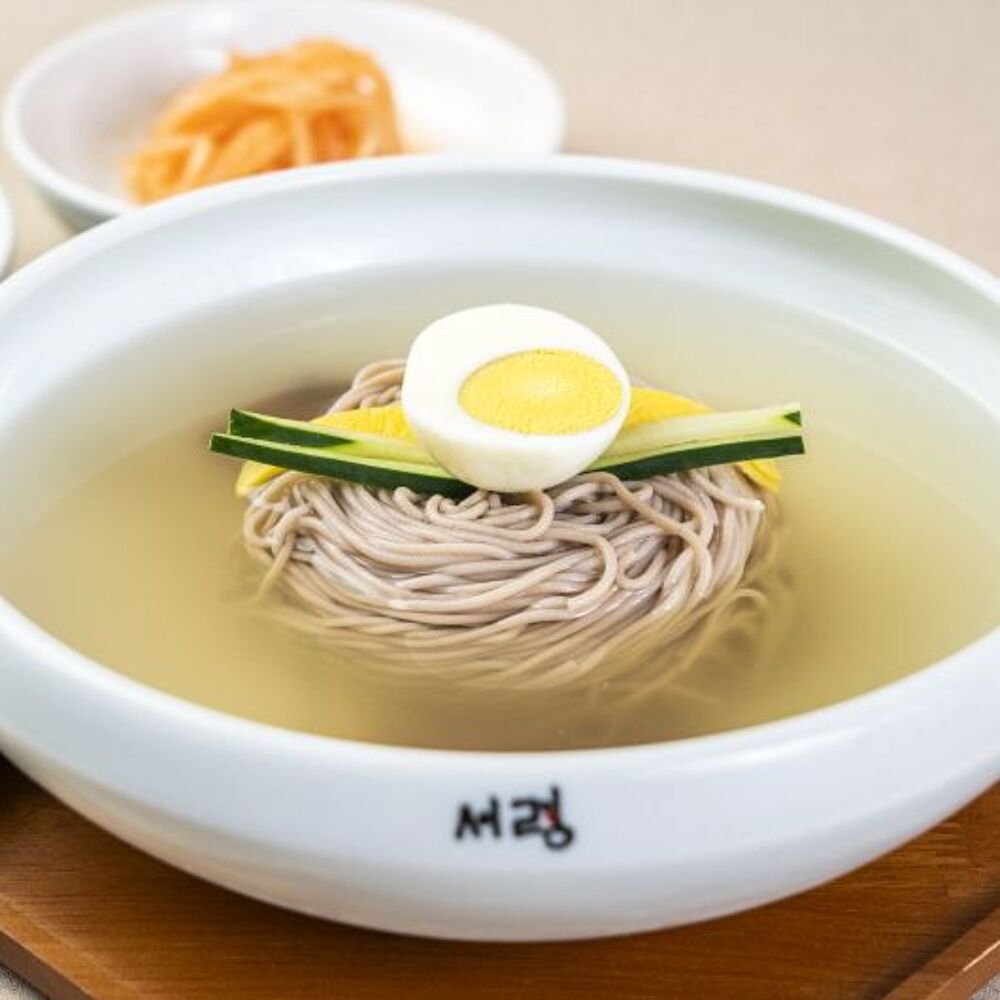
About Seoryung
Seoryung is Seoul's clearest recommendation for serious <em>memil-guksu</em> (buckwheat noodles) at an accessible price. Back-to-back Michelin Bib Gourmand recognition in 2024 and 2025 and a 4.4 Google score across 384 reviews confirm consistent quality. Easy to book, ₩-tier pricing, and a focused ingredient-led menu make it a practical priority for food-focused visitors to Jung-gu.
Verdict: A Bib Gourmand buckwheat noodle specialist that earns its repeat visits
Seoryung is easy to book and genuinely worth the effort. This Jung-gu address has earned back-to-back Michelin Bib Gourmand recognition in 2024 and 2025, which in Seoul's noodle category is a meaningful credential — the Bib signals exceptional quality at a price that won't strain a budget set at ₩ per head. If you are looking for serious memil-guksu (buckwheat noodles) in central Seoul and want the assurance of independent verification behind the bowl, Seoryung is the clearest answer in its category. For those who want to explore comparable noodle-focused spots, Yurimmyeon and Yangyang Memil Makguksu offer useful points of comparison, but Seoryung's consecutive Bib recognition sets it apart in the field.
What Seoryung Is
Seoryung is a specialist restaurant focused on memil-guksu, the Korean buckwheat noodle tradition that draws on the same grain family as Japanese soba but follows its own preparation logic. Chef Jeong Jong-mun runs the kitchen at 10 Sowol-ro in Jung-gu, one of Seoul's more grounded central neighbourhoods, away from the high-gloss dining corridors of Gangnam or the tasting-menu circuit in Jongno. The address puts Seoryung close enough to the city's core to make it accessible for most itineraries, and the ₩ price tier means it fits without planning around a special-occasion budget.
The editorial angle worth understanding here is sourcing. Memil — buckwheat , is an ingredient where provenance matters significantly. Korean buckwheat has a distinct earthy, slightly bitter aromatic character, and the quality of the grain determines whether the finished noodle has structural integrity and depth or turns limp and generic. Restaurants working at this level in Seoul tend to be deliberate about where their buckwheat comes from, because the grain's natural oils oxidise quickly and inferior or poorly stored stock produces a flat result. The aroma of freshly prepared buckwheat noodles is one of the clearest quality signals in this category: a faint nuttiness, a clean earthiness, nothing stale. At a venue earning consecutive Bib recognition, the sourcing discipline is implied , the Michelin inspectors are tasting this repeatedly, across visits, across seasons.
For the food-focused traveller who wants depth rather than novelty, Seoryung represents a direct line into one of Korea's older noodle traditions without the mediation of a tasting-menu format or a prix-fixe commitment. This is a place where the ingredient is the point. Compare that to somewhere like Mingles, which operates in the contemporary Korean fine-dining register at a far higher price tier, or alla prima, which approaches Korean ingredients through an innovative lens. Seoryung does the opposite: it narrows the focus and goes deep on a single tradition.
A useful parallel for international visitors: this is closer in spirit to a dedicated soba specialist in Tokyo than to a general Korean restaurant. The analogy to something like Le Bernardin's fish-focused discipline or Atomix's ingredient-led Korean tasting approach is structural rather than stylistic , Seoryung's commitment to a single ingredient category is where the seriousness shows.
The Google rating of 4.4 across 384 reviews holds up as a consistent signal. That volume of reviews at that score, for a ₩-tier specialist, suggests a broad cross-section of diners , locals, visitors, regulars , arriving with different expectations and leaving satisfied at the same rate. It is a more useful data point than a single high-end review at this price level.
Seoul has a number of strong noodle options at the Bib Gourmand tier, and you will find useful alternatives through Mijin and, for those travelling beyond the capital, Mori in Busan offers a different regional register. But within central Seoul for memil-guksu specifically, Seoryung's combination of track record, price point, and accessibility makes it the most practical recommendation.
Know Before You Go
- Address: 10 Sowol-ro, Jung-gu, Seoul, 04527, South Korea
- Cuisine: Memil-guksu (buckwheat noodles)
- Price tier: ₩ , budget-friendly, no special-occasion spend required
- Awards: Michelin Bib Gourmand 2024 and 2025
- Google rating: 4.4 / 5 (384 reviews)
- Booking difficulty: Easy , no significant lead time required
- Chef: Jeong Jong-mun
- Leading for: Solo diners, food-focused travellers, noodle tradition seekers
- Dress code: Not specified , casual appropriate for the price tier
- Phone / website: Not listed , check arrival logistics in advance
How It Compares
See the full comparison below. Seoryung sits at a completely different price tier from the ₩₩₩₩ venues in its peer set, which is the most immediate practical distinction. Solbam, Onjium, 7th Door, and Zero Complex are all operating in the tasting-menu or fine-dining register where a meal costs several times what Seoryung charges. L'Amitié at ₩₩₩ sits closer but is a French-format restaurant with a different occasion profile. If your Seoul dining budget is limited and you want verified quality, Seoryung is the clearest value recommendation in this peer group. If you want contemporary Korean cuisine at a higher price point, 7th Door or Onjium is the direction to go.
Explore More in Seoul
For a broader view of dining, drinking, and staying in Seoul, see our guides: Seoul restaurants, Seoul hotels, Seoul bars, Seoul wineries, and Seoul experiences. If you are travelling further, Baegyangsa Temple in Jangseong-gun, Kwon Sook Soo in Gangnam-gu, The Flying Hog in Seogwipo, Double T Dining in Gangneung, and Market Café in Incheon are worth noting for multi-city itineraries.
Compare Seoryung
Frequently Asked Questions
Does Seoryung handle dietary restrictions?
Buckwheat noodles are the core of what Seoryung does, which is a narrow menu by design. Buckwheat is naturally gluten-reduced but not gluten-free, and the menu is not suited to diners who cannot eat noodles or grain-based dishes. If you have specific allergen concerns, call ahead — the format is specialist enough that substitutions are unlikely.
Is Seoryung good for solo dining?
Yes, and it's one of the stronger solo options in Seoul at this price tier. A focused noodle menu at ₩ pricing means no awkward minimum spends, and the format doesn't require a group to make sense of the meal. The Bib Gourmand recognition confirms quality without the ceremony that makes solo dining feel odd at higher-end venues.
What are alternatives to Seoryung in Seoul?
For a completely different price and format, Onjium and 7th Door represent the fine-dining end of Seoul's Korean cuisine spectrum. If you want another Bib Gourmand-calibre experience with strong value, look at other recognised spots on Seoul's Bib list rather than trading up to ₩₩₩₩ venues. Seoryung is the right choice when the specific appeal is buckwheat noodles at an accessible price.
Can I eat at the bar at Seoryung?
Bar seating specifics are not confirmed in available venue data for Seoryung. At a specialist noodle house in Jung-gu operating at ₩ pricing, counter or communal seating is common in the format, but confirm directly before visiting if this matters to your booking decision.
Is Seoryung good for a special occasion?
Only if the occasion calls for a low-key, food-first meal rather than an event. Seoryung's back-to-back Michelin Bib Gourmand credentials give it credibility, but the ₩ price point and specialist noodle format mean the setting is casual, not celebratory. For a milestone dinner, Onjium or L'Amitié would be a better fit. Seoryung works well as a deliberate, considered choice — not as a backdrop.
Recognized By

More restaurants in Seoul
- MinglesMingles is Seoul's most credentialed modern Korean restaurant: three Michelin stars, World's 50 Best number 29 in 2025, and a tasting menu built around Chef Mingoo Kang's in-house fermented jangs. Book six to eight weeks ahead — availability is near impossible — and budget for ₩₩₩₩ food pricing plus wine. The best single splurge for a food-focused visit to Seoul.
- OnjiumRanked #57 on the World's 50 Best Restaurants 2025 and holding a Michelin star, Onjium is one of Seoul's hardest reservations and one of its most justified. Chef Cho Eun-hee's research-driven Korean tasting menus draw from centuries-old recipe books, with a strong vegetable focus and techniques including fermentation and drying. Open Tuesday to Friday only; book as far ahead as possible.
- EvettEvett holds two Michelin stars and one of Seoul's most serious wine lists — 2,170 selections with a World's Best Wine List 3-Star Accreditation. Chef Joseph Lidgerwood's innovative Korean-influenced tasting menu in Gangnam is near-impossible to book; lunch is your best entry point. At ₩₩₩₩, it is one of the few Seoul addresses where the cellar matches the kitchen.
Related editorial
- Best Fine Dining Restaurants in ParisFrom three-Michelin-star icons to the next generation of Parisian chefs pushing boundaries, these are the restaurants that define fine dining in the world's culinary capital.
- Best Luxury Hotels in RomeFrom rooftop terraces overlooking ancient ruins to Michelin-starred hotel dining, these are the luxury hotels that make Rome unforgettable.
- Best Cocktail Bars in KyotoFrom sleek lounges to hidden speakeasies, Kyoto's cocktail scene blends Japanese precision with global influence in ways you won't find anywhere else.
Save or rate Seoryung on Pearl
Keep this venue in your Pearl passport, rate it after you visit, and track it alongside every other place you collect.