
Restaurant in Tokyo, Japan
Saucer
450ptsOne-star French at ¥¥¥. Book early.

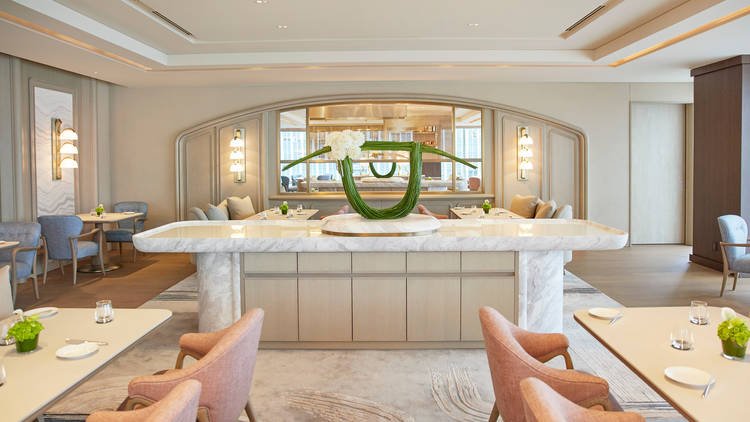
About Saucer
A Michelin-starred (2024) French counter in Ebisu built around a single obsession: sauce. The format is intentionally minimal — freshly baked bread, a rotating sauce anchored by three-day consommé, and seasonal ingredients like spring morels and summer sweetfish. At ¥¥¥, it is one of the stronger value propositions in Tokyo's French dining tier, but seats are limited and booking is hard.
Who Should Book Saucer — and When
Saucer is the right call for solo diners, couples, and small groups who want technically serious French cooking in Tokyo without the ceremony of a four-hour kaiseki or the price ceiling of a ¥¥¥¥ tasting room. If your interest is in watching a chef's single obsession — sauce , executed at a Michelin-starred level, and you are happy eating bread alongside a rotating cast of consommé and seasonal reductions, this is the booking to chase. Spring, when morel mushrooms are in season, and summer, when sweetfish (ayu) appears, are the strongest times to visit. Plan your reservation around those windows if the calendar allows.
The Concept: Sauce as the Entire Point
The name is not decorative. Saucer comes from the French verb saucer , to pour sauce or to drizzle sauce over bread , and the format reflects that etymology exactly. The chef, who trained as a saucier (sauce master) during his apprenticeship, has built the entire restaurant around that role. The standard format is two plates: freshly baked bread on one, a sauce on the other. The anchor of that sauce is a consommé drawn over three days, which gives you a sense of the patience behind what arrives at the table. This is not a venue where the concept needs defending with qualifications , it is a clear idea, executed with confidence, and the Michelin committee agreed, awarding it a star in 2024.
For diners coming from broader French fine dining in Tokyo , say, L'Effervescence or ESqUISSE , Saucer will read as more focused and more singular. It is not trying to tell the full story of contemporary French cuisine. It is telling one chapter, in depth.
The Counter Experience
The venue is in Ebisu, basement level, in Tokyo's Shibuya ward. Counter seating, by format and layout, is the presumed mode of eating here , and that matters for how you receive what the chef is doing. Watching a sauce built and finished in real time, at close range, is qualitatively different from receiving it at a dining room table. The sound register in a small basement counter room tends toward the intimate: low conversation, the rhythm of kitchen work, none of the ambient noise that arrives with larger rooms. If you are choosing between a counter seat and a table, take the counter. The proximity to the cooking is part of what you are paying for at a restaurant with this specific concept.
The atmosphere is focused rather than festive. This is not a room for loud birthday celebrations or business entertaining where the deal matters more than the food. It suits the explorer diner , someone who arrives with questions about technique and leaves with a clearer picture of what a saucier actually does. If you are coming with a companion, the conversation will naturally follow the food; the format invites it.
Seasonal Timing and Booking Difficulty
Booking Saucer is hard. A single Michelin star in Tokyo at the ¥¥¥ price range creates significant demand against limited seats , and a basement counter room has, by definition, a small capacity. If you are planning to visit during the spring morel season (roughly March through May) or the summer sweetfish window (June through August), expect to need at least four to six weeks of lead time, possibly more. Outside those peak seasonal windows, the booking may be marginally more accessible, but do not count on walk-in availability. This is a restaurant that rewards planning.
No booking method is confirmed in our data, so verify the current reservation channel before your trip , options in Tokyo at this level typically include a dedicated reservation system or a third-party platform. Our full Tokyo restaurants guide covers booking logistics across the city's French dining tier.
Value and Price Positioning
At ¥¥¥, Saucer sits below the ¥¥¥¥ tier occupied by L'Effervescence, Florilège's higher-spend occasions, and the full kaiseki experience at RyuGin. A Michelin star at this price point in Tokyo is not common , the combination makes it one of the stronger value propositions in the city's French dining set. You are not getting a multi-course marathon or an extensive wine program (details on either are not confirmed), but what you are getting , bread, a three-day consommé, seasonal ingredients executed by a trained saucier , justifies the spend for the right diner. If budget is the primary driver and you want maximum courses for the outlay, look elsewhere. If the idea of one thing done at a very high level appeals, the price-to-quality ratio here is strong.
Practical Details
| Detail | Saucer | L'Effervescence | Florilège |
|---|---|---|---|
| Cuisine | French (sauce-focused) | French | French |
| Price range | ¥¥¥ | ¥¥¥¥ | ¥¥¥ |
| Michelin stars | 1 (2024) | 2 | 1 |
| Location | Ebisu, Shibuya | Nishi-Azabu | Minami-Aoyama |
| Booking difficulty | Hard | Hard | Hard |
| Format | Counter, sauce concept | Tasting menu | Counter, tasting menu |
Pearl Rating
Google: 4.5 (33 reviews). The review count is low for a Michelin-starred venue, which reflects both the room's small size and the fact that the 2024 star is recent , expect that number to grow as awareness builds post-award.
Explore More
If Saucer is full, your leading alternatives in Tokyo's French tier are Florilège (also ¥¥¥, also counter-focused), Sézanne, or Château Restaurant Joël Robuchon at the higher end. For French fine dining beyond Tokyo, consider HAJIME in Osaka, akordu in Nara, or further afield, Les Amis in Singapore and Hotel de Ville Crissier in Switzerland. Browse our Tokyo hotels guide, Tokyo bars guide, Tokyo wineries guide, and Tokyo experiences guide to round out your trip. For Japan more broadly, Gion Sasaki in Kyoto, Goh in Fukuoka, 1000 in Yokohama, and 6 in Okinawa are worth your attention.
Frequently Asked Questions
Is Saucer good for solo dining?
Yes , it is one of the better solo dining options in Tokyo's French tier. Counter seating at a venue with a focused, single-plate concept means a solo diner gets the full experience without the awkwardness of a large tasting menu room. You will be close to the kitchen, which is where the interesting part happens. At ¥¥¥, it is also a reasonable spend for a solo meal by Tokyo Michelin standards.
What should a first-timer know about Saucer?
The format is intentionally minimal: bread and sauce, built around a three-day consommé. Do not arrive expecting a multi-course progression in the conventional French tasting menu sense. The concept rewards diners who find that simplicity interesting rather than limiting. Book as far ahead as possible , the 2024 Michelin star has increased demand significantly. The restaurant is in Ebisu, basement level, in Shibuya ward.
Is Saucer worth the price?
At ¥¥¥ with a Michelin star, yes , for the right diner. Tokyo's French fine dining tier is largely ¥¥¥¥, so Saucer offers genuine value relative to peers like L'Effervescence. The qualifier is format: if you want volume and variety, it is not the right spend. If the idea of a single, technically obsessive concept , sauce, executed by a trained saucier , is appealing, the price-to-quality ratio is strong.
Can Saucer accommodate groups?
Groups are likely limited by the small counter format typical of this style of Tokyo restaurant. Parties of two or three are the practical sweet spot. Larger groups should contact the venue directly to confirm availability , no group booking policy is confirmed in our data, and no phone number or website is available to list here. Check reservation platforms active at time of booking.
Is the tasting menu worth it at Saucer?
The format at Saucer is not a tasting menu in the conventional sense , it is bread paired with a sauce derived from a three-day consommé, with seasonal ingredients (morels in spring, sweetfish in summer) shaping what arrives. Whether that is worth it depends entirely on your interest in the concept. A chef who trained as a saucier building a Michelin-starred restaurant around that one skill is a compelling proposition. If you want a traditional multi-course tasting menu, Florilège or Sézanne are better fits.
Does Saucer handle dietary restrictions?
No confirmed information is available on dietary accommodation. Given the narrow, technique-driven concept , centred on a specific consommé base , significant modifications may be difficult. Contact the venue before booking if you have restrictions; no website or phone number is in our current data, so use the reservation platform through which you book to communicate requirements in advance.
Compare Saucer
| Venue | Cuisine | Price | Awards | Booking Difficulty | Value |
|---|---|---|---|---|---|
| Saucer | French | ¥¥¥ | The name is French: saucer used as a verb, to pour sauce or to drizzle sauce on bread. The standard fare is what the chef terms ‘saucer’: freshly baked bread on one plate and a sauce on the other. Consommé drawn over a period of three days is a key ingredient. Morel mushrooms in spring and sweetfish in summer impart seasonal flavours. As an apprentice, the chef was appointed saucier, sauce master; his confidence shines in his work today.; Michelin 1 Star (2024) | Hard | — |
| Harutaka | Sushi | ¥¥¥¥ | Michelin 3 Star, World's 50 Best | Unknown | — |
| RyuGin | Kaiseki, Japanese | ¥¥¥¥ | Michelin 3 Star, World's 50 Best | Unknown | — |
| L'Effervescence | French | ¥¥¥¥ | Michelin 3 Star, World's 50 Best | Unknown | — |
| HOMMAGE | Innovtive French, French | ¥¥¥¥ | Michelin 2 Star, World's 50 Best | Unknown | — |
| Florilège | French | ¥¥¥ | Michelin 2 Star, World's 50 Best | Unknown | — |
How Saucer stacks up against the competition.
Frequently Asked Questions
Is Saucer good for solo dining?
Yes — Saucer is one of the more practical solo options in Tokyo's French tier. Counter seating and a focused bread-and-sauce format mean a single diner is never at a structural disadvantage. At ¥¥¥ with a 2024 Michelin star, it delivers serious cooking without the social expectation of a shared multi-course table.
What should a first-timer know about Saucer?
The concept is narrow by design: freshly baked bread served with a sauce built from a consommé drawn over three days. This is not a conventional multi-course progression. Seasonal produce — morel mushrooms in spring, sweetfish in summer — shifts what the sauce becomes, so the experience changes with the calendar. Come for the technique, not the variety.
Is Saucer worth the price?
At ¥¥¥ with a Michelin star, yes — relative to the Tokyo French field. L'Effervescence and the full kaiseki experience at RyuGin both sit at ¥¥¥¥, so Saucer offers genuine value for the standard of cooking. The caveat: the format is singular, and diners who want range or a traditional multi-course structure should look at Florilège instead.
Can Saucer accommodate groups?
Likely not comfortably above three people. The basement counter format in Ebisu is built for intimate dining, and that puts a hard practical ceiling on group size. Parties of two are the optimal booking unit here; if you need to seat four or more, Florilège or Sézanne are better-suited alternatives.
Is the tasting menu worth it at Saucer?
Saucer does not run a tasting menu in the conventional sense. The format is bread paired with a sauce anchored by a three-day consommé, with seasonal adjustments — morels in spring, sweetfish in summer. If you want that specific experience executed at Michelin one-star level for ¥¥¥, it is worth it. If you want a multi-course progression, this is not the right venue.
Does Saucer handle dietary restrictions?
No confirmed information is available on dietary accommodation. The concept centres on a specific consommé-based sauce, which means the format has limited flexibility by design. If you have significant dietary restrictions, check the venue's official channels before booking — the narrow technique-driven concept makes substitution less straightforward than at a broader-menu restaurant.
Recognized By

More restaurants in Tokyo
- SézanneOccupying the seventh floor of the Four Seasons Hotel Tokyo at Marunouchi, Sézanne earned its first Michelin star within months of opening in July 2021 and now holds three. British chef Daniel Calvert applies French technique to Japanese ingredients, producing a prix-fixe format that Tabelog has recognised with Silver awards every year from 2023 through 2026. It ranked 4th in Asia's 50 Best Restaurants in 2025 and 15th globally in 2024.
- SazenkaSazenka is the address for Chinese cuisine in Tokyo at its most technically demanding. Chef Tomoya Kawada's wakon-kansai approach — Japanese seasonal ingredients applied through Chinese culinary technique — has earned consecutive Tabelog Gold Awards from 2019 to 2026, a #71 ranking on the World's 50 Best 2025, and 99 points from La Liste 2026. At JPY 50,000–59,999 per head, it is one of the hardest tables in the city to book and worth the effort.
- NarisawaNarisawa is Tokyo's most credentialled innovative tasting menu restaurant — two Michelin stars, Asia's 50 Best number 12, and a Tabelog Silver award — running at JPY 80,000–99,999 per head. Book for a milestone occasion, confirm vegetarian or vegan needs in advance, and reserve at least two to three months out. With 15 seats and reservation-only access, this is one of Tokyo's hardest tables to secure.
- FlorilègeFlorilège delivers two Michelin stars and an Asia's 50 Best #17 ranking at a dinner price of ¥22,000 — competitive for Tokyo at this level. Chef Hiroyasu Kawate's plant-forward tasting menus around an open-kitchen counter at Azabudai Hills make this the strongest choice for contemporary French dining in Tokyo if theatrical, produce-led cooking is what you want. Book well in advance; availability is near-impossible at short notice.
- DenDen holds two Michelin stars, a World's 50 Best top-25 Asia ranking, and a Tabelog Silver Award running back to 2017 — and it books out within hours of the two-month reservation window opening. Chef Zaiyu Hasegawa's daily-changing seasonal omakase runs JPY 30,000–39,999 at dinner in a relaxed house-restaurant setting near Gaiemmae. Book by phone only, noon–5 PM JST. Lunch is irregular; plan around dinner.
- MyojakuMyojaku is a 2-Michelin-star, 14-course French-leaning omakase in Nishiazabu holding a 4.47 Tabelog score, Tabelog Silver 2025–2026, and Asia's 50 Best #45 (2025). Chef Hidetoshi Nakamura's water-forward, no-dashi approach shifts meaningfully with the seasons — making timing your reservation as important as getting one. Budget JPY 50,000–59,999 per head plus 10% service charge; reservations only, near-impossible to secure.
Related editorial
- Best Fine Dining Restaurants in ParisFrom three-Michelin-star icons to the next generation of Parisian chefs pushing boundaries, these are the restaurants that define fine dining in the world's culinary capital.
- Best Luxury Hotels in RomeFrom rooftop terraces overlooking ancient ruins to Michelin-starred hotel dining, these are the luxury hotels that make Rome unforgettable.
- Best Cocktail Bars in KyotoFrom sleek lounges to hidden speakeasies, Kyoto's cocktail scene blends Japanese precision with global influence in ways you won't find anywhere else.
Save or rate Saucer on Pearl
Keep this venue in your Pearl passport, rate it after you visit, and track it alongside every other place you collect.