
Restaurant in Oslo, Norway
Sabi Omakase Oslo
550pts15 seats, two Michelin stars, book early.


About Sabi Omakase Oslo
Sabi Omakase Oslo is Norway's clearest answer to a serious Tokyo-style counter experience: 15 seats, a chef-driven sequence, and consecutive Michelin stars in 2024 and 2025. At €€€€ it is Oslo's top price tier, but the format is without a direct local rival. Book at least six weeks ahead — this is a genuinely hard reservation.
Verdict: Oslo's most focused high-end sushi counter, and worth the difficulty of booking
If you are serious about omakase, Sabi Omakase Oslo is the clearest answer in Norway. Chef Airis Zapa runs a 15-seat counter at Ruseløkkveien 3 in Aker Brygge, holding a Michelin star in both 2024 and 2025. The format is pure omakase: you eat what the chef decides, in the sequence the chef decides, and the experience is structured around the counter rather than a dining room. At the €€€€ price point, this is one of Oslo's most expensive meals, but measured against the Michelin recognition and the intimacy of the format, the value case is legitimate. The honest question is not whether Sabi is good. It is whether omakase is the right format for you on this trip.
The Counter Experience
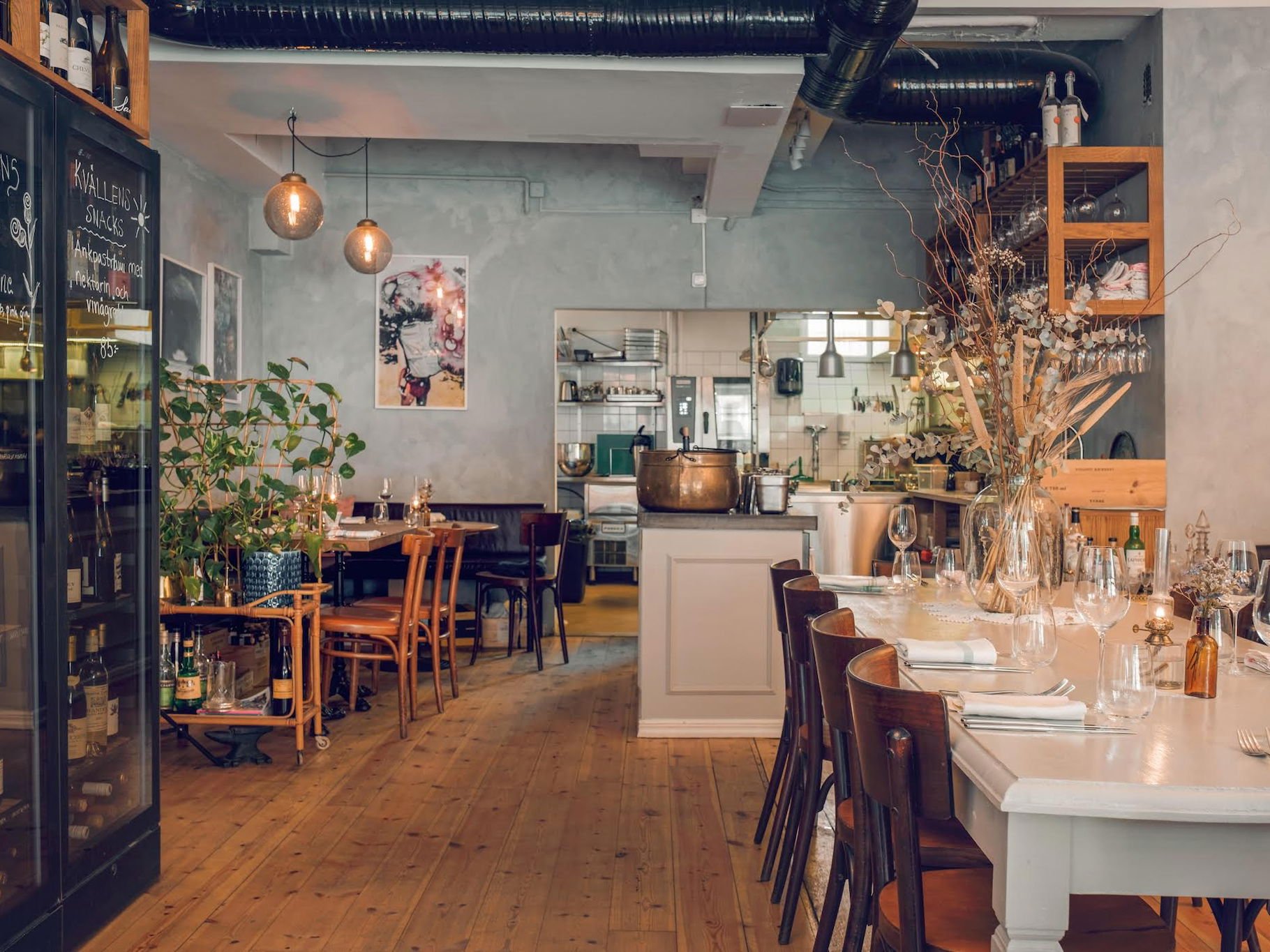
Fifteen seats around a counter is not a metaphor for intimacy — it is a logistical reality that shapes everything about the meal. The room is quiet by the standards of Oslo's other high-end restaurants. There is no background buzz from a packed dining room, no table-to-table noise bleed. The ambient energy is focused and close, closer to a chef's table experience than to a conventional restaurant evening. If you are coming from a Nordic tasting menu background — from Maaemo or Kontrast , the shift in atmosphere is significant. Those rooms are larger, more theatrical in a spatial sense. Here, the theatre is at arm's length, which is the point.
The format follows Tokyo-style omakase conventions, where the chef works directly in front of the guests. This is not background service. It is the full attention of a small team on a small number of covers. For explorers who want depth and context, this is the format that delivers it most directly. You are watching technique rather than inferring it from a plate that arrives from a distant kitchen.
Multi-Visit Strategy
At 15 seats and with strong ongoing demand backed by consecutive Michelin stars, Sabi does not lend itself to casual repeat visits. But if you are building a multi-visit plan for Oslo, the logic here is direct. On a first visit, the goal is to understand the chef's current direction , what fish is being sourced, how the progression is structured, where the season sits. Omakase menus change with availability and with the chef's evolving approach, so a return visit three to six months later will not replicate the first. That is the argument for coming back.
A second visit is leading approached with less tourist framing and more focus on the drink pairing. Many guests on a first visit are absorbing the format itself; on a second, you can engage more directly with how the wine or sake selection interacts with the sequence. If you plan multiple visits to Oslo across different trips, consider bracketing Sabi against the broader Norwegian fine dining circuit: RE-NAA in Stavanger, FAGN in Trondheim, and Under in Lindesnes each represent a different register of Norwegian fine dining, none of which overlap with what Sabi does. Oslo's Gaptrast in Bergen and Iris in Rosendal round out a country-wide picture if you are travelling beyond the capital.
For visitors spending multiple evenings in Oslo specifically, the sensible approach is Sabi on one night and either Hot Shop or Bar Amour on another. Those options offer distinct formats at lower price points, which means your Oslo dining spread covers both the high-precision counter experience and the more casual end of the city's creative cooking scene. Mon Oncle works well as a lighter lunch option on the same day you have Sabi in the evening, keeping the food load manageable. For context beyond Oslo, the format at Sabi is most comparable to Harutaka in Tokyo and Sushi Shikon in Hong Kong in terms of counter intimacy and chef-driven sequencing, though those venues operate in deeper sushi markets with different sourcing realities.
Booking and Practical Details
Book as early as possible , at minimum four to six weeks in advance, and longer if your travel dates are fixed. The 15-seat counter means that at any given service, there are fewer covers than at most Oslo fine dining venues, and the Michelin recognition has tightened availability considerably since the 2024 star. This is a genuinely hard reservation. If you are travelling specifically for this meal, build flexibility into your itinerary rather than assuming a specific date will open. There is no phone number in the public record; reservations should be pursued through the venue's booking channels directly. For broader Oslo context on restaurants, hotels, bars, and experiences, Pearl's full Oslo restaurants guide, Oslo hotels guide, Oslo bars guide, and Oslo experiences guide cover the city's full options at every price tier.
Dress code is not formally specified in the venue record, but the €€€€ price point and Michelin context put this squarely in smart casual territory at minimum. Erring toward business casual is safe. The 15-seat format means that underdressed guests are more visible than in a larger room. Arrive on time , with a counter this size, late arrivals affect the pacing for everyone at the bar.
The Case For Booking
Two consecutive Michelin stars at this address, a 4.9 Google rating across 217 reviews, and a format with no direct competitor in Oslo make the affirmative case clearly. If omakase is a format you seek out , and especially if you have reference points from Tokyo or Hong Kong counters , this is a legitimate version of that experience in a city where the format is rare. For readers exploring Norway's wider fine dining reach, Sabi sits at the Oslo apex of a national scene that also includes Boen Gård in Tveit among its quieter destinations. The counter at Ruseløkkveien 3 is small enough that a bad visit would be noticeable. The evidence suggests that is not the dominant experience here.
Compare Sabi Omakase Oslo
| Venue | Cuisine | Price | Booking Difficulty |
|---|---|---|---|
| Sabi Omakase Oslo | Sushi | €€€€ | Hard |
| Maaemo | New Nordic, Modern Cuisine | €€€€ | Unknown |
| Kontrast | New Nordic, Scandinavian | €€€€ | Unknown |
| Hot Shop | New Nordic, Modern Cuisine | €€€ | Unknown |
| Statholdergaarden | Modern European, Classic Cuisine | €€€€ | Unknown |
| Arakataka | Nordic , Norwegian | €€ | Unknown |
A quick look at how Sabi Omakase Oslo measures up.
Frequently Asked Questions
How far ahead should I book Sabi Omakase Oslo?
Book at least four to six weeks in advance — more if your travel dates are fixed. With only 15 seats and back-to-back Michelin stars in 2024 and 2025, availability disappears fast. If you are visiting Oslo specifically for this meal, treat the reservation as the first thing you confirm, not the last.
What should a first-timer know about Sabi Omakase Oslo?
This is a 15-seat counter format with a single omakase menu, meaning Chef Airis Zapa sets what you eat — there is no à la carte option. The experience is quiet and focused by design, closer to a Tokyo-style counter than a conventional restaurant. Come expecting a structured, chef-led progression rather than a browsable menu.
Is the tasting menu worth it at Sabi Omakase Oslo?
For omakase specifically, yes — Sabi is the clearest answer in Norway at this format, with two consecutive Michelin stars and a 4.9 Google rating across 217 reviews backing it up. If you want a broader Nordic tasting menu, Maaemo or Kontrast are different propositions. Sabi's case rests entirely on precision sushi, so if that is your format, the answer is straightforward.
What should I wear to Sabi Omakase Oslo?
The venue data does not specify a dress code, but a Michelin-starred counter at €€€€ pricing in Oslo warrants dressing neatly — think business casual at minimum. Loud or bulky outerwear will feel out of place at a 15-seat counter where the room is intimate and the pacing is deliberate.
Is Sabi Omakase Oslo worth the price?
At €€€€ pricing, you are paying for two consecutive Michelin stars, a 15-seat counter with no direct Oslo competitor in this format, and a chef-directed sushi experience that mirrors a Tokyo-style counter more than anything else in Norway. If you are comparing to Maaemo on pure prestige, that is a different spend with a different format. For omakase specifically, Sabi's price-to-credential ratio holds up.
What should I order at Sabi Omakase Oslo?
There is no ordering — omakase means the chef decides. Chef Airis Zapa sets the full progression for every guest. The format exists precisely to remove that decision from the diner, so arrive ready to trust the counter rather than direct it.
Can Sabi Omakase Oslo accommodate groups?
The entire restaurant is 15 seats, so a large group would effectively take over the counter. For parties of four or more, availability becomes significantly harder to secure, and the intimate counter format is not well-suited to celebratory group dynamics in the conventional sense. A private dining buyout may be possible, but that is not confirmed in available venue data — check the venue's official channels to explore it.
Recognized By


Related editorial
- Best Fine Dining Restaurants in ParisFrom three-Michelin-star icons to the next generation of Parisian chefs pushing boundaries, these are the restaurants that define fine dining in the world's culinary capital.
- Best Luxury Hotels in RomeFrom rooftop terraces overlooking ancient ruins to Michelin-starred hotel dining, these are the luxury hotels that make Rome unforgettable.
- Best Cocktail Bars in KyotoFrom sleek lounges to hidden speakeasies, Kyoto's cocktail scene blends Japanese precision with global influence in ways you won't find anywhere else.
Save or rate Sabi Omakase Oslo on Pearl
Keep this venue in your Pearl passport, rate it after you visit, and track it alongside every other place you collect.