
Restaurant in Tokyo, Japan
Rokurinsha
200ptsTokyo's tsukemen reference point. Go early.

About Rokurinsha
Rokurinsha is the reference tsukemen counter in Tokyo, ranked No. 35 in Japan by Opinionated About Dining (2025) and holding a 4.1 rating across nearly 5,000 Google reviews. The thick fish-and-pork dipping broth is the draw. Go at opening (7:30 am) to avoid the queue, eat at the counter immediately, and finish with soup wari. No booking needed.
Is Rokurinsha worth the queue at Tokyo Station?
Yes — if tsukemen is what you are after, Rokurinsha is the reference point in Tokyo. The format is dipping ramen: thick, chewy noodles served cold or at room temperature alongside a concentrated hot broth for dipping. The broth here is the draw — a dense, fish-and-pork blend that has made this basement stall on Tokyo Ramen Street one of the most talked-about bowls in the country. Opinionated About Dining has ranked it in Japan's top 50 casual spots three consecutive years (No. 35 in 2025, No. 44 in 2024, No. 41 in 2023), which for a counter inside a train station is a meaningful credential. With a Google rating of 4.1 across nearly 5,000 reviews, the consensus holds: this is not hype tourism, it is a genuinely strong bowl.
What to expect
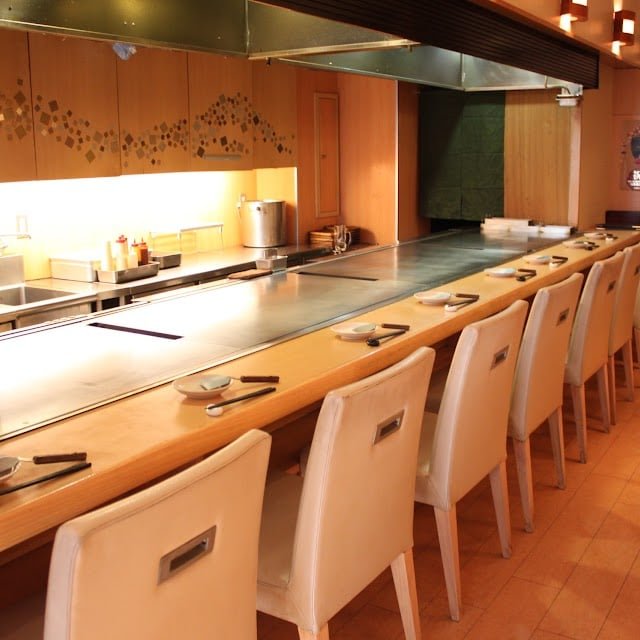
Rokurinsha sits in the basement of Tokyo Station's Ichiban-gai shopping corridor, on the stretch branded as Tokyo Ramen Street. The location sounds unglamorous, and it is , but that is part of the point. This is counter dining at its most direct: you order, you eat, you leave. The kitchen's output is the only thing competing for your attention, and the concentrated umami of the dipping broth is what lingers. The signature aroma , a rich, savoury cloud of fish stock and rendered pork , reaches you before you sit down, which tells you something about the intensity of what is coming. That scent is a reliable preview of the broth itself: thick enough to coat the noodles properly, with enough salt and fat to function as a sauce rather than a soup.
For travellers passing through Tokyo Station on the way to Osaka, Kyoto, or Yokohama, the location is a genuine logistical advantage. You can eat here en route, without a detour.
Leading time to visit
The early morning session (7:30–9:35 am) is the single leading window to visit. Queue times are shorter, the kitchen is fresh, and you avoid the midday and post-work rushes that can push waits past 30 minutes. Rokurinsha runs the same hours every day of the week, which removes any day-of-week strategy from the equation , Monday and Sunday operate identically. If you cannot make the morning slot, aim for 10 am when doors reopen for the main service, arriving as early as possible before the lunch crowd builds. Evening service until 10:30 pm is an option for those staying in central Tokyo, but expect longer waits after 7 pm.
The morning window also matters for a practical reason: tsukemen travels poorly. The thick noodles clump as they cool further, and the dipping broth loses its temperature differential quickly. This is a bowl that rewards eating immediately at the counter, not one you should attempt to take back to a hotel room. If off-premise is your only option, reconsider , the format genuinely does not survive a 15-minute journey in the same way a simpler ramen might.
Who should book
Rokurinsha works well for solo diners, couples, and small groups passing through Tokyo Station. The counter format suits individual travellers particularly well , there is no awkwardness in eating alone here, and solo seats turn over quickly so waits are often shorter for single diners. Food enthusiasts visiting Japan to track regional ramen and tsukemen styles will find this a useful data point: Rokurinsha is widely credited with popularising the thick-broth tsukemen style that spread across Tokyo in the 2010s, making it a historically significant stop for anyone mapping the category. Visitors already exploring Tokyo's broader dining scene , whether heading to Harutaka for sushi or Sézanne for a more formal meal , will find Rokurinsha a useful and affordable counterpoint.
It is not the right call for large groups looking for a shared meal with drinks, or for anyone who needs a full sit-down experience. There is no alcohol, no extensive menu, and limited table space. Dress casually , there is no code, and anything beyond smart-casual would be out of place at a ramen counter inside a train station.
On the menu
The menu centres on tsukemen in varying portion sizes and heat levels. The thick-broth dipping style is the default and the reason to come. At the end of your bowl, ask for soup wari , the kitchen will dilute the remaining broth with hot dashi so you can drink it as a finishing soup. This is standard practice at tsukemen counters and the correct way to end the meal. Beyond that, the menu is focused: do not arrive expecting elaborate sides or seasonal specials. The format is intentionally narrow, which is why the execution is consistent.
For context on Tokyo's broader dining options, see our full Tokyo restaurants guide, and if you are planning a wider Japan itinerary, Pearl also covers Goh in Fukuoka, akordu in Nara, and 6 in Okinawa. For Tokyo hotels and bars, see our Tokyo hotels guide and our Tokyo bars guide.
Quick reference: Tokyo Station B1F, Tokyo Ramen Street. Open daily 7:30–9:35 am and 10 am–10:30 pm. No booking required. Leading visited at opening.
FAQs
- Can I eat at the bar at Rokurinsha? Yes , counter seating is the only format available. There are no conventional tables, so every diner eats at the counter. Solo diners will find this works in their favour: single seats fill quickly and you are less likely to wait as long as a group of three or four.
- Is lunch or dinner better at Rokurinsha? Neither. The early morning session (7:30–9:35 am) is the leading window, with the shortest queues and the freshest kitchen. If morning is not possible, arrive right at 10 am when the main service opens. Dinner is convenient for central Tokyo stays but draws longer waits after 7 pm. The food quality is consistent across all sessions , timing is purely about managing the queue.
- Is Rokurinsha good for solo dining? It is one of the better solo dining options in Tokyo's casual category. Counter-only seating means there is no social friction eating alone, single seats turn over faster than group tables, and the bowl is priced accessibly enough that this is an easy spontaneous stop rather than a planned occasion. If you are a solo food traveller mapping Tokyo's ramen scene, this is a logical and low-friction visit.
- What should I wear to Rokurinsha? Whatever you are already wearing. There is no dress code at a ramen counter inside a train station. Casual clothes are standard and appropriate. Given the intensity of the broth aroma and the likelihood of splashing dipping broth, avoid anything you would be concerned about staining.
- What should I order at Rokurinsha? Order the tsukemen , thick noodles with the rich fish-and-pork dipping broth. Choose your portion size (larger portions are available at no extra cost at many tsukemen counters, though confirm at the counter). When you finish the noodles, request soup wari to have the kitchen thin your remaining broth with hot dashi. That finishing step is the correct way to complete the meal and one most first-time visitors miss.
Compare Rokurinsha
| Venue | Price | Value |
|---|---|---|
| Rokurinsha | — | |
| Harutaka | ¥¥¥¥ | — |
| RyuGin | ¥¥¥¥ | — |
| L'Effervescence | ¥¥¥¥ | — |
| HOMMAGE | ¥¥¥¥ | — |
| Florilège | ¥¥¥ | — |
What to weigh when choosing between Rokurinsha and alternatives.
Frequently Asked Questions
Can I eat at the bar at Rokurinsha?
Rokurinsha operates a counter-format setup, which functions like a bar in practice — you order, sit, eat, and move on. There are no reserved tables or booth arrangements to request. The counter format is part of what makes it efficient for solo diners and pairs passing through Tokyo Station.
Is lunch or dinner better at Rokurinsha?
Neither — the early morning session (7:30–9:35 am) is the window to target. Queues are shorter, the kitchen is at its freshest, and you avoid the midday and post-work rushes that stack up on Tokyo Ramen Street. If you can only come at lunch or dinner, dinner slightly edges it for shorter queues than the midday peak, but neither compares to arriving before 9 am.
Is Rokurinsha good for solo dining?
It is one of the better solo dining options in Tokyo's casual ramen category. The counter format removes the awkwardness of a table-for-one, and the quick turnover means you are in and out efficiently. Rokurinsha has ranked in the Opinionated About Dining Casual Japan top 50 for three consecutive years (2023–2025), so you are not compromising on quality for convenience.
What should I wear to Rokurinsha?
Anything you would wear to walk around Tokyo Station. This is a basement ramen counter — no dress code applies. Comfortable, practical clothing is appropriate; you will be eating noodles at a counter, so avoid anything you would not want splashed with rich dipping broth.
What should I order at Rokurinsha?
Order the tsukemen — it is the only reason to come, and the thick dipping broth is the format Rokurinsha is ranked for. Choose your portion size (larger portions are typically available at no extra cost, worth taking) and the default heat level if it is your first visit. At the end of the meal, ask staff to thin the remaining broth with hot soup stock — a standard finish to the format that most regulars do not skip.
Hours
- Monday
- 7:30–9:35 am, 10 am–10:30 pm
- Tuesday
- 7:30–9:35 am, 10 am–10:30 pm
- Wednesday
- 7:30–9:35 am, 10 am–10:30 pm
- Thursday
- 7:30–9:35 am, 10 am–10:30 pm
- Friday
- 7:30–9:35 am, 10 am–10:30 pm
- Saturday
- 7:30–9:35 am, 10 am–10:30 pm
- Sunday
- 7:30–9:35 am, 10 am–10:30 pm
Recognized By

More restaurants in Tokyo
- SézanneOccupying the seventh floor of the Four Seasons Hotel Tokyo at Marunouchi, Sézanne earned its first Michelin star within months of opening in July 2021 and now holds three. British chef Daniel Calvert applies French technique to Japanese ingredients, producing a prix-fixe format that Tabelog has recognised with Silver awards every year from 2023 through 2026. It ranked 4th in Asia's 50 Best Restaurants in 2025 and 15th globally in 2024.
- SazenkaSazenka is the address for Chinese cuisine in Tokyo at its most technically demanding. Chef Tomoya Kawada's wakon-kansai approach — Japanese seasonal ingredients applied through Chinese culinary technique — has earned consecutive Tabelog Gold Awards from 2019 to 2026, a #71 ranking on the World's 50 Best 2025, and 99 points from La Liste 2026. At JPY 50,000–59,999 per head, it is one of the hardest tables in the city to book and worth the effort.
- NarisawaNarisawa is Tokyo's most credentialled innovative tasting menu restaurant — two Michelin stars, Asia's 50 Best number 12, and a Tabelog Silver award — running at JPY 80,000–99,999 per head. Book for a milestone occasion, confirm vegetarian or vegan needs in advance, and reserve at least two to three months out. With 15 seats and reservation-only access, this is one of Tokyo's hardest tables to secure.
- FlorilègeFlorilège delivers two Michelin stars and an Asia's 50 Best #17 ranking at a dinner price of ¥22,000 — competitive for Tokyo at this level. Chef Hiroyasu Kawate's plant-forward tasting menus around an open-kitchen counter at Azabudai Hills make this the strongest choice for contemporary French dining in Tokyo if theatrical, produce-led cooking is what you want. Book well in advance; availability is near-impossible at short notice.
- DenDen holds two Michelin stars, a World's 50 Best top-25 Asia ranking, and a Tabelog Silver Award running back to 2017 — and it books out within hours of the two-month reservation window opening. Chef Zaiyu Hasegawa's daily-changing seasonal omakase runs JPY 30,000–39,999 at dinner in a relaxed house-restaurant setting near Gaiemmae. Book by phone only, noon–5 PM JST. Lunch is irregular; plan around dinner.
- MyojakuMyojaku is a 2-Michelin-star, 14-course French-leaning omakase in Nishiazabu holding a 4.47 Tabelog score, Tabelog Silver 2025–2026, and Asia's 50 Best #45 (2025). Chef Hidetoshi Nakamura's water-forward, no-dashi approach shifts meaningfully with the seasons — making timing your reservation as important as getting one. Budget JPY 50,000–59,999 per head plus 10% service charge; reservations only, near-impossible to secure.
Similar venues by awards
Related editorial
- Best Fine Dining Restaurants in ParisFrom three-Michelin-star icons to the next generation of Parisian chefs pushing boundaries, these are the restaurants that define fine dining in the world's culinary capital.
- Best Luxury Hotels in RomeFrom rooftop terraces overlooking ancient ruins to Michelin-starred hotel dining, these are the luxury hotels that make Rome unforgettable.
- Best Cocktail Bars in KyotoFrom sleek lounges to hidden speakeasies, Kyoto's cocktail scene blends Japanese precision with global influence in ways you won't find anywhere else.
Save or rate Rokurinsha on Pearl
Keep this venue in your Pearl passport, rate it after you visit, and track it alongside every other place you collect.