
Restaurant in Tokyo, Japan
Ranjatai
250ptsSerious yakitori, surprisingly easy to book.

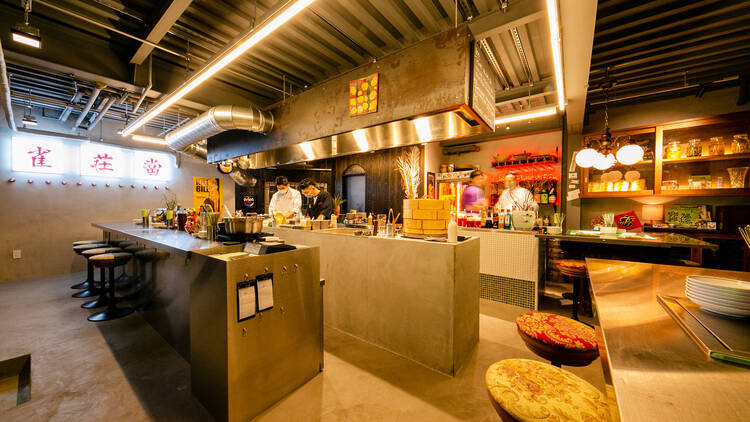
About Ranjatai
Ranjatai in Shibuya's Sarugakucho is among Tokyo's most technically serious yakitori addresses, earning a 4.9 Google rating and Pearl Recommended status for 2025 under chef Hideyuki Wadahama. Book here if you want to understand what yakitori looks like when treated as a discipline rather than a casual night out. Booking is rated Easy, making it one of the more accessible high-end yakitori counters in the city.
Ranjatai Is Not the Yakitori You Think You Know
If you arrive at Ranjatai in Sarugakucho expecting casual skewers and cold beer, you will need to recalibrate. This Shibuya address, under chef Hideyuki Wadahama, treats yakitori as a serious cooking discipline — one that rewards the same level of attention you would bring to an omakase dinner or a kaiseki meal. The common assumption that yakitori is Tokyo's most approachable genre is true in general; at Ranjatai, it is also its most technically demanding expression. That distinction matters when you are deciding whether to book here or spend the same evening elsewhere.
What Ranjatai Does in the Kitchen
Yakitori's technical demands are frequently underestimated. Controlling heat across multiple cuts simultaneously, reading doneness without thermometers, and sequencing skewers so each one arrives at peak texture — this is precision work. Wadahama's approach earns Ranjatai a 4.9 Google rating across 83 reviews, a score that sits at the upper edge of what any restaurant in this city sustains consistently, and a Pearl Recommended designation for 2025. That combination of guest sentiment and editorial recognition tells you something meaningful: the kitchen delivers at a level that converts skeptics. For food enthusiasts who seek genuine craft rather than spectacle, this is the right address.
The Shibuya location, specifically the Sarugakucho pocket near Daikanyama, puts Ranjatai in a quieter, more residential stretch than the main Shibuya scramble. The neighbourhood has its own culinary density , see our full Tokyo restaurants guide for context , but Ranjatai does not lean on location as a selling point. The cooking is the argument.
How It Compares to Other Yakitori in Tokyo
Within Tokyo's yakitori category, the reference points are well established. BIRD LAND in Ginza is the benchmark many visitors reach for first, with a longer track record and easier international name recognition. Yakitori Omino and Asagaya BIRD LAND serve different neighbourhoods with their own loyal followings. 124. KAGURAZAKA and Aramaki round out the serious end of the field. Against this set, Ranjatai's 4.9 rating is a differentiator. For food-focused travellers who want to understand what yakitori looks like at its most refined, Ranjatai is the more instructive booking. If you want the famous name with guaranteed walk-in potential, BIRD LAND is the safer choice. If you are building a broader Japan itinerary, the yakitori tradition extends well beyond Tokyo: Torisaki in Kyoto and Torisho Ishii in Osaka are both worth knowing.
Practical Details
Reservations: Booking is rated Easy , this is one of the more accessible serious yakitori counters in the city, and you do not need to plan months ahead as you would for a Michelin three-star. Still, advance booking is advisable, particularly on weekends. Address: 30-8 Sarugakucho, Shibuya, Tokyo 150-0033. Awards: Pearl Recommended Restaurant (2025). Google Rating: 4.9 from 83 reviews. Dress: No formal dress code is documented, but the seriousness of the cooking warrants smart-casual at minimum , avoid arriving as if you stumbled in from a konbini run. Budget: Specific pricing is not published, but yakitori at this level in Tokyo typically sits in the mid-to-upper range for the category; expect to spend meaningfully more than a casual yakitori-ya, and plan accordingly. Getting There: Sarugakucho is walkable from both Daikanyama and Nakameguro stations, and a short taxi or train ride from central Shibuya.
If You Are Travelling Beyond Tokyo
Ranjatai fits naturally into a Japan itinerary built around serious eating. If you are moving between cities, the roster of Pearl-recommended restaurants across the country gives you comparable depth: HAJIME in Osaka, Gion Sasaki in Kyoto, akordu in Nara, Goh in Fukuoka, 1000 in Yokohama, and 6 in Okinawa are all within the same conversation. For everything you need in Tokyo beyond restaurants, see our guides to hotels, bars, wineries, and experiences.
Frequently Asked Questions
- What should I wear to Ranjatai? Smart-casual is the right call. No formal dress code is on record, but the cooking here is taken seriously and the room will reflect that. Leave the tourist-trail casual behind; you will feel more comfortable and the meal will land differently when you treat it as a proper dining occasion.
- How far ahead should I book Ranjatai? Booking difficulty is rated Easy relative to Tokyo's competitive reservation landscape, so you are not chasing a months-out waiting list. That said, for weekend evenings, book at least a week or two in advance. Weekday seats are likely more available. Do not assume you can walk in.
- What should I order at Ranjatai? Specific menu details are not published, but at a yakitori restaurant operating at this level, the counter omakase format , where the chef sequences the skewers for you , is almost always the right choice. It gives Wadahama the control to show the full range of the kitchen. Trust the sequence rather than ordering à la carte unless you have a specific reason to do otherwise.
- Can I eat at the bar at Ranjatai? Counter seating is standard at serious yakitori restaurants in Tokyo, and it is generally the preferred position: you see the grill, the sequencing, and the craft directly. Whether Ranjatai operates a separate bar area is not documented, but if counter seats are available, take them.
- Can Ranjatai accommodate groups? Seat count is not published. Yakitori restaurants of this style tend to be compact , counter-heavy, with limited capacity. Groups larger than four should contact the restaurant directly before assuming availability. For large groups, Tokyo's more expansive yakitori-ya formats will be easier logistically.
- Does Ranjatai handle dietary restrictions? No dietary policy is documented. Yakitori is inherently meat-focused, and the kitchen's format may limit flexibility. If you have significant dietary restrictions, contact the restaurant before booking rather than raising it on arrival. A chicken-centric tasting progression does not adapt easily to major restrictions.
- What should a first-timer know about Ranjatai? Come expecting a structured, chef-led experience rather than a casual yakitori bar. The 4.9 Google rating and Pearl Recommended status signal a kitchen that performs consistently at a high level. Arrive on time, follow the chef's lead on ordering, and give the meal space to unfold. If this is your first serious yakitori experience in Tokyo, Ranjatai will set a useful benchmark for everything else you eat in the category.
Compare Ranjatai
Frequently Asked Questions
What should I wear to Ranjatai?
Neat, presentable clothing is the right call. Ranjatai is a serious counter restaurant under a Pearl Recommended chef — it is not a casual izakaya, so avoid athletic wear or beachwear. That said, Tokyo's yakitori culture does not demand formal attire; clean and put-together is enough.
How far ahead should I book Ranjatai?
Booking is rated Easy, which makes Ranjatai one of the more accessible serious yakitori counters in Tokyo. You do not need months of lead time, but booking at least one to two weeks out is sensible, especially if your travel dates are fixed. This is a meaningful advantage over Tokyo's hardest-to-book restaurants.
What should I order at Ranjatai?
Yakitori counters at this level typically follow a set or chef-led sequence — do not expect a large à la carte menu to pick through. Follow chef Hideyuki Wadahama's lead and trust the progression; the technical control across different cuts is precisely what earns Ranjatai its Pearl Recommended status.
Can I eat at the bar at Ranjatai?
The counter format is core to the Ranjatai experience — sitting at the bar puts you close to the grill and the chef, which is the point. Confirm your seating preference when booking, but counter seating here is an asset, not a compromise.
Can Ranjatai accommodate groups?
Yakitori counters are inherently better suited to pairs and small parties of three or four. Larger groups should contact Ranjatai directly to ask about capacity and configuration before assuming availability; counter restaurants in this category often have limited total seats.
Does Ranjatai handle dietary restrictions?
Yakitori is built around chicken and grilled proteins, so this is a poor fit for vegetarians or those who avoid poultry. For other dietary needs, check the venue's official channels before booking — at a counter of this calibre, advance notice gives the kitchen the best chance to accommodate you.
What should a first-timer know about Ranjatai?
Arrive knowing that this is not casual skewer-and-beer yakitori. Ranjatai in Sarugakucho, Shibuya, is a chef-led counter where the focus is precision and technique across multiple cuts — Pearl Recommended for 2025. The relatively easy booking process means you can plan this without the stress of Tokyo's most competitive reservations, so there is little reason not to lock it in.
Recognized By

More restaurants in Tokyo
- SézanneOccupying the seventh floor of the Four Seasons Hotel Tokyo at Marunouchi, Sézanne earned its first Michelin star within months of opening in July 2021 and now holds three. British chef Daniel Calvert applies French technique to Japanese ingredients, producing a prix-fixe format that Tabelog has recognised with Silver awards every year from 2023 through 2026. It ranked 4th in Asia's 50 Best Restaurants in 2025 and 15th globally in 2024.
- SazenkaSazenka is the address for Chinese cuisine in Tokyo at its most technically demanding. Chef Tomoya Kawada's wakon-kansai approach — Japanese seasonal ingredients applied through Chinese culinary technique — has earned consecutive Tabelog Gold Awards from 2019 to 2026, a #71 ranking on the World's 50 Best 2025, and 99 points from La Liste 2026. At JPY 50,000–59,999 per head, it is one of the hardest tables in the city to book and worth the effort.
- NarisawaNarisawa is Tokyo's most credentialled innovative tasting menu restaurant — two Michelin stars, Asia's 50 Best number 12, and a Tabelog Silver award — running at JPY 80,000–99,999 per head. Book for a milestone occasion, confirm vegetarian or vegan needs in advance, and reserve at least two to three months out. With 15 seats and reservation-only access, this is one of Tokyo's hardest tables to secure.
- FlorilègeFlorilège delivers two Michelin stars and an Asia's 50 Best #17 ranking at a dinner price of ¥22,000 — competitive for Tokyo at this level. Chef Hiroyasu Kawate's plant-forward tasting menus around an open-kitchen counter at Azabudai Hills make this the strongest choice for contemporary French dining in Tokyo if theatrical, produce-led cooking is what you want. Book well in advance; availability is near-impossible at short notice.
- DenDen holds two Michelin stars, a World's 50 Best top-25 Asia ranking, and a Tabelog Silver Award running back to 2017 — and it books out within hours of the two-month reservation window opening. Chef Zaiyu Hasegawa's daily-changing seasonal omakase runs JPY 30,000–39,999 at dinner in a relaxed house-restaurant setting near Gaiemmae. Book by phone only, noon–5 PM JST. Lunch is irregular; plan around dinner.
- MyojakuMyojaku is a 2-Michelin-star, 14-course French-leaning omakase in Nishiazabu holding a 4.47 Tabelog score, Tabelog Silver 2025–2026, and Asia's 50 Best #45 (2025). Chef Hidetoshi Nakamura's water-forward, no-dashi approach shifts meaningfully with the seasons — making timing your reservation as important as getting one. Budget JPY 50,000–59,999 per head plus 10% service charge; reservations only, near-impossible to secure.
Related editorial
- Best Fine Dining Restaurants in ParisFrom three-Michelin-star icons to the next generation of Parisian chefs pushing boundaries, these are the restaurants that define fine dining in the world's culinary capital.
- Best Luxury Hotels in RomeFrom rooftop terraces overlooking ancient ruins to Michelin-starred hotel dining, these are the luxury hotels that make Rome unforgettable.
- Best Cocktail Bars in KyotoFrom sleek lounges to hidden speakeasies, Kyoto's cocktail scene blends Japanese precision with global influence in ways you won't find anywhere else.
Save or rate Ranjatai on Pearl
Keep this venue in your Pearl passport, rate it after you visit, and track it alongside every other place you collect.