
Restaurant in Grottaferrata, Italy
Prato di Sopra
125ptsPeasant-Root Vegetable Cooking

About Prato di Sopra
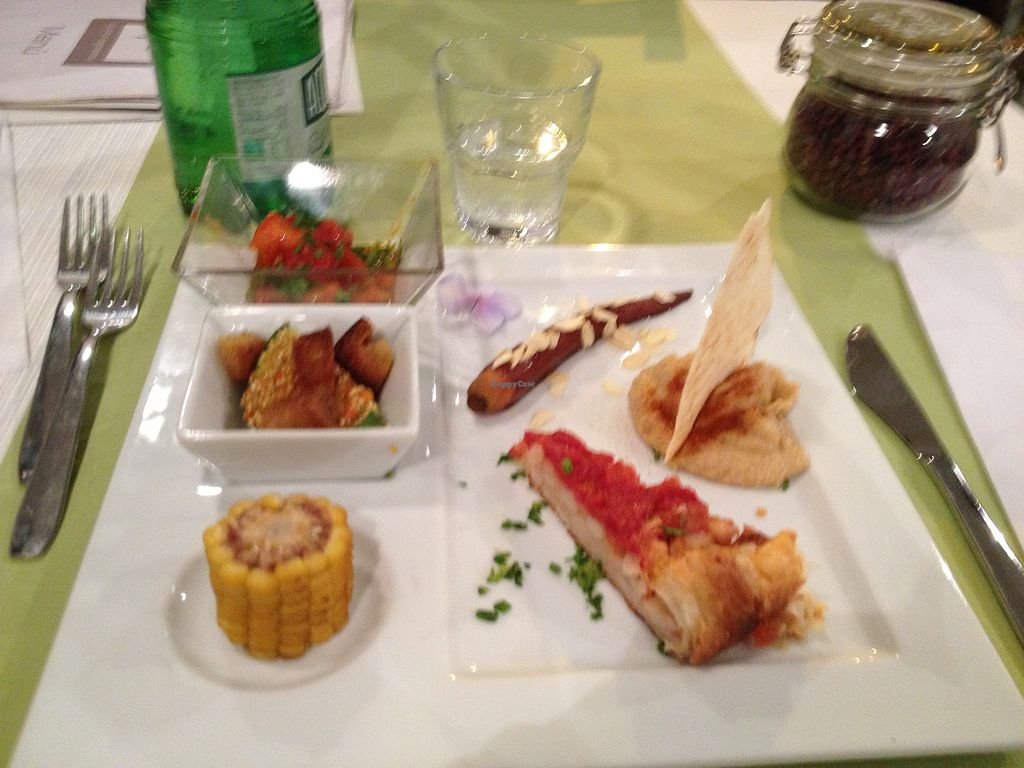
In the hill town of Grottaferrata, a short drive from Rome's southern edge, Prato di Sopra takes a position that few restaurants in the Castelli Romani dare: a menu built almost entirely around vegetables, drawing on both local peasant tradition and ingredients with roots as far as Southeast Asia and the Middle East. The cooking is balanced and precise, the room decorated in Italian country style with a care that signals intention rather than habit.
A Vegetable-Forward Kitchen in the Castelli Romani
The Castelli Romani towns southeast of Rome have long been associated with uncomplicated, meat-heavy trattorias and carafes of local white wine. Grottaferrata, leading known for its tenth-century Basilian abbey — the Abbazia di San Nilo, which still functions as an active monastery — sits comfortably within that tradition. Which makes Prato di Sopra, on Via Principe Amedeo a short walk from the abbey walls, a departure worth noting. While the broader Castelli Romani dining scene leans on offal, porchetta, and slow-braised lamb, this kitchen has built a program almost entirely around vegetables, running the full range from reconstructed peasant recipes to dishes with clear debts to Thai and Middle Eastern cooking. That range of reference is unusual for a town this size and this historically rooted.
The premise matters because sourcing drives everything in a menu this committed to plant-based ingredients. When the protein is the carrot rather than the lamb, the quality of the carrot becomes the argument. Restaurants that work at this register in rural Lazio tend to rely on the same short-chain relationships that historically fed the peasant table: direct from market gardens, seasonal without apology, adjusted week to week as availability shifts. The approach mirrors what Reale in Castel di Sangro and Atelier Moessmer Norbert Niederkofler in Brunico have each made central to their more formally recognised kitchens: a clear line between what grows nearby and what ends up on the plate, with the season determining the menu rather than the reverse.
What the Menu Is Actually Doing
Two dishes that appear in the venue's own description illustrate the kitchen's range and its logic. The orecchiette with pistachio, basil, and lemon pesto is a pasta format native to Puglia but long naturalised across southern and central Italy, here given a nut-and-herb sauce that draws on Sicilian pistachio tradition while the lemon keeps it from heaviness. The construction is classically Italian in architecture, with sourced ingredients doing the work rather than technique-for-its-own-sake.
The vignarola reconstruction tells a different story. Vignarola is a Roman spring dish of extraordinary pedigree, combining fava beans, peas, artichokes, and sometimes lettuce or guanciale, cooked down together in olive oil. It is the kind of recipe that Roman home cooks still make in April and May, available in the markets for only a few weeks. Prato di Sopra's version strips out the guanciale and adds a vegetable mayonnaise with mint, keeping the seasonal logic intact while updating the dish's profile for a fully plant-based context. The fact that it appears on the menu as a reference point rather than a novelty says something about the kitchen's relationship to regional culinary history: these are not arbitrary borrowings from the Roman repertoire but dishes that work from the same seasonal-sourcing premise the restaurant is built on. For context on how seriously the broader Italian fine-dining world has taken ingredient provenance and regional reconstruction, see Osteria Francescana in Modena and Piazza Duomo in Alba, both of which have made the negotiation between Italian culinary memory and contemporary technique a central part of their reputations.
The Thai and Middle Eastern references in parts of the menu represent a different register entirely, and they are worth taking seriously rather than dismissing as fusion eclecticism. Both cuisines are structurally more sophisticated in their handling of vegetables than most European traditions, using spice, acid, and fermentation to build depth without animal fat. A kitchen that knows how to use these references is accessing a wider toolkit for vegetarian cooking than Lazio's own tradition provides. The execution, by the account in the venue record, achieves balance , neither the Italian nor the global references overwhelm each other.
The Room and Its Context
Italian country decorative tradition in a restaurant can mean anything from dusty agricultural props to carefully curated rusticity that uses the same vocabulary with more control. At Prato di Sopra, the room is described as drawing on that country tradition with attention to detail and notes of elegance, which places it in the latter category , a space that signals the same considered intention as the menu rather than defaulting to generic trattoria shorthand. For visitors arriving from Rome, where the design ambition of restaurants tends to track closely with price tier, this is a useful calibration point: the room is not expensive-feeling, but it is not careless either.
The abbey's proximity deserves a moment. San Nilo was founded in 1004 and has operated continuously since, making it one of the older functioning religious institutions in Lazio. The town that grew around it has a different character than the wine-tourism towns of the Castelli Romani further west , quieter, less frequented by day-trippers, more oriented toward the local. Prato di Sopra sits in that quieter register, which affects the dining experience: this is not a restaurant calibrated for tourist throughput. The pace is likely unhurried, the clientele disproportionately local. For how Grottaferrata's broader restaurant scene is distributed, Taverna dello Spuntino represents the town's more traditional, Lazio-rooted end of the spectrum. Our full Grottaferrata restaurants guide maps the range.
Where This Fits Among Italian Vegetable-Forward Kitchens
Italy's most awarded restaurants , Dal Pescatore in Runate, Enoteca Pinchiorri in Florence, Le Calandre in Rubano, Enrico Bartolini in Milan , operate at price points and formality levels quite removed from a Castelli Romani trattoria. But the underlying question of how Italian culinary tradition handles a plant-based premise runs across those tiers. What Prato di Sopra demonstrates is that the answer does not require a destination-restaurant budget or a tasting-menu format. The vignarola and the pistachio orecchiette are both achievable within a trattoria price register, and both are more interesting than most of the vegetable dishes you will find in the agriturismo belt surrounding Rome. For comparison points outside Italy, Uliassi in Senigallia and Quattro Passi in Marina del Cantone show how Italian coastal kitchens have handled similar questions of sourcing and seasonal constraint at higher price tiers. At the far end of the international range, Le Bernardin in New York and Emeril's in New Orleans illustrate how ingredient sourcing has been framed as a formal commitment at very different points on the culinary spectrum.
Planning a Visit
Prato di Sopra is located at Via Principe Amedeo 7 in Grottaferrata, within easy walking distance of the abbey. Grottaferrata sits on the Via Anagnina and is reachable from Rome by regional train to Frascati followed by a short transfer, or directly by car in under 45 minutes from the city centre under normal traffic conditions. Given the restaurant's position in a relatively quiet hill town rather than a tourist-heavy venue, booking in advance is advisable, particularly on weekends when Romans make day and evening trips to the Castelli Romani. No phone or website details are currently confirmed in our records, so reservation approach should be confirmed locally. Visitors exploring the town's broader offer can refer to our Grottaferrata hotels guide, bars guide, wineries guide, and experiences guide for a fuller picture of what the area offers.
Frequently Asked Questions
What do regulars order at Prato di Sopra?
Order the orecchiette with pistachio, basil, and lemon pesto, and the vignarola reconstruction with vegetable mayonnaise and mint. Both dishes appear prominently in the venue's own description and represent the kitchen's two strongest modes: the pasta demonstrating competence with Italian regional formats, the vignarola showing how the kitchen handles Roman culinary heritage within a plant-based constraint. The menu includes fully vegan options alongside the broader vegetarian selection.
Is Prato di Sopra suitable for children?
A trattoria-format restaurant in a quiet Castelli Romani town, priced accessibly for the category, is a reasonable choice for families with children , the pace is unhurried and the setting informal enough to accommodate them without friction.
Is Prato di Sopra better for a quiet night or a lively one?
If the restaurant is in a town with a strong local following and a menu built around careful, seasonal vegetable cooking, expect a measured, unhurried atmosphere rather than a high-energy dining room. Grottaferrata is not a nightlife town; the abbey sets the cultural register. For a quiet dinner with attentive cooking, this is the right fit. For something livelier, the broader Castelli Romani circuit or central Rome will serve better.
Recognized By

Related editorial
- Best Fine Dining Restaurants in ParisFrom three-Michelin-star icons to the next generation of Parisian chefs pushing boundaries, these are the restaurants that define fine dining in the world's culinary capital.
- Best Luxury Hotels in RomeFrom rooftop terraces overlooking ancient ruins to Michelin-starred hotel dining, these are the luxury hotels that make Rome unforgettable.
- Best Cocktail Bars in KyotoFrom sleek lounges to hidden speakeasies, Kyoto's cocktail scene blends Japanese precision with global influence in ways you won't find anywhere else.
Save or rate Prato di Sopra on Pearl
Keep this venue in your Pearl passport, rate it after you visit, and track it alongside every other place you collect.