
Restaurant in Sint Niklaas, Belgium
Portobelfino
100ptsVegetable-Led Precision

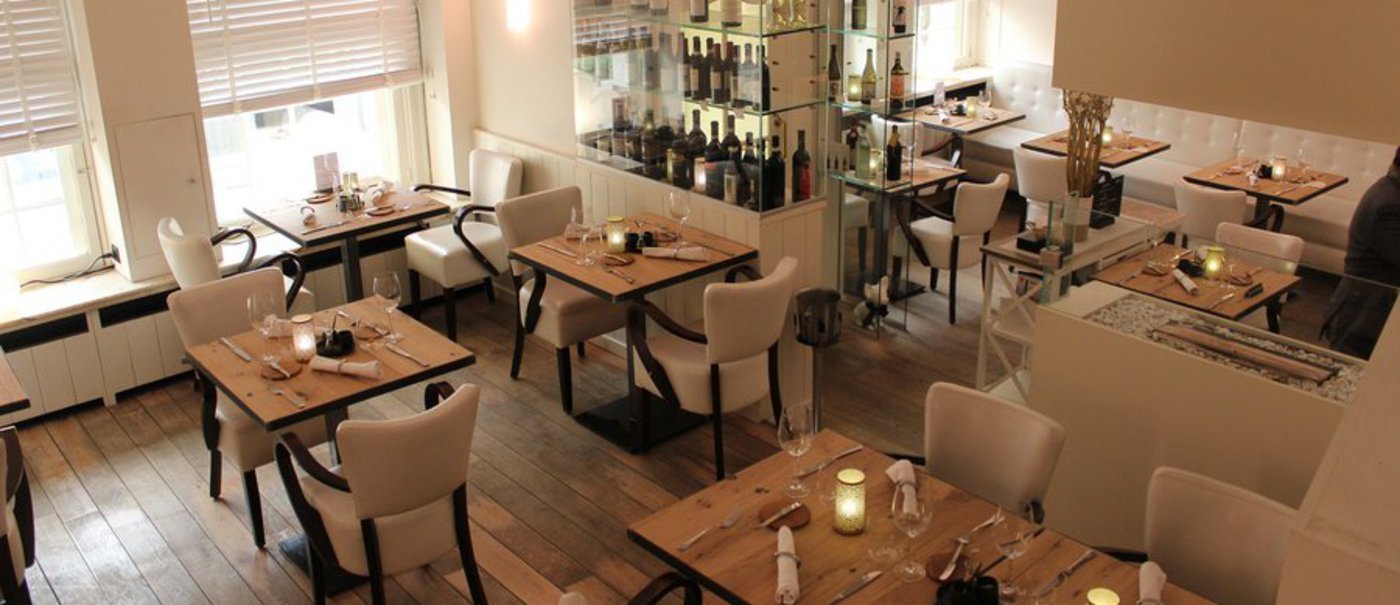
About Portobelfino
At Portobelfino on Houtbriel in Sint-Niklaas, plant-based ingredients occupy a serious position on the menu rather than a token one. Chef Ritchie De Clercq works with seasonal produce across multiple techniques, earning recognition from We're Smart for both product knowledge and sourcing discipline. The result is a table where vegetables are treated with the same rigour usually reserved for protein-led kitchens.
Where Vegetables Are the Argument, Not the Afterthought
Sint-Niklaas sits in the Waasland, a stretch of East Flanders where the flat agricultural hinterland has long supplied Antwerp's restaurant trade without getting much credit of its own. The city's dining room has grown quietly over the past decade, and Houtbriel 24 is a useful address on that map. Arriving at Portobelfino, the street is residential in scale, the kind of address that announces nothing from the outside. That restraint carries indoors: the room prioritises the plate over spectacle, which is consistent with a kitchen whose reputation rests on sourcing discipline rather than theatrical presentation.
Belgium's relationship with vegetables at the fine-dining level has evolved considerably. For most of the past generation, top-tier Belgian tables built their identity around classical protein technique, with plant matter filling supporting roles. A smaller cohort of kitchens has pushed against that structure, treating vegetables as primary material rather than garnish. Portobelfino sits inside that cohort, and it does so with enough consistency to have attracted the attention of We're Smart, the international vegetable-focused recognition programme whose criteria weigh product knowledge, seasonal accuracy, and technique range as heavily as execution on the plate.
What We're Smart Recognition Actually Signals
We're Smart, founded by Belgian chef Frank Fol, operates a green leaf rating system for restaurants that demonstrate serious commitment to vegetables and fruit. Inclusion is not a default outcome for any kitchen that adds a vegetable dish to a tasting menu. The programme's assessment framework looks at whether plant ingredients are genuinely central to the cooking, whether sourcing reflects seasonal and quality discipline, and whether the kitchen applies meaningful technique range rather than defaulting to one register. Portobelfino's recognition under this framework places it in a specific peer set within Belgium: restaurants where the vegetable section of a menu is where the kitchen's real intellectual investment shows up.
That peer set is smaller than the general fine-dining pool. Across Flanders, kitchens earning We're Smart attention include addresses with established national profiles. The fact that Portobelfino holds this recognition from a Sint-Niklaas address, rather than from Antwerp, Ghent, or Brussels, is itself a signal about the seriousness of the operation relative to its immediate geography. For comparison, the Sint-Niklaas dining scene includes Den Silveren Harynck, which works a classical cuisine register at the €€€ tier, and Kokovin, which operates a farm-to-table format also at €€€. Nova sits at the €€€€ level with a creative format. Portobelfino occupies a distinct lane among these: the vegetable-forward approach is not simply a styling choice but the organising logic of the menu.
Ingredient Sourcing as Editorial Statement
The We're Smart citation for Portobelfino specifically references high product knowledge and a consistent search for quality and correct season. Those two criteria are worth separating. Product knowledge in this context means understanding how an ingredient behaves across different states of maturity, how it responds to heat, acid, fat, and time, and which techniques extract what is specific to that ingredient rather than flattening it toward a generic result. Seasonal accuracy means the menu moves with what is actually at its leading, not what is available year-round through distribution networks that have disconnected ingredient quality from calendar position.
Chef Ritchie De Clercq's approach, as documented in the We're Smart recognition, applies multiple techniques to plant-based ingredients rather than anchoring the kitchen to a single method. This matters because it distinguishes a kitchen genuinely invested in vegetable cookery from one that has added a few roasted-root dishes and called the programme complete. In the broader European context, kitchens working at this level of vegetable technique tend to operate closer to the ingredient supply chain, either through direct producer relationships or through proximity to growing regions. The Waasland agricultural belt positions Portobelfino well for the latter.
For readers who track this kind of sourcing-led cooking across Belgium, the reference points extend beyond Sint-Niklaas. Willem Hiele in Oudenburg has built a national conversation around hyper-local ingredient provenance along the coast. Hof van Cleve in Kruishoutem operates at the three-Michelin-star level with rigorous supplier relationships. Boury in Roeselare and Zilte in Antwerp each anchor a high-technique approach to seasonal produce at different price and format points. Portobelfino is not competing directly with those addresses in terms of scale or national visibility, but the We're Smart framework places it in the same intellectual tradition: kitchens where sourcing is not a marketing position but a daily operational discipline.
Sint-Niklaas in Context
Sint-Niklaas is the largest city in the Waasland and the administrative centre of the region, but it does not carry the same dining gravity as Antwerp, forty minutes west by road. That distance cuts both ways. The city supports a dining scene that serves a local audience with genuine expectations rather than tourist traffic, which tends to keep kitchens honest about value and consistency. A table like Portobelfino functions within that local economy, building a reputation through repeat visits and word of mouth rather than through destination-dining marketing. For visitors combining it with broader East Flanders itineraries, the Castor in nearby Beveren extends the regional dining picture, and Bozar Restaurant in Brussels or Bartholomeus in Heist sit within reasonable range for a multi-stop itinerary across the country.
The full picture of what Sint-Niklaas offers across dining, accommodation, and leisure is covered in the EP Club guides: restaurants, hotels, bars, wineries, and experiences. For Belgium-wide context on kitchens pushing technique at different price points, Cuchara in Lommel and Emeril's in New Orleans illustrate how ingredient-driven cooking translates across very different geographies and culinary traditions. Le Bernardin in New York City remains the reference point internationally for what single-ingredient focus at the highest technical level looks like when sustained over decades.
Planning a Visit
Portobelfino is at Houtbriel 24, 9100 Sint-Niklaas. Phone and website details are not currently listed in our database; approaching the restaurant directly via in-person enquiry or through local reservation channels is the practical route. Given the kitchen's sourcing-led philosophy, visiting during peak seasonal windows for Belgian vegetables, roughly late spring through autumn, aligns the menu with when the underlying ingredient quality is at its calendar high. Specific pricing, seating arrangements, and booking requirements are leading confirmed at the time of planning, as they are not published in current records.
Frequently Asked Questions
- Is Portobelfino okay with children?
- Portobelfino is a considered fine-dining address in Sint-Niklaas, and without confirmed pricing data it is difficult to assess affordability relative to families, but the kitchen's focus on technically prepared seasonal produce makes it a better fit for adults with genuine interest in vegetable-forward cooking than for younger diners with limited patience for a multi-course format.
- What kind of setting is Portobelfino?
- If you are looking for a contemporary Belgian table that takes plant-based cooking seriously rather than treating it as a dietary accommodation, Portobelfino is the right address in Sint-Niklaas. The We're Smart recognition signals a kitchen working at a technical level above casual dining, and the East Flanders setting places it at the centre of a strong agricultural supply network. Pricing is not currently published, so confirming fit with your budget before booking is advisable.
- What's the must-try dish at Portobelfino?
- The We're Smart programme recognises Portobelfino specifically for its range of techniques applied to plant-based ingredients across multiple forms, so the vegetable-led courses are where the kitchen's recognised competence lies. Chef Ritchie De Clercq's seasonal sourcing approach means the strongest dishes shift with the calendar rather than anchoring to a fixed signature, and specific current dishes are leading confirmed when booking.
Recognized By

Related editorial
- Best Fine Dining Restaurants in ParisFrom three-Michelin-star icons to the next generation of Parisian chefs pushing boundaries, these are the restaurants that define fine dining in the world's culinary capital.
- Best Luxury Hotels in RomeFrom rooftop terraces overlooking ancient ruins to Michelin-starred hotel dining, these are the luxury hotels that make Rome unforgettable.
- Best Cocktail Bars in KyotoFrom sleek lounges to hidden speakeasies, Kyoto's cocktail scene blends Japanese precision with global influence in ways you won't find anywhere else.
Save or rate Portobelfino on Pearl
Keep this venue in your Pearl passport, rate it after you visit, and track it alongside every other place you collect.