
Restaurant in Miami, United States
Ogawa
450ptsBook early. The Michelin star changed everything.

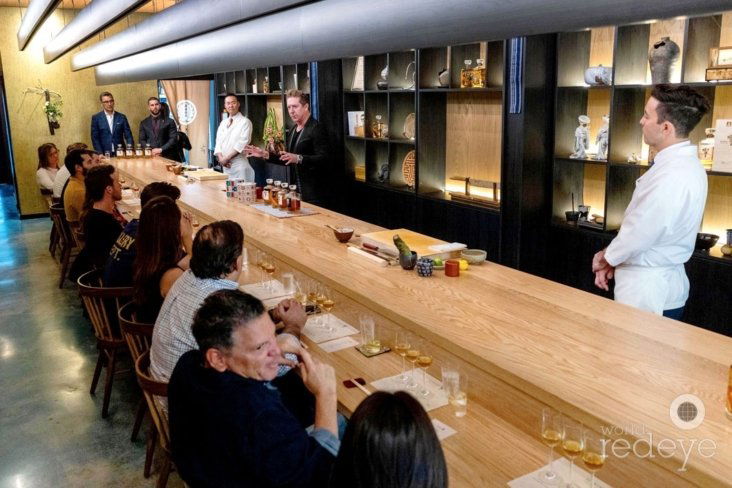
About Ogawa
Ogawa is Miami's most serious omakase counter, earning a Michelin star in 2025 and a 4.9 rating from 229 reviews. Chef Kazuo Harada's tasting menu runs a deliberate cooked-to-nigiri arc — langoustine tempura, caviar-topped squid, sansho-dusted anago — that sets it apart from standard sushi counters. Book four to six weeks ahead; this one is hard to get.
Should You Book Ogawa?
If you can get a reservation, yes — book it without hesitation. Ogawa earned its Michelin star in 2025, carries a 4.9 Google rating across 229 reviews, and delivers an omakase that competes with the serious Japanese counters in New York and Los Angeles. For Miami, this is the benchmark for nigiri-led tasting menus. The challenge is not deciding whether to go — it is getting in.
The Counter, the Room, and Where to Sit
Ogawa runs an omakase format, which means seating is counter-only and positions are assigned. The name itself references the Little River neighbourhood it occupies: ogawa translates to "small river," and the spatial experience reflects that , intimate, unhurried, and deliberately small-scale. If you are booking as a couple, request counter seats directly facing Chef Harada's station. The sightlines matter here: the cooked courses arrive plated with precision and watching the nigiri portion of service is part of the value. Larger groups should be aware that omakase counters of this type rarely accommodate parties above four comfortably, and the format is built around quiet engagement with the food rather than cross-table conversation. This is not the room for a loud celebration dinner , it is the room for focused eating.
What the Omakase Actually Delivers
The Michelin inspector's notes are specific enough to be useful: the meal opens with four appetiser bites , baby sea eels with soy-cured quail egg, bigfin reef squid in shiso-miso sauce, baby snow crab, and Japanese-style herring roe. These are not token amuse-bouches. They establish a cooked-dishes section that runs through lotus root, wild yam, and langoustine tempura served with a sauce made from roasted langoustine shells. The shift to nigiri that follows covers kisu, ebodai, squid topped with osetra caviar, and anago finished with sansho pepper. The sequencing is deliberate: Ogawa is not a pure sushi-ya where nigiri carries the entire meal. Chef Harada uses the cooked section to build context before the raw fish portion, and that structure distinguishes Ogawa from more conventional omakase counters in the city. Compare this to Hiyakawa Miami, which operates at a similar price tier , Hiyakawa leans more traditional in its omakase flow, while Ogawa's cooked-to-raw arc gives the meal a different rhythm and broader creative range.
Booking Ogawa: Expect Difficulty
Booking difficulty is rated Hard. Since the Michelin star was awarded in 2025, demand has outpaced availability at most sittings. Plan to book four to six weeks in advance at minimum. There is no walk-in culture at a counter of this format. If you have tried and failed, check for cancellations on weeknights , Friday and Saturday sittings clear fastest. The address is 7223 NW 2nd Ave, Miami, FL 33150, in the Little River district north of Wynwood, which means driving or rideshare is the practical option. No website or phone number is currently listed in Pearl's verified data, so booking confirmation should be sought through reservation platforms rather than direct contact.
Is Ogawa a Late Option?
Omakase counters of this type typically run two sittings: an early service around 6:00–6:30 PM and a later one around 8:30–9:00 PM. Ogawa's confirmed hours are not available in Pearl's verified data, but if a late sitting is offered, it functions as one of Miami's strongest late-evening fine dining options. The format is self-contained , the meal runs two to two-and-a-half hours regardless of start time , so the later sitting ends later than most tasting menu restaurants in the city. For diners who want serious food after 9 PM in Miami, omakase counters are structurally better suited than à la carte kitchens, which often close service earlier. Check availability for the second sitting specifically if evening flexibility matters to your plans. For contrast, Komodo and Makoto both accommodate later arrivals with à la carte service, but neither delivers the same depth of Japanese technique at the counter.
Practical Details
Reservations: Required; book four to six weeks ahead minimum , Hard difficulty rating post-Michelin. Budget: $$$$ , expect omakase pricing consistent with Michelin one-star counters nationally (typically $150–$250+ per head before beverage). Format: Omakase only; no à la carte option. Group size: Suited to parties of one to four; the counter format does not scale to larger groups. Dress: Not formally specified, but smart casual is appropriate for the price tier and setting. Location: Little River neighbourhood, 7223 NW 2nd Ave , rideshare recommended.
If You Have Been Once: What to Focus On Next
If your first visit followed the standard omakase progression, your second visit is the time to pay closer attention to the nigiri sequencing. The move from kisu to ebodai to caviar-topped squid and sansho-dusted anago is where Chef Harada's technical editing shows most clearly , each piece is calibrated against the last. Ask about the beverage pairing if you did not take it first time; omakase counters at this level typically offer sake pairings that track the cooked-to-raw structure of the meal. The appetiser section is also worth slowing down on: the langoustine shell sauce in particular is the kind of detail that reads as a throwaway line in a review but registers differently when you are at the counter. For reference, this level of cooked-course integration is closer to what you find at Myojaku in Tokyo or Azabu Kadowaki than at a typical American sushi counter. That is not hyperbole , it is the standard Ogawa is being measured against by the people who have eaten at both.
Pearl's Broader Miami Context
For Japanese food in Miami, Sushi Yasu Tanaka and ITAMAE occupy different positions , ITAMAE blends Peruvian and Japanese technique, Yasu Tanaka runs a more traditional nigiri-forward counter. Ogawa sits above both on the cooked-dish ambition scale. If you are planning a broader Miami dining trip, our full Miami restaurants guide covers the full range, and we also have guides for Miami hotels, Miami bars, Miami wineries, and Miami experiences. For a point of national comparison, Ogawa's cooked-to-nigiri structure is more ambitious than many starred omakase counters in larger markets , closer to the editorial standard of Smyth in Chicago or Lazy Bear in San Francisco in terms of how seriously the non-protein courses are treated.
How It Compares
Compare Ogawa
| Venue | Price | Booking Difficulty | Value |
|---|---|---|---|
| Ogawa | $$$$ | Hard | — |
| Cote Miami | $$$ | Unknown | — |
| Ariete | $$$$ | Unknown | — |
| Boia De | $$$ | Unknown | — |
| Stubborn Seed | $$$$ | Unknown | — |
| Los Fuegos by Francis Mallmann | $$$$ | Unknown | — |
Side-by-side comparison to help you decide where to book.
Frequently Asked Questions
Can I eat at the bar at Ogawa?
Ogawa runs a counter-only omakase format, so the counter is the dining room — there is no separate bar seating. Every seat faces the chef, and positions are assigned at booking. Walk-in bar dining is not a realistic option here, especially post-Michelin star when demand routinely outpaces availability.
What should a first-timer know about Ogawa?
Book four to six weeks ahead — Hard difficulty is the rating since the 2025 Michelin star landed. The meal runs omakase-only, so you surrender menu choice in exchange for a structured progression: cooked appetiser courses first, then nigiri. Chef Komatsu's style leans precise and ingredient-forward, not fusion-heavy, so arrive ready to focus rather than graze.
Is Ogawa worth the price?
At $$$$ with a 2025 Michelin star, Ogawa is priced in line with what the credential demands and the execution justifies. The Michelin notes specifically call out the nigiri sequencing and cooked courses as skilled and focused — that is not language inspectors use casually. If omakase is a format you value, the price holds up. If you want à la carte flexibility, this is the wrong room.
Does Ogawa handle dietary restrictions?
Omakase counters like Ogawa are built around a fixed chef-driven sequence, which limits how far the kitchen can deviate. Serious allergies or restrictions should be communicated at the time of booking, not on arrival. Strict dietary requirements — vegan, shellfish allergy, no raw fish — are likely to be poorly served by a format where seafood and raw preparation are central to the meal.
Is Ogawa good for a special occasion?
Yes, with the right expectations. A counter seat at a Michelin-starred omakase is a focused, intimate experience — not a celebratory dinner with bottles and noise. Parties of two work well; larger groups should note that counter seating limits how many people can experience the meal together. For a milestone that rewards attention over atmosphere, Ogawa delivers.
Is the tasting menu worth it at Ogawa?
The omakase is the only format Ogawa offers, and based on the Michelin inspector's detailed notes — covering specific dishes from baby sea eel with soy-cured quail egg through langoustine tempura to nigiri finished with sansho pepper — the progression is genuinely considered rather than formulaic. At $$$$ it is a meaningful spend, but the 2025 Michelin star and a 4.9 Google rating across 229 reviews suggest the kitchen is consistent, not just occasionally impressive.
What are alternatives to Ogawa in Miami?
ITAMAE is the closest Miami comparison if you want Japanese technique at a high level, but it blends Peruvian influence into the format — a different experience than Ogawa's straight omakase. Sushi Yasu Tanaka runs traditional nigiri-focused omakase and is worth comparing directly on price and booking difficulty. If you cannot get a table at Ogawa within your window, Yasu Tanaka is the most natural fallback in the same category.
Recognized By

Related editorial
- Best Fine Dining Restaurants in ParisFrom three-Michelin-star icons to the next generation of Parisian chefs pushing boundaries, these are the restaurants that define fine dining in the world's culinary capital.
- Best Luxury Hotels in RomeFrom rooftop terraces overlooking ancient ruins to Michelin-starred hotel dining, these are the luxury hotels that make Rome unforgettable.
- Best Cocktail Bars in KyotoFrom sleek lounges to hidden speakeasies, Kyoto's cocktail scene blends Japanese precision with global influence in ways you won't find anywhere else.
Save or rate Ogawa on Pearl
Keep this venue in your Pearl passport, rate it after you visit, and track it alongside every other place you collect.