
Restaurant in Tokyo, Japan
Nodaiwa Azabu Iikura Honten
590ptsEdo-era eel. Book early, dress neatly.


About Nodaiwa Azabu Iikura Honten
A Michelin-starred unagi specialist operating since the Edo period, Nodaiwa Azabu Iikura Honten delivers one of Tokyo's sharpest value propositions in the ¥¥ price tier. The shirayaki and kabayaki preparations, anchored by a generations-refined dipping sauce, are at their best between September and December. Book three to four weeks out via concierge; this is a hard reservation and not accessible by walk-in.
Tokyo's Most Serious Unagi Restaurant Is Not What You Expect
The common assumption is that Nodaiwa Azabu Iikura Honten is a heritage attraction, a place you visit once to say you have eaten eel in a centuries-old restaurant. That is the wrong frame. This is a Michelin-starred, Opinionated About Dining-ranked working kitchen that rewards repeat visits, seasonal awareness, and deliberate ordering. If you book expecting a museum experience, you will miss the point. If you book as a food-focused traveller who understands what fifth-generation craftsmanship actually means in a cooking context, this is one of the strongest value propositions in Minato-ku.
Nodaiwa has operated continuously since the Edo period, which means it predates most of the category conventions we associate with Japanese fine dining. Fifth-generation proprietor Kanejiro Kanemoto does not run the kitchen as a historical re-enactment. The dipping sauce, which forms the backbone of the signature kabayaki preparation, has been actively adjusted across generations as palates and soy sauce production have changed. That detail matters: this is a living recipe, not a frozen one. The most recent recalibration of the soy-to-mirin ratio is the kind of meaningful, low-drama evolution that defines serious craft cooking but rarely gets the attention it deserves from diners focused on novelty.
The Space: Intimate, Traditional, Deliberate
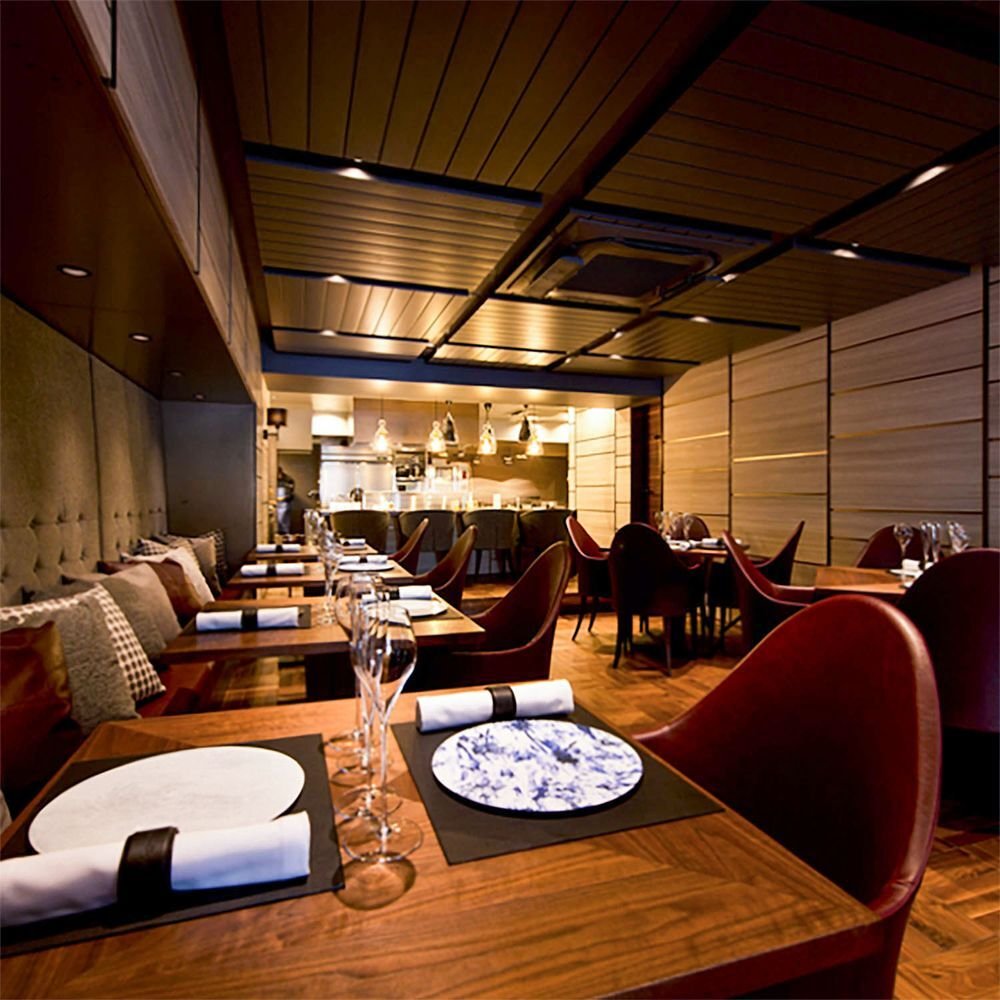
The Higashiazabu address puts Nodaiwa in the quieter residential pocket of Minato City, away from the noise of Roppongi and the tourist density of Ginza. The building itself signals intent before you order: wooden architecture, restrained proportions, the kind of spatial composition that communicates this is not a volume business. Seating is limited, rooms are divided in the traditional Japanese manner, and the atmosphere leans toward focused rather than convivial. This is not a room that rewards late arrivals or loud groups. It suits pairs and small groups of three or four who want to eat attentively. If you are planning a celebratory dinner with six or more, check whether a private room configuration is available at the time of booking, as the layout affects the experience considerably.
What to Order and When: The Seasonal Logic
Unagi has a seasonal rhythm that most Western diners do not account for. The traditional peak is Doyo no Ushi no Hi, the midsummer day of the ox in late July or early August, when eel consumption in Japan spikes and supply pressure increases. Serious unagi eaters, however, tend to favour autumn and winter visits. Eel that has fattened through the warm months has deeper fat content by September through December, which translates directly to richer flavour and more complexity in both shirayaki and kabayaki preparations.
Nodaiwa offers both preparations, and the choice is not arbitrary. The shirayaki, grilled without seasoning after steaming, is the format that shows the eel's own character most directly. It is the better order if you want to understand what makes the sourcing and the preparation technique distinctive at this specific kitchen. The kabayaki, dipped in the house sauce and broiled, is the more familiar reference point and the format where the evolved dipping sauce is most legible. If you are visiting for the first time, ordering both in the same meal is the sensible approach. If you are visiting in the cooler months, lean toward shirayaki, where the fattened eel speaks most clearly.
On the question of what the ¥¥ price tier actually means here: Nodaiwa is materially less expensive than a Michelin-starred kaiseki dinner or a top-tier omakase sushi counter. For a Michelin 1 Star with an Opinionated About Dining ranking that moved from #22 in 2024 to #30 in 2025 (the category competition sharpened, not the kitchen quality), the per-head cost represents genuine value in the Tokyo fine dining context. Budget roughly in the range of a mid-tier restaurant dinner, not an omakase splurge.
Booking and Logistics
Nodaiwa is a hard booking. Michelin recognition and a loyal regular base mean tables are not available on short notice. For foreign visitors, the absence of an English-language online reservation system is the practical obstacle. Book through your hotel concierge if you are staying at a Minato-ku or central Tokyo property; a Japanese-speaking intermediary makes the process significantly more reliable. Aim for a minimum of three to four weeks out, longer if you are targeting a weekend or any date adjacent to the midsummer eel season peak. Walk-in attempts are not realistic for a first visit.
Phone contact information is not publicly listed in standard directories, which reinforces the concierge-booking approach. If you are planning a Japan trip that includes serious eating, add Nodaiwa to the booking list at the same time you confirm your flights.
How It Compares
Among unagi specialists in Tokyo and across Japan, Nodaiwa anchors the formal end of the category. For other serious eel destinations, Hatsuogawa and Unagi Tokito are worth comparing in Tokyo, while Ike Edoyakiunagi Asahitei in Nara and Kanesho in Kyoto offer regional counterpoints if your itinerary extends beyond the capital. Within the Edo-style tradition, Ginza Yondaime Takahashiya and Watabe are legitimate Tokyo alternatives at a similar price tier. Mejiro Zorome is a lower-profile option worth knowing about if Nodaiwa is fully booked.
For broader Japan trip planning, Pearl covers serious dining in Osaka, Kyoto, Nara, Fukuoka, Yokohama, and Okinawa. Our full Tokyo restaurants guide, Tokyo hotels guide, Tokyo bars guide, Tokyo wineries guide, and Tokyo experiences guide cover the full picture for trip planning.
Pearl Ratings
- Google: 4.3 / 5 (1,508 reviews)
- Michelin: 1 Star (2024)
- Opinionated About Dining — Casual Japan: #30 (2025), #22 (2024)
- Opinionated About Dining — Leading Restaurants Japan: Highly Recommended (2023)
Practical Details
| Detail | Nodaiwa Azabu Iikura Honten | Typical Tokyo Unagi Peer | Michelin-Starred Kaiseki |
|---|---|---|---|
| Price tier | ¥¥ | ¥–¥¥ | ¥¥¥–¥¥¥¥ |
| Booking difficulty | Hard | Moderate | Very Hard |
| Lead time needed | 3–4 weeks minimum | 1–2 weeks | 4–8 weeks |
| English reservation support | Via concierge recommended | Variable | Often available online |
| Leading season to visit | Autumn–Winter (Sept–Dec) | Year-round | Year-round |
| Michelin recognition | 1 Star (2024) | Rare | 1–3 Stars |
Compare Nodaiwa Azabu Iikura Honten
| Venue | Awards | Price | Value |
|---|---|---|---|
| Nodaiwa Azabu Iikura Honten | This restaurant has been in business since the days of the Edo shogunate. Kanejiro Kanemoto is its fifth-generation proprietor, committed to a life of craftsmanship. Guided by the belief that eel is ‘a delicacy for the people,’ he has worked to share its appeal. With practiced craftsmanship, he patiently steams the eel to drip out excess fat then grills it without seasoning in the shirayaki style, or dips it in sauce and broils it to create beguilingly aromatic kabayaki. The dipping sauce has evolved over the generations, with the proportions of soy sauce and mirin shifting according to changing tastes. Kanemoto trains fresh cohorts of cooks, keeping the eel culture of Edo alive.; Opinionated About Dining Casual in Japan Ranked #30 (2025); Opinionated About Dining Casual in Japan Ranked #22 (2024); Michelin 1 Star (2024); Opinionated About Dining Top Restaurants in Japan Highly Recommended (2023) | ¥¥ | — |
| Harutaka | Michelin 3 Star, World's 50 Best | ¥¥¥¥ | — |
| L'Effervescence | Michelin 3 Star, World's 50 Best | ¥¥¥¥ | — |
| RyuGin | Michelin 3 Star, World's 50 Best | ¥¥¥¥ | — |
| HOMMAGE | Michelin 2 Star, World's 50 Best | ¥¥¥¥ | — |
| Crony | Michelin 2 Star, World's 50 Best | ¥¥¥¥ | — |
A quick look at how Nodaiwa Azabu Iikura Honten measures up.
Frequently Asked Questions
Is the tasting menu worth it at Nodaiwa Azabu Iikura Honten?
The format here is built around eel, not a multi-course tasting progression, so 'tasting menu' in the Western sense does not apply. What you get is a tightly focused meal centred on kabayaki or shirayaki preparation — the kitchen's craft is in the technique, not the variety. For anyone serious about unagi, that focus is the point. If you want broad Japanese fine-dining coverage, RyuGin or L'Effervescence is a better fit.
How far ahead should I book Nodaiwa Azabu Iikura Honten?
Book at least four to six weeks ahead. Michelin recognition since 2024 and a loyal local clientele mean tables move fast, and foreign visitors face the additional challenge of no English-language booking infrastructure on record. Use a hotel concierge or a third-party restaurant service to secure the reservation. Last-minute walk-in attempts are a poor strategy here.
What should I order at Nodaiwa Azabu Iikura Honten?
The kitchen's two core preparations are kabayaki — eel dipped in the house sauce and broiled — and shirayaki, grilled without seasoning to let the eel's natural flavour carry. The kabayaki is the more accessible entry point; the shirayaki rewards diners who want to assess the eel's quality directly. The dipping sauce has been refined across five generations, which makes the kabayaki a reasonable place to start.
What should I wear to Nodaiwa Azabu Iikura Honten?
The venue is a traditional, formal Japanese eel specialist in the residential Higashiazabu area of Minato City. Neat, presentable clothing is sensible — this is not a casual ramen counter. Formal business attire is not required, but arriving in shorts or gym wear would be misjudged given the restaurant's standing as a Michelin-starred, multi-century institution.
Is Nodaiwa Azabu Iikura Honten worth the price?
At a ¥¥ price point, Nodaiwa delivers Michelin-starred unagi at a cost well below what comparable precision cooking runs in Tokyo's fine-dining tier. Opinionated About Dining ranked it #22 in Japan for casual dining in 2024 and #30 in 2025, confirming the value position. If unagi is what you're after, this is one of the most credentialled places in the country to eat it without paying omakase prices.
Can I eat at the bar at Nodaiwa Azabu Iikura Honten?
Seating configuration details are not documented in available data for this venue. Given the traditional format and the restaurant's age — it has operated since the Edo period — a counter or bar option in the Western sense is unlikely to be the central feature. Confirm seating options when booking, ideally through a concierge who can communicate directly with the restaurant.
Does Nodaiwa Azabu Iikura Honten handle dietary restrictions?
The menu is built entirely around freshwater eel, which makes it a poor fit for pescatarians avoiding eel, vegetarians, or anyone with shellfish cross-contamination concerns from a Japanese kitchen. The kitchen's identity is inseparable from its single core ingredient, so there is little structural flexibility. Guests with serious dietary restrictions should contact the restaurant in advance — a hotel concierge can assist with communication.
Recognized By


More restaurants in Tokyo
- SézanneOccupying the seventh floor of the Four Seasons Hotel Tokyo at Marunouchi, Sézanne earned its first Michelin star within months of opening in July 2021 and now holds three. British chef Daniel Calvert applies French technique to Japanese ingredients, producing a prix-fixe format that Tabelog has recognised with Silver awards every year from 2023 through 2026. It ranked 4th in Asia's 50 Best Restaurants in 2025 and 15th globally in 2024.
- SazenkaSazenka is the address for Chinese cuisine in Tokyo at its most technically demanding. Chef Tomoya Kawada's wakon-kansai approach — Japanese seasonal ingredients applied through Chinese culinary technique — has earned consecutive Tabelog Gold Awards from 2019 to 2026, a #71 ranking on the World's 50 Best 2025, and 99 points from La Liste 2026. At JPY 50,000–59,999 per head, it is one of the hardest tables in the city to book and worth the effort.
- NarisawaNarisawa is Tokyo's most credentialled innovative tasting menu restaurant — two Michelin stars, Asia's 50 Best number 12, and a Tabelog Silver award — running at JPY 80,000–99,999 per head. Book for a milestone occasion, confirm vegetarian or vegan needs in advance, and reserve at least two to three months out. With 15 seats and reservation-only access, this is one of Tokyo's hardest tables to secure.
- FlorilègeFlorilège delivers two Michelin stars and an Asia's 50 Best #17 ranking at a dinner price of ¥22,000 — competitive for Tokyo at this level. Chef Hiroyasu Kawate's plant-forward tasting menus around an open-kitchen counter at Azabudai Hills make this the strongest choice for contemporary French dining in Tokyo if theatrical, produce-led cooking is what you want. Book well in advance; availability is near-impossible at short notice.
- DenDen holds two Michelin stars, a World's 50 Best top-25 Asia ranking, and a Tabelog Silver Award running back to 2017 — and it books out within hours of the two-month reservation window opening. Chef Zaiyu Hasegawa's daily-changing seasonal omakase runs JPY 30,000–39,999 at dinner in a relaxed house-restaurant setting near Gaiemmae. Book by phone only, noon–5 PM JST. Lunch is irregular; plan around dinner.
- MyojakuMyojaku is a 2-Michelin-star, 14-course French-leaning omakase in Nishiazabu holding a 4.47 Tabelog score, Tabelog Silver 2025–2026, and Asia's 50 Best #45 (2025). Chef Hidetoshi Nakamura's water-forward, no-dashi approach shifts meaningfully with the seasons — making timing your reservation as important as getting one. Budget JPY 50,000–59,999 per head plus 10% service charge; reservations only, near-impossible to secure.
Related editorial
- Best Fine Dining Restaurants in ParisFrom three-Michelin-star icons to the next generation of Parisian chefs pushing boundaries, these are the restaurants that define fine dining in the world's culinary capital.
- Best Luxury Hotels in RomeFrom rooftop terraces overlooking ancient ruins to Michelin-starred hotel dining, these are the luxury hotels that make Rome unforgettable.
- Best Cocktail Bars in KyotoFrom sleek lounges to hidden speakeasies, Kyoto's cocktail scene blends Japanese precision with global influence in ways you won't find anywhere else.
Save or rate Nodaiwa Azabu Iikura Honten on Pearl
Keep this venue in your Pearl passport, rate it after you visit, and track it alongside every other place you collect.