
Restaurant in Tokyo, Japan
NANAHIRO
230ptsSeasonal tasting, no starred price tag.

About NANAHIRO
NANAHIRO in Nishiazabu holds a Michelin Plate for 2025 and runs a seasonally driven, ingredient-led tasting progression that blends Japanese and Western technique at a ¥¥¥ price point. Booking is easy by Tokyo fine-dining standards, making it a practical choice for a special occasion dinner. Go in spring or autumn when the seasonal ingredient logic is at its sharpest.
NANAHIRO, Nishiazabu: The Verdict
At the ¥¥¥ price point, NANAHIRO in Tokyo's Nishiazabu neighbourhood delivers a composed, seasonally driven tasting progression that sits comfortably between Japanese kaiseki tradition and European cooking sensibility. If you want a fixed-menu format where the kitchen leads and the ingredients do the talking, this is a well-priced entry into that category. If you need à la carte flexibility or are new to omakase-style dining, look elsewhere first.
What You're Booking
NANAHIRO holds a Michelin Plate recognition for 2025, which signals consistent cooking quality without the price pressure of a starred house. The concept is described as 'Japanese cuisine plus': a progression that moves through seasonal vegetables, seafood, and meat before finishing with steamed rice and a sweet course. Only the ingredients are listed on the menu, not descriptions of the dish itself, which means you arrive knowing the raw material but not the form it will take. For a special occasion dinner where you want the experience to unfold without a script, that format works well. For diners who want to know exactly what they're eating before it arrives, it may cause friction.
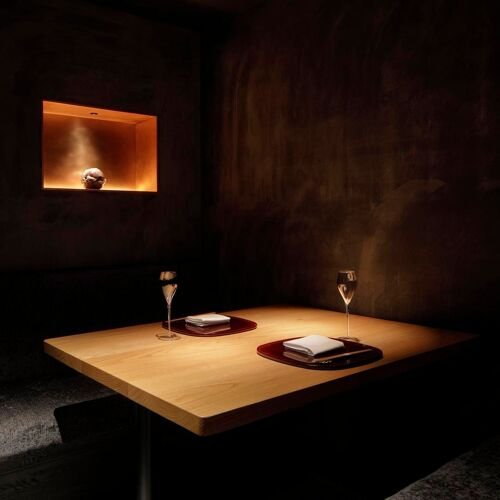
The atmosphere at NANAHIRO, located on the third floor of the ArtSilo building in Nishiazabu, reads as composed and quiet rather than theatrical. Nishiazabu itself is one of Tokyo's quieter dining corridors: less footfall than Roppongi, more residential than Ginza. Expect a room where the ambient sound level supports conversation across the table rather than competing with it. For a date dinner or a business meal where the food is the main event and the room stays out of the way, that pitch is right. Celebrations requiring a louder, more charged energy should look at venues with more room presence.
The Seasonal Angle
The progression structure at NANAHIRO is season-dependent by design. The menu lists ingredients rather than dishes, and those ingredients rotate with what the kitchen is working with at any given time. Practically, this means the menu you experience in early spring, when Japanese cooking leans into bamboo shoots, firefly squid, and young mountain vegetables, will be materially different from autumn, when matsutake mushroom and Pacific saury define the season. There is no fixed dish to recommend because the dish does not exist independently of the month.
For a diner deciding when to visit, that matters. Tokyo's restaurant year has two windows with the greatest seasonal ingredient intensity: March through May, when spring vegetables and early seafood overlap, and October through November, when autumn produce peaks. If you can align your booking with either of those windows, the ingredient-led format here will be at its strongest. A mid-summer or mid-winter visit will still deliver a competent progression, but the seasonal logic that underpins the menu concept will be less pronounced. Venues doing similar work across Japan include Gion Sasaki in Kyoto and HAJIME in Osaka, both of which apply comparably rigorous seasonal thinking at higher price points.
Booking Intelligence
NANAHIRO carries a Google rating of 3.6 from 347 reviews, which is low by Tokyo fine-dining standards where 4.2 to 4.5 is more typical for well-regarded tasting-menu restaurants. That score is worth factoring in: it suggests the experience divides opinion, possibly around the no-description menu format, the service register, or expectations mismatched to the concept. Read it as a signal to go in with a clear sense of what the format is, not as a reason to avoid the booking.
Booking difficulty is rated Easy. You do not need to set calendar reminders three months out. A one to two week lead time should be sufficient for most dates, though prime weekend slots in peak season (October through November, March through May) may require more notice. The venue does not appear to take bookings through a widely publicised online system, so direct contact is the likely path. Confirm current booking method before you plan.
For Tokyo contemporary dining at this price tier, NANAHIRO is meaningfully more accessible than starred alternatives. Compare that against venues like hakunei or nôl, where booking windows are tighter. If your travel dates are fixed and you need to lock in a special occasion dinner without a long run-up, that accessibility is a practical advantage.
Who Should Book
NANAHIRO is the right call for diners who want a tasting progression built around premium seasonal ingredients at a price point that does not require a budget conversation. It works for a date dinner or an occasion where the food format carries the evening. It is less suited to groups wanting a shared energy or diners who prefer a menu with description and context. If the ingredient-only listing sounds interesting rather than frustrating, that is the clearest signal you are the right audience.
For broader Tokyo dining context, see our full Tokyo restaurants guide. If you are planning around other Japanese cities, akordu in Nara and Goh in Fukuoka offer comparable contemporary-meets-Japanese approaches worth considering. Contemporary dining with a cross-cultural angle is also strong at Jungsik in Seoul and César in New York City if you are building a wider trip itinerary.
Tokyo hotel and bar planning sits alongside the dining decision: see our full Tokyo hotels guide and our full Tokyo bars guide for neighbourhood-matched options. Nishiazabu has strong bar coverage for a post-dinner drink without moving far. Other Tokyo contemporary venues worth cross-referencing include FUSOU, JULIA, and HYÈNE.
Practical Details
| Detail | NANAHIRO | nôl | hakunei |
|---|---|---|---|
| Price tier | ¥¥¥ | ¥¥¥¥ | ¥¥¥¥ |
| Cuisine type | Contemporary (Japanese+) | Contemporary | Contemporary |
| Michelin recognition | Plate 2025 | Check listing | Check listing |
| Booking difficulty | Easy | Moderate | Moderate |
| Format | Set progression, ingredient-led | Tasting menu | Tasting menu |
| Leading for | Date, special occasion | Special occasion | Serious sushi occasion |
| Google rating | 3.6 (347) | See listing | See listing |
FAQs: NANAHIRO
- What should I order at NANAHIRO? There is no ordering at NANAHIRO. The kitchen sets the progression and you follow it. The menu lists only the ingredients, not the dish form, so what you eat depends entirely on what is seasonal and what the chef decides to do with it. Go in without expectations about specific dishes and the format works in your favour. Try to steer it and the format will frustrate you.
- How far ahead should I book NANAHIRO? Booking difficulty is rated Easy, so one to two weeks out is realistic for most dates. That said, if your visit falls in the peak seasonal windows (October to November or March to May) and you have a specific date in mind, book earlier to avoid losing prime slots. NANAHIRO is more accessible than most Michelin-recognised tasting menus in Tokyo, so last-minute bookings are more viable here than at ¥¥¥¥ competitors like RyuGin or Harutaka.
- Is the tasting menu worth it at NANAHIRO? At ¥¥¥, yes, if the format suits you. You get Michelin Plate-level cooking with a seasonal ingredient progression that blends Japanese and Western technique, at a price tier below most comparable starred venues in the city. The Google score of 3.6 suggests the experience does not land for everyone, likely because the ingredient-only menu and fixed progression require buy-in. If you want that format, the value case is solid. If you want more control over what you eat, look at à la carte alternatives.
- Does NANAHIRO handle dietary restrictions? No specific dietary restriction policy is available in the public record. Given the set-progression format and ingredient-led menu, restrictions that require significant dish changes may be difficult to accommodate. Contact the restaurant directly before booking to confirm what is possible. Do not assume flexibility from a kitchen running a fixed seasonal sequence.
- What are alternatives to NANAHIRO in Tokyo? For a higher-budget contemporary tasting menu, L'Effervescence (French, ¥¥¥¥) and Crony (Innovative French, ¥¥¥¥) are both operating at a more described, structured format. For kaiseki with more ceremony, RyuGin (¥¥¥¥) is the reference point. For Tokyo contemporary dining at a similar price level with a different approach, FUSOU and nôl are worth comparing. See our full Tokyo restaurants guide for a broader view. Further afield, 1000 in Yokohama and 6 in Okinawa offer regional alternatives worth considering if you are travelling beyond Tokyo.
Compare NANAHIRO
| Venue | Awards | Price | Value |
|---|---|---|---|
| NANAHIRO | The concept is ‘Japanese cuisine plus’. The menu reflects the chef’s background in both Japanese and Western cooking, blending traditions to create something uniquely his own. Only the ingredients are listed, heightening anticipation and offering an element of surprise when the dishes arrive. The progression moves from seasonal vegetables, seafood and meat to freshly steamed rice and a delicate sweet course. More than Japanese, yet not quite Western, this is a place to savour premium ingredients with a refined touch.; Michelin Plate (2025) | ¥¥¥ | — |
| Harutaka | Michelin 3 Star, World's 50 Best | ¥¥¥¥ | — |
| L'Effervescence | Michelin 3 Star, World's 50 Best | ¥¥¥¥ | — |
| RyuGin | Michelin 3 Star, World's 50 Best | ¥¥¥¥ | — |
| HOMMAGE | Michelin 2 Star, World's 50 Best | ¥¥¥¥ | — |
| Crony | Michelin 2 Star, World's 50 Best | ¥¥¥¥ | — |
Comparing your options in Tokyo for this tier.
Frequently Asked Questions
What should I order at NANAHIRO?
There is no ordering at NANAHIRO — the kitchen sets the progression. The menu lists ingredients only, not dishes, so you will not know exactly what arrives until it does. The sequence moves from seasonal vegetables through seafood and meat to steamed rice and a sweet course. If you need full menu visibility before booking, this format is not your format.
How far ahead should I book NANAHIRO?
Booking lead times are not publicly documented for NANAHIRO, but Nishiazabu tasting-format restaurants at the ¥¥¥ price point with Michelin recognition consistently fill 2 to 4 weeks out in Tokyo. Book at least three weeks ahead to avoid disappointment, and further out if you are planning around a fixed travel date.
Is the tasting menu worth it at NANAHIRO?
At ¥¥¥ with a 2025 Michelin Plate, NANAHIRO sits at a price point where you get serious seasonal cooking without paying starred-house rates. The Google rating of 3.6 from 347 reviews is lower than the Tokyo fine-dining norm of 4.2 to 4.5, so temper expectations accordingly. It is worth it if the ingredient-led, Japanese-plus-Western format appeals; less so if you want a conventional kaiseki or a la carte experience.
Does NANAHIRO handle dietary restrictions?
Dietary restriction policies are not documented in available data for NANAHIRO. Given the set-progression format with no menu selection, communicating restrictions clearly at the time of booking is advisable. Restaurants operating this format in Tokyo typically require advance notice to accommodate anything beyond standard preferences.
What are alternatives to NANAHIRO in Tokyo?
For a higher-stakes tasting experience with full Michelin recognition, RyuGin or L'Effervescence are the obvious steps up, both at a meaningfully higher price point. Crony in Tokyo covers similar Japanese-meets-Western contemporary ground at a more accessible price. If you want pure Japanese fine dining without the cross-cultural angle, Harutaka is the better call.
Recognized By

More restaurants in Tokyo
- SézanneOccupying the seventh floor of the Four Seasons Hotel Tokyo at Marunouchi, Sézanne earned its first Michelin star within months of opening in July 2021 and now holds three. British chef Daniel Calvert applies French technique to Japanese ingredients, producing a prix-fixe format that Tabelog has recognised with Silver awards every year from 2023 through 2026. It ranked 4th in Asia's 50 Best Restaurants in 2025 and 15th globally in 2024.
- SazenkaSazenka is the address for Chinese cuisine in Tokyo at its most technically demanding. Chef Tomoya Kawada's wakon-kansai approach — Japanese seasonal ingredients applied through Chinese culinary technique — has earned consecutive Tabelog Gold Awards from 2019 to 2026, a #71 ranking on the World's 50 Best 2025, and 99 points from La Liste 2026. At JPY 50,000–59,999 per head, it is one of the hardest tables in the city to book and worth the effort.
- NarisawaNarisawa is Tokyo's most credentialled innovative tasting menu restaurant — two Michelin stars, Asia's 50 Best number 12, and a Tabelog Silver award — running at JPY 80,000–99,999 per head. Book for a milestone occasion, confirm vegetarian or vegan needs in advance, and reserve at least two to three months out. With 15 seats and reservation-only access, this is one of Tokyo's hardest tables to secure.
- FlorilègeFlorilège delivers two Michelin stars and an Asia's 50 Best #17 ranking at a dinner price of ¥22,000 — competitive for Tokyo at this level. Chef Hiroyasu Kawate's plant-forward tasting menus around an open-kitchen counter at Azabudai Hills make this the strongest choice for contemporary French dining in Tokyo if theatrical, produce-led cooking is what you want. Book well in advance; availability is near-impossible at short notice.
- DenDen holds two Michelin stars, a World's 50 Best top-25 Asia ranking, and a Tabelog Silver Award running back to 2017 — and it books out within hours of the two-month reservation window opening. Chef Zaiyu Hasegawa's daily-changing seasonal omakase runs JPY 30,000–39,999 at dinner in a relaxed house-restaurant setting near Gaiemmae. Book by phone only, noon–5 PM JST. Lunch is irregular; plan around dinner.
- MyojakuMyojaku is a 2-Michelin-star, 14-course French-leaning omakase in Nishiazabu holding a 4.47 Tabelog score, Tabelog Silver 2025–2026, and Asia's 50 Best #45 (2025). Chef Hidetoshi Nakamura's water-forward, no-dashi approach shifts meaningfully with the seasons — making timing your reservation as important as getting one. Budget JPY 50,000–59,999 per head plus 10% service charge; reservations only, near-impossible to secure.
Similar venues by awards
Related editorial
- Best Fine Dining Restaurants in ParisFrom three-Michelin-star icons to the next generation of Parisian chefs pushing boundaries, these are the restaurants that define fine dining in the world's culinary capital.
- Best Luxury Hotels in RomeFrom rooftop terraces overlooking ancient ruins to Michelin-starred hotel dining, these are the luxury hotels that make Rome unforgettable.
- Best Cocktail Bars in KyotoFrom sleek lounges to hidden speakeasies, Kyoto's cocktail scene blends Japanese precision with global influence in ways you won't find anywhere else.
Save or rate NANAHIRO on Pearl
Keep this venue in your Pearl passport, rate it after you visit, and track it alongside every other place you collect.