
Restaurant in Fuzhou, China
Mei Ya Bo Hua Sheng Tang
350ptsBib Gourmand peanut soup at street-food prices.

About Mei Ya Bo Hua Sheng Tang
Mei Ya Bo Hua Sheng Tang has held the Michelin Bib Gourmand in both 2024 and 2025, making it Fuzhou's most credentialed address for traditional peanut soup and taro paste. The recipe traces back to 1937 and the family still runs it. At the ¥ price tier in a small, tidy room in Taijiang District, this is an easy booking and a clear value case for anyone eating in the neighbourhood.
Should You Book Mei Ya Bo Hua Sheng Tang?
If you are choosing between Mei Ya Bo Hua Sheng Tang and Ye Jia Hua Sheng Tang for a bowl of Fuzhou-style peanut soup, the answer comes down to one thing: lineage with institutional recognition. Mei Ya Bo holds consecutive Michelin Bib Gourmand awards in 2024 and 2025, making it the more verifiable choice for first-time visitors who want a credential to anchor the experience. Both sit at the ¥ price tier, so cost is not a differentiator. What you get at Mei Ya Bo is a small, tidy room, a recipe that traces directly back to 1937, and the kind of Bib Gourmand recognition that Michelin reserves for places offering genuinely good food at accessible prices.
The Portrait
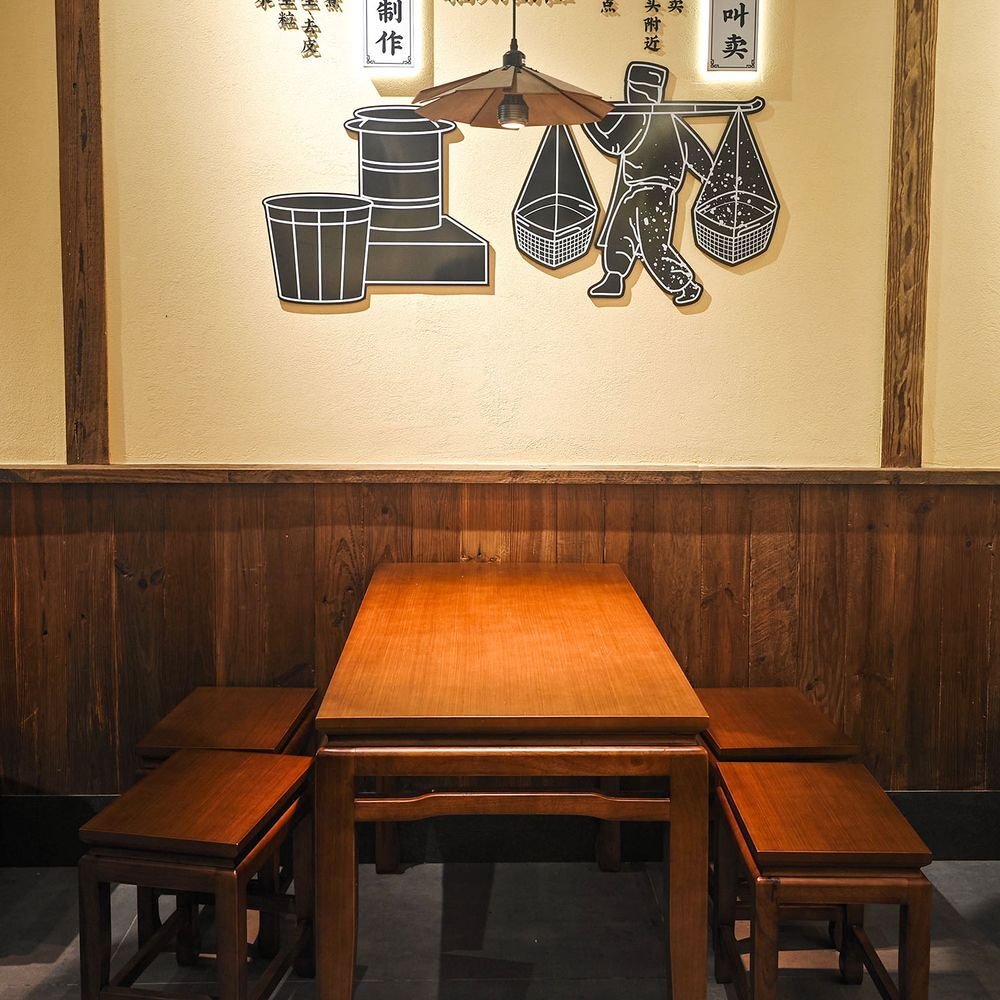
Mei Ya Bo Hua Sheng Tang has been operating in some form since 1937, when the founder, Grandpa Chen, sold sweet peanut soup from a bamboo shoulder pole on the streets of Fuzhou. That is an 88-year timeline, and the current iteration run by his grandchildren on Laoyaozhou Street in the Taijiang District is the direct continuation of that street-food lineage. For a special occasion meal, this context matters: you are not visiting a restaurant that mimics tradition, you are eating a product made by the family that originated it in this city.
The room itself is described as a neat, cosy space. At this price point and in this category, that is exactly what you want. Fuzhou's small-eats tradition was never meant to be experienced in formal dining rooms, so the spatial register here is appropriate: intimate enough to feel personal, tidy enough to feel considered. This is a good fit for a low-key celebration, a birthday lunch for someone who values authenticity over ceremony, or a first date where you want the food to do the talking without the overhead of a formal restaurant booking. It is not the venue for a business dinner requiring a private room or extended wine service; for that, look at Jiangnan Wok Rong or Wenru No.9 instead.
The core menu, as documented in the Michelin record, centres on peanut soup served hot or chilled, taro paste, and sesame-topped preparations. The peanut soup is the reason to come: the texture is described as melt-in-the-mouth, with a lingering nuttiness that holds whether you take it hot in cooler months or chilled during Fuzhou's humid summers. The taro paste is noted for its velvety consistency and depth of flavour, with toasted sesame as a finishing layer. These are simple preparations, but simplicity executed over eight decades of family continuity is the point.
On Takeout and Delivery
Editorial question here is whether the food travels well off-premise. For this category of sweet soup and paste-based small eats, the honest answer is that the experience degrades meaningfully in transit. Peanut soup served in the room, at the right temperature, in a bowl rather than a takeaway container, is a different product from the same soup after 20 minutes in a delivery bag. The chilled version has a better chance of surviving transit than the hot version, but neither replicates the sit-down experience. If you are deciding whether to order delivery versus visiting in person, visit in person. The ¥ price point makes the in-person trip an easy economic decision, and the cosy room format is a meaningful part of what Michelin recognised. Takeout is a fallback, not a recommendation.
For comparison, small-eats venues like A Cun Beef Soup in Tainan and A Hai Taiwanese Oden operate in a similar tradition of long-running family stalls that have been formalised into small rooms, and both are leading experienced in situ. The pattern holds: this type of food was designed to be eaten immediately, in place.
Booking and Practical Details
Booking difficulty at Mei Ya Bo Hua Sheng Tang is rated as easy. At the ¥ price tier with a small-eats format, this is unlikely to require advance reservation in the way a Michelin-starred tasting menu would. Walk-in should be viable for most visits, though peak weekend timings and the post-Bib Gourmand recognition bump may create short waits. No website or phone number is on record in our database, so planning ahead via local apps or a hotel concierge is advisable, particularly if you are visiting from outside Fuzhou. The address is 182 Laoyaozhou Street, Taijiang District, Fuzhou, Fujian 350004. For broader context on eating in the city, see our full Fuzhou restaurants guide.
For visitors arriving from elsewhere in China who want comparable small-eats experiences with similar institutional credibility, Xin Rong Ji in Beijing, 102 House in Shanghai, and Xin Rong Ji in Chengdu operate in the same space of recognised Chinese culinary tradition, though at higher price points. If Fuzhou is part of a broader regional itinerary, Ru Yuan in Hangzhou and Chef Tam's Seasons in Macau offer useful points of comparison for how different cities in the region treat heritage cuisine. For the wider Fuzhou picture, also check our Fuzhou hotels guide, bars guide, and experiences guide.
The bottom line: book when you are in Taijiang, go in person, order the peanut soup in the format that matches the season, and treat it as the main event of a casual meal rather than a component in a longer itinerary. At ¥ with double Bib Gourmand recognition, the value case is clear.
Quick reference: Michelin Bib Gourmand 2024 and 2025 | ¥ price tier | 182 Laoyaozhou St, Taijiang District, Fuzhou | Easy to book | Leading experienced in person.
Compare Mei Ya Bo Hua Sheng Tang
| Venue | Cuisine | Awards | Booking Difficulty | Value |
|---|---|---|---|---|
| Mei Ya Bo Hua Sheng Tang | Small eats | In 1937, Grandpa Chen started hawking his sweet peanut soup with a bamboo pole on his shoulder. Today, his grandchildren make the rustic sweets just as he did, but serve them in a neat cosy room at affordable prices. The peanut soup tastes divine, hot or chilled, as melt-in-the-mouth peanuts impart a lingering nuttiness. Taro paste is also well crafted and sports a velvety texture and robust flavour. The toasted sesame topping is to die for…; Michelin Bib Gourmand (2025); Michelin Bib Gourmand (2024) | Easy | — |
| Hou Jie Lao Hua (Yadao Lane) | Noodles | Unknown | — | |
| Jing Li | Fujian | Unknown | — | |
| Ye Jia Hua Sheng Tang | Small eats | Unknown | — | |
| Jiangnan Wok‧Rong | Huaiyang | Michelin 1 Star | Unknown | — |
| Yut Fei | Cantonese | Unknown | — |
Comparing your options in Fuzhou for this tier.
Frequently Asked Questions
Can Mei Ya Bo Hua Sheng Tang accommodate groups?
Yes, with caveats. The format is a small, cosy room rather than a large dining hall, so groups of more than four or five may find space tight during peak hours. At ¥ prices with no booking difficulty, arriving slightly off-peak is the practical solution. Groups looking for a full sit-down meal should look elsewhere — this is a small-eats stop, not a banquet venue.
Does Mei Ya Bo Hua Sheng Tang handle dietary restrictions?
The menu centres on sweet soups and pastes — peanut soup and taro paste are the documented mainstays — which are naturally free of meat. That said, specific allergen information is not available in Pearl's data for this venue, and the ¥ price tier means staff may have limited capacity to field detailed dietary queries. If nut allergies are a concern, peanut soup is the signature dish, so this may not be the right stop.
Is Mei Ya Bo Hua Sheng Tang good for solo dining?
Yes, and arguably better solo than with a group. The small-eats format — order a bowl of peanut soup, add taro paste, pay very little — suits a solo visit with no coordination required. Booking difficulty is rated easy, and the ¥ price point means there is no financial pressure to order more than you want. Two consecutive Michelin Bib Gourmand awards (2024, 2025) confirm the quality holds up without needing a group consensus to justify the trip.
What are alternatives to Mei Ya Bo Hua Sheng Tang in Fuzhou?
Ye Jia Hua Sheng Tang is the most direct comparison for peanut soup in Fuzhou — if you can only visit one, Pearl's body content frames the choice as coming down to a single deciding factor, so check that section before committing. Hou Jie Lao Hua (Yadao Lane) and Jing Li are also in Pearl's Fuzhou comparison set for small eats. For a broader format, Jiangnan Wok·Rong or Yut Fei may be relevant depending on what you are after.
Is the tasting menu worth it at Mei Ya Bo Hua Sheng Tang?
There is no tasting menu here — this is a small-eats shop in the ¥ price tier, not an omakase or set-menu format. The decision is simpler: order peanut soup, add taro paste, pay a few yuan, and leave. Two Michelin Bib Gourmand awards confirm the value-to-quality ratio is strong. The question is not whether a tasting menu is worth it, but whether you are in Fuzhou's Taijiang District — if you are, it is an easy stop.
Recognized By

Related editorial
- Best Fine Dining Restaurants in ParisFrom three-Michelin-star icons to the next generation of Parisian chefs pushing boundaries, these are the restaurants that define fine dining in the world's culinary capital.
- Best Luxury Hotels in RomeFrom rooftop terraces overlooking ancient ruins to Michelin-starred hotel dining, these are the luxury hotels that make Rome unforgettable.
- Best Cocktail Bars in KyotoFrom sleek lounges to hidden speakeasies, Kyoto's cocktail scene blends Japanese precision with global influence in ways you won't find anywhere else.
Save or rate Mei Ya Bo Hua Sheng Tang on Pearl
Keep this venue in your Pearl passport, rate it after you visit, and track it alongside every other place you collect.