
Restaurant in Tokyo, Japan
Le Jardin de Kamo
290ptsSouthern French focus, easier booking than starred rivals.

About Le Jardin de Kamo
Le Jardin de Kamo brings southern French cooking — Seto Inland Sea seafood paired with citrus, herbs, and Mediterranean spice — to Nihonbashi at the ¥¥¥ tier. With a Michelin Plate in both 2024 and 2025 and a 4.9 Google rating, it delivers a focused, well-executed meal for considerably less than Tokyo's starred French rooms. Easy to book; strong value for the category.
Verdict
Le Jardin de Kamo is not another Tokyo interpretation of French cooking filtered through Japanese technique. It is something more specific: a focused argument for the cuisine of southern France, anchored by Seto Inland Sea seafood and built on a philosophy inherited directly from the Montpellier kitchen of Le Jardin des Sens. The common misconception about French restaurants in Tokyo is that they trade in Parisian elegance or Japan-inflected fusion. Le Jardin de Kamo does neither. If you are looking for Provençal flavour logic — citrus, herbs, spice, sea — expressed with disciplined restraint, this is the room to book. At ¥¥¥, it sits a full price tier below [L'Effervescence](https://www.joinpearl.co/restaurants/leffervescence-tokyo-restaurant) and [Florilège](https://www.joinpearl.co/restaurants/florilege) without conceding much in seriousness. That gap matters when you are deciding where your yen goes.
The Experience
Chef Kamoda's cooking starts at the coast. The Seto Inland Sea is one of Japan's most productive and diverse fishing grounds, and using its catch as the canvas for Mediterranean flavour thinking is an editorial choice, not a gimmick. Pairing seafood with citrus fruits, herbs, and spices follows the discipline of his mentors at Le Jardin des Sens in Montpellier, where the name of this Tokyo restaurant was itself chosen. That lineage is worth understanding before you book: this is a restaurant shaped by a specific regional French tradition, not a broad European-Japanese negotiation.
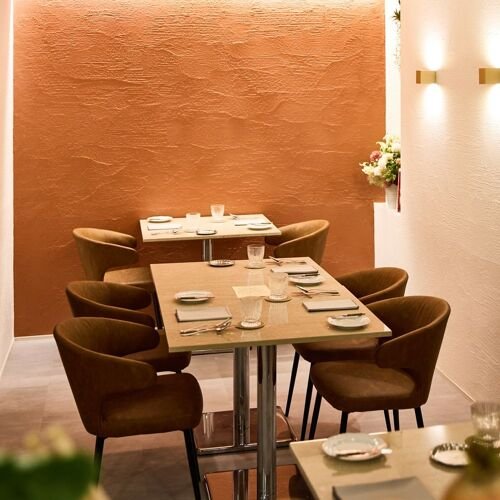
The interior reinforces the intent. Stucco walls and warm service create a room that reads as southern French without theatrical staging. It is not a dramatic dining environment, and that is a deliberate choice. The atmosphere is calm, the proportions are considered, and the service has the kind of unhurried warmth that formal French rooms in Tokyo can sometimes lack. For a returning visitor, the question is not whether the room holds up , it does , but whether you are working through the menu with more intention this time.
If you have been once, the thing to focus on next is how Kamoda handles seafood in the current season. The Mediterranean logic of matching catch with citrus and herb changes character depending on what the Seto Inland Sea is producing. Winter and early spring tend to bring shellfish and firm white fish; the pairing of those with brighter citrus notes is where this kitchen's philosophy becomes most legible. Coming back with that seasonal lens gives the meal a different register than a first visit focused on simply understanding the concept.
Pearl's editorial angle for this page flags the morning and weekend service as worth specific attention. Japanese French restaurants at the ¥¥¥ tier in Tokyo more often anchor their value in dinner tasting menus, so a lunch or brunch-adjacent format , where available , can represent a more accessible entry point into the same kitchen. Without confirmed hours in the database, the practical advice is to check directly, but the restaurant's Chuo City location in Nihonbashi makes it reachable for a midday visit if you are already in the central Tokyo corridor. Nihonbashi is a business-forward neighbourhood, which means lunch service is typically structured and efficient rather than leisurely , a consideration if you want the full experience of Kamoda's cooking rather than an edited version of it.
The Google rating of 4.9 from 25 reviews is high, though the sample is small. Michelin has awarded a Plate in both 2024 and 2025, which signals consistent quality without the reservation pressure of a starred room. A Michelin Plate is a mark of a good meal, not a landmark one , but at this price tier, that is exactly the right expectation to calibrate around. You are not paying for a once-in-a-decade occasion; you are paying for a well-executed, intellectually coherent dinner that punches above its price. For broader context on where this fits among Tokyo's French options, see [our full Tokyo restaurants guide](https://www.joinpearl.co/restaurants/tokyo).
If you are travelling from outside Tokyo, the French cooking traditions being expressed here have close parallels at [HAJIME in Osaka](https://www.joinpearl.co/restaurants/hajime-osaka-restaurant) and, in a different register, at [akordu in Nara](https://www.joinpearl.co/restaurants/akordu-nara-restaurant). For a regional French comparison closer to the source, [Hotel de Ville Crissier](https://www.joinpearl.co/restaurants/hotel-de-ville-crissier-crissier-restaurant) in Switzerland and [Les Amis](https://www.joinpearl.co/restaurants/les-amis-singapore-restaurant) in Singapore show how Mediterranean-influenced French cooking travels. Within Japan, [Gion Sasaki in Kyoto](https://www.joinpearl.co/restaurants/gion-sasaki-kyoto-restaurant) and [Goh in Fukuoka](https://www.joinpearl.co/restaurants/goh-fukuoka-restaurant) are worth knowing if you want contrast from the Japanese side of the equation. Tokyo's broader food scene beyond French is covered in [our full Tokyo experiences guide](https://www.joinpearl.co/experiences/tokyo), [our full Tokyo bars guide](https://www.joinpearl.co/bars/tokyo), and [our full Tokyo hotels guide](https://www.joinpearl.co/hotels/tokyo).
Ratings at a Glance
- Google: 4.9 / 5 (25 reviews)
- Michelin: Plate 2024, Plate 2025
- Price tier: ¥¥¥
Booking
Booking difficulty is rated Easy. With a Michelin Plate rather than stars, Le Jardin de Kamo does not face the same reservation pressure as Tokyo's starred French rooms. You can realistically secure a table with a few days' notice in most periods, though weekend evenings may require slightly more lead time given the Google rating's suggestion of a loyal returning clientele. No online booking link is confirmed in our data , check directly with the restaurant or use a third-party reservation platform covering Chuo City venues.
Quick reference: ¥¥¥ | Michelin Plate 2025 | Nihonbashi, Chuo City, Tokyo | Easy to book | French, southern France focus | Seto Inland Sea seafood
How It Compares
Also Worth Considering in Tokyo
- [L'Effervescence](https://www.joinpearl.co/restaurants/leffervescence-tokyo-restaurant) , French, ¥¥¥¥, higher price tier, broader recognition
- [Sézanne](https://www.joinpearl.co/restaurants/szanne-tokyo-restaurant) , French, strong critical standing
- [ESqUISSE](https://www.joinpearl.co/restaurants/esquisse-tokyo-restaurant) , French, established Tokyo reputation
- [Château Restaurant Joël Robuchon](https://www.joinpearl.co/restaurants/chteau-restaurant-jol-robuchon-tokyo-restaurant) , French, grand format
- [Florilège](https://www.joinpearl.co/restaurants/florilege) , French, ¥¥¥, closest price-tier peer
- [1000 in Yokohama](https://www.joinpearl.co/restaurants/1000-yokohama-restaurant) , for Greater Tokyo French options
- [6 in Okinawa](https://www.joinpearl.co/restaurants/6-okinawa-restaurant) , for island-sourced cooking contrast
Compare Le Jardin de Kamo
| Venue | Price | Booking Difficulty | Value |
|---|---|---|---|
| Le Jardin de Kamo | ¥¥¥ | Easy | — |
| Harutaka | ¥¥¥¥ | Unknown | — |
| RyuGin | ¥¥¥¥ | Unknown | — |
| L'Effervescence | ¥¥¥¥ | Unknown | — |
| HOMMAGE | ¥¥¥¥ | Unknown | — |
| Florilège | ¥¥¥ | Unknown | — |
What to weigh when choosing between Le Jardin de Kamo and alternatives.
Frequently Asked Questions
Can I eat at the bar at Le Jardin de Kamo?
The venue database does not confirm a bar or counter seating arrangement at Le Jardin de Kamo. Given its stucco-interior setting designed to evoke southern France, the format likely centres on table dining rather than a counter experience. check the venue's official channels via its Nihonbashihakozakicho address to confirm seating options before booking.
How far ahead should I book Le Jardin de Kamo?
With a Michelin Plate rather than one or two stars, Le Jardin de Kamo does not face the same reservation pressure as Tokyo's starred French rooms. A week or two of lead time is generally sufficient, though weekend dinner slots fill faster. Compare this to L'Effervescence or Florilège, where you will typically need four to six weeks.
Is Le Jardin de Kamo worth the price?
At the ¥¥¥ price point, it sits in the mid-to-upper range for Tokyo French dining without the premium that comes with Michelin stars. The cooking has a specific focus — southern French technique applied to Seto Inland Sea seafood — which gives it more identity than a generic French bistro at the same price. If that proposition interests you, the value case is solid.
Can Le Jardin de Kamo accommodate groups?
No group capacity information is confirmed in the venue data. The ¥¥¥ pricing and formal French format suggest it is better suited to smaller parties of two to four than large celebrations. For confirmed private dining or group bookings, reach out directly at the Nihonbashihakozakicho location.
Is the tasting menu worth it at Le Jardin de Kamo?
The menu structure is not confirmed in the venue data, so specific tasting menu details cannot be stated here. What is documented is that Chef Kamoda's cooking is built around a coherent philosophy — Seto Inland Sea seafood paired with citrus, herbs, and spices in the tradition of southern France — which is the kind of focused approach that tends to make tasting menus feel purposeful rather than padded. Confirm the current format when booking.
What should I wear to Le Jardin de Kamo?
No dress code is specified in the venue data. The stucco interior and warm service described in the restaurant's own framing suggest a relaxed but polished atmosphere rather than formal black-tie. Neat, put-together clothing in line with a ¥¥¥ French restaurant is a reasonable baseline.
What should I order at Le Jardin de Kamo?
Specific menu items are not available in the venue data and can change here. What is documented is that Chef Kamoda builds his cooking around Seto Inland Sea seafood refined with citrus fruits, herbs, and spices in the southern French tradition. Dishes based on that combination are the point of the restaurant, so they should anchor whatever you order. Check the venue's official channels for the latest details.
Recognized By

More restaurants in Tokyo
- SézanneOccupying the seventh floor of the Four Seasons Hotel Tokyo at Marunouchi, Sézanne earned its first Michelin star within months of opening in July 2021 and now holds three. British chef Daniel Calvert applies French technique to Japanese ingredients, producing a prix-fixe format that Tabelog has recognised with Silver awards every year from 2023 through 2026. It ranked 4th in Asia's 50 Best Restaurants in 2025 and 15th globally in 2024.
- SazenkaSazenka is the address for Chinese cuisine in Tokyo at its most technically demanding. Chef Tomoya Kawada's wakon-kansai approach — Japanese seasonal ingredients applied through Chinese culinary technique — has earned consecutive Tabelog Gold Awards from 2019 to 2026, a #71 ranking on the World's 50 Best 2025, and 99 points from La Liste 2026. At JPY 50,000–59,999 per head, it is one of the hardest tables in the city to book and worth the effort.
- NarisawaNarisawa is Tokyo's most credentialled innovative tasting menu restaurant — two Michelin stars, Asia's 50 Best number 12, and a Tabelog Silver award — running at JPY 80,000–99,999 per head. Book for a milestone occasion, confirm vegetarian or vegan needs in advance, and reserve at least two to three months out. With 15 seats and reservation-only access, this is one of Tokyo's hardest tables to secure.
- FlorilègeFlorilège delivers two Michelin stars and an Asia's 50 Best #17 ranking at a dinner price of ¥22,000 — competitive for Tokyo at this level. Chef Hiroyasu Kawate's plant-forward tasting menus around an open-kitchen counter at Azabudai Hills make this the strongest choice for contemporary French dining in Tokyo if theatrical, produce-led cooking is what you want. Book well in advance; availability is near-impossible at short notice.
- DenDen holds two Michelin stars, a World's 50 Best top-25 Asia ranking, and a Tabelog Silver Award running back to 2017 — and it books out within hours of the two-month reservation window opening. Chef Zaiyu Hasegawa's daily-changing seasonal omakase runs JPY 30,000–39,999 at dinner in a relaxed house-restaurant setting near Gaiemmae. Book by phone only, noon–5 PM JST. Lunch is irregular; plan around dinner.
- MyojakuMyojaku is a 2-Michelin-star, 14-course French-leaning omakase in Nishiazabu holding a 4.47 Tabelog score, Tabelog Silver 2025–2026, and Asia's 50 Best #45 (2025). Chef Hidetoshi Nakamura's water-forward, no-dashi approach shifts meaningfully with the seasons — making timing your reservation as important as getting one. Budget JPY 50,000–59,999 per head plus 10% service charge; reservations only, near-impossible to secure.
Similar venues by awards
Related editorial
- Best Fine Dining Restaurants in ParisFrom three-Michelin-star icons to the next generation of Parisian chefs pushing boundaries, these are the restaurants that define fine dining in the world's culinary capital.
- Best Luxury Hotels in RomeFrom rooftop terraces overlooking ancient ruins to Michelin-starred hotel dining, these are the luxury hotels that make Rome unforgettable.
- Best Cocktail Bars in KyotoFrom sleek lounges to hidden speakeasies, Kyoto's cocktail scene blends Japanese precision with global influence in ways you won't find anywhere else.
Save or rate Le Jardin de Kamo on Pearl
Keep this venue in your Pearl passport, rate it after you visit, and track it alongside every other place you collect.