
Restaurant in Tokyo, Japan
LA BONNE TABLE
535ptsSerious French-kaiseki cooking, easy to book.


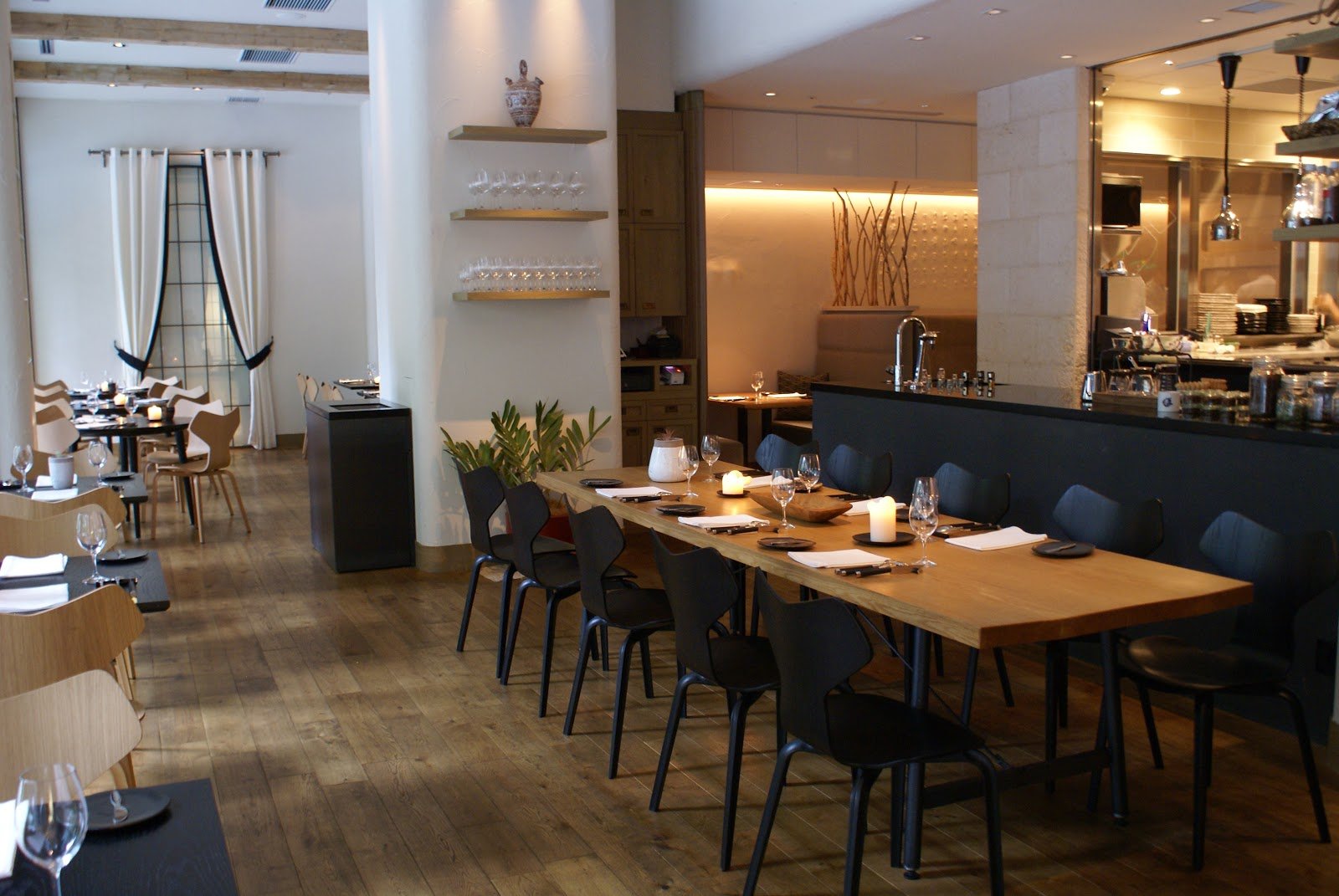
About LA BONNE TABLE
LA BONNE TABLE is a 40-seat French-kaiseki restaurant in Nihonbashi holding a Michelin Plate and a 4.4 Google rating. Chef Shinji Ishida builds menus around direct-from-farm produce, with French technique applied through a kaiseki lens. At ¥¥¥, it is one of the most accessible Michelin-recognised options in central Tokyo and easy to book with a week or two of lead time.
Verdict
LA BONNE TABLE is easy to book, reasonably priced for what it delivers, and technically serious about its farm-to-table French-kaiseki cooking. If you want a Michelin-recognised meal in central Tokyo without the four-figure bill or the three-month wait, this Nihonbashi address is a practical first choice. It will not replace a night at L'Effervescence or Sézanne, but it does not try to. What it offers instead is precise, ingredient-led cooking at a price point that makes repeat visits realistic.
The Kitchen
Chef Shinji Ishida runs a 40-seat casual French restaurant in Coredo Muromachi 2, the shopping and dining complex in Nihonbashi, Chuo City. The cooking is anchored in the farm-to-table method: producers ship ingredients directly to the kitchen, and the menu is built around what arrives. The approach is not decorative — it shapes how dishes are constructed. A signature amuse-bouche called 'Farm to Table' delivers a colour-varied assortment of vegetables prepared across multiple techniques, signalling from the first bite that the kitchen treats produce as the point, not the backdrop. Roast shiitake is prepared whole, stem included, which is the kind of detail that separates a kitchen with conviction from one that follows a formula.
The cuisine type is listed as Kaiseki and French, which in practice means French technique applied with kaiseki discipline around ingredients and seasonality. This is not fusion for novelty's sake. The discipline is real: strong producer relationships, direct sourcing, and a kitchen that builds dishes around ingredient quality rather than around a fixed concept. For Tokyo, where this hybrid register can tip toward gimmick, La Bonne Table keeps it grounded.
The restaurant holds a Michelin Plate for both 2024 and 2025, and appears in the Opinionated About Dining rankings for Japan in both 2023 (Recommended) and 2025 (ranked #565). A Google rating of 4.4 across 477 reviews is consistent and strong for a casual neighbourhood format. These are not splashy credentials, but they are reliable ones: the Michelin Plate signals food worth eating, and the OAD ranking places it within a credible peer group of serious Japanese restaurants.
Who Should Book
This is a good choice for a special occasion dinner that does not require theatre. The 40-seat room is casual rather than formal, which makes it workable for a business meal where you want the food to do the talking without the ceremony. For a date night or a celebration where the guest cares about ingredient provenance and technical cooking, the format works well. If you need a grand room with a long wine list and tableside service, look at L'Effervescence or RyuGin instead.
Solo diners are accommodated in a 40-seat room with no counter format confirmed in the data, so check seating options when booking. The ¥¥¥ price range sits below the ¥¥¥¥ tier of most Michelin-starred Tokyo peers, making this one of the more accessible options in its category. Comparable farm-to-table French cooking at a similar price point in Tokyo is not easy to find, which strengthens the value case.
Practical Details
La Bonne Table is open Tuesday through Sunday. Lunch runs 11:30 am to 3 pm; dinner 6 to 11 pm. Monday is closed. The restaurant is located inside Coredo Muromachi 2 in Nihonbashi, with strong access via Tokyo Metro. Booking difficulty is rated Easy, which means you do not need to plan months ahead — a week or two is likely sufficient for most slots, though Friday and Saturday evenings will fill faster. No phone or website is listed in the database; check reservation platforms such as TableCheck or Google for live availability.
For other strong cooking in central Tokyo, La Bombance offers another French-Japanese hybrid worth considering. Further afield in Japan, HAJIME in Osaka, Gion Sasaki in Kyoto, and akordu in Nara represent strong regional alternatives for the same trip. For the full picture on dining in the city, see our full Tokyo restaurants guide, and for where to stay, our full Tokyo hotels guide.
Comparison: How La Bonne Table Sits in the Tokyo Market
| Venue | Cuisine | Price | Booking Difficulty | Leading For |
|---|---|---|---|---|
| LA BONNE TABLE | French-Kaiseki | ¥¥¥ | Easy | Ingredient-led casual dining, repeat visits |
| L'Effervescence | French | ¥¥¥¥ | Hard | Full-service occasion dining |
| RyuGin | Kaiseki | ¥¥¥¥ | Hard | Traditional kaiseki, serious occasion |
| Harutaka | Sushi | ¥¥¥¥ | Very Hard | Omakase sushi at the highest level |
| Sézanne | French | ¥¥¥¥ | Hard | Modern French, hotel dining |
Further Reading
Compare LA BONNE TABLE
| Venue | Cuisine | Price | Booking Difficulty |
|---|---|---|---|
| LA BONNE TABLE | Kaiseki, French | ¥¥¥ | Easy |
| Harutaka | Sushi | ¥¥¥¥ | Unknown |
| L'Effervescence | French | ¥¥¥¥ | Unknown |
| RyuGin | Kaiseki, Japanese | ¥¥¥¥ | Unknown |
| HOMMAGE | Innovtive French, French | ¥¥¥¥ | Unknown |
| Crony | Innovative, French | ¥¥¥¥ | Unknown |
A quick look at how LA BONNE TABLE measures up.
Frequently Asked Questions
What are alternatives to LA BONNE TABLE in Tokyo?
For a French tasting menu with more critical weight, L'Effervescence is the step up. HOMMAGE offers French-Japanese cooking at a similar price bracket but with a more intimate format. If you want kaiseki proper rather than French-kaiseki, RyuGin is the benchmark at a significantly higher price point. Crony is worth considering if you want something more casual and contemporary.
Is LA BONNE TABLE good for solo dining?
It works for solo dining. The 40-seat room is casual rather than counter-focused, so solo guests are not conspicuous. Lunch is the more comfortable solo slot — the atmosphere is relaxed and the format is less couples-oriented than dinner. The Michelin Plate recognition and OAD listing signal enough kitchen seriousness to make a solo meal feel worthwhile.
Is lunch or dinner better at LA BONNE TABLE?
Lunch is the better value entry point. Both lunch and dinner run the same hours window Tuesday through Sunday (11:30 am–3 pm and 6–11 pm), but lunch at a ¥¥¥ French-kaiseki restaurant in Tokyo typically offers the same kitchen at a lower price. Dinner suits a longer, more occasion-oriented meal. For a first visit, start with lunch.
Does LA BONNE TABLE handle dietary restrictions?
The farm-to-table sourcing model — direct from producers for vegetables and seafood — means the kitchen is ingredient-led, which usually allows flexibility. However, specific dietary accommodation policies are not documented in available venue data, so check the venue's official channels before booking if restrictions are a concern.
Is LA BONNE TABLE good for a special occasion?
Yes, with the right expectation set. The 40-seat room is casual rather than formal, which suits occasions where you want quality cooking without a stiff atmosphere. It holds a Michelin Plate (2025) and an OAD Top Restaurants in Japan ranking, so there is enough credibility to make it feel intentional. It is not a theatrical dinner — if spectacle is the point, look at RyuGin instead.
How far ahead should I book LA BONNE TABLE?
Book at least one to two weeks ahead for dinner, especially Thursday through Saturday. Lunch mid-week is more accessible. The restaurant is inside Coredo Muromachi 2, a busy Nihonbashi shopping complex, which increases walk-in foot traffic competition. The 40-seat capacity means prime slots go faster than the casual tone might suggest.
Is LA BONNE TABLE worth the price?
At ¥¥¥, it delivers. The Michelin Plate (2025) and OAD recognition confirm the kitchen earns its price, and the farm-to-table sourcing model — direct producer relationships, ingredient-led cooking — justifies the positioning. It is not the cheapest French option in Tokyo, but for French-kaiseki at this level in a no-dress-code room, the price-to-quality ratio is fair.
Hours
- Monday
- Closed
- Tuesday
- 11:30 am–3 pm, 6–11 pm
- Wednesday
- 11:30 am–3 pm, 6–11 pm
- Thursday
- 11:30 am–3 pm, 6–11 pm
- Friday
- 11:30 am–3 pm, 6–11 pm
- Saturday
- 11:30 am–3 pm, 6–11 pm
- Sunday
- 11:30 am–3 pm, 6–11 pm
Recognized By


More restaurants in Tokyo
- SézanneOccupying the seventh floor of the Four Seasons Hotel Tokyo at Marunouchi, Sézanne earned its first Michelin star within months of opening in July 2021 and now holds three. British chef Daniel Calvert applies French technique to Japanese ingredients, producing a prix-fixe format that Tabelog has recognised with Silver awards every year from 2023 through 2026. It ranked 4th in Asia's 50 Best Restaurants in 2025 and 15th globally in 2024.
- SazenkaSazenka is the address for Chinese cuisine in Tokyo at its most technically demanding. Chef Tomoya Kawada's wakon-kansai approach — Japanese seasonal ingredients applied through Chinese culinary technique — has earned consecutive Tabelog Gold Awards from 2019 to 2026, a #71 ranking on the World's 50 Best 2025, and 99 points from La Liste 2026. At JPY 50,000–59,999 per head, it is one of the hardest tables in the city to book and worth the effort.
- NarisawaNarisawa is Tokyo's most credentialled innovative tasting menu restaurant — two Michelin stars, Asia's 50 Best number 12, and a Tabelog Silver award — running at JPY 80,000–99,999 per head. Book for a milestone occasion, confirm vegetarian or vegan needs in advance, and reserve at least two to three months out. With 15 seats and reservation-only access, this is one of Tokyo's hardest tables to secure.
- FlorilègeFlorilège delivers two Michelin stars and an Asia's 50 Best #17 ranking at a dinner price of ¥22,000 — competitive for Tokyo at this level. Chef Hiroyasu Kawate's plant-forward tasting menus around an open-kitchen counter at Azabudai Hills make this the strongest choice for contemporary French dining in Tokyo if theatrical, produce-led cooking is what you want. Book well in advance; availability is near-impossible at short notice.
- DenDen holds two Michelin stars, a World's 50 Best top-25 Asia ranking, and a Tabelog Silver Award running back to 2017 — and it books out within hours of the two-month reservation window opening. Chef Zaiyu Hasegawa's daily-changing seasonal omakase runs JPY 30,000–39,999 at dinner in a relaxed house-restaurant setting near Gaiemmae. Book by phone only, noon–5 PM JST. Lunch is irregular; plan around dinner.
- MyojakuMyojaku is a 2-Michelin-star, 14-course French-leaning omakase in Nishiazabu holding a 4.47 Tabelog score, Tabelog Silver 2025–2026, and Asia's 50 Best #45 (2025). Chef Hidetoshi Nakamura's water-forward, no-dashi approach shifts meaningfully with the seasons — making timing your reservation as important as getting one. Budget JPY 50,000–59,999 per head plus 10% service charge; reservations only, near-impossible to secure.
Similar venues by awards
Related editorial
- Best Fine Dining Restaurants in ParisFrom three-Michelin-star icons to the next generation of Parisian chefs pushing boundaries, these are the restaurants that define fine dining in the world's culinary capital.
- Best Luxury Hotels in RomeFrom rooftop terraces overlooking ancient ruins to Michelin-starred hotel dining, these are the luxury hotels that make Rome unforgettable.
- Best Cocktail Bars in KyotoFrom sleek lounges to hidden speakeasies, Kyoto's cocktail scene blends Japanese precision with global influence in ways you won't find anywhere else.
Save or rate LA BONNE TABLE on Pearl
Keep this venue in your Pearl passport, rate it after you visit, and track it alongside every other place you collect.