
Restaurant in Kyoto, Japan
Kappo Takohachi
290ptsOld-school Kyoto kappo, affordable and low-fuss.

About Kappo Takohachi
A Michelin Plate-recognised neighbourhood kappo on Takoyakushi Street, Kappo Takohachi delivers market-driven Japanese cooking at ¥¥ — one of Kyoto's most accessible serious dining options. The counter format is intimate and chef-directed: arrive ready to ask for the day's recommendation. Easy to book, genuinely worth the effort.
Should You Book Kappo Takohachi?
Getting a seat at Kappo Takohachi is refreshingly direct by Kyoto standards — no months-long waitlist, no convoluted reservation system. The difficulty is not booking it; it is knowing it exists. This is a small, family-run counter on Takoyakushi Street in Nakagyo Ward, Michelin Plate-recognised in both 2024 and 2025, and priced at ¥¥ — which puts it among the most accessible serious Japanese dining in the city. If you are visiting Kyoto for the first time and want to understand what a neighbourhood kappo feels like without spending ¥¥¥¥ on kaiseki, this is where to go.
The Space
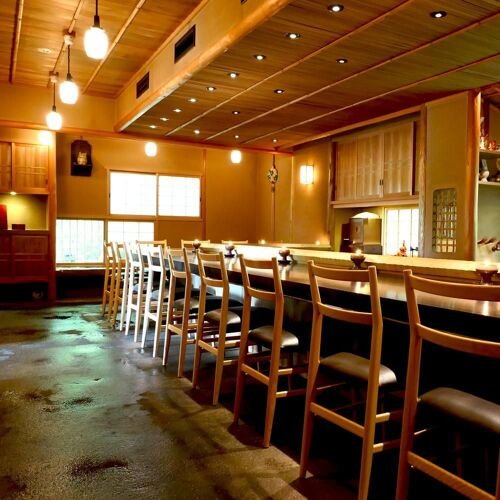
The room is the experience here. Takoyakushi Street retains the atmosphere of mid-20th-century Kyoto , low signage, worn shopfronts, a pace that has not caught up with the tourist corridors a few streets over. Inside Kappo Takohachi, the counter seating places you shoulder to shoulder with other diners in a format that collapses the usual distance between strangers. There is nothing theatrical about the layout , no open flames for effect, no dramatic plating counter , just a compact workspace where the owner couple operate in close coordination. For a first-timer, this spatial intimacy can feel unfamiliar, but that is precisely the point. Kappo, as a format, is built around proximity: you watch the cooking, you read the room, you settle into a rhythm that is collective rather than private. The Michelin description frames it as a space that enfolds everyone present in a harmonious mood, which is accurate without being sentimental.
How the Meal Works
Kappo Takohachi does not hand you a written tasting menu with course titles and ingredient poetry. The menu lists only the raw ingredients , sea bream, squid, octopus , and the progression of the meal is built around what has arrived that day. This is not a gap in information; it is the format. The arc of the meal depends on the season, the market, and the judgment of the chef. For a first-timer, the correct move is to ask the chef for the day's recommendation when you arrive. That interaction is not an afterthought; it is the intended starting point. The Michelin recognition specifically flags this as part of the experience, not a workaround for a sparse menu.
What this means practically: you are not choosing between set courses at different price points, as you would at a kaiseki counter like Kikunoi Roan or Isshisoden Nakamura. You are handing a degree of control to the kitchen, which is standard kappo practice but worth knowing before you arrive. The cooking draws on a generational recipe , the current chef inherited the approach from his father , so the nostalgia embedded in the dishes is not a marketing angle; it is the actual culinary lineage of the place.
Who This Is For
Kappo Takohachi makes most sense for a first-time visitor to Kyoto who wants genuine local dining at a price that does not require a special-occasion budget. The ¥¥ price range makes it accessible on a night when you are not committing to a full kaiseki experience. It also works for travellers who have already done the formal kaiseki circuit , Kyokaiseki Kichisen, Kodaiji Jugyuan, or Gion Matayoshi , and want to contrast the formal with something more immediate and neighbourhood-scaled.
It is not the right choice if you need a menu in advance to manage dietary restrictions, if you require English-language communication with the kitchen, or if you are planning a large group dinner. The counter format rewards flexibility and a willingness to go with the flow of the meal as it develops. Solo diners and pairs will get the most from this setting.
Ratings and Recognition
Kappo Takohachi holds a Google rating of 4.3 from 74 reviews , a reliable signal for a small venue with a modest footprint on international dining platforms. The Michelin Plate in 2024 and 2025 confirms consistent cooking quality without the pressure of star expectations. Pearl rates Michelin Plate recognition as Tier A trust signal: it reflects quality standards assessed by named inspectors, not aggregated crowd opinion. For a ¥¥ neighbourhood kappo, two consecutive Plate recognitions represent meaningful external validation.
Booking and Logistics
Booking is easy relative to most Kyoto venues of this calibre. No phone number or website is listed in available records, which suggests walk-in or direct reservation through local channels may be the primary access route. If you are staying at a Kyoto hotel with a concierge, ask them to assist with the booking , this is standard practice for smaller neighbourhood restaurants that do not maintain English-language online reservation systems. Arrive on time; the counter format means late arrivals disrupt the rhythm of the room for everyone present. For broader planning, see our full Kyoto restaurants guide, our full Kyoto hotels guide, and our full Kyoto bars guide.
Beyond Kyoto
If you are building a Japan itinerary around serious Japanese cooking, Kappo Takohachi sits well alongside other regional destinations: HAJIME in Osaka for a completely different register of precision cooking, Harutaka in Tokyo for comparable counter intimacy at a higher price point, akordu in Nara for a cross-cultural contrast nearby, or Goh in Fukuoka if your route takes you south. For Tokyo-based Japanese counter dining, Myojaku and Azabu Kadowaki offer useful points of comparison. Further afield, 1000 in Yokohama and 6 in Okinawa round out Japan's range of intimate dining formats worth considering alongside a Kyoto visit. You can also explore our full Kyoto wineries guide and our full Kyoto experiences guide for planning context.
FAQ
- What should I order at Kappo Takohachi? Ask the chef for the day's recommendation , that is the intended approach. The menu lists only ingredients (sea bream, squid, octopus), and the meal progresses based on what is fresh that day. Trying to pre-select defeats the format.
- Is the tasting menu worth it at Kappo Takohachi? At ¥¥ pricing, yes. The kappo format means you are getting chef-directed seasonal cooking without the formal kaiseki price structure. The Michelin Plate in 2024 and 2025 confirms the kitchen earns its recognition. If you want a written multi-course tasting menu with English descriptions, a kaiseki venue will suit you better.
- Is Kappo Takohachi worth the price? For what it is , a Michelin-recognised neighbourhood kappo at ¥¥ , yes. You are getting consistent quality cooking in an intimate setting at a fraction of what kaiseki counters in the same city charge. The value case is clear.
- How far ahead should I book Kappo Takohachi? Booking difficulty is rated easy. That said, the counter is small, so a few days' notice is sensible, particularly during peak Kyoto travel periods (cherry blossom in late March to April, autumn foliage in November). Use your hotel concierge if no English-language booking channel is available.
- Is Kappo Takohachi good for a special occasion? Yes, for the right kind of occasion. The intimacy and the generational cooking story make it meaningful for a low-key celebration or a dinner that feels personal rather than performative. For a milestone that calls for a grander room and a formal multi-course structure, consider Kyokaiseki Kichisen instead.
- Does Kappo Takohachi handle dietary restrictions? This is harder to confirm. The menu is market-driven and ingredient-led, which limits substitution flexibility. No phone or website is listed in available records, so communicating restrictions in advance requires going through a concierge or finding a direct contact locally. If you have significant dietary restrictions, a kaiseki restaurant with a written menu and advance communication options is safer.
- What are alternatives to Kappo Takohachi in Kyoto? For comparable counter intimacy at a higher price point, Gion Matayoshi or Kikunoi Roan are worth considering. If you want the full kaiseki format with formal course structure, Isshisoden Nakamura and Kodaiji Jugyuan operate at ¥¥¥¥. For a broader overview of where Kappo Takohachi sits in the city's dining options, see our full Kyoto restaurants guide.
Compare Kappo Takohachi
| Venue | Price | Value |
|---|---|---|
| Kappo Takohachi | ¥¥ | — |
| Gion Sasaki | ¥¥¥¥ | — |
| cenci | ¥¥¥ | — |
| Ifuki | ¥¥¥¥ | — |
| Kyokaiseki Kichisen | ¥¥¥¥ | — |
| SEN | ¥¥¥¥ | — |
Comparing your options in Kyoto for this tier.
Frequently Asked Questions
Does Kappo Takohachi handle dietary restrictions?
The menu is built around daily seafood — sea bream, squid, and octopus are the documented staples — so this is a poor fit for anyone avoiding fish or shellfish. The ingredient-only menu format and the owner-couple running a small counter leave little room for substitutions. If you have specific dietary needs, this format is likely not the right call.
What should I order at Kappo Takohachi?
At Kappo Takohachi, the menu lists only raw ingredients — sea bream, squid, octopus — with no dish titles or course structure. Ask the chef what to have that day; that interaction is part of how the meal works, and daily recommendations reflect what is freshest. Treating the chef as your guide, rather than scanning a fixed menu, is the right approach here.
What are alternatives to Kappo Takohachi in Kyoto?
For a step up in formality and prestige, Gion Sasaki and Kyokaiseki Kichisen are the Kyoto benchmarks, but both require serious forward planning and a much higher spend. Ifuki and cenci offer mid-range alternatives with more structured menus if you want courses spelled out. SEN is worth considering if you want something with a cleaner booking path and a more contemporary format.
How far ahead should I book Kappo Takohachi?
No website or phone number is listed in available records, which points toward walk-in or direct contact as the booking route. The counter is small and fills quickly, so showing up early or confirming locally on the day is the safest approach. This is one of the easier Kyoto venues to access compared to peers like Gion Sasaki, but do not assume a seat is guaranteed.
Is Kappo Takohachi good for a special occasion?
It depends on what the occasion calls for. The intimate, shoulder-to-shoulder counter and the mid-20th-century atmosphere of Takoyakushi Street make it genuinely memorable, and the Michelin Plate recognition (2024 and 2025) confirms the cooking is serious. But the format is casual and communal, not ceremony-appropriate — for a milestone dinner with private space or a formal atmosphere, Kyokaiseki Kichisen is the more suitable choice.
Is Kappo Takohachi worth the price?
At ¥¥, Kappo Takohachi is one of the more accessible ways to eat Michelin-recognised kappo cooking in Kyoto. The value case is strong if you want a genuine local experience without the expense of kaiseki. If you are comparing on price alone, it delivers well above what the spend suggests — Kyoto peers at a similar price point rarely carry the same cooking pedigree or neighbourhood character.
Is the tasting menu worth it at Kappo Takohachi?
There is no formal tasting menu here. The menu lists only ingredients, and the meal takes shape through conversation with the chef — a format closer to traditional kappo than a set omakase progression. If you need a structured, course-by-course experience, this is not the right fit. If you are comfortable with an open, chef-led format, the ¥¥ price point makes it a low-risk way to try one of Kyoto's more distinctive dining styles.
Recognized By

More restaurants in Kyoto
- OgataOgata is a 16-seat kaiseki counter in Shimogyo, Kyoto, holding two Michelin stars and ten years of Tabelog Gold recognition. Dinner runs JPY 60,000–79,999 before drinks and a 10% service charge. Booking is near impossible without months of advance planning, but for serious kaiseki at the counter, it earns its place on any shortlist.
- MizaiMizai holds three Michelin stars and a sustained Tabelog track record across nearly a decade, with dinner running to ¥80,000–¥99,999 per person all-in. Chef Hitoshi Ishihara structures the meal around the spirit of the tea ceremony in a 15-seat room inside Maruyama Park. Book for a serious special occasion; reservations are near-impossible to secure without months of advance planning.
Similar venues by awards
Related editorial
- Best Fine Dining Restaurants in ParisFrom three-Michelin-star icons to the next generation of Parisian chefs pushing boundaries, these are the restaurants that define fine dining in the world's culinary capital.
- Best Luxury Hotels in RomeFrom rooftop terraces overlooking ancient ruins to Michelin-starred hotel dining, these are the luxury hotels that make Rome unforgettable.
- Best Cocktail Bars in KyotoFrom sleek lounges to hidden speakeasies, Kyoto's cocktail scene blends Japanese precision with global influence in ways you won't find anywhere else.
Save or rate Kappo Takohachi on Pearl
Keep this venue in your Pearl passport, rate it after you visit, and track it alongside every other place you collect.