
Restaurant in Kyoto, Japan
Kappo Shinatomi
290ptsNeighbourhood kappo with real flexibility.

About Kappo Shinatomi
A chef-run kappo counter in Kyoto's Kamigyo Ward, Kappo Shinatomi holds a Michelin Plate (2025) and a 4.8 Google rating. The menu shifts daily between à la carte and omakase, with top-quality seafood sourcing at its core. At ¥¥¥, it is one of Kyoto's stronger options for an intimate, personally run Japanese meal without the formality or price of full kaiseki.
Who Should Book Kappo Shinatomi
Book Kappo Shinatomi if you want an intimate, chef-led Japanese meal in Kyoto's Kamigyo Ward without committing to the ceremony or price tag of a full kaiseki progression. This is the right restaurant for food-focused travellers who want to eat what the chef wants to cook that day, alongside a menu that responds to what you actually order. If you are visiting Kyoto and want one meal that feels genuinely local rather than curated for tourists, this is a strong candidate. It is less suited to large groups or diners who need rigid structure and English-language support.
A Kappo Restaurant Rooted in Its Neighbourhood
The name itself tells you something useful. The chef named Kappo Shinatomi after the ancient word for this part of Kyoto, a deliberate signal that this restaurant is built for the neighbourhood rather than for the dining-destination circuit. That instinct shapes the whole experience. The room carries the personality of the couple who run it: not a stage for theatrical presentation, but a working kitchen counter where the interaction between chef and guest is the point.
Kappo, as a format, sits between a casual izakaya and the formal architecture of kaiseki. You are close to the kitchen, watching the meal take shape. What arrives on the counter is determined by three things: what you order from the à la carte selection, the chef's omakase menus, and how he feels that day. That last element is not marketing language. In practice it means the meal can shift depending on what came in from the market, what the chef judges to be at its peak, and what the room seems to need. For the food-focused traveller, that kind of responsiveness is exactly what you are paying for.
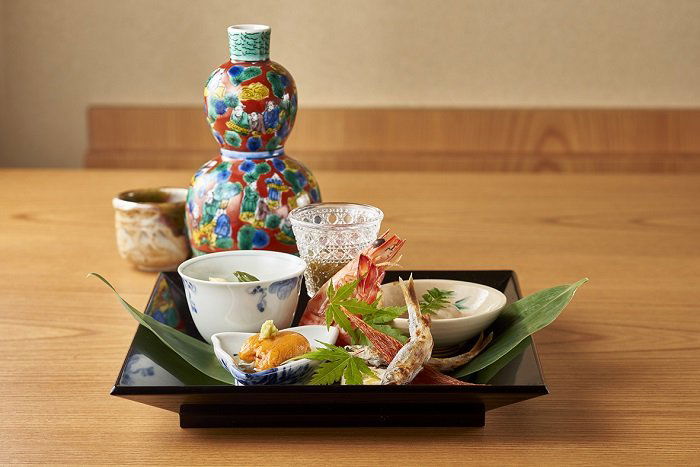
Visually, the meal communicates restraint. The sashimi assortment, which Michelin's inspectors single out as a highlight, arrives in the clean, composed style that Kyoto seafood sourcing tends to produce when the ingredient quality is high. This is not garnish-heavy plating. You are looking at the fish itself, which is the whole point. Boiled greens drawn through bonito stock and stewed dishes appear as the meal progresses, the kind of cooking that warms rather than impresses. The meal closes with sweets made by the chef's partner, a detail that matters because it keeps the experience personal rather than handed off to a pastry department.
Kappo Shinatomi holds a Michelin Plate for 2025, the Guide's designation for restaurants that represent good cooking without reaching starred territory. That is a useful calibration. This is not a venue trying to compete with Kyokaiseki Kichisen or Kikunoi Roan on technical grandeur. It is a chef cooking food he believes in, in a room that reflects who he and his partner are. Michelin recognising it at all tells you the quality is real and not just neighbourhood goodwill.
Google reviewers score it 4.8 from 32 ratings, which is a small sample but a high consensus. The absence of volume suggests this is not a restaurant that has been algorithmically discovered yet, which is worth noting for travellers who want to eat somewhere that still feels like it belongs to Kyoto's Kamigyo Ward rather than to the international dining trail.
For context on how Kappo Shinatomi sits within Kyoto's wider restaurant scene, see our full Kyoto restaurants guide. If you are building a broader trip around Japan, you may also want to look at HAJIME in Osaka, Harutaka in Tokyo, akordu in Nara, or Goh in Fukuoka for comparable depth across different formats. Within Tokyo, Myojaku and Azabu Kadowaki offer similar chef-led Japanese formats if you want a comparison point before you go. For other Kyoto dining worth considering in the same general price tier or just above it, Gion Matayoshi, Isshisoden Nakamura, and Kodaiji Jugyuan are all worth reading before you commit.
Kyoto rewards exploration beyond the restaurant table. See also our full Kyoto hotels guide, our full Kyoto bars guide, our full Kyoto wineries guide, and our full Kyoto experiences guide for a complete picture of what the city offers. For further afield in Japan, 1000 in Yokohama and 6 in Okinawa are worth knowing about if your itinerary extends south or east.
Practical Details
Address: 315-4 Shintomicho, Kamigyo Ward, Kyoto, 602-0875, Japan. Price range: ¥¥¥ — mid-to-upper range for Kyoto, positioned below the city's leading kaiseki tier. Booking difficulty: Easy relative to Kyoto's most competed-for restaurants. Awards: Michelin Plate 2025. Google rating: 4.8 from 32 reviews. Phone and website: Not available in our current data — contact through your hotel concierge or a local booking service. Dress: Not formally specified, but the kappo format and neighbourhood setting suggest smart casual is appropriate. Hours: Not confirmed in our data , verify directly before visiting.
How It Compares
Frequently Asked Questions
- Is Kappo Shinatomi worth the price? At ¥¥¥, yes , particularly if you order the sashimi assortment and lean into the omakase options. You are paying for high-quality seafood sourcing, a personally run room, and the kind of responsive cooking that adjusts to market and mood. If you want more formal structure and are willing to pay ¥¥¥¥, consider Kyokaiseki Kichisen instead. Kappo Shinatomi offers a stronger value argument for diners who want quality without ceremony.
- Can Kappo Shinatomi accommodate groups? Seat count is not confirmed in our data, but the kappo format typically means a counter-focused room with limited covers. Groups of more than four should contact the restaurant in advance. For larger parties in Kyoto, a restaurant with private dining rooms would be a safer choice.
- Is Kappo Shinatomi good for solo dining? Yes. The kappo counter format is well-suited to solo diners , you are directly facing the kitchen, and the chef-led progression means there is no awkwardness in ordering alone. For a food-focused solo traveller in Kyoto, this is one of the more rewarding options at the ¥¥¥ tier.
- Is the tasting menu worth it at Kappo Shinatomi? The omakase option is likely the better way to eat here, since the kitchen's strength is in sourcing and seasonal judgement rather than à la carte variety for its own sake. Michelin's note that the chef's offerings shift based on his mood and the market is a reason to trust his selection rather than direct it. That said, à la carte is available if you have specific preferences.
- What should I wear to Kappo Shinatomi? No dress code is specified, but a Michelin Plate kappo restaurant in Kyoto warrants smart casual at minimum. Avoid overly casual attire. The room is personal and intimate, not a formal dining room, so you do not need to dress for a star-level kaiseki occasion.
- Is Kappo Shinatomi good for a special occasion? It works well for an occasion where intimacy matters more than spectacle. The couple's personality in the room and the house-made sweets at the end give the meal a personal quality that formal kaiseki venues rarely have. For a milestone dinner requiring more ceremony and visual drama, Gion Matayoshi or a ¥¥¥¥-tier kaiseki would be the stronger call.
- What are alternatives to Kappo Shinatomi in Kyoto? For a step up in formality and price, Kikunoi Roan and Isshisoden Nakamura are worth comparing. If you want something at a similar price point with a different format, Kodaiji Jugyuan is a reasonable alternative. See our full Kyoto restaurants guide for a broader view of what the city offers across price tiers.
Compare Kappo Shinatomi
| Venue | Cuisine | Awards | Booking Difficulty | Value |
|---|---|---|---|---|
| Kappo Shinatomi | Japanese | Keen to earn the affection of locals, the chef named his restaurant after the ancient word for this part of Kyoto. Offerings are determined by customers’ à la carte preferences, the chef’s omakase menus, and how he feels that day. The quality of the seafood Kappo Shinatomi sources is top-notch, so we recommend the sashimi assortment. Boiled greens redolent with bonito stock and stewed dishes warm the soul. The meal ends with sweets prepared by the lady of the house. The couple’s personality is stamped on the ambience of this kappo restaurant.; Michelin Plate (2025); Keen to earn the affection of locals, the chef named his restaurant after the ancient word for this part of Kyoto. Offerings are determined by customers’ à la carte preferences, the chef’s omakase menus, and how he feels that day. The quality of the seafood Kappo Shinatomi sources is top-notch, so we recommend the sashimi assortment. Boiled greens redolent with bonito stock and stewed dishes warm the soul. The meal ends with sweets prepared by the lady of the house. The couple’s personality is stamped on the ambience of this kappo restaurant. | Easy | — |
| Gion Sasaki | Kaiseki, Japanese | Michelin 3 Star | Unknown | — |
| cenci | Italian | Michelin 1 Star, World's 50 Best | Unknown | — |
| Ifuki | Kaiseki | Michelin 2 Star | Unknown | — |
| Kyokaiseki Kichisen | Japanese | Michelin 2 Star | Unknown | — |
| SEN | French, Japanese | Michelin 1 Star | Unknown | — |
Side-by-side comparison to help you decide where to book.
Frequently Asked Questions
Is Kappo Shinatomi worth the price?
Yes, at ¥¥¥ it sits below Kyoto's top kaiseki tier while delivering Michelin Plate-recognised quality. The seafood sourcing is a particular strength — the sashimi assortment is specifically recommended by Michelin inspectors. If you want serious Japanese cooking without kaiseki ceremony or pricing, this is good value for the level.
Can Kappo Shinatomi accommodate groups?
Kappo restaurants in Japan typically run small counters, and Kappo Shinatomi has the feel of an intimate, couple-run operation. Groups larger than four should check the venue's official channels before assuming availability — this format suits pairs and small parties far better than large gatherings.
Is Kappo Shinatomi good for solo dining?
Yes. Counter-style kappo dining is one of the better solo formats in Japanese cuisine — you eat at your own pace, can interact with the chef, and the à la carte option means you order only what you want. Solo diners are well-suited to this format compared to multi-course kaiseki, where a single booking often feels more structured.
Is the tasting menu worth it at Kappo Shinatomi?
The omakase here is genuinely flexible — offerings shift based on customer preferences and the chef's read of the day, which keeps it from feeling formulaic. If you want to hand over the decision-making, the omakase is worth it; if you prefer control, the à la carte option is an equally valid way to eat here. The meal ends with sweets made by the chef's partner, which adds a personal note not common in more formal venues.
What should I wear to Kappo Shinatomi?
Neat, understated clothing is appropriate. Kappo restaurants occupy a middle register between casual izakaya and formal kaiseki — overdressing is unnecessary, but this is not a jeans-and-trainers setting. Think business casual or a clean, simple outfit that fits a ¥¥¥ neighbourhood restaurant in Kyoto.
Is Kappo Shinatomi good for a special occasion?
Yes, with the right expectations. The couple-run atmosphere and the personal touch of house-made sweets at the end of the meal make it feel considered rather than corporate. It works well for a birthday or a quiet anniversary dinner — better than a larger, more anonymous restaurant at this price. It is not the right choice if you want the full kaiseki production with lacquerware and multiple rooms.
What are alternatives to Kappo Shinatomi in Kyoto?
Gion Sasaki and Kyokaiseki Kichisen are the options if you want to move up into serious kaiseki territory, with higher prices and stricter formats. cenci offers a more contemporary, European-influenced approach. Ifuki and SEN sit closer to Kappo Shinatomi's register and are worth comparing if you want another neighbourhood-scale option before committing.
Recognized By

More restaurants in Kyoto
- OgataOgata is a 16-seat kaiseki counter in Shimogyo, Kyoto, holding two Michelin stars and ten years of Tabelog Gold recognition. Dinner runs JPY 60,000–79,999 before drinks and a 10% service charge. Booking is near impossible without months of advance planning, but for serious kaiseki at the counter, it earns its place on any shortlist.
- MizaiMizai holds three Michelin stars and a sustained Tabelog track record across nearly a decade, with dinner running to ¥80,000–¥99,999 per person all-in. Chef Hitoshi Ishihara structures the meal around the spirit of the tea ceremony in a 15-seat room inside Maruyama Park. Book for a serious special occasion; reservations are near-impossible to secure without months of advance planning.
Similar venues by awards
Related editorial
- Best Fine Dining Restaurants in ParisFrom three-Michelin-star icons to the next generation of Parisian chefs pushing boundaries, these are the restaurants that define fine dining in the world's culinary capital.
- Best Luxury Hotels in RomeFrom rooftop terraces overlooking ancient ruins to Michelin-starred hotel dining, these are the luxury hotels that make Rome unforgettable.
- Best Cocktail Bars in KyotoFrom sleek lounges to hidden speakeasies, Kyoto's cocktail scene blends Japanese precision with global influence in ways you won't find anywhere else.
Save or rate Kappo Shinatomi on Pearl
Keep this venue in your Pearl passport, rate it after you visit, and track it alongside every other place you collect.