
Restaurant in Kyoto, Japan
Kamanza Nagashima
650ptsOne party per night. Book months ahead.

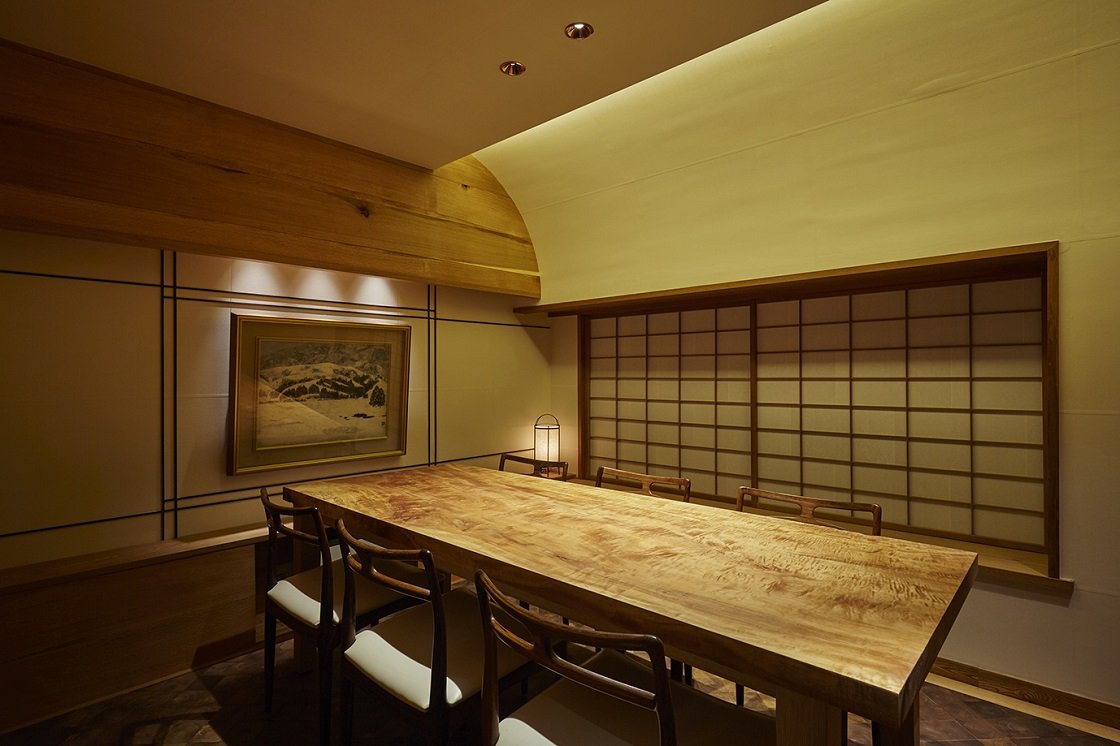
About Kamanza Nagashima
A Michelin-starred kappo in Kyoto's Yamashina Ward that cooks for one party per evening only. Built around dashi harmony and seasonal ingredients, the meal moves from mochi rice through white-miso wanmono to clay-pot rice in the chef's family home. At ¥¥¥, it delivers genuine privacy and focused craft at a price below Kyoto's ¥¥¥¥ kaiseki tier — book two to three months out minimum.
Who Should Book Kamanza Nagashima
Kamanza Nagashima is the right choice for a couple or pair marking something that matters: an anniversary, a milestone birthday, a trip built around one dinner that will define the visit to Kyoto. Because the kitchen cooks for one party per evening only, the experience is not a shared dining room — it is a private meal in a family home that earned a Michelin star. If you are travelling solo or with a group larger than two, read the FAQ before committing. If your occasion demands genuine intimacy rather than the performance of it, this is where you book.
The Restaurant
The address is Yamashina Ward, which places Kamanza Nagashima a short distance from the central Higashiyama corridor where most Kyoto dining tourism concentrates. The chef grew up in Emmachi and turned the family house into a kappo — a counter format less formal than kaiseki but still built on technical craft. The decision to accept only one party per evening is not a marketing posture. It reflects a genuine philosophy about what the kitchen can deliver when it is not splitting attention across multiple tables.
The menu structure follows a clear arc. It opens with congee, or steamed mochi rice topped with seasonal ingredients, then moves through sake with snacks, a wanmono of white-miso soup in the Kyoto tradition, and closes with white rice cooked in clay pots served alongside hand-made pickled vegetables prepared by the proprietress. The clay-pot rice course is the one the chef considers the truest measure of his cooking , a position worth remembering when you reach it.
Everything in this kitchen pivots around dashi. The seasoned first dashi in soup dishes is drawn from makombu seaweed, and that foundational broth runs as a connective thread through the meal. Char-grilled fish is paired with dashi paste, so even the grilled courses stay in conversation with the kitchen's central technique rather than departing from it. This is a coherent culinary argument, not a collection of impressive individual dishes.
Seasonal Rotation and When to Visit
Because the menu is built around dashi harmony and seasonal ingredients topping the opening mochi rice, what you eat here shifts meaningfully across the calendar. Kyoto's four seasons each bring distinct produce into Japanese kappo: mountain vegetables and bamboo shoots in spring, ayu sweetfish in early summer, matsutake mushroom and autumn chestnuts from September, and winter's root vegetables and citrus alongside richer broths. The white-miso wanmono, a Kyoto regional constant, will anchor each visit regardless of season, but the opening courses and the snack assortment accompanying sake will vary considerably depending on when you arrive.
For first-time visitors choosing a season deliberately, spring (late March through May) and autumn (October through November) offer the widest range of peak seasonal ingredients and the most photogenic Kyoto backdrop if you plan to combine dinner with temple visits. That said, booking in any season is preferable to not booking at all , the one-party format means availability is always limited, and a winter visit with a focus on hearty dashi and clay-pot rice has its own clear logic.
Awards and Standing
Kamanza Nagashima holds a Michelin 1 Star (2024) alongside Michelin Plate recognition in both 2024 and 2025. A Google rating of 4.5 from 45 reviews is a small sample by city-centre standards, but the one-party format means the venue serves far fewer covers per year than a conventional restaurant , so 45 reviews represents a meaningful proportion of its actual guests. The Michelin star is the operative credential here: it confirms that the dashi-focused kappo approach is being executed at a level that justifies the ¥¥¥ price tier.
For broader context on where this fits in Kyoto's dining hierarchy, see our full Kyoto restaurants guide. Comparable experiences elsewhere in Japan include HAJIME in Osaka for a more architectural, tasting-menu format, and Myojaku in Tokyo for another intimate Japanese counter with strong seasonal credentials. If your trip includes Nara, akordu in Nara offers a different register entirely , European technique applied to Japanese produce , worth considering for variety across a multi-city itinerary.
Practical Details
Reservations: Book as far ahead as possible , a one-party format with Michelin recognition in Kyoto means availability is genuinely scarce; treat this as a hard booking, not a tentative inquiry. Budget: ¥¥¥ pricing positions this below the ¥¥¥¥ tier of venues like Kyokaiseki Kichisen, though the private-party format means the per-head cost depends on your group size. Format: One party per evening only , confirm your party size when booking. Dress: No published dress code, but a Michelin-starred kappo in Kyoto warrants smart dress at minimum. Location: Yamashina Ward, Kyoto; plan travel time if staying in central Higashiyama or Gion. Contact: No phone or website in current records , book through a concierge service or a third-party reservation platform that covers Kyoto's independent restaurants.
Pearl Picks Nearby
If Kamanza Nagashima is unavailable, the following Kyoto options cover similar or adjacent territory: Isshisoden Nakamura and Gion Matayoshi for depth of Kyoto culinary tradition; Kikunoi Roan for kaiseki at a slightly more accessible booking window; and Kodaiji Jugyuan for a distinctive setting. For Japanese counter dining in Tokyo as a comparison point, Azabu Kadowaki and Harutaka in Tokyo show what the format looks like at the capital's standard. Further afield, Goh in Fukuoka and 1000 in Yokohama are worth the detour if your itinerary extends beyond Kyoto. For everything else in the city, see our Kyoto hotels guide, bars guide, wineries guide, and experiences guide. In Okinawa, 6 offers an interesting counterpoint for anyone extending a Japan trip southward.
Compare Kamanza Nagashima
| Venue | Cuisine | Price | Booking Difficulty |
|---|---|---|---|
| Kamanza Nagashima | Japanese | ¥¥¥ | Hard |
| Gion Sasaki | Kaiseki, Japanese | ¥¥¥¥ | Unknown |
| cenci | Italian | ¥¥¥ | Unknown |
| Ifuki | Kaiseki | ¥¥¥¥ | Unknown |
| Kyokaiseki Kichisen | Japanese | ¥¥¥¥ | Unknown |
| SEN | French, Japanese | ¥¥¥¥ | Unknown |
Key differences to consider before you reserve.
Frequently Asked Questions
Can Kamanza Nagashima accommodate groups?
No. The restaurant serves only one party per evening by design, which is part of its appeal and its limitation. If your group is larger than a couple or small party, confirm the maximum party size before booking — the intimate format is not built for group dining in the conventional sense. For larger groups seeking Kyoto kaiseki, Kyokaiseki Kichisen or Isshisoden Nakamura are more practical options.
What are alternatives to Kamanza Nagashima in Kyoto?
If you cannot secure a reservation, Gion Sasaki and Kyokaiseki Kichisen cover serious kaiseki territory with their own Michelin credentials. For something lighter in format and price, cenci offers a more contemporary angle. Ifuki and SEN are worth considering if you want strong dashi-forward cooking without the booking pressure of a one-party venue.
Is Kamanza Nagashima good for solo dining?
Almost certainly not the right fit. A one-party-per-evening kappo run by a couple is structured around shared experience, and the meal arc — from congee through sake snacks to clay-pot rice — reads as a progression designed for two. Solo diners would be better served by a kappo counter format elsewhere in Kyoto.
Is Kamanza Nagashima worth the price?
At ¥¥¥ with a Michelin 1 Star (2024), the price reflects both the cooking and the format: one party, full attention, a meal built around the couple's care for each guest. That is a different value proposition from a larger starred restaurant. If you want efficient prestige-per-yen, look elsewhere. If the intimacy and the host-guest philosophy matter to you, the price is justified.
How far ahead should I book Kamanza Nagashima?
Book as far ahead as you possibly can — realistically three to six months minimum. A Michelin-starred restaurant accepting only one party per evening in Kyoto means every available night is a finite, non-repeatable slot. Treat this like securing a reservation at a small private house, not a regular restaurant booking.
Is Kamanza Nagashima good for a special occasion?
Yes, and it is one of the clearest cases in Kyoto for doing so. The restaurant was built from the chef's own family home, the couple hosts only one party per night, and the meal has a clear arc from opening congee to clay-pot rice. An anniversary or milestone dinner here has a structure that generic special-occasion restaurants do not offer.
Is the tasting menu worth it at Kamanza Nagashima?
The menu is dashi-focused, moving from mochi rice with seasonal toppings through white-miso wanmono soup to clay-pot white rice with house-made pickles. That closing rice course is, by the chef's own framing, the dish that best reflects the cooking. If that progression — restrained, seasonal, technically grounded — is your format, the answer is yes. If you want bold flavours or variety-driven tasting menus, this is the wrong room.
Recognized By

More restaurants in Kyoto
- OgataOgata is a 16-seat kaiseki counter in Shimogyo, Kyoto, holding two Michelin stars and ten years of Tabelog Gold recognition. Dinner runs JPY 60,000–79,999 before drinks and a 10% service charge. Booking is near impossible without months of advance planning, but for serious kaiseki at the counter, it earns its place on any shortlist.
- MizaiMizai holds three Michelin stars and a sustained Tabelog track record across nearly a decade, with dinner running to ¥80,000–¥99,999 per person all-in. Chef Hitoshi Ishihara structures the meal around the spirit of the tea ceremony in a 15-seat room inside Maruyama Park. Book for a serious special occasion; reservations are near-impossible to secure without months of advance planning.
- Kikunoi HontenThree Michelin stars and eight consecutive Tabelog Bronze awards make Kikunoi Honten one of Kyoto's most credentialed kaiseki addresses. Lunch (JPY 20,000–29,999) is the practical first visit; dinner (JPY 30,000–39,999) rewards a return. Booking is near impossible without advance planning — use a hotel concierge or specialist service. Private rooms accommodate groups of 4 to 30-plus.
Similar venues by awards
Related editorial
- Asia's 50 Best Restaurants 2026: The Chairman and Wing Go 1-2 from the Same BuildingThe Chairman takes No. 1 and Wing climbs to No. 2 at Asia's 50 Best Restaurants 2026. Both operate from the same Hong Kong building. Here's what it means.
- Four Seasons Yachts Debut: 95 Suites, 11 Restaurants, and a March 2026 Maiden VoyageFour Seasons I launches March 20, 2026, with 95 suites, a one-to-one staff ratio, and 11 onboard restaurants. Worth tracking if you want hotel-grade service at sea.
- LA Michelin Guide 2026: Seven New Restaurants from Tlayudas to Uzbek DumplingsMichelin's March 2026 California Guide update adds six LA restaurants and one Montecito newcomer, spanning Oaxacan tlayudas, Uzbek manti, and Korean-Italian pasta.
Save or rate Kamanza Nagashima on Pearl
Keep this venue in your Pearl passport, rate it after you visit, and track it alongside every other place you collect.