
Restaurant in Tokyo, Japan
IBAIA
290ptsMeat-forward French bistro, Michelin-recognised, mid-price.

About IBAIA
A Michelin Plate bistro in Ginza built around French flame cookery and serious cuts of meat — beef, pork, lamb, and duck — at a ¥¥ price point that is rare for the neighbourhood. The signature beef tenderloin cutlet blends Japanese and French instincts effectively, and the room has enough energy to make a weeknight dinner feel worthwhile. Easy to book; best for carnivores and solo diners.
The Verdict
If you have already eaten at IBAIA once, the question on a return visit is not whether the food holds up — the Michelin Plate (2025) and a Google rating of 4.3 across 126 reviews suggest it does — but whether the format still fits what you need. IBAIA is a French bistro in Ginza built around serious meat cookery at a ¥¥ price point, which in Tokyo's French dining scene is a rare combination. For carnivores who want flame-cooked beef, pork, lamb, or duck without the commitment of a ¥¥¥¥ tasting menu, this is one of the most practical bookings in the neighbourhood. Book it.
Portrait
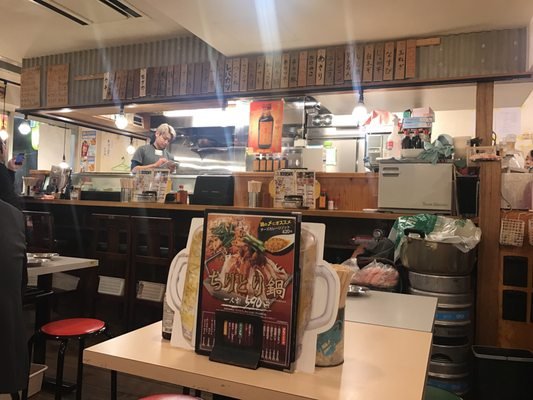
The energy at IBAIA reads immediately as a bistro rather than a gastronomic dining room. The atmosphere sits on the warmer, more animated side of Ginza's French options: there is an audible hum to the room, wine is central to the experience, and the cooking is built around the kind of thick-cut meat preparations that generate their own sense of occasion without requiring ceremony from the service. If you are looking for a hushed, course-by-course progression, this is not your venue. If you want a room that feels alive without being chaotic, and food that is direct in its intentions, IBAIA delivers on both.
The counter or bar seating, where available, sharpens the experience considerably. At a venue where open-flame technique is central to the kitchen's identity, proximity to the action adds a layer of engagement that a table in the middle of the room does not provide. The sound and heat of the grill are part of what IBAIA is selling. Sitting closer to that process , watching thick cuts of beef tenderloin develop crust under direct heat , gives you the full version of what this bistro does. If you are returning and previously sat at a table, request counter seating. The difference is material.
Signature preparation that anchors the menu is the beef tenderloin cutlet. The Michelin description frames it accurately: it reads at first as a Japanese-inflected Western dish, but the technique pulls clearly French , parsley and garlic worked in, a nod to the breadcrumb-grilled lamb preparations common in classic French cooking. This cross-referencing of Japanese and French instincts is not a novelty act. It is the kitchen's actual working method, and the result is a dish that is heavier and more flavour-forward than a standard katsu preparation, with a texture that rewards a good Burgundy or a medium-weight Rhône. The wine list exists to be used alongside the food, not as an afterthought, and the menu is constructed with that pairing logic in mind.
At ¥¥ in Ginza, IBAIA sits well below the price ceiling of the neighbourhood's French dining options. That gap matters. You are not getting the multi-course architecture of L'Effervescence or the technical ambition of ESqUISSE, but you are also not paying for it. What IBAIA offers instead is a focused, confident bistro menu built around ingredients that benefit from direct heat and simple French technique applied with precision. For the price tier, the Michelin recognition is a meaningful signal that the kitchen is executing consistently , a Plate is not awarded to venues that are merely adequate.
Ginza's French dining scene is one of the most concentrated in Asia, with venues ranging from the theatrical grandeur of Château Restaurant Joël Robuchon to the ingredient-led restraint of Sézanne. IBAIA does not compete in that register, and it is not trying to. Its frame of reference is the neighbourhood bistro: a place where the food is the point, the wine supports it, and the room has enough energy to make an ordinary evening feel purposeful. That is a different kind of value proposition from the city's destination French tables, and it is an honest one.
For broader context on where IBAIA sits within Tokyo's restaurant scene, see our full Tokyo restaurants guide. If you are planning a longer trip through Japan, French cooking of serious ambition is also available at HAJIME in Osaka and European-influenced contemporary dining at akordu in Nara. For Japanese-centric alternatives in Tokyo itself, Gion Sasaki in Kyoto and Goh in Fukuoka offer reference points for how regional Japanese kitchens handle produce at a high level. You can also explore our full Tokyo hotels guide, our full Tokyo bars guide, and our full Tokyo experiences guide to complete your itinerary.
Ratings & Recognition
- Michelin Plate (2025) , recognition of consistent quality cooking
- Google rating: 4.3 / 5 (126 reviews)
- Price tier: ¥¥ , mid-range for Ginza French dining
Booking
Booking difficulty is rated Easy. Hours and booking method are not confirmed in our data, so verify directly via the venue's listing or a local reservations platform before visiting. Given the Michelin recognition and the Ginza address, same-week availability is plausible for mid-week sittings, but weekends and Friday evenings may require more lead time. Solo diners and couples have the most flexibility.
Practical Details
| Detail | IBAIA | Florilège (¥¥¥) | L'Effervescence (¥¥¥¥) |
|---|---|---|---|
| Cuisine | French bistro / meat-focused | French contemporary | French fine dining |
| Price tier | ¥¥ | ¥¥¥ | ¥¥¥¥ |
| Michelin recognition | Plate (2025) | Yes (Stars) | Yes (Stars) |
| Format | Bistro / à la carte | Tasting menu | Tasting menu |
| Booking difficulty | Easy | Moderate | Hard |
| Leading for | Carnivores, solo diners, couples | Contemporary French enthusiasts | Special occasions |
How It Compares
See the comparison section below for how IBAIA positions against Florilège, L'Effervescence, and other Tokyo French options.
FAQ
What should I order at IBAIA?
- The beef tenderloin cutlet is the dish the venue is known for , a French-technique preparation with parsley and garlic that sits between a classic katsu and a grilled lamb cutlet in character. Beyond that, the menu covers beef, pork, lamb, and duck cooked as substantial portions over flame. If you are here and not eating meat, you are at the wrong venue.
Is IBAIA worth the price?
- At ¥¥ in Ginza with a Michelin Plate, yes. You are getting competent French technique, serious meat cookery, and a wine-forward room at a price point well below what comparable Michelin-recognised French tables in the area charge. It is not a destination meal in the way that L'Effervescence or HOMMAGE are, but it is not priced like one either. The value equation is clear.
Can I eat at the bar at IBAIA?
- Counter or bar seating is not confirmed in our data, but given the bistro format and Ginza location, bar seating is common at venues of this type in Tokyo. Call ahead to confirm. If it is available, take it , the flame cookery that defines this kitchen is leading experienced up close, and the counter format suits the wine-and-meat ethos of the room.
Is IBAIA good for solo dining?
- Yes. The bistro format, ¥¥ pricing, and Easy booking difficulty make IBAIA one of the more practical solo dining options in Ginza's French category. A solo diner at a venue like Sézanne or Château Restaurant Joël Robuchon faces higher per-head costs and tighter availability. At IBAIA, the format works for one person ordering a cut of meat and a bottle split across the meal. Counter seating, if available, makes the solo experience better still.
What are alternatives to IBAIA in Tokyo?
- For French at the next price tier up, Florilège (¥¥¥) offers a more contemporary, vegetable-forward French approach with Michelin recognition and a stronger booking challenge. For full fine dining commitment, L'Effervescence (¥¥¥¥) and ESqUISSE (¥¥¥¥) are the standard-setters in Tokyo French, but at a significantly higher price and with considerably harder reservations. If the core appeal of IBAIA is meat-forward cooking at an accessible price rather than French cuisine specifically, also consider 1000 in Yokohama or 6 in Okinawa for regional alternatives on a broader Japan trip. For French dining of serious ambition outside Japan, Les Amis in Singapore and Hotel de Ville Crissier in Crissier are the reference points in Asia and Europe respectively.
Compare IBAIA
| Venue | Cuisine | Price | Awards | Booking Difficulty | Value |
|---|---|---|---|---|---|
| IBAIA | French | ¥¥ | This bistro is sure to satisfy the cravings of carnivores, with French flame techniques that bring out the sizzle in meat dishes. Beef, pork, lamb and duck are cooked as hearty slabs. Their famous cutlet of beef tenderloin looks like a standard Japanese take on Western cuisine, but with a French twist: parsley and garlic are mixed in, a la lamb grilled in breadcrumbs. Here, you’ll find the thrill of savouring thick cuts of meat and the joy of opening a bottle of wine.; Michelin Plate (2025); This bistro is sure to satisfy the cravings of carnivores, with French flame techniques that bring out the sizzle in meat dishes. Beef, pork, lamb and duck are cooked as hearty slabs. Their famous cutlet of beef tenderloin looks like a standard Japanese take on Western cuisine, but with a French twist: parsley and garlic are mixed in, a la lamb grilled in breadcrumbs. Here, you’ll find the thrill of savouring thick cuts of meat and the joy of opening a bottle of wine. | Easy | — |
| Harutaka | Sushi | ¥¥¥¥ | Michelin 3 Star, World's 50 Best | Unknown | — |
| RyuGin | Kaiseki, Japanese | ¥¥¥¥ | Michelin 3 Star, World's 50 Best | Unknown | — |
| L'Effervescence | French | ¥¥¥¥ | Michelin 3 Star, World's 50 Best | Unknown | — |
| HOMMAGE | Innovtive French, French | ¥¥¥¥ | Michelin 2 Star, World's 50 Best | Unknown | — |
| Florilège | French | ¥¥¥ | Michelin 2 Star, World's 50 Best | Unknown | — |
Key differences to consider before you reserve.
Frequently Asked Questions
What should I order at IBAIA?
The beef tenderloin cutlet is the dish that defines IBAIA's identity: a Japanese-inflected take on French technique, finished with parsley and garlic in the style of breadcrumb-grilled lamb. Beyond that, the menu centres on thick cuts of beef, pork, lamb, and duck cooked over flame. Pair with a bottle of wine — that combination is the point of the meal here.
Is IBAIA worth the price?
At the ¥¥ price range, IBAIA sits in mid-range territory for Ginza, and a Michelin Plate (2025) confirms the cooking clears a credible standard. For carnivores who want serious French flame cooking without paying omakase prices, the value case is strong. If you want refined sauces and classical French plating over hearty meat slabs, this format may not satisfy.
Can I eat at the bar at IBAIA?
Bar seating availability is not confirmed in the current data for IBAIA. check the venue's official channels via its Ginza listing to verify seating options before arriving and assuming counter access.
Is IBAIA good for solo dining?
The bistro format and animated atmosphere at IBAIA make it a reasonable solo option — this is not a hushed tasting-menu room where a table for one feels awkward. The wine-and-meat format works as well for one as for two. Confirm bar or counter seating availability when booking, as that tends to be the most comfortable solo configuration in this style of restaurant.
What are alternatives to IBAIA in Tokyo?
Florilège and L'Effervescence are the benchmarks for serious French dining in Tokyo, both operating at significantly higher price points and formality than IBAIA. If you want the bistro register but with more classical French technique, HOMMAGE is worth comparing. IBAIA's specific advantage is the meat-forward, flame-cooked format at a mid-range price in Ginza — alternatives rarely combine all three.
Recognized By

More restaurants in Tokyo
- SézanneOccupying the seventh floor of the Four Seasons Hotel Tokyo at Marunouchi, Sézanne earned its first Michelin star within months of opening in July 2021 and now holds three. British chef Daniel Calvert applies French technique to Japanese ingredients, producing a prix-fixe format that Tabelog has recognised with Silver awards every year from 2023 through 2026. It ranked 4th in Asia's 50 Best Restaurants in 2025 and 15th globally in 2024.
- SazenkaSazenka is the address for Chinese cuisine in Tokyo at its most technically demanding. Chef Tomoya Kawada's wakon-kansai approach — Japanese seasonal ingredients applied through Chinese culinary technique — has earned consecutive Tabelog Gold Awards from 2019 to 2026, a #71 ranking on the World's 50 Best 2025, and 99 points from La Liste 2026. At JPY 50,000–59,999 per head, it is one of the hardest tables in the city to book and worth the effort.
- NarisawaNarisawa is Tokyo's most credentialled innovative tasting menu restaurant — two Michelin stars, Asia's 50 Best number 12, and a Tabelog Silver award — running at JPY 80,000–99,999 per head. Book for a milestone occasion, confirm vegetarian or vegan needs in advance, and reserve at least two to three months out. With 15 seats and reservation-only access, this is one of Tokyo's hardest tables to secure.
- FlorilègeFlorilège delivers two Michelin stars and an Asia's 50 Best #17 ranking at a dinner price of ¥22,000 — competitive for Tokyo at this level. Chef Hiroyasu Kawate's plant-forward tasting menus around an open-kitchen counter at Azabudai Hills make this the strongest choice for contemporary French dining in Tokyo if theatrical, produce-led cooking is what you want. Book well in advance; availability is near-impossible at short notice.
- DenDen holds two Michelin stars, a World's 50 Best top-25 Asia ranking, and a Tabelog Silver Award running back to 2017 — and it books out within hours of the two-month reservation window opening. Chef Zaiyu Hasegawa's daily-changing seasonal omakase runs JPY 30,000–39,999 at dinner in a relaxed house-restaurant setting near Gaiemmae. Book by phone only, noon–5 PM JST. Lunch is irregular; plan around dinner.
- MyojakuMyojaku is a 2-Michelin-star, 14-course French-leaning omakase in Nishiazabu holding a 4.47 Tabelog score, Tabelog Silver 2025–2026, and Asia's 50 Best #45 (2025). Chef Hidetoshi Nakamura's water-forward, no-dashi approach shifts meaningfully with the seasons — making timing your reservation as important as getting one. Budget JPY 50,000–59,999 per head plus 10% service charge; reservations only, near-impossible to secure.
Similar venues by awards
Related editorial
- Best Fine Dining Restaurants in ParisFrom three-Michelin-star icons to the next generation of Parisian chefs pushing boundaries, these are the restaurants that define fine dining in the world's culinary capital.
- Best Luxury Hotels in RomeFrom rooftop terraces overlooking ancient ruins to Michelin-starred hotel dining, these are the luxury hotels that make Rome unforgettable.
- Best Cocktail Bars in KyotoFrom sleek lounges to hidden speakeasies, Kyoto's cocktail scene blends Japanese precision with global influence in ways you won't find anywhere else.
Save or rate IBAIA on Pearl
Keep this venue in your Pearl passport, rate it after you visit, and track it alongside every other place you collect.