
Restaurant in Tokyo, Japan
HOPPERS
225ptsTokyo's only serious Sri Lankan. Book it.


About HOPPERS
Karam Sethi's Sri Lankan restaurant in Nihonbashikabutocho is the clearest option in Tokyo for this cuisine at the ¥¥ price point, and the OAD ranking backs it up. The rice and curry set — multiple curries, Maldive fish base, and a basmati-Japanese rice blend — is the main event. Book easily, go more than once.
Who Should Book HOPPERS — and When
If you are in Tokyo and want to eat somewhere genuinely different from the city's default repertoire of sushi, kaiseki, and French-Japanese fusion, HOPPERS is the clearest answer at the ¥¥ price point. This is Karam Sethi's Sri Lankan restaurant, positioned inside KABUTO ONE in Nihonbashikabutocho, and it earns its place on a short list not through novelty alone but through cooking that Opinionated About Dining ranked #201 in its 2024 Casual Europe list and flagged as Highly Recommended in 2023. That ranking is notable: it signals a kitchen operating to a standard that travels, not a concept coasting on being the only Sri Lankan option in the room. For a solo diner curious about the format, a couple looking for something affordable without sacrificing quality, or a pair of regulars who want to understand the menu more deeply across multiple visits, HOPPERS is worth your time.
The Room and the Concept
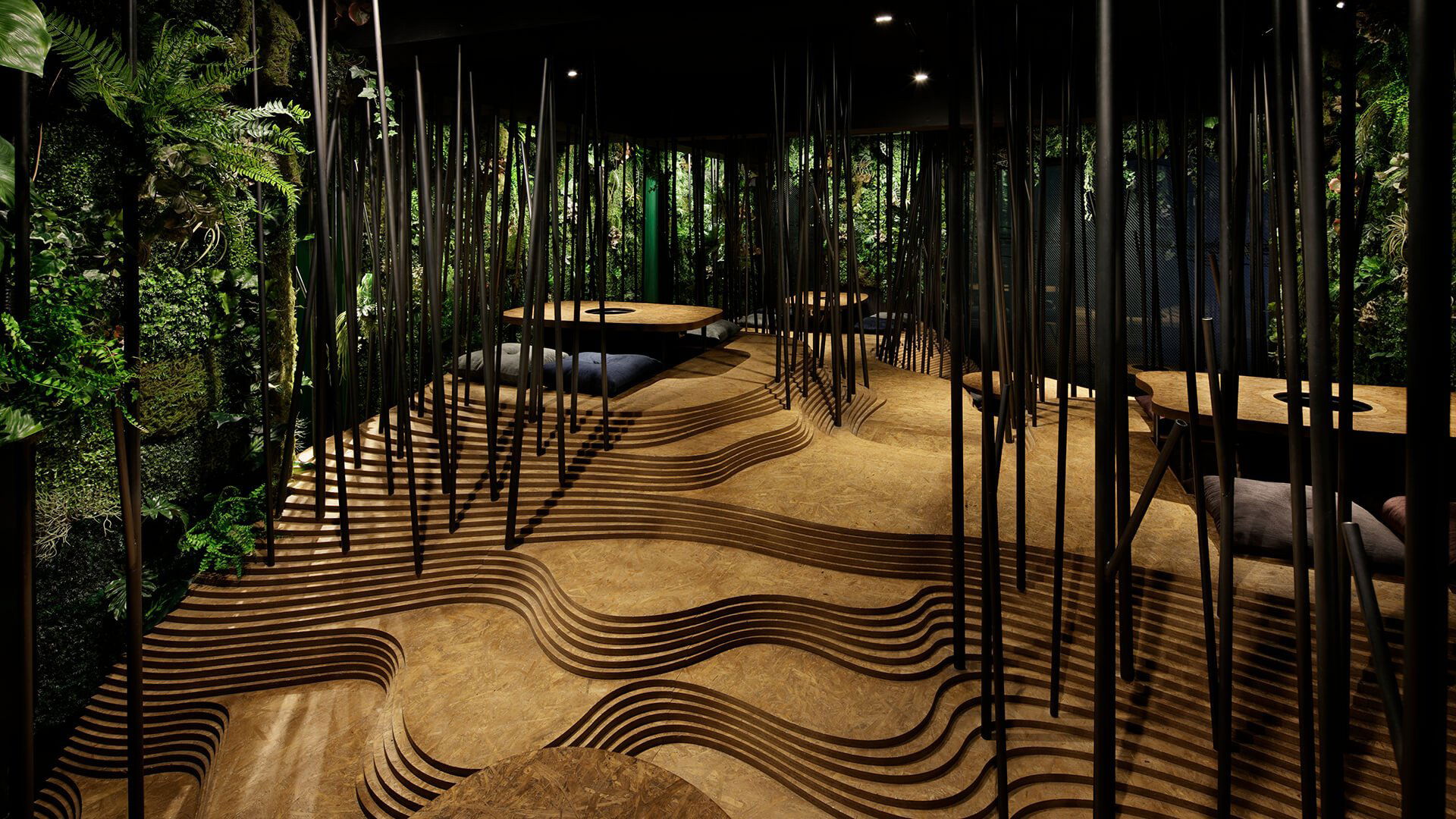
The ground-floor space inside KABUTO ONE reads clean and contemporary rather than decoratively Sri Lankan. What you notice first is the organisation of the kitchen's output: the rice and curry set, the hoppers themselves (bowl-shaped fermented rice-and-coconut crepes), and the surrounding array of curries and condiments that give the menu its logic. Sethi's approach is anchored in the Sri Lankan principle that "rice and curry" is not a single dish but a composed set — several distinct curries, sambol, and sides arranged around a rice base. The rice itself is a deliberate hybrid: basmati mixed with Japanese short-grain, a small adaptation that reflects the kitchen's awareness of where it is without abandoning what it is cooking. The curry base uses Maldive fish, a shaved cured bonito that is as fundamental to Sri Lankan cooking as dashi is to Japanese , a comparison that lands meaningfully in this city.
Multi-Visit Strategy: How to Work Through the Menu
If you have been once and defaulted to the hopper with egg and a single curry, you have covered the entry point but not the argument. A second visit should be structured around the rice and curry set in full , this is where the kitchen's range becomes legible, with multiple curry varieties, the coconut sambol, and the Maldive fish-based preparations appearing together. The set-menu format means the kitchen controls pacing and proportion, which works in your favour: you are less likely to over-order one element and miss another. A third visit, for anyone who has made it that far, is the moment to focus on the side dishes and condiments that support the main event. Sri Lankan cooking at this level is as much about the surrounding elements as the centrepiece, and Sethi's sourcing philosophy around spices , which the venue's own awards description foregrounds , makes the accompaniments worth attention in their own right. The Google rating of 4.5 across 255 reviews suggests the kitchen delivers consistently enough to support repeat visits without disappointment.
Practical Details
Reservations: Booking difficulty is rated Easy, which means walk-ins are plausible but a reservation removes the risk, particularly on weekends. Location: KABUTO ONE, 7-1 Nihonbashikabutocho, Chuo City, Tokyo , accessible from Kayabacho or Nihonbashi stations. Price: ¥¥, making this one of the more affordable intentional dining experiences in a city where the ¥¥¥¥ tier dominates the conversation. Dress: No dress code is specified; smart casual is safe for the Nihonbashi area. Group size: The format suits parties of two to four well; the set-menu structure means larger groups can share across dishes without the kitchen losing coherence.
Awards and Recognition
The Opinionated About Dining recognition is meaningful context. OAD's Casual Europe list measures execution against peer restaurants across a wide field of casual-dining venues, and a #201 ranking in 2024 with a Highly Recommended in 2023 places HOPPERS in a credible tier of kitchens that reviewers return to rather than simply note. For a Sri Lankan restaurant operating in Tokyo, where the cuisine has almost no competitive set locally, this external validation from a European-benchmarked list is the clearest available signal that the cooking holds up to scrutiny beyond the novelty of the concept.
How It Compares in Tokyo
To be direct: HOPPERS occupies a category of its own in Tokyo's restaurant scene by cuisine type, which makes direct comparison within the city largely beside the point. The honest peer group is price-tier and occasion, not cuisine. At ¥¥, it sits well below the city's celebrated fine-dining tier , Harutaka at ¥¥¥¥ for sushi omakase, RyuGin at ¥¥¥¥ for kaiseki, L'Effervescence and Sézanne for French at the upper end , but it is not trying to compete with them. Within Tokyo's broader dining scene, it is closer to Crony in spirit: an internationally-minded kitchen doing something with intention at a price that does not require advance budgeting. If you want Sri Lankan cooking benchmarked against its own tradition, Ministry of Crab in Colombo or Aliyaa in Kuala Lumpur are the relevant comparisons, and both operate in their home market. HOPPERS in Tokyo is the leading available option for this cuisine in the city, with OAD recognition to support that claim.
For broader trip planning, see our full Tokyo restaurants guide, our Tokyo hotels guide, our Tokyo bars guide, and our Tokyo experiences guide. If you are travelling beyond Tokyo, HAJIME in Osaka, Gion Sasaki in Kyoto, akordu in Nara, Goh in Fukuoka, 1000 in Yokohama, and 6 in Okinawa are worth considering depending on your itinerary.
FAQ
- Is HOPPERS good for a special occasion? It works well for a low-key celebration where the food is the point rather than the setting or price tag. At ¥¥, it will not feel like a splurge occasion in the way that a kaiseki dinner at RyuGin would, but if the occasion is about eating something genuinely interesting with someone you want to have a real conversation with, HOPPERS delivers that better than most rooms at this price.
- Can HOPPERS accommodate groups? The set-menu format is well-suited to groups of two to four. For larger groups, confirm capacity directly since seat count is not published. The shareable nature of the rice and curry format means the kitchen's output scales naturally across a table.
- Is HOPPERS good for solo dining? Yes. The format is counter- or table-friendly for a single diner, and the set-menu structure means you do not need to navigate a long à la carte list alone. At ¥¥ in Tokyo, it is one of the more satisfying solo options if you want intentional cooking without a two-hour commitment.
- What should a first-timer know about HOPPERS? Understand the format before you sit down. "Rice and curry" here is a composed set of multiple curries and sides, not a single bowl. The hopper (the crepe) is a separate item. Order both on a first visit to understand what the kitchen is doing. The Maldive fish in the curry base is the flavour anchor , it is what makes the dish distinctly Sri Lankan rather than generically South Asian.
- What are alternatives to HOPPERS in Tokyo? There is no direct competitor for Sri Lankan cooking in Tokyo at this standard, which is part of the case for booking. If cuisine is less important than price tier and intention, Crony is a reasonable alternative. For Sri Lankan cooking in the wider region, Ministry of Crab in Colombo and Aliyaa in Kuala Lumpur are the benchmarks.
- Is the tasting menu worth it at HOPPERS? The rice and curry set functions as the closest equivalent to a tasting menu here , a composed sequence of dishes rather than a single-plate order. At ¥¥, the value case is clear. Karam Sethi's OAD recognition suggests the kitchen earns the format rather than simply using it for convenience.
- Is HOPPERS worth the price? At ¥¥ with an OAD #201 Casual Europe ranking and a 4.5 Google rating across 255 reviews, yes. The price point removes most of the risk from the decision. You are paying for a kitchen with a clear point of view and external validation, not a tourist-facing novelty.
- What should I order at HOPPERS? On a first visit: a hopper and the rice and curry set in full. On a second visit: focus on the range of curries and the supporting dishes , the sambol and Maldive fish preparations specifically. Sethi's stated focus on spice sourcing means the condiments reward attention rather than functioning purely as background. See the multi-visit strategy section above for a more detailed progression.
Compare HOPPERS
| Venue | Cuisine | Awards | Booking Difficulty | Value |
|---|---|---|---|---|
| HOPPERS | Sri Lankan | Love of spices inspires the chef of this house of Sri Lankan cuisine. When he says the national dish of Sri Lanka is ‘rice and curry’, he doesn’t just mean rice with curry. The phrase refers specifically to a set menu of several types of curry, side dishes, and rice. In keeping with tradition, the curry is made with Maldive fish, a type of shaved bonito. Distinctively, the rice is a mixture of basmati rice and Japanese rice.; Opinionated About Dining Casual in Europe Ranked #201 (2024); Opinionated About Dining Casual in Europe Highly Recommended (2023) | Easy | — |
| Harutaka | Sushi | Michelin 3 Star, World's 50 Best | Unknown | — |
| RyuGin | Kaiseki, Japanese | Michelin 3 Star, World's 50 Best | Unknown | — |
| L'Effervescence | French | Michelin 3 Star, World's 50 Best | Unknown | — |
| HOMMAGE | Innovtive French, French | Michelin 2 Star, World's 50 Best | Unknown | — |
| Florilège | French | Michelin 2 Star, World's 50 Best | Unknown | — |
What to weigh when choosing between HOPPERS and alternatives.
Frequently Asked Questions
Is HOPPERS good for a special occasion?
It works for a certain kind of special occasion: one where the point is eating something genuinely different rather than performing a celebration. The ¥¥ price range keeps it accessible, so if you want a marquee splurge with matching price tag, look at RyuGin or Harutaka instead. For a low-key dinner that will generate real conversation, HOPPERS delivers.
Can HOPPERS accommodate groups?
The ground-floor space inside KABUTO ONE is described as clean and contemporary rather than sprawling, so large groups should enquire directly before assuming availability. Small groups of two to four are the natural fit for the format, particularly given the set-menu structure built around Sri Lankan rice and curry service.
Is HOPPERS good for solo dining?
Yes. The counter-style or compact contemporary room suits solo diners well, and the OAD Casual recognition signals a relaxed rather than formal atmosphere. The ¥¥ price range means solo dining here does not require a special justification — it is an easy weeknight call.
What should a first-timer know about HOPPERS?
The core of the menu follows Sri Lankan tradition: rice and curry means a set of several curries, side dishes, and rice — not a single bowl. The rice is a distinctive basmati-Japanese blend, and the curry is made with Maldive fish. Booking difficulty is rated Easy, so a reservation on weekdays is straightforward, though weekends carry more risk if you walk in.
What are alternatives to HOPPERS in Tokyo?
There is no direct competitor in Tokyo by cuisine type — Sri Lankan cooking at this level of recognition does not exist elsewhere in the city. If your goal is interesting non-Japanese cooking, L'Effervescence and Florilège cover French-influenced territory at higher price points. For a comparable casual-but-serious format in a different cuisine, HOMMAGE is worth considering.
Is the tasting menu worth it at HOPPERS?
The set menu format here is structural to the cuisine rather than a premium upsell: Sri Lankan rice and curry is, by definition, a multi-dish spread. At ¥¥ pricing, the format delivers meaningful value compared to Tokyo's tasting menus at ¥¥¥ and above. If you want à la carte flexibility, the format may not suit you.
Is HOPPERS worth the price?
At ¥¥, yes — this is one of the lower price points at which you can eat something OAD-recognised in Tokyo. The 2024 OAD Casual Europe ranking at #201 and 2023 Highly Recommended citation are earned benchmarks, not PR. For the price, you are getting chef Karam Sethi's Sri Lankan cooking in a city where that offer does not otherwise exist.
Recognized By


More restaurants in Tokyo
- SézanneOccupying the seventh floor of the Four Seasons Hotel Tokyo at Marunouchi, Sézanne earned its first Michelin star within months of opening in July 2021 and now holds three. British chef Daniel Calvert applies French technique to Japanese ingredients, producing a prix-fixe format that Tabelog has recognised with Silver awards every year from 2023 through 2026. It ranked 4th in Asia's 50 Best Restaurants in 2025 and 15th globally in 2024.
- SazenkaSazenka is the address for Chinese cuisine in Tokyo at its most technically demanding. Chef Tomoya Kawada's wakon-kansai approach — Japanese seasonal ingredients applied through Chinese culinary technique — has earned consecutive Tabelog Gold Awards from 2019 to 2026, a #71 ranking on the World's 50 Best 2025, and 99 points from La Liste 2026. At JPY 50,000–59,999 per head, it is one of the hardest tables in the city to book and worth the effort.
- NarisawaNarisawa is Tokyo's most credentialled innovative tasting menu restaurant — two Michelin stars, Asia's 50 Best number 12, and a Tabelog Silver award — running at JPY 80,000–99,999 per head. Book for a milestone occasion, confirm vegetarian or vegan needs in advance, and reserve at least two to three months out. With 15 seats and reservation-only access, this is one of Tokyo's hardest tables to secure.
- FlorilègeFlorilège delivers two Michelin stars and an Asia's 50 Best #17 ranking at a dinner price of ¥22,000 — competitive for Tokyo at this level. Chef Hiroyasu Kawate's plant-forward tasting menus around an open-kitchen counter at Azabudai Hills make this the strongest choice for contemporary French dining in Tokyo if theatrical, produce-led cooking is what you want. Book well in advance; availability is near-impossible at short notice.
- DenDen holds two Michelin stars, a World's 50 Best top-25 Asia ranking, and a Tabelog Silver Award running back to 2017 — and it books out within hours of the two-month reservation window opening. Chef Zaiyu Hasegawa's daily-changing seasonal omakase runs JPY 30,000–39,999 at dinner in a relaxed house-restaurant setting near Gaiemmae. Book by phone only, noon–5 PM JST. Lunch is irregular; plan around dinner.
- MyojakuMyojaku is a 2-Michelin-star, 14-course French-leaning omakase in Nishiazabu holding a 4.47 Tabelog score, Tabelog Silver 2025–2026, and Asia's 50 Best #45 (2025). Chef Hidetoshi Nakamura's water-forward, no-dashi approach shifts meaningfully with the seasons — making timing your reservation as important as getting one. Budget JPY 50,000–59,999 per head plus 10% service charge; reservations only, near-impossible to secure.
Related editorial
- Best Fine Dining Restaurants in ParisFrom three-Michelin-star icons to the next generation of Parisian chefs pushing boundaries, these are the restaurants that define fine dining in the world's culinary capital.
- Best Luxury Hotels in RomeFrom rooftop terraces overlooking ancient ruins to Michelin-starred hotel dining, these are the luxury hotels that make Rome unforgettable.
- Best Cocktail Bars in KyotoFrom sleek lounges to hidden speakeasies, Kyoto's cocktail scene blends Japanese precision with global influence in ways you won't find anywhere else.
Save or rate HOPPERS on Pearl
Keep this venue in your Pearl passport, rate it after you visit, and track it alongside every other place you collect.