
Restaurant in Tokyo, Japan
Ginza Kagari - Soba
100ptsFast, focused soba in central Ginza.
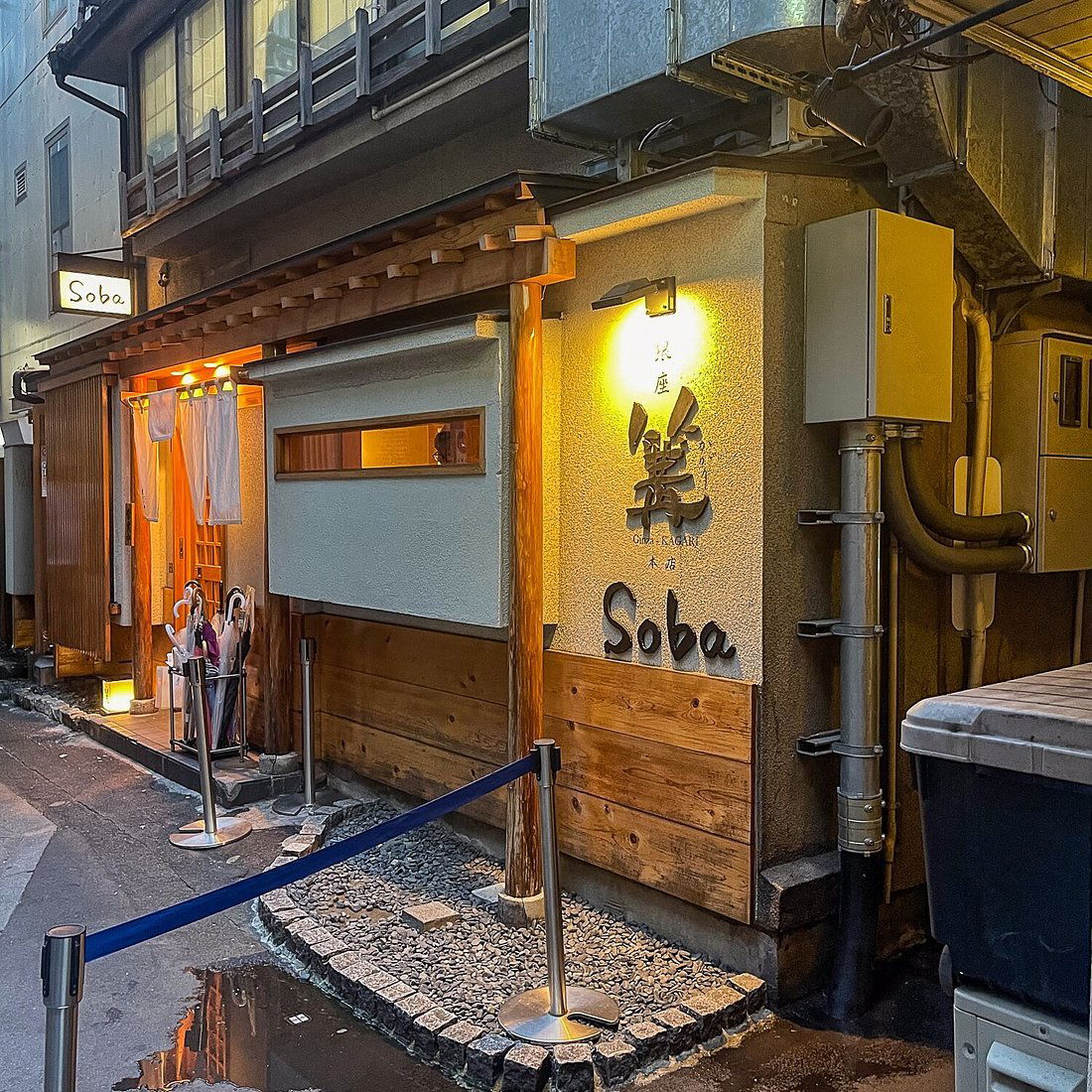
About Ginza Kagari - Soba
Ginza Kagari Soba is the right pick for a focused, no-fuss lunch in central Tokyo — ideal for first-timers who want quality without the commitment of a full kaiseki or omakase booking. The calm, quiet room suits solo diners and pairs. Eat in for the best result; soba does not travel well. Midweek lunch is the optimal visit.
Who Should Book Ginza Kagari Soba
If you are in Ginza for a quick, satisfying lunch between appointments or a shopping circuit, Ginza Kagari Soba is the right call. This is not a destination meal that requires a special occasion — it is the kind of place that rewards the first-timer who wants to eat well without committing to a long kaiseki afternoon or a high-stakes omakase booking. For solo diners or pairs who want something grounded and unhurried, it fits cleanly into a Ginza afternoon.
What to Expect
Ginza Kagari occupies a small, focused space in the heart of Ginza's 6-chome area. The atmosphere runs quiet and composed — the kind of room where you hear the kitchen more than the crowd. Energy is calm and deliberate rather than buzzy. First-timers should know this is not a place for lingering over rounds of drinks; the focus is on the bowl in front of you. The format is tight and efficient, which is exactly what makes it work.
Soba in Tokyo sits in a well-defined category: done correctly, it is one of the most technically demanding simple foods in the city. Ginza Kagari's location in one of Tokyo's most commercially dense neighbourhoods means the clientele skews toward office workers and locals who know what they are doing, not tourists hunting novelty. That is a useful signal about quality consistency.
On Takeout and Delivery
Soba is one of the harder dishes to translate off-premise. The noodles continue to hydrate after plating, and the textural window for optimal eating is narrow , typically minutes, not hours. If takeout is your only option, cold soba (zaru-style) travels better than hot, since the noodles are served separately from the dipping broth. That said, eating at the counter or a table here is the clearly preferable choice. Delivery or takeout should be a fallback, not a plan. If you are exploring Tokyo's broader dining scene, our full Tokyo restaurants guide covers venues that handle off-premise formats more reliably.
Timing
Midweek lunch is the optimal visit , quieter, faster service, and a more focused crowd. Weekend lunch can draw longer waits given Ginza's foot traffic. Avoid peak Saturday afternoon if your schedule is tight. For dinner comparisons or a broader Tokyo evening plan, consider pairing a Ginza Kagari lunch stop with an evening reservation elsewhere , options like RyuGin or L'Effervescence occupy a different tier and a different format entirely. If you are spending time in other Japanese cities, Gion Sasaki in Kyoto and HAJIME in Osaka are worth the trip for more formal experiences. Other regional options worth noting include akordu in Nara, Goh in Fukuoka, and 1000 in Yokohama.
Quick reference: Midweek lunch, eat in, cold soba if takeout is unavoidable. Booking is easy , walk-ins are generally viable outside peak Saturday hours.
Compare Ginza Kagari - Soba
| Venue | Price | Value |
|---|---|---|
| Ginza Kagari - Soba | — | |
| Harutaka | ¥¥¥¥ | — |
| L'Effervescence | ¥¥¥¥ | — |
| RyuGin | ¥¥¥¥ | — |
| Crony | ¥¥¥¥ | — |
| Den | ¥¥¥ | — |
Comparing your options in Tokyo for this tier.
Frequently Asked Questions
Is Ginza Kagari - Soba worth the price?
Pricing varies at Ginza Kagari - Soba; confirm via check the venue's official channels.
Where is Ginza Kagari - Soba located?
Ginza Kagari - Soba is located in Tokyo, at 6 Chome-4-12 Ginza, Chuo City, Tokyo 104-0061, Japan.
How can I contact Ginza Kagari - Soba?
You can reach Ginza Kagari - Soba via check the venue's official channels.
More restaurants in Tokyo
- SézanneOccupying the seventh floor of the Four Seasons Hotel Tokyo at Marunouchi, Sézanne earned its first Michelin star within months of opening in July 2021 and now holds three. British chef Daniel Calvert applies French technique to Japanese ingredients, producing a prix-fixe format that Tabelog has recognised with Silver awards every year from 2023 through 2026. It ranked 4th in Asia's 50 Best Restaurants in 2025 and 15th globally in 2024.
- SazenkaSazenka is the address for Chinese cuisine in Tokyo at its most technically demanding. Chef Tomoya Kawada's wakon-kansai approach — Japanese seasonal ingredients applied through Chinese culinary technique — has earned consecutive Tabelog Gold Awards from 2019 to 2026, a #71 ranking on the World's 50 Best 2025, and 99 points from La Liste 2026. At JPY 50,000–59,999 per head, it is one of the hardest tables in the city to book and worth the effort.
- NarisawaNarisawa is Tokyo's most credentialled innovative tasting menu restaurant — two Michelin stars, Asia's 50 Best number 12, and a Tabelog Silver award — running at JPY 80,000–99,999 per head. Book for a milestone occasion, confirm vegetarian or vegan needs in advance, and reserve at least two to three months out. With 15 seats and reservation-only access, this is one of Tokyo's hardest tables to secure.
- FlorilègeFlorilège delivers two Michelin stars and an Asia's 50 Best #17 ranking at a dinner price of ¥22,000 — competitive for Tokyo at this level. Chef Hiroyasu Kawate's plant-forward tasting menus around an open-kitchen counter at Azabudai Hills make this the strongest choice for contemporary French dining in Tokyo if theatrical, produce-led cooking is what you want. Book well in advance; availability is near-impossible at short notice.
- DenDen holds two Michelin stars, a World's 50 Best top-25 Asia ranking, and a Tabelog Silver Award running back to 2017 — and it books out within hours of the two-month reservation window opening. Chef Zaiyu Hasegawa's daily-changing seasonal omakase runs JPY 30,000–39,999 at dinner in a relaxed house-restaurant setting near Gaiemmae. Book by phone only, noon–5 PM JST. Lunch is irregular; plan around dinner.
- MyojakuMyojaku is a 2-Michelin-star, 14-course French-leaning omakase in Nishiazabu holding a 4.47 Tabelog score, Tabelog Silver 2025–2026, and Asia's 50 Best #45 (2025). Chef Hidetoshi Nakamura's water-forward, no-dashi approach shifts meaningfully with the seasons — making timing your reservation as important as getting one. Budget JPY 50,000–59,999 per head plus 10% service charge; reservations only, near-impossible to secure.
Related editorial
- Asia's 50 Best Restaurants 2026: The Chairman and Wing Go 1-2 from the Same BuildingThe Chairman takes No. 1 and Wing climbs to No. 2 at Asia's 50 Best Restaurants 2026. Both operate from the same Hong Kong building. Here's what it means.
- Four Seasons Yachts Debut: 95 Suites, 11 Restaurants, and a March 2026 Maiden VoyageFour Seasons I launches March 20, 2026, with 95 suites, a one-to-one staff ratio, and 11 onboard restaurants. Worth tracking if you want hotel-grade service at sea.
- LA Michelin Guide 2026: Seven New Restaurants from Tlayudas to Uzbek DumplingsMichelin's March 2026 California Guide update adds six LA restaurants and one Montecito newcomer, spanning Oaxacan tlayudas, Uzbek manti, and Korean-Italian pasta.
Save or rate Ginza Kagari - Soba on Pearl
Keep this venue in your Pearl passport, rate it after you visit, and track it alongside every other place you collect.