
Restaurant in Tokyo, Japan
Gigio
255ptsRegional Italian, residential Tokyo, Michelin-noted.

About Gigio
A Michelin Plate (2025) Italian trattoria in Setagaya, Tokyo, with Tuscan-inspired interiors and an à la carte menu rooted in regional Italian cooking. At ¥¥ pricing with easy bookings, it works well for date nights or low-key celebrations — particularly when seasonal dishes like pici with tomato ragù are in form. One of Tokyo's more accessible recognised Italian options.
Is Gigio worth booking for a special occasion in Tokyo?
Yes — if you want a relaxed Italian meal with genuine regional credibility in a residential Tokyo neighbourhood, Gigio earns its Michelin Plate (2025) without requiring you to spend ¥¥¥¥ to prove the point. This is a trattoria that encourages à la carte ordering, which means you can build the evening around what you actually want rather than committing to a set menu format. For a date night or a low-key celebration dinner where the atmosphere matters as much as the food, it works well. If you need a grander occasion venue with multi-course theatre, look instead at Aroma Fresca or Principio.
What Gigio Is
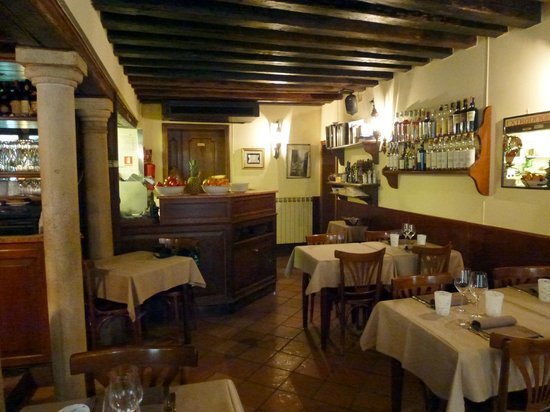
Gigio sits in Setagaya, steps from Shoin Shrine, in one of Tokyo's quieter residential wards. The room draws from Tuscan interiors: a marble bar counter, stone walls in an earthy palette. Visually, it reads more like a regional Italian trattoria than the polished European dining rooms you find in central Tokyo. That setting matters for a special occasion because it creates intimacy without formality. You are not at a table set for performance; you are in a room that expects you to stay for a second glass.
The menu draws on regional Italian cooking — the kind of flavour combinations learned from time in the Italian countryside rather than assembled for a Tokyo audience. Pici with tomato ragù, garlic-forward preparations, and vegetable sformato are the reference points the venue itself highlights. These are dishes shaped by season and locality in Italian cuisine: pici is a Tuscan hand-rolled pasta that changes texture with humidity and flour variation, and a ragù built on good tomatoes is only as interesting as the tomatoes allow.
Seasonal Angle: When to Visit and What to Order Around
Because Gigio encourages à la carte dining across a comprehensive menu, the seasonal rotation of Italian regional cooking is where the real value sits. Italian trattoria cooking follows produce logic: spring favours lighter preparations with legumes and green vegetables, summer leans into tomatoes and herbs, autumn brings richer ragùs and mushroom-forward dishes, and winter supports the kind of garlic-heavy braises the venue's own descriptions reference. Visiting in autumn or winter, when a tomato ragù and a vegetable sformato are at their most appropriate, aligns your order with the kitchen's natural strengths. In spring or summer, the à la carte structure means you can steer toward lighter, vegetable-led options without being locked into a format that doesn't suit the weather.
This seasonal flexibility is one reason the à la carte model here is an advantage rather than a compromise. At a tasting-menu restaurant, the kitchen decides your seasonal arc. At Gigio, you do , which is more useful if you know the category well or have specific preferences. If you are less confident about what to order, the menu's roots in specific regional traditions (rather than a generic pan-Italian spread) give the staff something concrete to guide you toward.
How It Fits into Tokyo's Italian Scene
Tokyo has a deep Italian restaurant culture, and Gigio occupies a distinct position within it. It is not a destination restaurant requiring a special trip from Shinjuku or Shibuya, but that is not the point. The Michelin Plate recognition signals consistent kitchen quality without the booking complexity or price premium of a starred room. Among Tokyo's Italian options, consider where Gigio sits relative to neighbours in the category: PRISMA, AlCeppo, and Gucci Osteria da Massimo Bottura Tokyo each offer a different price and formality profile. Gigio's ¥¥ positioning makes it the most accessible of the group without the trade-off feeling punishing.
For Italian in other Japanese cities, cenci in Kyoto is worth knowing if your itinerary extends south, and 8½ Otto e Mezzo Bombana in Hong Kong is the regional benchmark if you are traveling broader. Within Japan more generally, HAJIME in Osaka, Gion Sasaki in Kyoto, akordu in Nara, Goh in Fukuoka, 1000 in Yokohama, and 6 in Okinawa round out a sense of how the country's serious dining landscape extends beyond Tokyo.
Ratings and Trust Signals
Gigio holds a Michelin Plate (2025) and a Google rating of 4.3 from 50 reviews. The Michelin Plate does not carry the weight of a star, but it is a documented signal of consistent quality from the guide's inspectors , useful confirmation when you are booking somewhere outside the central Tokyo circuits you might know better. The Google sample is modest at 50 reviews, which reflects the neighbourhood location more than any quality concern.
Practical Details
Reservations: Booking is rated easy , walk-in may be possible, but calling ahead is sensible given the intimate room size implied by the trattoria format. Address: 4 Chome-24-19 Wakabayashi, Setagaya City, Tokyo , near Shoin Shrine, accessible from Sangenjaya or Setagaya-Daita stations. Budget: ¥¥ pricing makes this one of the more accessible Michelin-recognised Italian options in Tokyo; expect a meaningful meal without the ¥¥¥¥ commitment of a tasting-menu room. Dress: No dress code is documented; the Tuscan trattoria aesthetic suggests smart casual is appropriate and over-dressing would feel mismatched. Leading for: Date nights, low-key celebrations, solo dining at the bar counter, or any occasion where you want quality without occasion-dining formality.
Explore More in Tokyo and Beyond
For broader context on dining and travel planning in the city, see our full Tokyo restaurants guide, our full Tokyo hotels guide, our full Tokyo bars guide, our full Tokyo wineries guide, and our full Tokyo experiences guide.
FAQ: Gigio, Tokyo
- Can Gigio accommodate groups? The trattoria format and neighbourhood location suggest moderate capacity rather than a large-group venue. For groups of four or more, calling ahead is advisable to confirm table configuration. For larger private bookings, a more purpose-built venue in central Tokyo may be more practical.
- Is Gigio good for solo dining? Yes. The marble bar counter is the right seat for a solo visit , it gives you proximity to the kitchen activity and removes the table-for-one awkwardness that affects some formal dining rooms. At ¥¥ pricing, solo dining here is also a more comfortable budget decision than at starred Italian rooms in the city.
- Does Gigio handle dietary restrictions? The menu covers regional Italian cuisine with a comprehensive à la carte structure, which typically allows more flexibility for dietary adjustments than a fixed tasting menu. Specific accommodations are not documented , contact the restaurant directly to confirm before booking.
- Is Gigio worth the price? At ¥¥, yes. A Michelin Plate at this price tier is a strong value signal. You are getting recognised kitchen quality without the premium that comes with starred rooms or tasting-menu formats. Compare this to ¥¥¥¥ Italian options in Tokyo where the price gap is substantial and the format less flexible.
- Is the tasting menu worth it at Gigio? Gigio specifically encourages à la carte dining rather than a tasting menu format , that is part of its identity. If you want a guided multi-course Italian experience in Tokyo, Aroma Fresca or Principio are more appropriate choices.
- Can I eat at the bar at Gigio? The marble bar counter is a documented feature of the room and is the recommended seat for solo diners or anyone who wants a less formal version of the meal. It is a practical and atmospheric option given the Tuscan interior design.
- What should I wear to Gigio? No dress code is listed, and the trattoria setting in a residential Setagaya neighbourhood points toward smart casual. Think clean, put-together rather than formal. The room does not demand occasion dressing, which is part of why it works for a relaxed special occasion rather than a high-ceremony one.
Compare Gigio
| Venue | Cuisine | Price | Booking Difficulty |
|---|---|---|---|
| Gigio | Italian | ¥¥ | Easy |
| Harutaka | Sushi | ¥¥¥¥ | Unknown |
| L'Effervescence | French | ¥¥¥¥ | Unknown |
| RyuGin | Kaiseki, Japanese | ¥¥¥¥ | Unknown |
| HOMMAGE | Innovtive French, French | ¥¥¥¥ | Unknown |
| Crony | Innovative, French | ¥¥¥¥ | Unknown |
Key differences to consider before you reserve.
Frequently Asked Questions
Can Gigio accommodate groups?
Gigio is a trattoria-format room with a marble bar counter and Tuscan-style interiors, which suggests an intimate space rather than one built for large parties. Groups of four or fewer are likely the practical ceiling for a comfortable booking. If you are planning a larger dinner, call ahead to confirm capacity before committing.
Is Gigio good for solo dining?
Yes — the marble bar counter makes Gigio a solid solo option. À la carte ordering means you control the pace and cost, and a ¥¥ price range keeps a solo meal from becoming a commitment. For solo diners who want a counter seat with a fuller omakase format, Harutaka is an alternative worth considering, but Gigio suits a lower-key evening.
Does Gigio handle dietary restrictions?
The menu is described as comprehensive and regionally Italian, which typically means pasta, vegetables, and meat-forward dishes. The vegetable sformato on the menu signals some vegetable-focused options exist. Specific dietary accommodation details are not confirmed in available records, so check the venue's official channels before booking if restrictions are a factor.
Is Gigio worth the price?
At ¥¥ pricing with a Michelin Plate (2025), Gigio sits in a range where the value case is straightforward for a neighbourhood Italian with documented regional credibility. It is not a splurge destination, but it delivers more culinary specificity than a generic Tokyo Italian at the same price point. If budget is tight, it competes well against comparable mid-range options in the city.
Is the tasting menu worth it at Gigio?
Gigio actively encourages à la carte dining, and the format is designed around that approach rather than a set tasting menu. The regional Italian menu, including dishes like pici with tomato ragú and vegetable sformato, is built to be ordered freely. If a structured tasting progression is what you want, L'Effervescence or RyuGin are better fits for that format in Tokyo.
Can I eat at the bar at Gigio?
Yes — Gigio has a marble bar counter, and it is a deliberate part of the room's design. Counter seating works well for solo diners or pairs who want a more casual, drop-in feel. The à la carte format pairs naturally with bar dining, so this is one of the more practical ways to experience the venue without a full table reservation.
What should I wear to Gigio?
Gigio's Tuscan trattoria setting and residential Setagaya location point to a relaxed, unfussy dress expectation. Clean, neat casual clothing fits the room. It is not a formal dining environment, and overdressing would feel out of place given the neighbourhood and ¥¥ pricing.
Recognized By

More restaurants in Tokyo
- SézanneOccupying the seventh floor of the Four Seasons Hotel Tokyo at Marunouchi, Sézanne earned its first Michelin star within months of opening in July 2021 and now holds three. British chef Daniel Calvert applies French technique to Japanese ingredients, producing a prix-fixe format that Tabelog has recognised with Silver awards every year from 2023 through 2026. It ranked 4th in Asia's 50 Best Restaurants in 2025 and 15th globally in 2024.
- SazenkaSazenka is the address for Chinese cuisine in Tokyo at its most technically demanding. Chef Tomoya Kawada's wakon-kansai approach — Japanese seasonal ingredients applied through Chinese culinary technique — has earned consecutive Tabelog Gold Awards from 2019 to 2026, a #71 ranking on the World's 50 Best 2025, and 99 points from La Liste 2026. At JPY 50,000–59,999 per head, it is one of the hardest tables in the city to book and worth the effort.
- NarisawaNarisawa is Tokyo's most credentialled innovative tasting menu restaurant — two Michelin stars, Asia's 50 Best number 12, and a Tabelog Silver award — running at JPY 80,000–99,999 per head. Book for a milestone occasion, confirm vegetarian or vegan needs in advance, and reserve at least two to three months out. With 15 seats and reservation-only access, this is one of Tokyo's hardest tables to secure.
- FlorilègeFlorilège delivers two Michelin stars and an Asia's 50 Best #17 ranking at a dinner price of ¥22,000 — competitive for Tokyo at this level. Chef Hiroyasu Kawate's plant-forward tasting menus around an open-kitchen counter at Azabudai Hills make this the strongest choice for contemporary French dining in Tokyo if theatrical, produce-led cooking is what you want. Book well in advance; availability is near-impossible at short notice.
- DenDen holds two Michelin stars, a World's 50 Best top-25 Asia ranking, and a Tabelog Silver Award running back to 2017 — and it books out within hours of the two-month reservation window opening. Chef Zaiyu Hasegawa's daily-changing seasonal omakase runs JPY 30,000–39,999 at dinner in a relaxed house-restaurant setting near Gaiemmae. Book by phone only, noon–5 PM JST. Lunch is irregular; plan around dinner.
- MyojakuMyojaku is a 2-Michelin-star, 14-course French-leaning omakase in Nishiazabu holding a 4.47 Tabelog score, Tabelog Silver 2025–2026, and Asia's 50 Best #45 (2025). Chef Hidetoshi Nakamura's water-forward, no-dashi approach shifts meaningfully with the seasons — making timing your reservation as important as getting one. Budget JPY 50,000–59,999 per head plus 10% service charge; reservations only, near-impossible to secure.
Similar venues by awards
Related editorial
- Best Fine Dining Restaurants in ParisFrom three-Michelin-star icons to the next generation of Parisian chefs pushing boundaries, these are the restaurants that define fine dining in the world's culinary capital.
- Best Luxury Hotels in RomeFrom rooftop terraces overlooking ancient ruins to Michelin-starred hotel dining, these are the luxury hotels that make Rome unforgettable.
- Best Cocktail Bars in KyotoFrom sleek lounges to hidden speakeasies, Kyoto's cocktail scene blends Japanese precision with global influence in ways you won't find anywhere else.
Save or rate Gigio on Pearl
Keep this venue in your Pearl passport, rate it after you visit, and track it alongside every other place you collect.