
Restaurant in Tokyo, Japan
fragment Azabujuban
290ptsItalian-Japanese sourcing done with real conviction.

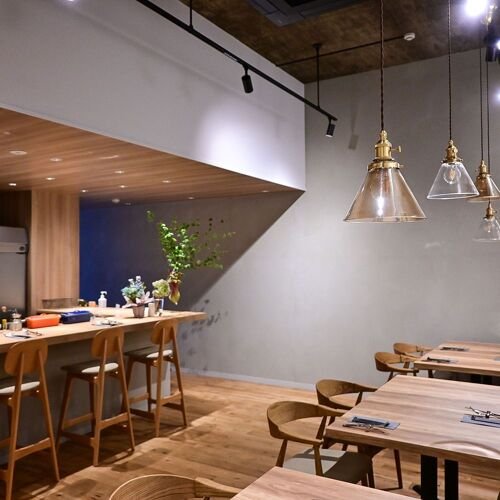
About fragment Azabujuban
A Michelin Plate Italian restaurant in Azabujuban built around Japan's regional seafood networks, with a particular focus on tuna — carpaccio, roast cheek, salad. At ¥¥¥, it is one of the more affordable and genuinely specific Italian options in Tokyo. Booking is easy; lunch pasta is the low-commitment entry point, dinner à la carte is where the full concept plays out.
Verdict
Book fragment Azabujuban if you want Italian food in Tokyo that takes Japan's ingredient culture seriously. Its concept — Italian cuisine built around Japanese regional produce, particularly tuna sourced through intermediate wholesalers across the country — is specific enough to matter. Holding a Michelin Plate in both 2024 and 2025, it sits below the starred tier but well above generic Italian in the city. At ¥¥¥ pricing, it is more accessible than most of its Azabu-area competition. The caveat: with only 17 Google reviews logged, this is a small, quiet room, not a social-media fixture. That is either a feature or a warning, depending on what you are after.
Portrait
The address puts fragment Azabujuban on the second floor of a building in Azabujuban, a neighbourhood that sits between the embassies of Minato-ku and the more frenetic energy of Roppongi. The setting signals deliberate restraint. This is not a destination designed around spectacle. What you see on the plate is where the ambition lives.
The organising idea is Italian cuisine assembled from Japanese geography. The kitchen uses the country's regional seafood networks to source ingredients that most Italian restaurants in Tokyo , including well-regarded names like Aroma Fresca and Principio , source more conventionally. The standout is tuna, handled here with a level of focus that reflects the chef's clear specialisation: carpaccio, tuna salad, roast cheek of tuna. These are not decorative nods to Japan. They represent a sourcing relationship with intermediate tuna wholesalers that few Italian restaurants in the country have built.
For explorers who track how chefs use Japan's ingredient distribution infrastructure, this is genuinely interesting territory. Italy and Japan share an obsession with provenance and regional specificity, and fragment Azabujuban is one of the more coherent attempts to let those two sensibilities speak to each other. Compare this approach with PRISMA, which works a different creative register, or Gucci Osteria da Massimo Bottura Tokyo, where Italian identity is the primary frame. Fragment positions Japan's geography as the ingredient engine and Italian technique as the vehicle. The distinction is meaningful if you are choosing between them.
The format is structured to encourage different visit styles. Lunchtime centres on pasta, making it an entry point at a lower commitment level. Evenings open into an extensive à la carte menu, which gives you more room to explore the tuna-focused programme. There is no indication of a formal tasting menu, but the à la carte breadth is enough to build a considered meal. For explorers who prefer to direct their own progression through a menu rather than surrender to a set sequence, this structure is a practical advantage.
Drinks
No specific drinks data is available for fragment Azabujuban. Given the Italian framing, expect a wine list oriented toward Italian regions, which at this price point and concept level in Tokyo typically means reasonable depth without the cellar scale of a place like AlCeppo. If the drinks programme is a primary consideration for your visit, confirm the list directly with the restaurant before booking. For a serious cocktail-first evening in Tokyo, the city has dedicated bar options covered in our full Tokyo bars guide.
Booking
Booking here is rated Easy. With a Michelin Plate rather than stars, and a Google review count suggesting a compact operation, you are unlikely to be fighting for a table weeks in advance. One to two weeks' notice should be sufficient for most visits, though weekend evenings in Azabujuban can tighten up. Walk-ins at lunch are more plausible than at dinner. No phone number or direct booking URL is listed in our records; contact the restaurant through standard discovery channels or the building's second-floor office.
Practical Details
| Detail | fragment Azabujuban | Florilège (peer) | Aroma Fresca (peer) |
|---|---|---|---|
| Cuisine | Italian (Japan-sourced) | French | Italian |
| Price range | ¥¥¥ | ¥¥¥ | ¥¥¥¥ |
| Recognition | Michelin Plate 2024, 2025 | Michelin starred | Michelin starred |
| Booking difficulty | Easy | Moderate | Moderate–Hard |
| Leading for | Ingredient-focused Italian | Modern French tasting | Classic Italian in Tokyo |
| Lunch option | Yes (pasta) | Yes | Yes |
How It Compares
See the comparison section below for fragment Azabujuban against its Tokyo peers.
Further Exploration
If Italian food in Asia with serious regional intent interests you, cenci in Kyoto works a comparable philosophy with Kyoto's seasonal produce as the driver. For the broader Italian-in-Asia reference point, 8½ Otto e Mezzo Bombana in Hong Kong shows what the three-Michelin-star ceiling looks like in the region. Within Japan, the experiential range runs from HAJIME in Osaka to Gion Sasaki in Kyoto, akordu in Nara, Goh in Fukuoka, 1000 in Yokohama, and 6 in Okinawa , all worth factoring into a wider Japan itinerary. For Tokyo specifically, see our full Tokyo restaurants guide, our Tokyo hotels guide, our Tokyo wineries guide, and our Tokyo experiences guide.
FAQ
- Is fragment Azabujuban worth the price? At ¥¥¥, yes , particularly if you are interested in Italian food that uses Japan's regional seafood networks rather than imported product. The Michelin Plate recognition in both 2024 and 2025 confirms it clears a quality threshold. It is not a splurge destination, but it delivers specific, considered cooking at a price that is easier to justify than the ¥¥¥¥ tier.
- Can fragment Azabujuban accommodate groups? Specific seat count and private dining data are not available. Given the address (second floor, Azabujuban) and the small review volume, this reads as a compact room. For larger groups , six or more , contact the restaurant in advance to confirm availability and layout.
- What should a first-timer know about fragment Azabujuban? Go at lunch first if you want a lower-stakes introduction: the pasta-focused lunch menu is more focused and less of a financial commitment than the full evening à la carte. Come back for dinner if the tuna programme , carpaccio, salad, roast cheek , appeals after the first visit. Azabujuban is an easy neighbourhood to navigate by Tokyo Metro (Azabu-Juban station, Namboku or Oedo line).
- How far ahead should I book fragment Azabujuban? One to two weeks should be sufficient for most visits. Booking is rated Easy relative to Tokyo's competitive reservation market. Weekend dinner may tighten, so book at least 10 days ahead if you have a fixed date. Lunch is more forgiving.
- What are alternatives to fragment Azabujuban in Tokyo? For Italian at a similar price tier, Principio is worth comparing. For Italian with more formal recognition, Aroma Fresca operates at ¥¥¥¥ with Michelin stars. If you want to stay in the ¥¥¥ French tier as a counterpoint, Florilège is the strongest comparison for ingredient-led cooking with a clear point of view.
- Is fragment Azabujuban good for a special occasion? It works for a considered dinner with someone who appreciates ingredient provenance and a specific concept, but it is not a grand-occasion room. For a dinner where the room and the ceremony matter as much as the food, the ¥¥¥¥ tier , AlCeppo or a starred option , gives you more of that register.
- Is the tasting menu worth it at fragment Azabujuban? The database does not confirm a formal tasting menu. The evening format is à la carte. If you are looking for a set tasting sequence with tuna as the through-line, build your own meal from the à la carte options rather than expecting a chef's menu. The à la carte breadth is reportedly extensive, which gives you enough latitude to eat well without a fixed sequence.
Compare fragment Azabujuban
| Venue | Awards | Price | Value |
|---|---|---|---|
| fragment Azabujuban | The concept is intriguing: ‘Italian cuisine from all over Japan’, the furthest thing from traditional Edo fare. Its strength is its unique routes to obtain seafood from around the country, sourced from intermediate tuna wholesalers. The chef’s speciality, tuna, is served as carpaccio, tuna salad, roast cheek of tuna and more. To encourage drop-in trade, the restaurant offers a selection of pasta at lunchtime and an extensive à la carte menu in the evening.; Michelin Plate (2025); Michelin Plate (2024) | ¥¥¥ | — |
| Harutaka | Michelin 3 Star, World's 50 Best | ¥¥¥¥ | — |
| RyuGin | Michelin 3 Star, World's 50 Best | ¥¥¥¥ | — |
| L'Effervescence | Michelin 3 Star, World's 50 Best | ¥¥¥¥ | — |
| HOMMAGE | Michelin 2 Star, World's 50 Best | ¥¥¥¥ | — |
| Florilège | Michelin 2 Star, World's 50 Best | ¥¥¥ | — |
Key differences to consider before you reserve.
Frequently Asked Questions
Is fragment Azabujuban worth the price?
At ¥¥¥, it earns its price point if you care about ingredient provenance. The restaurant sources tuna through intermediate wholesalers with supply routes most Tokyo restaurants cannot access, and builds its Italian menu around that. If you want straightforward Italian at lower cost, there are cheaper options in Minato-ku. If Japan's seafood culture expressed through Italian cooking is your interest, the value is real.
Can fragment Azabujuban accommodate groups?
The second-floor address in a building in Azabujuban suggests a compact space, so large groups should check the venue's official channels before assuming availability. The à la carte evening format works better for groups than a fixed tasting menu would, since it allows the table to order across different dishes including pasta, carpaccio, and roast tuna cheek.
What should a first-timer know about fragment Azabujuban?
The menu is built around tuna in forms you will not find at a conventional Italian restaurant: carpaccio, tuna salad, roast cheek. Lunch skews more casual with a pasta focus; evenings open into an extensive à la carte. Come at lunch if you want a lower-commitment first visit; the drop-in trade format makes it accessible without a long booking lead time.
How far ahead should I book fragment Azabujuban?
Booking is rated Easy here. The restaurant holds a Michelin Plate rather than stars, and the operation appears small-scale, so you are unlikely to face the multi-week waits common at starred Tokyo venues. The restaurant actively encourages drop-in trade at lunch, which makes it one of the more accessible ¥¥¥ options in Azabujuban.
What are alternatives to fragment Azabujuban in Tokyo?
For Italian with serious European credential in Tokyo, Florilège and L'Effervescence both sit above fragment in prestige and price. If the appeal is specifically the Japanese-ingredient-meets-European-cooking angle, Florilège is the sharper comparison. For a similar philosophy applied to Kyoto's seasonal produce rather than Tokyo seafood, cenci in Kyoto is worth noting.
Is fragment Azabujuban good for a special occasion?
It works for a special occasion if the occasion suits a relaxed, concept-driven dinner rather than a grand-occasion format. The Michelin Plate recognition for 2024 and 2025 gives it credibility, and the tuna-led Italian menu provides a clear talking point. If you need formal ceremony or a private room, look at L'Effervescence or HOMMAGE instead.
Is the tasting menu worth it at fragment Azabujuban?
The venue data does not confirm a dedicated tasting menu format; the evening offering is an extensive à la carte. That structure actually plays in your favour at ¥¥¥: you can build a meal around the tuna specialities without committing to a fixed progression. Order the carpaccio and roast tuna cheek at minimum — those are the chef's stated specialities.
Recognized By

More restaurants in Tokyo
- SézanneOccupying the seventh floor of the Four Seasons Hotel Tokyo at Marunouchi, Sézanne earned its first Michelin star within months of opening in July 2021 and now holds three. British chef Daniel Calvert applies French technique to Japanese ingredients, producing a prix-fixe format that Tabelog has recognised with Silver awards every year from 2023 through 2026. It ranked 4th in Asia's 50 Best Restaurants in 2025 and 15th globally in 2024.
- SazenkaSazenka is the address for Chinese cuisine in Tokyo at its most technically demanding. Chef Tomoya Kawada's wakon-kansai approach — Japanese seasonal ingredients applied through Chinese culinary technique — has earned consecutive Tabelog Gold Awards from 2019 to 2026, a #71 ranking on the World's 50 Best 2025, and 99 points from La Liste 2026. At JPY 50,000–59,999 per head, it is one of the hardest tables in the city to book and worth the effort.
- NarisawaNarisawa is Tokyo's most credentialled innovative tasting menu restaurant — two Michelin stars, Asia's 50 Best number 12, and a Tabelog Silver award — running at JPY 80,000–99,999 per head. Book for a milestone occasion, confirm vegetarian or vegan needs in advance, and reserve at least two to three months out. With 15 seats and reservation-only access, this is one of Tokyo's hardest tables to secure.
- FlorilègeFlorilège delivers two Michelin stars and an Asia's 50 Best #17 ranking at a dinner price of ¥22,000 — competitive for Tokyo at this level. Chef Hiroyasu Kawate's plant-forward tasting menus around an open-kitchen counter at Azabudai Hills make this the strongest choice for contemporary French dining in Tokyo if theatrical, produce-led cooking is what you want. Book well in advance; availability is near-impossible at short notice.
- DenDen holds two Michelin stars, a World's 50 Best top-25 Asia ranking, and a Tabelog Silver Award running back to 2017 — and it books out within hours of the two-month reservation window opening. Chef Zaiyu Hasegawa's daily-changing seasonal omakase runs JPY 30,000–39,999 at dinner in a relaxed house-restaurant setting near Gaiemmae. Book by phone only, noon–5 PM JST. Lunch is irregular; plan around dinner.
- MyojakuMyojaku is a 2-Michelin-star, 14-course French-leaning omakase in Nishiazabu holding a 4.47 Tabelog score, Tabelog Silver 2025–2026, and Asia's 50 Best #45 (2025). Chef Hidetoshi Nakamura's water-forward, no-dashi approach shifts meaningfully with the seasons — making timing your reservation as important as getting one. Budget JPY 50,000–59,999 per head plus 10% service charge; reservations only, near-impossible to secure.
Similar venues by awards
Related editorial
- Best Fine Dining Restaurants in ParisFrom three-Michelin-star icons to the next generation of Parisian chefs pushing boundaries, these are the restaurants that define fine dining in the world's culinary capital.
- Best Luxury Hotels in RomeFrom rooftop terraces overlooking ancient ruins to Michelin-starred hotel dining, these are the luxury hotels that make Rome unforgettable.
- Best Cocktail Bars in KyotoFrom sleek lounges to hidden speakeasies, Kyoto's cocktail scene blends Japanese precision with global influence in ways you won't find anywhere else.
Save or rate fragment Azabujuban on Pearl
Keep this venue in your Pearl passport, rate it after you visit, and track it alongside every other place you collect.