
Restaurant in Tokyo, Japan
falò
250ptsBook the counter. The fire does the work.

About falò
Falò is a Michelin Bib Gourmand Italian counter in Daikanyama built around live-fire cooking over an open hearth — not a trattoria, not fine dining, but a focused fire-cooking experience at ¥¥ pricing. At this price tier, the value case is clear. Book one to two weeks out; the counter format keeps availability tighter than the Easy rating suggests.
Verdict
Falò is not a conventional Italian restaurant in Tokyo — and that misconception is what trips up first-timers. This is a fire-cooking counter in Daikanyama's basement level, built around a hearth, where the entire meal is structured by what the flame does to the ingredient. If you are expecting a red-sauce trattoria or a white-tablecloth pasta experience, book Aroma Fresca or Principio instead. But if you want to watch Italian technique applied to live fire in an intimate counter setting — with a Michelin Bib Gourmand to validate the value , falò earns a clear yes.
The Space
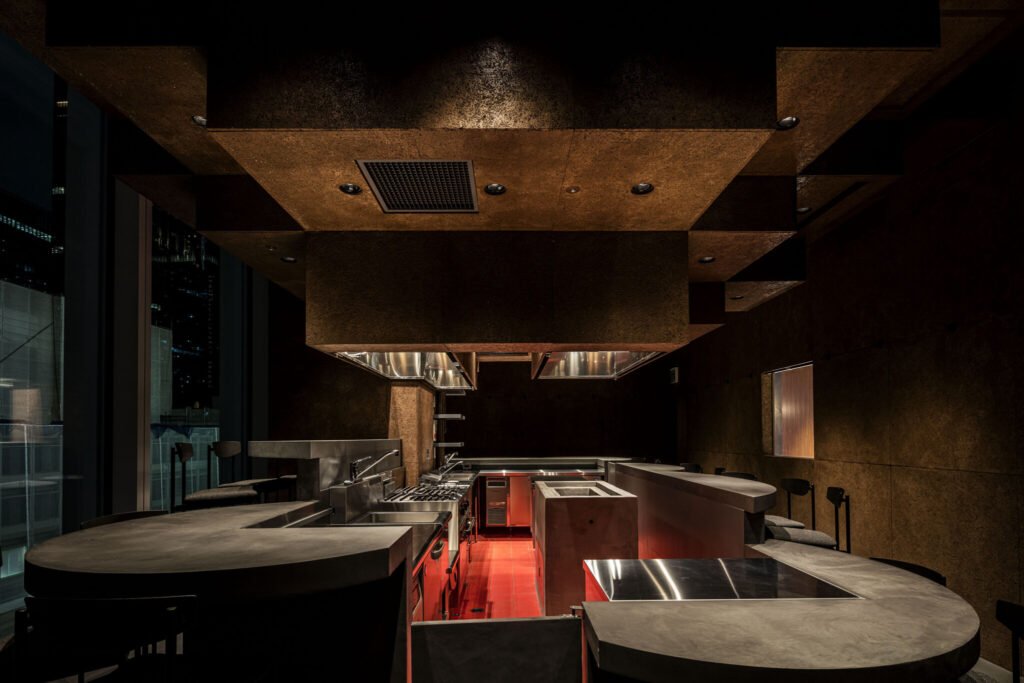
The address puts you underground in the LUZ Daikanyama building, and that basement setting is not incidental to the experience. The counter wraps around an open hearth, which means every seat faces the fire and the chef working it. The layout is deliberately theatrical in a functional sense: you are not watching performance cooking on a distant raised platform, you are close enough to feel the heat shift when charcoal is added to the grate. For a food-focused diner, this spatial arrangement is the point. The fire is the protagonist of the room, and the counter positions you directly in its orbit. Compare this to the more conventional dining-room setup at AlCeppo , falò's spatial grammar is fundamentally different, designed to foreground process over polish.
The Menu Architecture
The progression at falò follows the logic of fire intensity and ingredient suitability rather than a classical Italian antipasto-primo-secondo sequence. The kitchen uses three distinct techniques , grilling close to the flame, cooking over an open hearth, and direct placement on charcoal , and the menu moves through each. This is not a subtle distinction. Direct charcoal contact produces a different crust and smoke register than hearth-suspended grilling, and a menu structured around those differences has genuine narrative arc. You are eating through a series of decisions the chef made about proximity and heat, not simply through a list of dishes.
Porchetta cooked for over an hour is the anchor of that progression. Slow-cooked pork over live fire is a test of patience and fire management, and it is the dish most cited by visitors as the reason to return. Straw-grilled fish and foil-grilled vegetables extend the technique range without diluting it. The kitchen at falò does not use fire as garnish or atmosphere , it is the actual cooking method, applied with precision. Chef Tanisha's focus during service, described in the Michelin documentation as laser-concentrated on the food, reflects a kitchen culture where execution at the hearth is the central discipline.
For explorers who have eaten through Gucci Osteria da Massimo Bottura Tokyo or PRISMA and want Italian cooking in Tokyo approached from a completely different angle, falò's fire-first logic offers that contrast directly. It also sits in an interesting regional context: the Japanese tradition of live-fire cooking over binchotan has likely shaped how Tokyo diners read this kind of open-hearth Italian, making falò's concept land differently here than it might in Milan or Rome.
Value and Positioning
The Bib Gourmand rating is the key data point for value assessment. Michelin's Bib category is specifically awarded to restaurants offering good cooking at moderate prices , it is a signal that the food quality justifies the spend without requiring a fine-dining budget. At ¥¥ pricing, falò sits well below the ¥¥¥¥ tier occupied by Tokyo's flagship Italian addresses like Aroma Fresca. That gap is significant. You are getting a Michelin-recognised kitchen, a distinctive cooking format, and a counter experience for a price that does not require a special-occasion justification.
For context within the broader Italian dining spectrum in Japan, falò occupies a specific niche: fire-focused, counter-format, Bib-level pricing. Diners who want to map the full range of Italian cooking in this country should also consider cenci in Kyoto for a contrast in style and setting, or 8 1/2 Otto e Mezzo Bombana in Hong Kong if the question is where Italian fine dining in Asia peaks in terms of formal execution.
Booking and Logistics
Booking at falò is rated Easy. This is worth noting because Daikanyama has a concentration of serious restaurants where reservations become competitive quickly. For most visits, booking one to two weeks out should secure a seat , though if you have a fixed travel date, earlier is always lower-risk. The counter format means seat count is limited, so spontaneous walk-ins carry more uncertainty than the Easy rating might suggest. Check availability before you arrive in Tokyo rather than treating this as a fallback option for a free evening.
The LUZ Daikanyama building is in Shibuya ward. Daikanyama is walkable from Daikanyama Station on the Tokyu Toyoko Line and is roughly adjacent to Nakameguro, so it pairs well with an evening that starts or ends in that neighbourhood. For broader planning around a Tokyo visit, see our full Tokyo restaurants guide, our full Tokyo hotels guide, and our full Tokyo bars guide.
Know Before You Go
- Price tier: ¥¥ , moderate, Bib Gourmand value positioning
- Award: Michelin Bib Gourmand 2024
- Format: Counter seating around an open hearth
- Cuisine: Italian, fire-cooking focused
- Location: LUZ Daikanyama B1, Daikanyamacho, Shibuya, Tokyo
- Booking difficulty: Easy , 1–2 weeks out is generally sufficient for most dates
- Leading for: Food-focused diners, couples, counter dining enthusiasts, fire-cooking explorers
- Google rating: 4.2 (211 reviews)
Explore More in Tokyo and Beyond
If falò's fire-cooking approach appeals and you want to extend the principle across Japanese formats, Goh in Fukuoka and HAJIME in Osaka are worth adding to a Japan itinerary. For a quieter, different pace, akordu in Nara and Gion Sasaki in Kyoto cover contrasting ends of the Japanese fine dining spectrum. See also 1000 in Yokohama and 6 in Okinawa for further regional range. For Tokyo-specific planning resources, our Tokyo wineries guide and our Tokyo experiences guide cover the full picture.
Frequently Asked Questions
- How far ahead should I book falò? Booking one to two weeks in advance is usually enough given the Easy booking difficulty rating. That said, the counter is small and seats are finite , if you are visiting Tokyo on fixed travel dates, book as soon as your itinerary is confirmed. Do not treat falò as a walk-in fallback; the hearth counter format limits last-minute availability more than the difficulty rating alone implies.
- Is the tasting menu worth it at falò? At ¥¥ pricing with a Michelin Bib Gourmand, yes. The Bib category exists precisely to flag kitchens where the cooking justifies the price without requiring a fine-dining spend. Chef Tanisha's fire-cooking progression , from hearth grilling to direct charcoal contact , gives the meal a structural logic that elevates it beyond a standard Italian menu. If you want this level of technique and concept at ¥¥¥¥, you would be paying significantly more at Aroma Fresca without necessarily getting a more interesting cooking format.
- What should a first-timer know about falò? The key reset: this is not a classic Italian trattoria. It is a fire-cooking counter where the open hearth is the kitchen's central tool. Expect counter seating directly facing the chef, a menu structured around grilling techniques rather than conventional Italian courses, and a basement setting in Daikanyama that is intimate rather than sprawling. The Bib Gourmand signals that quality is genuine and the price is fair , come with curiosity about process and you will get more out of it.
- Is falò good for a special occasion? Yes, with a caveat about format. The counter setting and open hearth create a focused, high-engagement atmosphere that works well for two people who want a memorable dinner built around craft and fire. It is less suited to large group celebrations or anyone who wants a more formal white-tablecloth Italian experience. For the latter, Principio or Gucci Osteria da Massimo Bottura Tokyo would be a better fit. At ¥¥ pricing, falò is also a special occasion that does not require a high-budget evening, which makes it a practical choice for marking something without full fine-dining spend.
- Can falò accommodate groups? The counter format around a hearth limits group size naturally. Without confirmed seat count data, the safest approach is to contact the venue directly to ask about maximum party size before planning a group booking. For reference, counter-format restaurants in Tokyo at this price tier typically seat between 8 and 16 in total , meaning large groups may not fit, or may be split across sessions. Groups of two to four are the format's natural fit.
- Is falò worth the price? At ¥¥ with a 2024 Michelin Bib Gourmand and a 4.2 Google rating across 211 reviews, the answer is straightforwardly yes. The Bib Gourmand is Michelin's explicit value signal , it marks restaurants where cooking quality outpaces price. You are getting a distinctive concept (Italian fire cooking, counter format, open hearth), a recognised kitchen, and a Daikanyama address for moderate spend. The comparison that makes this clearest: the same Michelin organisation awards ¥¥¥¥ stars to Italian restaurants in Tokyo that offer a more formal but not necessarily more interesting experience.
Compare falò
| Venue | Cuisine | Price | Awards | Booking Difficulty | Value |
|---|---|---|---|---|---|
| falò | Italian | ¥¥ | The counter kitchen arrayed around a hearth suggests an open-air bonfire. The eyes are riveted to the chef as he grills the meat, throwing charcoal on the fire. The use of grilling close to the flame, grilling over an open hearth and directly placing ingredients on the charcoal, brings the ingredients and brightly burning charcoal into a tight embrace. Porchetta, patiently cooked for over an hour, is a popular item. Straw-grilled fish and foil-grilled vegetables whet curiosity and appetite. The chef works with practiced ease, laser-focused on the foodstuffs.; Michelin Bib Gourmand (2024) | Easy | — |
| Harutaka | Sushi | ¥¥¥¥ | Michelin 3 Star, World's 50 Best | Unknown | — |
| L'Effervescence | French | ¥¥¥¥ | Michelin 3 Star, World's 50 Best | Unknown | — |
| RyuGin | Kaiseki, Japanese | ¥¥¥¥ | Michelin 3 Star, World's 50 Best | Unknown | — |
| HOMMAGE | Innovtive French, French | ¥¥¥¥ | Michelin 2 Star, World's 50 Best | Unknown | — |
| Crony | Innovative, French | ¥¥¥¥ | Michelin 2 Star, World's 50 Best | Unknown | — |
What to weigh when choosing between falò and alternatives.
Frequently Asked Questions
How far ahead should I book falò?
Booking difficulty is rated Easy, which is notable for Daikanyama — a neighbourhood where other serious restaurants can require weeks of lead time. A few days ahead should be sufficient in most cases, though weekend counter seats will fill faster. Confirm directly through the venue given that hours and online booking channels are not publicly listed.
Is the tasting menu worth it at falò?
At ¥¥ pricing with a Michelin Bib Gourmand (2024), the value case is solid. Michelin's Bib category specifically recognises good cooking at moderate prices, so you're not paying a premium counter surcharge. The fire-cooking format — porchetta over an hour, straw-grilled fish, hearth-grilled meat — is the draw, and the price reflects that without demanding fine-dining spend.
What should a first-timer know about falò?
Falò is a fire-cooking counter, not a conventional Italian restaurant. Seating is arranged around an open hearth, and the menu follows the logic of fire and flame rather than a classical Italian sequence. First-timers expecting pasta courses will be surprised — the kitchen is built around grilling, charcoal, and live fire, with Chef Tanisha leading from the counter. Arrive knowing it's a counter format in a basement space in LUZ Daikanyama, Shibuya.
Is falò good for a special occasion?
It works for a specific kind of occasion: one where the cooking itself is the spectacle. The open hearth and counter format create a focused, interactive atmosphere, and Michelin recognition adds a credible stamp for guests who want that. It's less suitable if your occasion calls for a private room or a formal dining room setting — the basement counter is communal and open by design.
Can falò accommodate groups?
The counter format limits group size — this is a venue built around close-up fire cooking, not banquet-style dining. Pairs and small groups of three to four are the natural fit. Larger parties should check directly with the venue, but the space and format are not designed for big tables, so manage expectations accordingly.
Is falò worth the price?
At ¥¥ with a 2024 Bib Gourmand, falò is one of the stronger value propositions in the Daikanyama dining scene. You're getting Michelin-recognised fire cooking at a price point well below what neighbouring serious restaurants charge. If you want open-hearth Italian with strong technique — porchetta, charcoal-grilled meat, live-fire fish — the price-to-craft ratio is difficult to argue with.
Recognized By

More restaurants in Tokyo
- SézanneOccupying the seventh floor of the Four Seasons Hotel Tokyo at Marunouchi, Sézanne earned its first Michelin star within months of opening in July 2021 and now holds three. British chef Daniel Calvert applies French technique to Japanese ingredients, producing a prix-fixe format that Tabelog has recognised with Silver awards every year from 2023 through 2026. It ranked 4th in Asia's 50 Best Restaurants in 2025 and 15th globally in 2024.
- SazenkaSazenka is the address for Chinese cuisine in Tokyo at its most technically demanding. Chef Tomoya Kawada's wakon-kansai approach — Japanese seasonal ingredients applied through Chinese culinary technique — has earned consecutive Tabelog Gold Awards from 2019 to 2026, a #71 ranking on the World's 50 Best 2025, and 99 points from La Liste 2026. At JPY 50,000–59,999 per head, it is one of the hardest tables in the city to book and worth the effort.
- NarisawaNarisawa is Tokyo's most credentialled innovative tasting menu restaurant — two Michelin stars, Asia's 50 Best number 12, and a Tabelog Silver award — running at JPY 80,000–99,999 per head. Book for a milestone occasion, confirm vegetarian or vegan needs in advance, and reserve at least two to three months out. With 15 seats and reservation-only access, this is one of Tokyo's hardest tables to secure.
- FlorilègeFlorilège delivers two Michelin stars and an Asia's 50 Best #17 ranking at a dinner price of ¥22,000 — competitive for Tokyo at this level. Chef Hiroyasu Kawate's plant-forward tasting menus around an open-kitchen counter at Azabudai Hills make this the strongest choice for contemporary French dining in Tokyo if theatrical, produce-led cooking is what you want. Book well in advance; availability is near-impossible at short notice.
- DenDen holds two Michelin stars, a World's 50 Best top-25 Asia ranking, and a Tabelog Silver Award running back to 2017 — and it books out within hours of the two-month reservation window opening. Chef Zaiyu Hasegawa's daily-changing seasonal omakase runs JPY 30,000–39,999 at dinner in a relaxed house-restaurant setting near Gaiemmae. Book by phone only, noon–5 PM JST. Lunch is irregular; plan around dinner.
- MyojakuMyojaku is a 2-Michelin-star, 14-course French-leaning omakase in Nishiazabu holding a 4.47 Tabelog score, Tabelog Silver 2025–2026, and Asia's 50 Best #45 (2025). Chef Hidetoshi Nakamura's water-forward, no-dashi approach shifts meaningfully with the seasons — making timing your reservation as important as getting one. Budget JPY 50,000–59,999 per head plus 10% service charge; reservations only, near-impossible to secure.
Related editorial
- Best Fine Dining Restaurants in ParisFrom three-Michelin-star icons to the next generation of Parisian chefs pushing boundaries, these are the restaurants that define fine dining in the world's culinary capital.
- Best Luxury Hotels in RomeFrom rooftop terraces overlooking ancient ruins to Michelin-starred hotel dining, these are the luxury hotels that make Rome unforgettable.
- Best Cocktail Bars in KyotoFrom sleek lounges to hidden speakeasies, Kyoto's cocktail scene blends Japanese precision with global influence in ways you won't find anywhere else.
Save or rate falò on Pearl
Keep this venue in your Pearl passport, rate it after you visit, and track it alongside every other place you collect.