
Restaurant in Tokyo, Japan
Daikanyama Issai Kassai
290ptsMichelin-recognised izakaya at ¥¥. Book it.

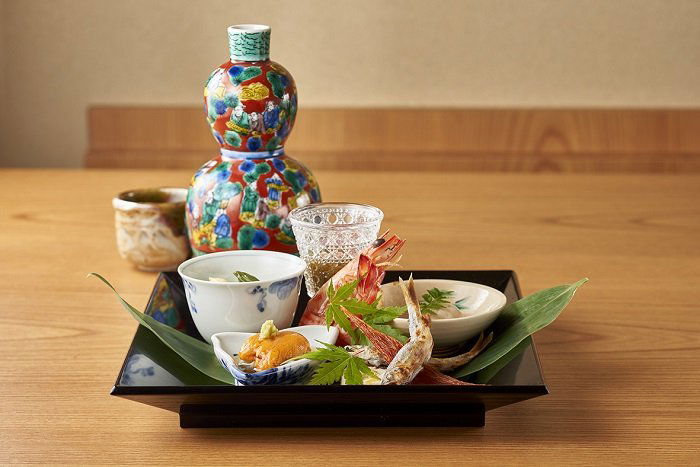
About Daikanyama Issai Kassai
A Michelin Plate izakaya in Daikanyama's basement, Issai Kassai delivers creative Japanese casual cooking at ¥¥ pricing, with two consecutive years of Michelin recognition and a 4.6 Google rating across 98 reviews. The counter-focused room suits solo diners and pairs best. Easy to book by Tokyo standards, and a credible alternative to the city's far more expensive and harder-to-access kaiseki venues.
A Basement Izakaya in Daikanyama That Earns Its Michelin Plate — And Your Booking
Picture a warmly lit counter visible through glass walls, a proprietress in kimono welcoming you at the door, and a kitchen drawing on time spent in New York to rethink what an izakaya can be. That scene, in the basement of a quiet building in Daikanyama's Sarugakucho, is the context for a direct recommendation: if you want creative Japanese casual dining in Shibuya-ku without paying kaiseki prices, Daikanyama Issai Kassai is worth your evening.
The venue holds a Michelin Plate in both 2024 and 2025, which in practical terms means Michelin's inspectors consider the cooking good enough to flag, even if it stops short of a star. That puts it in useful territory: credentialed enough to trust, priced at ¥¥ rather than the ¥¥¥¥ that defines the top tier of Tokyo dining. For food-focused visitors who have already done the kaiseki circuit, or for those who find Tokyo's highest-end restaurants require months of advance planning and intermediary booking services, this is a genuinely accessible alternative with legitimate credentials. See our full Tokyo restaurants guide for further context on how this venue fits the city's broader dining map.
What the Kitchen Does Well
The cooking here is izakaya in format but atypical in ambition. The chef's New York background shows in the way individual dishes are constructed: sashimi comes as a mixed platter rather than the more ceremonial single-fish presentations you find at dedicated sushi counters like Harutaka. That is not a compromise; it is a considered choice that favours variety and conviviality over formality.
Dishes that have become regulars on the menu are instructive about the kitchen's priorities. Potato salad, a staple of Japanese home cooking, is a perennial favourite here, which signals that the chef is willing to take humble ingredients seriously rather than defaulting to premium produce as a shortcut to quality. Steamed shrimp siu mai dumplings bring a recognisable Chinese-Japanese crossover into the mix, and the meal typically closes with takikomi-gohan: rice cooked with soy sauce and various ingredients, served as a composed finisher rather than an afterthought. The Michelin description notes that every dish carries playful creativity, which is consistent with a kitchen that treats a potato salad and a siu mai with the same care it might apply to a sashimi platter.
That range, from casual to technically considered, is what makes the venue worth understanding as a cuisine-led destination rather than just a neighbourhood bar. The counter format, visible through glass walls, puts the preparation in view and gives solo diners or pairs the kind of direct engagement with the kitchen that you would expect at a much more expensive restaurant. If you are traveling through Tokyo and want to understand what thoughtful izakaya cooking looks like beyond the tourist-facing chains, this is a more instructive stop than most.
The Room and the Experience
The setting is basement-level in Daikanyama, one of Tokyo's more considered neighbourhoods for design and food, a short distance from the Tsutaya Books complex and the neighbourhood's characteristic low-rise character. The room carries what Michelin describes as a warmly lit counter that reads as Japanese in style but Western in mood: a combination that reflects the chef's transatlantic training rather than a deliberate fusion concept. The proprietress greeting guests in kimono anchors the hospitality in a Japanese register even as the food moves more freely across influences.
This is not a loud or theatrical venue. The counter setting favours conversation, and the basement location keeps street noise out. For a date, a small group of two to four, or a solo dinner where you want to watch a kitchen work, the format suits. It is a harder sell for larger groups or anyone who needs a private dining room for a corporate occasion. Google reviewers rate it 4.6 out of 5 across 98 reviews, which is a reliable signal of consistent execution rather than occasional brilliance. For izakaya experiences with regional variation elsewhere in Japan, Benikurage in Osaka and Berangkat in Kyoto offer useful points of comparison.
Practical Details
Budget: ¥¥ per head, making this one of the more accessible Michelin-recognised venues in the Shibuya area. Reservations: Booking is rated easy relative to Tokyo's broader dining competition; walk-ins may be possible, but securing a counter seat in advance is advisable, particularly on weekends. Booking method: No website or phone number is available in Pearl's verified data, so contact via the venue directly or through a hotel concierge service is the most reliable route. Dress: No formal dress code is documented; smart casual is appropriate for a counter izakaya in Daikanyama. Location: Basement level, Satou Estate Building No. 3, 2-5 Sarugakucho, Shibuya-ku, Tokyo. Getting there: Daikanyama Station on the Tokyu Toyoko Line is the closest rail access; the neighbourhood is walkable from Nakameguro and Ebisu stations as well.
How It Compares
See the comparison section below for how Daikanyama Issai Kassai sits against other Tokyo venues across different price tiers and dining styles. If your trip also takes you beyond Tokyo, the Pearl Japan network covers strong destinations including HAJIME in Osaka, Gion Sasaki in Kyoto, akordu in Nara, Goh in Fukuoka, 1000 in Yokohama, and 6 in Okinawa. Within Tokyo's izakaya category, venues such as Ginza Nominokoji Yamagishi, Ginza Shimada, Hakata Hotaru, Hakata Issou, and Kan Coffee Fujifuji round out the neighbourhood dining picture across different formats and price points. For planning beyond restaurants, Pearl's Tokyo hotels guide, Tokyo bars guide, Tokyo wineries guide, and Tokyo experiences guide cover the rest.
Compare Daikanyama Issai Kassai
| Venue | Cuisine | Price | Booking Difficulty |
|---|---|---|---|
| Daikanyama Issai Kassai | Izakaya | ¥¥ | Easy |
| Harutaka | Sushi | ¥¥¥¥ | Unknown |
| RyuGin | Kaiseki, Japanese | ¥¥¥¥ | Unknown |
| L'Effervescence | French | ¥¥¥¥ | Unknown |
| HOMMAGE | Innovtive French, French | ¥¥¥¥ | Unknown |
| Florilège | French | ¥¥¥ | Unknown |
Side-by-side comparison to help you decide where to book.
Frequently Asked Questions
How far ahead should I book Daikanyama Issai Kassai?
Booking is rated easy relative to other Michelin-recognised venues in the Shibuya area, so a few days to a week in advance should be sufficient for most visits. That said, the counter format means seating is limited, and popular evenings fill up — booking at least 3-5 days out is the safer call. At ¥¥ per head with a Michelin Plate in 2024 and 2025, demand is steady enough that leaving it to chance on a Friday or Saturday is a risk.
Can I eat at the bar at Daikanyama Issai Kassai?
The counter is the centrepiece of the room — warmly lit and visible through glass walls — so yes, counter seating is part of the intended experience here, not an afterthought. For solo diners or pairs, it's the right call: you get a direct view of the kitchen and the full atmosphere of the space. Groups of three or more may find it less comfortable depending on availability.
Does Daikanyama Issai Kassai handle dietary restrictions?
No specific dietary restriction policy is documented for this venue. Given the izakaya format and the kitchen's focus on Japanese fare including sashimi, siu mai dumplings, and rice dishes, pescatarians and omnivores are well-served by the menu as described. If you have serious allergen concerns or are vegetarian, it's worth contacting the venue directly before booking — the proprietress is on-site and the operation appears personal in scale.
Is Daikanyama Issai Kassai good for a special occasion?
It works well for a low-key celebration where atmosphere matters more than formality. The kimono-clad proprietress, counter setting, and Michelin Plate kitchen give it enough occasion weight without the price or rigidity of a tasting-menu restaurant. At ¥¥, it's a good choice if you want somewhere that feels considered without committing to a ¥¥¥¥ omakase — better for a birthday dinner between close friends than a corporate anniversary.
Is the tasting menu worth it at Daikanyama Issai Kassai?
The venue operates as an izakaya, so the format is more share-and-order than a structured tasting progression. Standout dishes documented include sashimi as a mixed platter, potato salad, steamed shrimp siu mai, and takikomi-gohan as a finisher — a credible arc from snack to rice closer. At ¥¥ with a Michelin Plate, the value case is strong; this isn't a venue where you're paying for a multi-course format, you're paying for well-executed izakaya cooking with more ambition than the price suggests.
What are alternatives to Daikanyama Issai Kassai in Tokyo?
For a step up in formality and price, Harutaka (high-end sushi) or RyuGin (kaiseki) represent the top end of Tokyo's dining tiers. If you want creative modern French at a comparable level of critical recognition but a different cuisine, Florilège and L'Effervescence both operate in Tokyo. HOMMAGE offers a more intimate fine-dining format. None of these are direct like-for-like alternatives to casual izakaya dining at ¥¥ — Daikanyama Issai Kassai fills a specific gap as an affordable, Michelin-recognised room with a distinct personality.
Recognized By

More restaurants in Tokyo
- SézanneOccupying the seventh floor of the Four Seasons Hotel Tokyo at Marunouchi, Sézanne earned its first Michelin star within months of opening in July 2021 and now holds three. British chef Daniel Calvert applies French technique to Japanese ingredients, producing a prix-fixe format that Tabelog has recognised with Silver awards every year from 2023 through 2026. It ranked 4th in Asia's 50 Best Restaurants in 2025 and 15th globally in 2024.
- SazenkaSazenka is the address for Chinese cuisine in Tokyo at its most technically demanding. Chef Tomoya Kawada's wakon-kansai approach — Japanese seasonal ingredients applied through Chinese culinary technique — has earned consecutive Tabelog Gold Awards from 2019 to 2026, a #71 ranking on the World's 50 Best 2025, and 99 points from La Liste 2026. At JPY 50,000–59,999 per head, it is one of the hardest tables in the city to book and worth the effort.
- NarisawaNarisawa is Tokyo's most credentialled innovative tasting menu restaurant — two Michelin stars, Asia's 50 Best number 12, and a Tabelog Silver award — running at JPY 80,000–99,999 per head. Book for a milestone occasion, confirm vegetarian or vegan needs in advance, and reserve at least two to three months out. With 15 seats and reservation-only access, this is one of Tokyo's hardest tables to secure.
- FlorilègeFlorilège delivers two Michelin stars and an Asia's 50 Best #17 ranking at a dinner price of ¥22,000 — competitive for Tokyo at this level. Chef Hiroyasu Kawate's plant-forward tasting menus around an open-kitchen counter at Azabudai Hills make this the strongest choice for contemporary French dining in Tokyo if theatrical, produce-led cooking is what you want. Book well in advance; availability is near-impossible at short notice.
- DenDen holds two Michelin stars, a World's 50 Best top-25 Asia ranking, and a Tabelog Silver Award running back to 2017 — and it books out within hours of the two-month reservation window opening. Chef Zaiyu Hasegawa's daily-changing seasonal omakase runs JPY 30,000–39,999 at dinner in a relaxed house-restaurant setting near Gaiemmae. Book by phone only, noon–5 PM JST. Lunch is irregular; plan around dinner.
- MyojakuMyojaku is a 2-Michelin-star, 14-course French-leaning omakase in Nishiazabu holding a 4.47 Tabelog score, Tabelog Silver 2025–2026, and Asia's 50 Best #45 (2025). Chef Hidetoshi Nakamura's water-forward, no-dashi approach shifts meaningfully with the seasons — making timing your reservation as important as getting one. Budget JPY 50,000–59,999 per head plus 10% service charge; reservations only, near-impossible to secure.
Similar venues by awards
Related editorial
- Best Fine Dining Restaurants in ParisFrom three-Michelin-star icons to the next generation of Parisian chefs pushing boundaries, these are the restaurants that define fine dining in the world's culinary capital.
- Best Luxury Hotels in RomeFrom rooftop terraces overlooking ancient ruins to Michelin-starred hotel dining, these are the luxury hotels that make Rome unforgettable.
- Best Cocktail Bars in KyotoFrom sleek lounges to hidden speakeasies, Kyoto's cocktail scene blends Japanese precision with global influence in ways you won't find anywhere else.
Save or rate Daikanyama Issai Kassai on Pearl
Keep this venue in your Pearl passport, rate it after you visit, and track it alongside every other place you collect.