
Restaurant in Beijing, China
Chu Shan Si Ji
360ptsCredentialed Hubei cooking, easy to book.


About Chu Shan Si Ji
Two consecutive Michelin Plates (2024–2025) and a 2025 Black Pearl Diamond make Chu Shan Si Ji the most credentialed Hubei restaurant in Beijing's Chaoyang district. At ¥¥¥ pricing, the awards-to-cost ratio works strongly in your favour. Booking is easy relative to its recognition level, making it a practical choice for group dinners and special occasions.
The Verdict
Two consecutive Michelin Plates (2024 and 2025) plus a Black Pearl 1 Diamond in 2025 make Chu Shan Si Ji one of the most credentialed Hubei-cuisine restaurants in Beijing right now. At ¥¥¥ pricing, it sits in a mid-to-upper tier where the awards-to-price ratio genuinely works in your favour. If you are looking for a special-occasion table that serves regional Chinese cooking at a documented level of quality, this is a strong booking. If you need a venue where the private or group dining experience carries real weight, read the section below carefully.
Portrait
Chu Shan Si Ji occupies a plot on East Third Ring Middle Road in Chaoyang, one of Beijing's most commercially active districts. The address puts it in a neighbourhood where restaurants compete hard for business diners and celebration tables, which means the kitchen has had to earn its following against well-funded competition. Two years of Michelin recognition suggests it has. For Hubei cuisine specifically, that kind of sustained external validation is meaningful: this is not a well-mapped cuisine in Beijing's fine-dining conversation, and the awards signal that the kitchen is doing something technically coherent rather than trading on novelty.
Hubei cooking, for context, draws from the Yangtze River basin and leans on freshwater fish, preserved vegetables, and a broader flavour palette than the chilli-heat profiles most Beijing diners associate with central Chinese food. It is distinct from the Sichuan or Hunan cooking that dominates this category in the capital, which gives Chu Shan Si Ji a particular positioning: if you are building a Beijing dining itinerary and want regional Chinese cuisine that sits outside the usual options, this fills a gap that venues like Chao Shang Chao (Chaoyang) or Xin Rong Ji (Xinyuan South Road) do not.
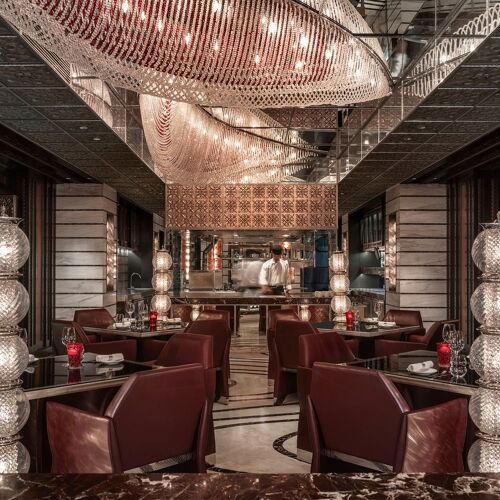
The spatial profile matters here. The physical address, opposite a KTV venue on the East Third Ring, does not suggest the kind of hushed, architecturally curated room you would find at Lamdre. What the Chaoyang location does offer is accessibility: it is central, well-connected, and the kind of address a business host can cite without confusion. For a special occasion where the surroundings need to feel credible without being intimidating, that positioning has practical value.
Group and Private Dining
This is where Chu Shan Si Ji's case is most compelling. Chinese regional cuisine at this price tier is typically designed for the table format: shared dishes, ordered in rounds, paced across an evening. That structure plays to a group's advantage in a way that tasting-menu formats at venues like Chef Tam's Seasons or Western-influenced formats such as Le Bernardin do not. At ¥¥¥, the per-head spend for a group table is manageable enough that hosts can order generously without the bill becoming awkward.
Private room availability is not confirmed in the data we hold, so you should ask directly when booking. What the awards record does imply is that the kitchen can deliver consistent output under group-dining conditions, which is not a given at this category. Venues that have maintained Michelin recognition across two consecutive cycles have typically stabilised their kitchen operation. For a business dinner, a family celebration, or a group table where the host needs the kitchen to perform reliably, that consistency matters more than it might seem.
Compare this to booking a group table at Xin Rong Ji (Xinyuan South Road) at ¥¥¥¥: the Taizhou cuisine there is technically exceptional, but the price premium is significant and the format can feel more formal than is useful for a celebratory group. Chu Shan Si Ji at ¥¥¥ gives you award-backed quality with less financial pressure on the table, which is often the better outcome for group occasions.
Booking and Timing
Booking difficulty is rated easy, which is genuinely useful information at this recognition level. Many Michelin-recognised restaurants in Beijing require multi-week advance planning; Chu Shan Si Ji appears to be more accessible. Weekend evenings and Chinese public holidays are still likely to fill, so book ahead for those dates, but if you need a mid-week dinner, availability should be reasonable. Phone and website details are not held in our current data, so approach booking through a hotel concierge or a local reservations platform if direct contact is not immediately obvious.
For broader Beijing dining context, our full Beijing restaurants guide covers the city's range from street-level to fine dining. If you are building a longer itinerary, the Beijing hotels guide, bars guide, and experiences guide sit alongside it.
How It Sits in the Regional Chinese Picture
Hubei cooking is underrepresented in Beijing's dining scene relative to its quality ceiling, which is partly why the awards here carry weight. If you have eaten at Ru Yuan in Hangzhou or 102 House in Shanghai, you will understand the tier of regional Chinese restaurant that takes its source cuisine seriously and executes it at a technical level that justifies the price. Chu Shan Si Ji is making the same argument for Hubei food in Beijing. Whether the room and service match that ambition is something we will update as more data becomes available, but the kitchen credentials are documented.
For other regional perspectives in Beijing, Hong Fan Qie (Yuyuantan South Road) and Jingyi (Liulichang East Street) offer different reference points worth considering when planning a multi-restaurant trip. And if you are travelling the broader China circuit, Imperial Treasure Fine Chinese Cuisine in Guangzhou, Dai Yuet Heen in Nanjing, and Xin Rong Ji in Chengdu provide useful benchmarks for what award-level regional Chinese cooking looks like across the country.
Frequently Asked Questions
- What should I order at Chu Shan Si Ji? Specific menu items are not confirmed in our current data. The Hubei cuisine format typically centres on freshwater fish preparations, preserved and braised proteins, and vegetable dishes that differ substantially from the chilli-forward central Chinese cooking most Beijing diners know. Ask the restaurant directly for current house dishes or what the kitchen is featuring that week.
- Can Chu Shan Si Ji accommodate groups? The shared-table format of Hubei cuisine is well-suited to groups, and the ¥¥¥ price tier makes group ordering financially manageable. Whether private rooms are available is not confirmed in our data. Call ahead or book through a concierge and ask specifically about room options for parties of six or more.
- Can I eat at the bar at Chu Shan Si Ji? There is no confirmed bar seating in our current data. This is a regional Chinese restaurant format where the dining room and table experience are the focus. Solo diners are better served by the FAQ entry below.
- Is the tasting menu worth it at Chu Shan Si Ji? Menu format details are not confirmed in our data. At the ¥¥¥ tier with Michelin Plate recognition, the price-to-award ratio is favourable regardless of format. If a tasting menu is available, the kitchen's two-cycle award consistency suggests it is executing at a level that justifies the commitment. Confirm format when booking.
- Is Chu Shan Si Ji worth the price? At ¥¥¥ with back-to-back Michelin Plates and a Black Pearl Diamond, yes. You are getting recognised kitchen quality at a price point below several comparable Beijing fine-dining venues. For Hubei cuisine specifically, which has limited high-quality representation in the capital, the price is fair for what the credentials imply.
- Is Chu Shan Si Ji good for a special occasion? Yes, with caveats. The awards backing gives the evening a credible foundation, and the Chaoyang location is central and accessible. For a date or intimate celebration, this works if regional Chinese cuisine fits your occasion. For a high-stakes business dinner where you need absolute confidence in the room and service, verify private dining options before committing.
- What should a first-timer know about Chu Shan Si Ji? Three things: Hubei cuisine is not Sichuan or Hunan, so expect a different flavour register than typical central Chinese restaurants in Beijing. Booking is rated easy, so you do not need to plan weeks out under normal conditions. And at ¥¥¥, ordering broadly across the menu is achievable without the bill becoming stressful. Come with at least two people to cover the range of dishes properly.
- Is Chu Shan Si Ji good for solo dining? Manageable but not the format's strength. Hubei cuisine is a shared-table experience, and solo diners will cover fewer dishes. At ¥¥¥, a solo meal is still affordable, but you will get a better read on the kitchen with a companion. If solo dining in Beijing is your situation, Lamdre or a counter-format venue may suit the experience better.
Compare Chu Shan Si Ji
| Venue | Price | Value |
|---|---|---|
| Chu Shan Si Ji | ¥¥¥ | — |
| Jing | ¥¥¥ | — |
| Xin Rong Ji (Xinyuan South Road) | ¥¥¥¥ | — |
| Chao Shang Chao (Chaoyang) | ¥¥¥¥ | — |
| Lamdre | ¥¥¥¥ | — |
| Jingji | ¥¥¥¥ | — |
A quick look at how Chu Shan Si Ji measures up.
Frequently Asked Questions
What should I order at Chu Shan Si Ji?
Specific menu items are not documented in available venue data, so ordering blind is a reasonable approach here — the kitchen has earned two consecutive Michelin Plates (2024 and 2025) and a Black Pearl 1 Diamond (2025), which suggests consistent output across the menu. Ask staff for house specialties from the Hubei canon, which typically centres on freshwater fish, braised pork preparations, and rice-based dishes. At the ¥¥¥ price point, leaning into the kitchen's regional strengths rather than ordering cautiously will give you the best return.
Can Chu Shan Si Ji accommodate groups?
Chinese regional restaurants at the ¥¥¥ tier in Beijing are typically configured for shared-table dining, which makes Chu Shan Si Ji a practical group choice. The format suits parties of four or more well. check the venue's official channels to confirm private room availability, as this is common at this recognition level but not confirmed in available data.
Can I eat at the bar at Chu Shan Si Ji?
Bar seating is not documented for Chu Shan Si Ji. Traditional Chinese regional restaurants at this tier are generally table-service focused rather than counter or bar-format venues. If bar dining is your preference, this is likely not the right format — consider it a sit-down, shared-table experience.
Is the tasting menu worth it at Chu Shan Si Ji?
A formal tasting menu is not confirmed in the venue data. At the ¥¥¥ price range with Michelin Plate and Black Pearl credentials, the kitchen clearly operates at a level where a curated set menu would make sense — but verify the format when booking. If the option exists, the award trajectory suggests it is likely to deliver.
Is Chu Shan Si Ji worth the price?
At ¥¥¥, Chu Shan Si Ji sits in the upper-mid tier for Beijing dining. Two consecutive Michelin Plates and a Black Pearl 1 Diamond in 2025 provide external validation that the kitchen is delivering at a level that justifies the spend. For Hubei cuisine specifically — which is underrepresented in Beijing at this standard — the price-to-credential ratio is favourable compared with more generic Chinese fine-dining options at the same price point.
Is Chu Shan Si Ji good for a special occasion?
Yes, with the right expectations. The combination of Michelin Plate recognition and Black Pearl 1 Diamond status gives it the credentials for a meaningful dinner, and the Chaoyang location is easy to reach. It works best as a special-occasion choice for guests who appreciate regional Chinese cuisine rather than those expecting an international fine-dining format. Confirm private dining options in advance if the occasion requires a dedicated space.
What should a first-timer know about Chu Shan Si Ji?
Booking is rated easy, which is genuinely useful given its recognition level — you do not need to plan weeks ahead the way you would at many Michelin-listed Beijing restaurants. The cuisine is Hubei regional, so expect a departure from the Cantonese or Sichuan styles that dominate Beijing's award-restaurant scene. The address on East Third Ring Middle Road in Chaoyang is commercially accessible. No English website is confirmed, so booking via a hotel concierge or Chinese-language platform is advisable.
Recognized By


More restaurants in Beijing
- King's JoyKing's Joy holds 2 Michelin Stars and a Green Star for its plant-based tasting menu in a bamboo-shaded Dongcheng hutong courtyard. Chef Gary Yin's kitchen, anchored by seasonal mushrooms and full culinary technique, is the strongest vegetarian fine dining argument in Beijing at the ¥¥¥¥ tier. Book months ahead — availability is extremely limited.
- LamdreBeijing's most credentialed plant-based fine dining address, Lamdre holds a Michelin 1 Star, Black Pearl 2 Diamond, and a place at #50 on Asia's Best Restaurants 2025. At ¥¥¥¥ with near-impossible booking difficulty, it outpaces King's Joy on current critical recognition. Book four to six weeks ahead and prioritise lunch for the skylight-lit main room at its best.
Similar venues by awards
Related editorial
- Asia's 50 Best Restaurants 2026: The Chairman and Wing Go 1-2 from the Same BuildingThe Chairman takes No. 1 and Wing climbs to No. 2 at Asia's 50 Best Restaurants 2026. Both operate from the same Hong Kong building. Here's what it means.
- Four Seasons Yachts Debut: 95 Suites, 11 Restaurants, and a March 2026 Maiden VoyageFour Seasons I launches March 20, 2026, with 95 suites, a one-to-one staff ratio, and 11 onboard restaurants. Worth tracking if you want hotel-grade service at sea.
- LA Michelin Guide 2026: Seven New Restaurants from Tlayudas to Uzbek DumplingsMichelin's March 2026 California Guide update adds six LA restaurants and one Montecito newcomer, spanning Oaxacan tlayudas, Uzbek manti, and Korean-Italian pasta.
Save or rate Chu Shan Si Ji on Pearl
Keep this venue in your Pearl passport, rate it after you visit, and track it alongside every other place you collect.