
Restaurant in Tokyo, Japan
ARROCERÍA La Panza
350ptsBib Gourmand rice cookery, share-pot format.


About ARROCERÍA La Panza
A Michelin Bib Gourmand rice specialist in Ginza bringing together regional Spanish rice preparations — paella, Basque clay-pot clam rice, and Mar Menor caldero — at a ¥¥ price point that is hard to match in this neighbourhood. Book it for a celebration dinner when you want a communal, region-spanning Spanish meal without the kaiseki price tag.
The Verdict
If you have already eaten at ARROCERÍA La Panza once, the question on a return visit is not whether the rice cookery holds up — it does — but whether you want to commit to the same shared-pot ritual all over again. The answer is almost certainly yes. This Ginza spot earned a Michelin Bib Gourmand in 2024, holds a Google rating of 4.3 across 366 reviews, and prices at ¥¥, making it one of the most honest-value propositions in a neighbourhood where a bowl of noodles can cost more than a glass of Rioja elsewhere. Book it for a celebratory dinner when you want something genuinely different from the kaiseki and sushi formats that dominate Tokyo's special-occasion circuit.
Portrait
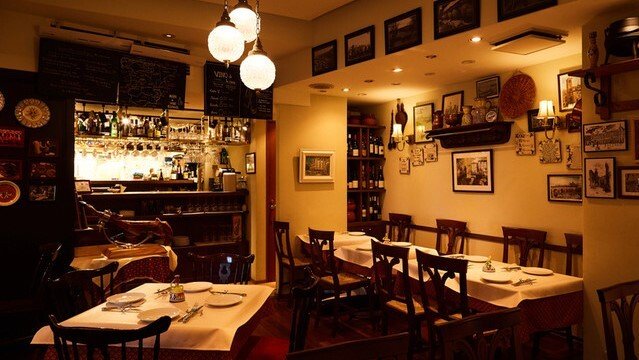
The room in Ginza 1-chome has the energy of a Spanish comedor transported without irony into central Tokyo: animated enough to feel festive, settled enough that you can actually hear your dining companions. The ambient sound sits at a level that works for conversation , not the hushed reverence of a tasting-menu counter, not the roar of an izakaya. For a date or a small celebration, that pitch is close to ideal. Arrive knowing that the shared-pot format is the point: this is not a restaurant where individual plates arrive in sequence. The structure here is communal, regional, and built around rice.
The menu is organised around Spanish rice cuisine drawn from multiple regions, not just Valencia. That distinction matters more than it might initially seem. Paella is present, but so is arroz en cazuela de barro , rice with clams cooked in a clay pot in the Basque style , and caldero, a simmered iron-pot preparation from the Mar Menor coast. Taken together, the progression across a meal here functions like a quiet education in how Spanish culture uses rice differently depending on geography: the sofrito base shifts, the protein changes, the ratio of crust to liquid adjusts. For anyone who associates Spanish rice purely with the Valencia paella template, eating through this range is instructive rather than merely decorative. The restaurant's name, Panza, translates to pot belly , a deliberate signal about what a full meal here does to you.
Appetiser range runs to dry-cured ham and a selection of tapas, which serve a practical function: they give a table time to settle, order, and let the kitchen time the rice correctly. Paella and its regional cousins cannot be rushed; the socarrat , the caramelised crust that forms at the bottom of a properly executed pan , requires patience from the kitchen and a few minutes' rest at the table. Coming in already hungry and impatient is the wrong approach. This is food designed around the rhythm of a Spanish meal, which means longer and slower than a typical Tokyo dinner service.
For special occasions, the format plays well. A table of two can share a single rice dish without waste; a table of four can order across two or three regional preparations and compare them directly, which is where the menu's educational arc becomes most apparent. The ¥¥ price point means a full meal , appetisers, a rice main, drinks , will not require financial recovery the following morning. That positioning, holding a Michelin Bib Gourmand at a mid-range price tier in Ginza, is genuinely unusual. Comparable Spanish cooking in Tokyo at a similar credential level includes ZURRIOLA and ENEKO Tokyo, both of which run at higher price points. If rice-forward Spanish cuisine is your priority and budget matters, La Panza is the clearest recommendation in the city.
Tokyo's Spanish restaurant circuit is stronger than most visitors expect. Arrocería Sal y Amor is the most direct peer in the rice-specialist category, and worth checking availability alongside La Panza. For broader Spanish in the city, LANBRoA and eman cover different registers of the cuisine. Outside Tokyo, the Spanish influence in Japan extends to akordu in Nara, which applies a different approach to the same cross-cultural conversation. For diners building a broader Japan itinerary, Pearl's guides to dining in HAJIME in Osaka, Gion Sasaki in Kyoto, and Goh in Fukuoka offer complementary reference points across the country's major dining cities.
For context on how this restaurant sits within the city's full dining picture, see our full Tokyo restaurants guide. If you are building a complete trip, our Tokyo hotels guide, bars guide, and experiences guide cover the rest of the city. For Spanish rice cookery in other international contexts, Arco by Paco Pérez in Gdańsk and BCN Taste & Tradition in Houston show how the cuisine translates across very different dining scenes. Closer to home, 1000 in Yokohama and 6 in Okinawa round out Pearl's broader Japan coverage. For wineries and more in the capital, our Tokyo wineries guide is the place to start.
Ratings & Recognition
- Michelin Bib Gourmand , 2024
- Google rating: 4.3 / 5 (366 reviews)
- Price range: ¥¥ (mid-range)
Booking & Practical Details
Booking at La Panza is relatively direct by Ginza standards , the Bib Gourmand recognition keeps it in demand, but this is not a months-out situation. A week or two of lead time should be sufficient for most dates, with weekends requiring slightly more. The address is 1 Chome-15-8 Ginza, Chuo City, Tokyo, ground floor. No phone or direct booking URL is listed in the current record; check the restaurant's current reservation channels before visiting. The ¥¥ price tier means you can plan a full meal , tapas, a shared rice dish, drinks , without pricing anxiety. Dress code is not specified, but Ginza context suggests smart-casual is appropriate.
Frequently Asked Questions
- Is ARROCERÍA La Panza good for solo dining? It works better for two or more. The rice dishes are designed for sharing, and ordering a full clay-pot or paella alone either leaves too much on the table or requires downsizing to appetisers only. If you are eating solo, the tapas and starters can compose a satisfying meal, but you will miss the restaurant's core format. A solo visit is fine; it is just not where this place performs leading. For solo dining in Tokyo at ¥¥, the counter format at a sushi-ya is a more natural fit.
- Can ARROCERÍA La Panza accommodate groups? Yes, and groups are actually the ideal format here. The shared-pot structure , paella, caldero, arroz en cazuela , is built for tables of four to six, where you can order across two or three regional rice preparations and compare them directly. Contact the restaurant in advance for larger parties; no group booking policy is confirmed in current data, but Ginza restaurants at this size typically manage bookings for six-plus by prior arrangement.
- What should I order at ARROCERÍA La Panza? Lead with the dry-cured ham and tapas to let the kitchen time the rice correctly, then anchor the meal on one of the regional rice dishes. The caldero (rice simmered in an iron pot, Mar Menor style) and the Basque clam rice in clay pot are the preparations that distinguish this restaurant from a standard paella house , they are the reason the Michelin Bib Gourmand is on the wall. The paella from Valencia is the recognisable reference point, but the regional variations are where the kitchen's range shows most clearly.
- How far ahead should I book ARROCERÍA La Panza? One to two weeks ahead covers most situations. The 2024 Bib Gourmand keeps the restaurant consistently booked, particularly on Friday and Saturday evenings, so earlier is better for weekend dates or special occasions. This is not in the same booking-difficulty tier as Tokyo's leading omakase counters , you are not fighting for a reservation months out. Midweek dinners can often be arranged with a few days' notice. Confirm availability through the restaurant's current reservation channels before finalising plans.
Compare ARROCERÍA La Panza
| Venue | Price | Value |
|---|---|---|
| ARROCERÍA La Panza | ¥¥ | — |
| Harutaka | ¥¥¥¥ | — |
| L'Effervescence | ¥¥¥¥ | — |
| RyuGin | ¥¥¥¥ | — |
| HOMMAGE | ¥¥¥¥ | — |
| Crony | ¥¥¥¥ | — |
Comparing your options in Tokyo for this tier.
Frequently Asked Questions
Is ARROCERÍA La Panza good for solo dining?
It works for solo diners, but the format is built around sharing pots — paella, caldero, clams and rice in clay. A solo visit is more practical if you order from the appetiser range, which includes dry-cured ham and tapas, rather than committing to a full rice dish designed for two or more. The ¥¥ price point keeps the bill manageable either way.
Can ARROCERÍA La Panza accommodate groups?
Yes, and groups are arguably who this place is designed for. The share-pot rice dishes — paella, caldero, clams in a clay pot — are made to anchor a table of four or more. The Bib Gourmand 2024 recognition means demand is real, so book ahead rather than showing up with a large party and hoping for the best.
What should I order at ARROCERÍA La Panza?
The rice dishes are the reason to come: paella in the Valencian tradition, caldero from Mar Menor, and clams with rice in a Basque-style clay pot. The appetiser selection — dry-cured ham and tapas — rounds out the meal and is worth ordering alongside rather than skipping. That combination is what earned the Michelin Bib Gourmand in 2024.
How far ahead should I book ARROCERÍA La Panza?
Book at least a week out. Bib Gourmand status keeps La Panza in steady demand, but by Ginza standards this is not a months-out situation. It sits at ¥¥ pricing, which makes it one of the more accessible Michelin-recognised options in the neighbourhood — that accessibility means tables move quickly, especially on weekends.
Recognized By


More restaurants in Tokyo
- SézanneOccupying the seventh floor of the Four Seasons Hotel Tokyo at Marunouchi, Sézanne earned its first Michelin star within months of opening in July 2021 and now holds three. British chef Daniel Calvert applies French technique to Japanese ingredients, producing a prix-fixe format that Tabelog has recognised with Silver awards every year from 2023 through 2026. It ranked 4th in Asia's 50 Best Restaurants in 2025 and 15th globally in 2024.
- SazenkaSazenka is the address for Chinese cuisine in Tokyo at its most technically demanding. Chef Tomoya Kawada's wakon-kansai approach — Japanese seasonal ingredients applied through Chinese culinary technique — has earned consecutive Tabelog Gold Awards from 2019 to 2026, a #71 ranking on the World's 50 Best 2025, and 99 points from La Liste 2026. At JPY 50,000–59,999 per head, it is one of the hardest tables in the city to book and worth the effort.
- NarisawaNarisawa is Tokyo's most credentialled innovative tasting menu restaurant — two Michelin stars, Asia's 50 Best number 12, and a Tabelog Silver award — running at JPY 80,000–99,999 per head. Book for a milestone occasion, confirm vegetarian or vegan needs in advance, and reserve at least two to three months out. With 15 seats and reservation-only access, this is one of Tokyo's hardest tables to secure.
- FlorilègeFlorilège delivers two Michelin stars and an Asia's 50 Best #17 ranking at a dinner price of ¥22,000 — competitive for Tokyo at this level. Chef Hiroyasu Kawate's plant-forward tasting menus around an open-kitchen counter at Azabudai Hills make this the strongest choice for contemporary French dining in Tokyo if theatrical, produce-led cooking is what you want. Book well in advance; availability is near-impossible at short notice.
- DenDen holds two Michelin stars, a World's 50 Best top-25 Asia ranking, and a Tabelog Silver Award running back to 2017 — and it books out within hours of the two-month reservation window opening. Chef Zaiyu Hasegawa's daily-changing seasonal omakase runs JPY 30,000–39,999 at dinner in a relaxed house-restaurant setting near Gaiemmae. Book by phone only, noon–5 PM JST. Lunch is irregular; plan around dinner.
- QuintessenceQuintessence is Tokyo's most consistently decorated French restaurant: three Michelin stars held through 2025, a La Liste score of 96.5 points, and a Tabelog Gold run from 2017 to 2024. Dinner runs ¥60,000–¥79,999 all in with wine. Book the first seating (5 PM) well ahead — Near Impossible to secure — and come for classical French cooking executed with sustained precision in a secluded Gotenyama setting.
Related editorial
- Asia's 50 Best Restaurants 2026: The Chairman and Wing Go 1-2 from the Same BuildingThe Chairman takes No. 1 and Wing climbs to No. 2 at Asia's 50 Best Restaurants 2026. Both operate from the same Hong Kong building. Here's what it means.
- Four Seasons Yachts Debut: 95 Suites, 11 Restaurants, and a March 2026 Maiden VoyageFour Seasons I launches March 20, 2026, with 95 suites, a one-to-one staff ratio, and 11 onboard restaurants. Worth tracking if you want hotel-grade service at sea.
- LA Michelin Guide 2026: Seven New Restaurants from Tlayudas to Uzbek DumplingsMichelin's March 2026 California Guide update adds six LA restaurants and one Montecito newcomer, spanning Oaxacan tlayudas, Uzbek manti, and Korean-Italian pasta.
Save or rate ARROCERÍA La Panza on Pearl
Keep this venue in your Pearl passport, rate it after you visit, and track it alongside every other place you collect.