
Restaurant in Kyoto, Japan
anpeiji
450ptsMichelin-starred French, Japanese ingredients, no kaiseki.

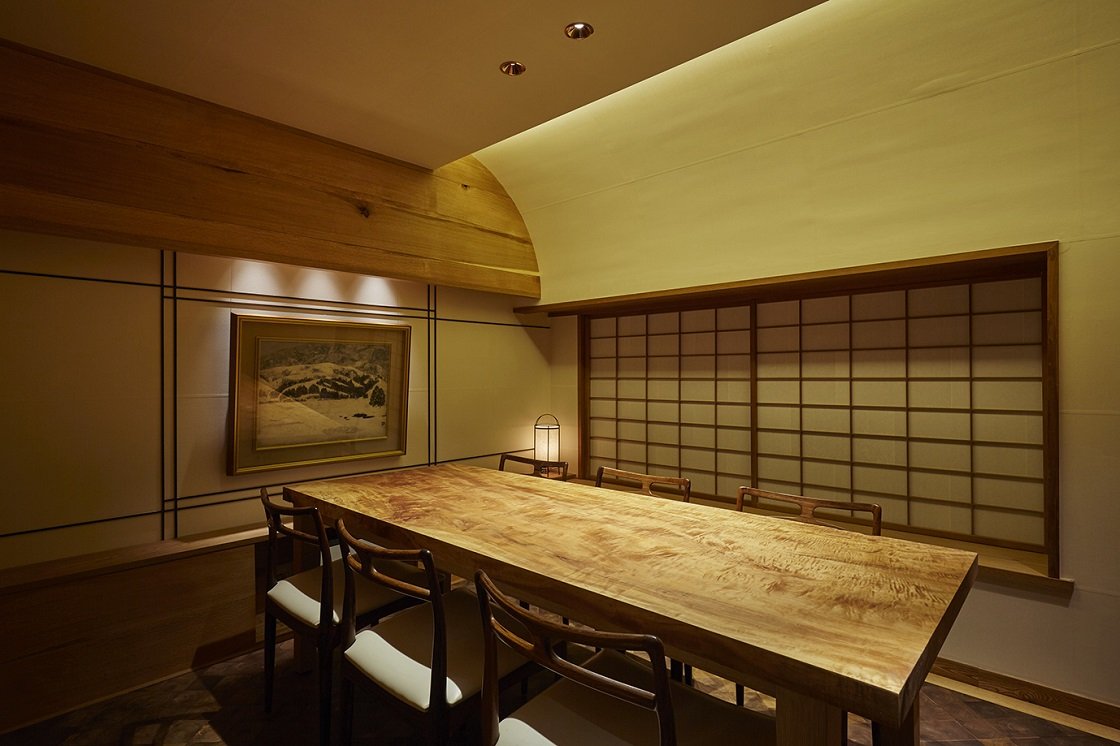
About anpeiji
anpeiji holds a Michelin 1 Star (2024) and serves lighter French cuisine built around high-quality Japanese ingredients, drawing on the chef's training in southern France. At the ¥¥¥ price tier, it is one of the more accessible starred restaurants in Kyoto. Book four to six weeks out minimum; non-Japanese speakers will likely need concierge help to secure a table.
Is anpeiji worth booking in Kyoto?
Yes — if you want Michelin-starred French cooking that takes Japanese ingredients seriously, anpeiji in Fushimi Ward is one of the most focused restaurants of its kind in the city. The kitchen holds a Michelin 1 Star (2024), scores 4.8 on Google from 79 reviews, and operates at the ¥¥¥ price tier, which makes it notably more accessible than most of Kyoto's starred competition. The question is not whether the quality justifies a visit — it does , but whether French cuisine built around Japanese produce is the format you are after.
What makes anpeiji different
The defining choice at anpeiji is a deliberate rejection of the butter-and-cream architecture that underpins most classical French cooking. Chef Masashi Ampeiji trained in the south of France specifically because southern French cuisine favours olive oil as its fat base, producing lighter, more herb-forward sauces with a brighter acid balance. That apprenticeship shapes every plate: the cooking is still sauce-driven and technically French in structure, but the results are noticeably lighter than what you would encounter at a comparable starred restaurant in Paris or Lyon.
What separates anpeiji from other Japan-based French kitchens is the sourcing logic. The chef uses high-quality Japanese ingredients as the primary material, then applies French technique and southern French flavour principles to them. This is not fusion in the loose sense , it is a coherent point of view about what French cooking can do when it works with produce selected for Japanese standards of quality and seasonality. Edible flowers, fresh herbs, and citrus fruits appear regularly, adding sweetness and acidity that keep the plates from feeling heavy. The presentations are described as brilliantly coloured and delicately constructed, which fits the broader aesthetic: this is food designed to look as considered as it tastes.
For the food-focused traveller visiting Kyoto, that combination , lighter French technique, Japanese ingredient standards, ¥¥¥ pricing, Michelin recognition , is a specific and compelling proposition. Kyoto's most celebrated restaurants are overwhelmingly kaiseki or traditional Japanese formats; a starred French option at this price point with a genuinely differentiated culinary philosophy is not something you encounter everywhere. If Japanese-French crossover cooking interests you, anpeiji makes a stronger argument than most. For comparable Japan-based French exploration, HAJIME in Osaka operates at a higher price tier with more formal ambition, while akordu in Nara takes a different European-Japanese approach worth comparing.
Location and access
anpeiji sits at 56 Nakajimahinokamicho in Fushimi Ward , the southern part of Kyoto, well away from the tourist concentration around Gion or the central station area. Fushimi is leading known as the neighbourhood surrounding Fushimi Inari Taisha, which means it draws visitors but is not a typical dining destination in the way Gion or Kawaramachi are. Factor in travel time from central Kyoto if you are planning around multiple reservations in an evening. The location is manageable but requires intention , this is not a restaurant you stumble past.
Booking anpeiji
Getting a table here is genuinely difficult. The Michelin star, the small-restaurant format typical of this type of Kyoto venue, and the limited English-language booking infrastructure common to Fushimi Ward restaurants all contribute to that difficulty. No booking method, phone number, or online reservation system is confirmed in available data, which itself signals that booking likely requires Japanese-language communication or a hotel concierge intermediary. Book as far in advance as your plans allow , four to six weeks is a reasonable minimum for a Michelin-starred venue of this scale in Kyoto, and more lead time is better. If you are coming from outside Japan, engage your hotel concierge early; they are the most reliable route to confirming a table at restaurants like this.
Reservations: Book four to six weeks out minimum; concierge assistance strongly recommended for non-Japanese speakers. Budget: ¥¥¥ price tier , mid-range for a Michelin-starred restaurant in Kyoto. Dress: No confirmed dress code, but smart casual is appropriate for a starred French restaurant. Location: Fushimi Ward, southern Kyoto , allow travel time from central areas.
Who should book anpeiji
anpeiji is the right choice for food-focused travellers who want a Michelin-starred meal in Kyoto that is not kaiseki, and who value ingredient provenance and a lighter French style over the richer, more classical approach. The ¥¥¥ price point makes it accessible relative to Kyoto's ¥¥¥¥ stalwarts, and the 4.8 Google rating suggests consistent execution. It is less suited to travellers who want a traditional Kyoto culinary experience , for that, the city's kaiseki options are the right category. It is also a tighter fit for large groups or travellers who need easy English-language booking.
For broader context on dining in the city, see our full Kyoto restaurants guide. Elsewhere in Japan's French-influenced fine dining scene, Harutaka in Tokyo, Goh in Fukuoka, 1000 in Yokohama, and 6 in Okinawa each represent distinct regional takes worth knowing. For Kyoto French specifically, Droit, Hiramatsu Kodaiji, La Biographie, la bûche, and MOKO are all worth comparing against anpeiji depending on your priorities. For a European benchmark of the classical French tradition anpeiji departs from, Hotel de Ville Crissier and Les Amis in Singapore illustrate how different the registers are.
For Kyoto beyond restaurants: hotels, bars, wineries, and experiences guides are all available.
Frequently asked questions
- Is anpeiji worth the price? At ¥¥¥, yes , it is one of the more accessible Michelin-starred restaurants in Kyoto, and the sourcing-led approach to Japanese ingredients gives the cooking a clarity that justifies the spend. It is cheaper than most of the city's ¥¥¥¥ kaiseki houses while offering comparable recognition.
- Does anpeiji handle dietary restrictions? No confirmed information is available on dietary accommodation. Given the absence of an English website or phone number in available data, communicating restrictions in advance requires either Japanese-language contact or concierge assistance. Do not leave this to chance on the day.
- What are alternatives to anpeiji in Kyoto? For French at a similar price, La Biographie and Droit are worth considering. For Kyoto fine dining at ¥¥¥¥, Gion Sasaki and Kyokaiseki Kichisen lead the kaiseki category. For Italian at ¥¥¥, cenci is a strong alternative if French is not a priority.
- How far ahead should I book anpeiji? Four to six weeks minimum is a sensible baseline. As a Michelin-starred restaurant in a city with high visitor demand and limited seating at venues of this type, earlier is always better. International visitors should plan around this when building a Kyoto itinerary.
- Is anpeiji good for a special occasion? Yes , the combination of Michelin recognition, a distinctive culinary point of view, and ¥¥¥ pricing makes it a strong special-occasion choice that does not require a ¥¥¥¥ commitment. The delicately presented, colourful plates also suit the occasion format well.
- Can anpeiji accommodate groups? Seat count is not confirmed in available data. Given the style and scale typical of this type of Kyoto restaurant, large groups are likely impractical. Parties of two to four are the safest assumption. Confirm directly before booking for any group larger than that.
- Is the tasting menu worth it at anpeiji? The format details are not confirmed in available data, but a Michelin-starred Japanese-French kitchen at ¥¥¥ operating with a chef who trained specifically in southern France is a strong candidate for a tasting format. The ingredient-led sourcing approach tends to express itself most clearly over multiple courses. Based on the 4.8 Google rating and the Michelin recognition, the value case is credible.
Compare anpeiji
| Venue | Cuisine | Price | Booking Difficulty |
|---|---|---|---|
| anpeiji | French | ¥¥¥ | Hard |
| Gion Sasaki | Kaiseki, Japanese | ¥¥¥¥ | Unknown |
| cenci | Italian | ¥¥¥ | Unknown |
| Ifuki | Kaiseki | ¥¥¥¥ | Unknown |
| Kyokaiseki Kichisen | Japanese | ¥¥¥¥ | Unknown |
| SEN | French, Japanese | ¥¥¥¥ | Unknown |
Side-by-side comparison to help you decide where to book.
Frequently Asked Questions
Is anpeiji worth the price?
For a Michelin-starred meal at the ¥¥¥ price point that prioritises Japanese ingredient quality over classical French richness, yes. Chef Masashi Ampeiji's south-of-France-influenced approach — olive oil over butter, vibrant produce, edible herbs and citrus — delivers something more restrained and precise than a typical French tasting menu at this tier. If you want classic cream-based sauces and a conventional French experience, it may not satisfy. If you want ingredient-led cooking with a clear philosophy behind it, the price holds up.
Does anpeiji handle dietary restrictions?
No dietary accommodation data is available for anpeiji. Given the small-restaurant format and the tasting-menu structure typical at this level in Kyoto, check the venue's official channels before booking if restrictions apply — preferably through a Japanese-speaking intermediary or a concierge, as English-language communication with the restaurant is limited.
What are alternatives to anpeiji in Kyoto?
For Michelin-starred French in Kyoto, cenci is the most direct comparison: also France-influenced, also ingredient-focused, but with a somewhat more accessible location. If you want the kaiseki format instead — traditional multi-course Japanese cuisine with equivalent rigour — Kyokaiseki Kichisen is in a different class entirely, as is Gion Sasaki for creative kaiseki. Ifuki and SEN are worth considering if you want high-quality Japanese cooking at a more accessible price point.
How far ahead should I book anpeiji?
Book as early as possible — at minimum 4 to 6 weeks out, and longer if your travel dates fall during peak Kyoto seasons (late March to early May for cherry blossom, November for autumn foliage). The Michelin 1 Star awarded in 2024 has increased demand sharply. English-language booking options are limited, so use a hotel concierge or a third-party reservation service if you don't have Japanese-language support.
Is anpeiji good for a special occasion?
Yes, with a practical caveat: the Fushimi Ward location is away from central Kyoto, so factor in travel time if you're combining it with a broader evening. The Michelin 1 Star, the deliberate cooking philosophy, and the visually precise presentations make it a strong choice for a meal with meaning behind it. It works better for two than for a larger group, given the format.
Can anpeiji accommodate groups?
No group capacity data is available for anpeiji. Based on the small-restaurant format typical of this type of Kyoto venue, it is unlikely to suit groups larger than four to six. For parties above that size, contact the restaurant through a Japanese-language intermediary to confirm availability before building plans around it.
Is the tasting menu worth it at anpeiji?
If the format fits you, yes. The tasting menu is where anpeiji's ingredient focus and technique are clearest — the olive-oil-based sauces, Japanese produce, edible flowers, and citrus elements are designed to be read as a progression, not as individual dishes. At ¥¥¥ with a Michelin 1 Star, it sits at a reasonable tier for what it delivers. Diners who want à la carte flexibility or a heavier classical French experience should look elsewhere.
Recognized By

More restaurants in Kyoto
- OgataOgata is a 16-seat kaiseki counter in Shimogyo, Kyoto, holding two Michelin stars and ten years of Tabelog Gold recognition. Dinner runs JPY 60,000–79,999 before drinks and a 10% service charge. Booking is near impossible without months of advance planning, but for serious kaiseki at the counter, it earns its place on any shortlist.
- MizaiMizai holds three Michelin stars and a sustained Tabelog track record across nearly a decade, with dinner running to ¥80,000–¥99,999 per person all-in. Chef Hitoshi Ishihara structures the meal around the spirit of the tea ceremony in a 15-seat room inside Maruyama Park. Book for a serious special occasion; reservations are near-impossible to secure without months of advance planning.
Related editorial
- Best Fine Dining Restaurants in ParisFrom three-Michelin-star icons to the next generation of Parisian chefs pushing boundaries, these are the restaurants that define fine dining in the world's culinary capital.
- Best Luxury Hotels in RomeFrom rooftop terraces overlooking ancient ruins to Michelin-starred hotel dining, these are the luxury hotels that make Rome unforgettable.
- Best Cocktail Bars in KyotoFrom sleek lounges to hidden speakeasies, Kyoto's cocktail scene blends Japanese precision with global influence in ways you won't find anywhere else.
Save or rate anpeiji on Pearl
Keep this venue in your Pearl passport, rate it after you visit, and track it alongside every other place you collect.