
Bar in Tokyo, Japan
Bar High Five
1,250ptsCounter-Precision Bartending


About Bar High Five
Bar High Five has appeared on the World's 50 Best Bars list every year since 2011, reaching as high as #3 globally in 2013. Located in a basement in Ginza, it represents the classical Tokyo bar tradition — precise technique, minimal theatre, and drinks built around the guest rather than the menu. A 4.3 Google rating across 715 reviews reflects consistent execution over more than a decade.
A Basement in Ginza, a Decade of Rankings
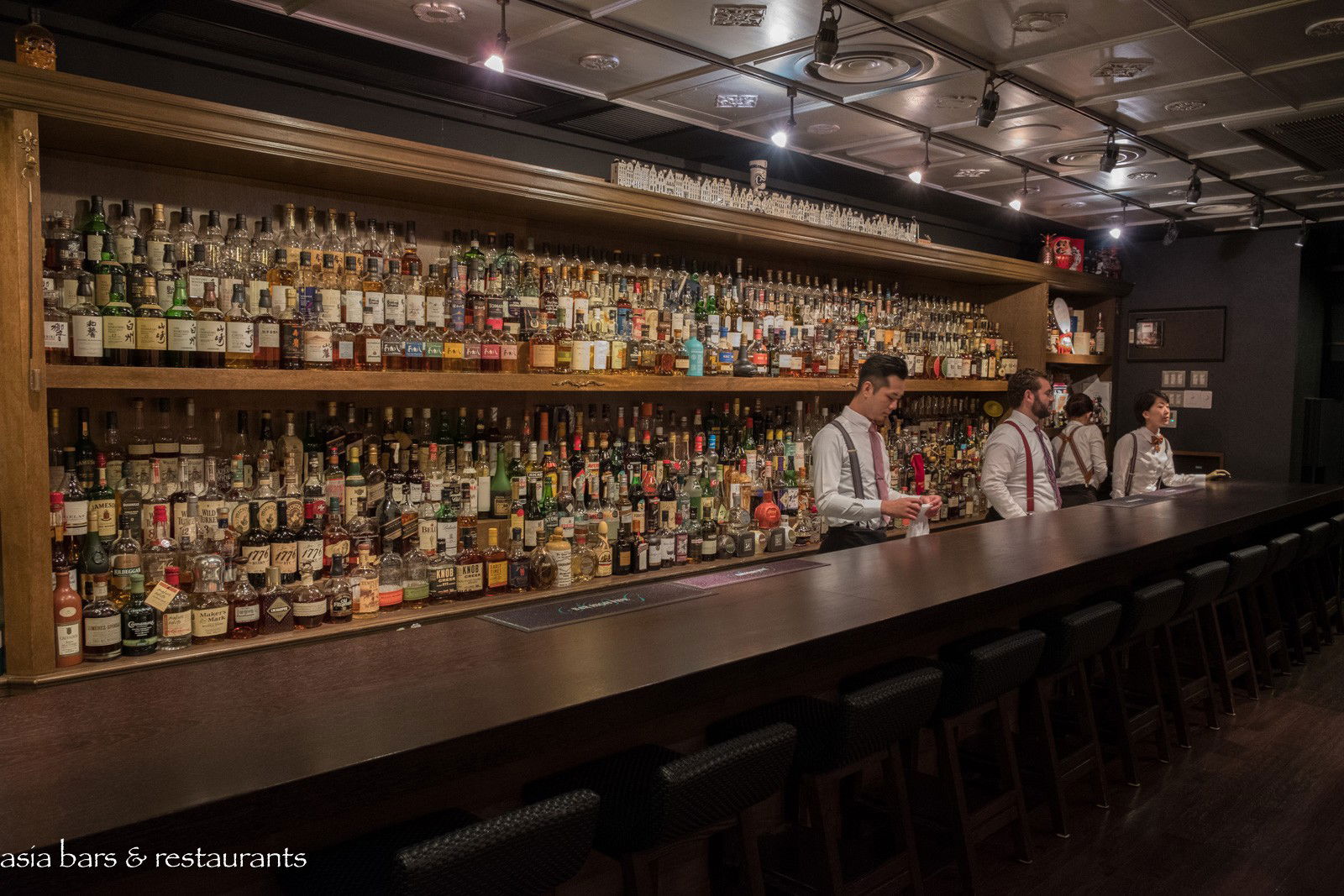
Ginza has long maintained two parallel bar cultures: the high-volume hotel lounges that service the area's luxury retail traffic, and the quieter basement operations that attract a different kind of drinker entirely. Bar High Five belongs firmly to the second category. Located on the B1F of the Efflore Ginza5 Building on 5-chome, it occupies the kind of space that announces nothing from street level — no signage theatre, no queue management, no visual hook to pull in passing foot traffic. That restraint is itself a signal about what happens inside.
The classical Tokyo bar model, of which High Five is among the most documented examples, prizes the relationship between bartender and guest above the construction of an elaborate menu identity. Drinks are built around what a guest wants rather than what the bar wants to showcase. This is a different value system from the technique-forward cocktail programs that define New York or London's current conversation, and it has proved durable precisely because it is not trend-dependent. High Five has been present on the World's 50 Best Bars list every single year from 2011 through 2025 — a stretch of consistency that few bars anywhere in the world can match.
Fourteen Consecutive Years on the World Stage
The awards record here is worth reading as a document rather than a list. Bar High Five entered the World's 50 Best Bars at #34 in 2011. By 2013 it had reached #3 globally. It held positions inside the global top 25 through 2014 and 2015, then maintained top-20 Asia's Leading Bars status through the late 2010s, reaching #6 in Asia in both 2018 and 2019 and #3 in 2017. The 2020 rankings placed it at #48 globally and #20 in Asia. By 2023 the global position had moved to #79, with an Asia ranking of #45 the following year and #87 in the 2024 Asia list. The 2025 Pearl Recommended Bar designation and a Top 500 Bars position at #226 reflect a bar that has moved from the upper tier of global rankings into a more settled, recognised position.
What that trajectory describes is not decline so much as a shift in how the ranking ecosystem has expanded. The World's 50 Best Bars list covered a smaller field in 2011 than it does now. As the programme grew to encompass more cities, more styles, and more regions, the competitive pressure at the leading intensified. High Five's movement down the rankings over the past six years tracks a broader pattern visible across many long-standing Tokyo bars: the city's bar scene has diversified considerably, and internationally, programs that prioritise spectacle, fermentation, or ingredient-sourcing narrative have captured more critical attention than the classical Japanese service model. High Five's response has not been reinvention. It has been consistency.
What Defines the Classical Tokyo Bar Tradition
To understand Bar High Five's position, it helps to understand what the classical Japanese bar model actually involves. The format is counter-led: a small number of seats facing a bartender who takes direction from the guest and constructs accordingly. Spirit knowledge runs deep , Japanese bars of this type often maintain extensive whisky collections alongside gin, cognac, and vintage liqueurs that would be difficult to source elsewhere. The technique emphasis is on precision: clean ice cuts, correct dilution, temperature discipline. There is no DJ, no food programme designed to compete with the drinks, and no ambient theatre beyond the bar itself.
This model has influenced bartenders across Asia and beyond. Several of Japan's most recognised bar figures trained in exactly this tradition before opening their own rooms. Within Ginza specifically, the density of serious bars operating at this level is unusually high. Star Bar Ginza and Tender Bar represent the same cultural lineage, and the area functions as something of a reference point for anyone wanting to understand where the classical Japanese bar style is practised at a high level. High Five sits within that reference set while holding an international recognition record that most of its neighbours do not.
For comparison, Bar Trench in Ebisu takes a more European-inflected approach with a vermouth and amaro focus, and Bar Benfiddich in Shinjuku occupies a distinctly different niche built around house-made bitters and botanicals grown by the bartender. Bar Libre and Bar Orchard Ginza represent other facets of Tokyo's bar range. High Five's peer set is smaller and more specific: bars where classical technique and guest-led service are the entire programme.
The Evolution Question
The editorial angle worth pressing on is whether a bar that has held to its original model for over a decade represents conviction or stagnation. The World's 50 Best rankings suggest both readings are available depending on the year you look at. The 2013 peak at #3 globally was a statement about how seriously the international bar world took the Japanese classical model at that moment. The subsequent gradual descent tracks the rise of other formats , the London cocktail laboratory, the Copenhagen ingredient-sourcing narrative, the New York transparency-and-technique school , that have increasingly captured the ranking conversation.
But a 4.3 Google rating across 715 reviews, sustained over many years, reflects something the rankings don't fully capture: return guests and word-of-mouth reputation among people who actually drink there regularly. The 50 Best programme rewards novelty and innovation cycles in ways that don't always align with what makes a bar worth visiting repeatedly. High Five's position in 2025 as a Pearl Recommended Bar and a Top 500 entry suggests an institution that has settled into a different kind of authority: not the disruptor but the reference point.
Planning a Visit
Bar High Five is in the basement level of the Efflore Ginza5 Building at 5-chome-4-15, Ginza, Chuo City. Ginza is accessible from Ginza Station on the Ginza, Hibiya, and Marunouchi lines. Given the bar's ongoing international recognition and limited counter capacity, an advance reservation is the practical approach , walk-ins are possible but availability is not guaranteed, particularly on weekend evenings. No specific hours, phone, or booking portal are listed in EP Club's current data; check recent reviews or the building directory for current operating information before visiting.
For travellers building a broader Japan bar itinerary, the classical counter tradition extends well beyond Tokyo. Bar Nayuta in Osaka, Bee's Knees in Kyoto, Lamp Bar in Nara, and Yakoboku in Kumamoto each represent distinct regional expressions of a shared sensibility. For those whose Japan itinerary extends further, anchovy butter in Osaka and Kyoto Tower Sando offer contrasting formats worth noting. And if you're travelling the Pacific circuit, Bar Leather Apron in Honolulu carries the Japanese bar tradition into a different context entirely. Our full Tokyo restaurants and bars guide covers the broader picture for first-time and returning visitors.
Frequently Asked Questions
- What's the general vibe of Bar High Five?
- The format is a classical Tokyo counter bar: a small number of seats, a bartender-led service model, and drinks built around what you want rather than a fixed menu. Ginza's bar culture in this tier runs quiet and precise. It is not a scene bar. Prices will reflect the level of recognition , Ginza counter bars at this tier typically run higher than midrange hotel lounges, and High Five's sustained global ranking history places it at the upper end of that bracket.
- What cocktail do people recommend at Bar High Five?
- The classical Tokyo bar model means no fixed signature menu , the bartender works from a conversation about your preferences. That said, bars at this level with the depth of spirit inventory that Ginza counter bars typically maintain are known for producing strong results with whisky highballs, stirred spirit-forward drinks, and classic templates executed with clean technique. The awards record, including a top-3 global position in 2013, reflects a bar whose reputation was built on exactly that consistency rather than on specific showpiece drinks.
- What's the defining thing about Bar High Five?
- Longevity on the global rankings at a level most bars don't reach. Appearing on the World's 50 Best Bars list every year from 2011 through 2025, including a #3 global ranking in 2013 and multiple top-10 Asia positions between 2016 and 2019, is a factual record that reflects something durable about how the bar operates. In a Ginza context where serious bars are relatively common, that international recognition history is what separates High Five from its immediate neighbours.
- Can I walk in to Bar High Five?
- Walk-ins are technically possible at a counter bar of this format, but the combination of limited seating and sustained international recognition means availability is not reliable, particularly on weekends or during peak evening hours. No reservations phone or website is currently listed in EP Club's data. The practical approach is to check current booking information through recent reviews or directly with the building before visiting, especially if you are planning around a specific evening rather than remaining flexible.
Recognized By


More bars in Tokyo
- 8bit Cafe8bit Cafe in Shinjuku is Tokyo's retro gaming bar — a fun, low-pressure stop that works best as an early-evening warm-up rather than a serious cocktail destination. Walk-ins are easy and the crowd is casual and young. Go for the atmosphere, not the bar program, and plan to move on to somewhere like Bar Benfiddich for the serious drinking.
- A10A10 is a basement bar in Ebisu West, Shibuya — a neighbourhood that signals a drinks-serious crowd over a nightlife-first one. Booking difficulty is low, making it accessible for first-timers, but confirm capacity and hours directly before visiting. Best suited to small groups of two to four looking for a considered, low-noise drinking environment in one of Tokyo's more relaxed upscale pockets.
- Ahiru StoreAhiru Store is a relaxed neighbourhood wine bar in Tomigaya, Shibuya, suited to unhurried evenings and easy to book when busier Tokyo bars are full. The atmosphere stays calm and conversational, making it a practical choice for explorers who want a quieter, more residential side of Tokyo's drinking scene rather than a polished Ginza experience.
Related editorial
- Best Fine Dining Restaurants in ParisFrom three-Michelin-star icons to the next generation of Parisian chefs pushing boundaries, these are the restaurants that define fine dining in the world's culinary capital.
- Best Luxury Hotels in RomeFrom rooftop terraces overlooking ancient ruins to Michelin-starred hotel dining, these are the luxury hotels that make Rome unforgettable.
- Best Cocktail Bars in KyotoFrom sleek lounges to hidden speakeasies, Kyoto's cocktail scene blends Japanese precision with global influence in ways you won't find anywhere else.
Save or rate Bar High Five on Pearl
Keep this venue in your Pearl passport, rate it after you visit, and track it alongside every other place you collect.