
Restaurant in Sankt Veit im Pongau, Austria
Wirtshaus by Vitus Winkler
150ptsContemporary Wirtshausküche

About Wirtshaus by Vitus Winkler
At Hotel Sonnenhof in Sankt Veit im Pongau, Wirtshaus by Vitus Winkler reframes the traditional Austrian tavern through a regional-ingredient lens. The menu moves between classic Wirtshausküche formats and contemporary technique, with dishes built around Salzburger Pongau produce. À la carte and set menus of three to five courses run alongside a wine list shared with the hotel's fine dining room, Kräuterreich.
Where the Tavern Format Meets Alpine Sourcing
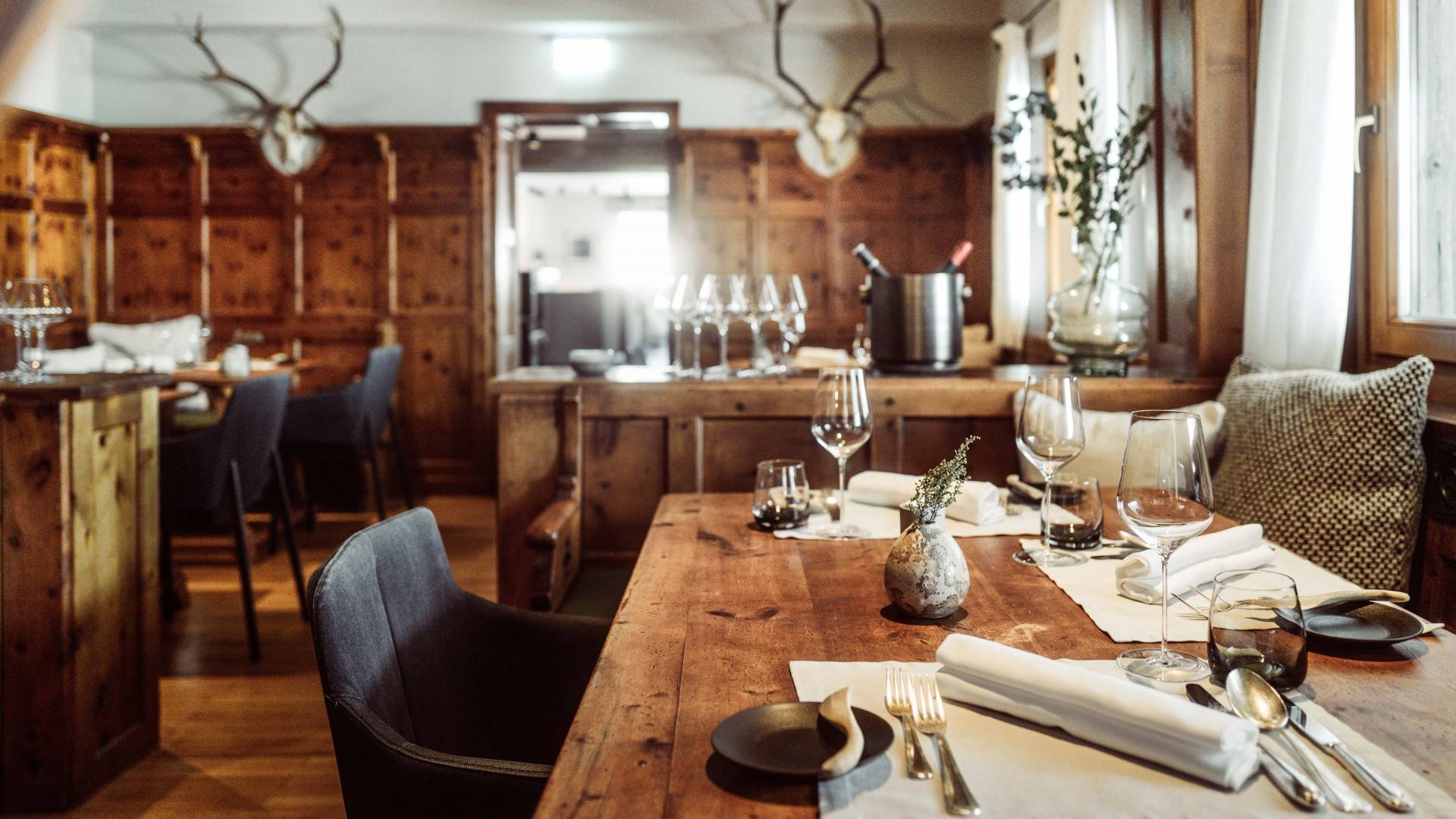
The windows are the first thing you register. At Wirtshaus by Vitus Winkler, the glazed partition between the tavern dining room and the adjacent fine dining space at Hotel Sonnenhof does two things at once: it keeps the two experiences distinct while allowing the mountain range of the Salzburger Pongau to read as a continuous backdrop from almost every seat. The interior leans toward an upscale rusticity, timber and considered material choices that position the room closer to a refined Wirtshaus than to the white-tablecloth register of its neighbour, Kräuterreich by Vitus Winkler. The effect is airy rather than cosy in the tourist-brochure sense, and the mountain views anchor the experience to a specific geography rather than a generic Alpine aesthetic.
The Wirtshausküche Tradition and What 'Contemporary' Actually Means Here
Austria's Wirtshaus culture is one of the more durable dining formats in central Europe. At its foundation: a short menu of regional dishes, a communal atmosphere, and a direct relationship between the kitchen and local suppliers. The challenge for any modern kitchen operating within this format is how to evolve technique without eroding the legibility that makes tavern food satisfying in the first place. Across the Austrian restaurant scene, from Landhaus Bacher in Mautern an der Donau to Obauer in Werfen, the stronger kitchens tend to resolve this by keeping the sourcing local and the format familiar while applying precision at the execution level. Wirtshaus by Vitus Winkler operates along the same logic.
The menu description of an Alpine fish soup, built with paprika fish stock, Alpine prawns, and fennel agnolotti, shows how this plays out in practice. The dish is still a soup, still centred on freshwater fish from mountain sources, but the agnolotti signals a kitchen comfortable with pasta craft. Similarly, the Pongauer Fleischkrapfen, a regional dumpling format filled with meat and sauerkraut and served here with coleslaw, bacon chips, and chives, retains its Salzburg valley identity while the plating and accompaniments suggest a kitchen thinking about contrast and texture as well as tradition. These are not reinventions; they are refinements, which is a harder thing to execute convincingly.
Ingredient Sourcing as the Organising Principle
The phrase 'mostly regional ingredients' in the kitchen's own description of its sourcing is worth unpacking. In the Salzburger Pongau, regional sourcing means access to Alpine dairy, mountain freshwater fish, game from surrounding forests, and produce from valley farms operating at altitude. This is a meaningfully different pantry from what an urban Austrian kitchen draws on, and the menu structure reflects that specificity. The Alpine prawns in the fish soup are a case in point: freshwater crayfish from mountain streams are a genuine regional product, not a substitution for coastal seafood, and their inclusion signals a kitchen that builds around what is actually available locally rather than importing prestige proteins and describing them as regional.
This sourcing model places Wirtshaus by Vitus Winkler in a peer group that extends well beyond Salzburger Pongau. Across the Austrian Alpine corridor, from Gourmetrestaurant Tannenhof in Sankt Anton am Arlberg to Griggeler Stuba in Lech and Stüva in Ischgl, the kitchens that have built lasting reputations share a similar approach: mountain geography shapes the ingredient list, and the menu follows from there rather than the other way around. The approach contrasts with the more cosmopolitan sourcing models at urban fine dining addresses like Steirereck im Stadtpark in Vienna or Ikarus in Salzburg, where global ingredient networks are part of the culinary identity. Neither is superior in principle; they are different arguments about what a kitchen should be.
Menu Format and the Wine List
Diners can approach the menu either à la carte or through a set menu running from three to five courses. The set menu format is a practical concession to the rhythm of tavern dining: it allows the kitchen to control pacing and reduce waste while giving guests a structured version of the meal that suits a table spending two hours rather than three. The à la carte option suits solo diners or those with a preference for one or two dishes over a full progression.
The wine list deserves specific mention because it is drawn directly from Kräuterreich's cellar, the hotel's fine dining restaurant one room over. In practice, this means a tavern dining room has access to a wine programme assembled with fine dining ambitions in mind. Austrian wine, particularly from the Wachau, Kamptal, and Steiermark, forms the backbone of serious hotel lists in this country, and a shared list with a fine dining operation typically means greater depth and a better price-to-quality ratio than a standalone tavern list would ordinarily carry. For guests with a specific interest in Austrian wine, this is a meaningful advantage. Those seeking broader context on dining and drinking in the region can consult our full Sankt Veit im Pongau restaurants guide, our bars guide, and our wineries guide.
Service and Who This Restaurant Is For
The team is described as cordial and genuinely engaged, with a register that sits between the formal precision expected in a Michelin-recognised fine dining room and the casual indifference that can characterise resort hotel dining. That combination, laid-back but knowledgeable, is harder to sustain than either extreme and is one of the stronger indicators of a kitchen and front-of-house that take the tavern format seriously rather than treating it as a secondary offering. For context on how this compares to other ambitious Austrian Alpine restaurants, see Schwarzer Adler in Hall in Tirol or Ois in Neufelden, and for a broader international framing of what serious regional cooking looks like, the sourcing discipline here shares something with the philosophy behind Restaurant 141 by Joachim Jaud in Mieming.
Wirtshaus by Vitus Winkler sits at a specific intersection: it is accessible enough in format for guests who want a relaxed dinner, and serious enough in sourcing and execution to hold up against the broader category of contemporary Austrian regional cooking. Guests staying at Hotel Sonnenhof who want something less ceremonial than Kräuterreich will find the tavern a well-considered alternative rather than a fallback. Those visiting specifically for the Wirtshaus should book through the hotel directly. For those planning a wider trip, our Sankt Veit im Pongau experiences guide and hotels guide provide useful planning context. The restaurant is located at Kirchweg 2, Sankt Veit im Pongau, within Hotel Sonnenhof.
Frequently Asked Questions
Is Wirtshaus by Vitus Winkler good for families?
The tavern format and relaxed service register make it a more practical choice for families than the fine dining room next door. The à la carte option allows flexibility with portion choices, and the Wirtshausküche menu, built around recognisable regional dishes, gives younger diners clear reference points. Pricing is not confirmed in our data, but the tavern positioning within a hotel fine dining property generally places it below the fine dining tier, which is typical of the Sankt Veit im Pongau hospitality market.
What is the atmosphere like at Wirtshaus by Vitus Winkler?
The room combines upscale materials with a deliberate rustic quality, avoiding the austere precision of a formal dining room while remaining a considered environment. Windows between the tavern and the adjacent Kräuterreich create a sense of connection to the wider hotel without collapsing the distinction between the two formats. Mountain views are accessible from most tables. The service tone, cordial and unhurried, reinforces a setting that reads as confident rather than performatively relaxed.
What dish is Wirtshaus by Vitus Winkler famous for?
Menu examples that define the kitchen's approach most clearly are the Alpine fish soup, built with paprika fish stock, Alpine prawns, and fennel agnolotti, and the Pongauer Fleischkrapfen, the regional meat and sauerkraut dumplings served with coleslaw, bacon chips, and chives. Both represent the kitchen's organising principle: Salzburger Pongau ingredients in recognisable Wirtshausküche formats, refined at the technique level without departing from regional identity.
What is the leading way to book Wirtshaus by Vitus Winkler?
Booking directly through Hotel Sonnenhof is the practical route, as the restaurant operates within the hotel at Kirchweg 2, Sankt Veit im Pongau. Specific phone and online booking details are not confirmed in our current data. For guests also considering the fine dining room, Kräuterreich by Vitus Winkler operates within the same property and warrants separate consideration depending on the occasion.
Recognized By

Similar venues by awards
Related editorial
- Asia's 50 Best Restaurants 2026: The Chairman and Wing Go 1-2 from the Same BuildingThe Chairman takes No. 1 and Wing climbs to No. 2 at Asia's 50 Best Restaurants 2026. Both operate from the same Hong Kong building. Here's what it means.
- Four Seasons Yachts Debut: 95 Suites, 11 Restaurants, and a March 2026 Maiden VoyageFour Seasons I launches March 20, 2026, with 95 suites, a one-to-one staff ratio, and 11 onboard restaurants. Worth tracking if you want hotel-grade service at sea.
- LA Michelin Guide 2026: Seven New Restaurants from Tlayudas to Uzbek DumplingsMichelin's March 2026 California Guide update adds six LA restaurants and one Montecito newcomer, spanning Oaxacan tlayudas, Uzbek manti, and Korean-Italian pasta.
Save or rate Wirtshaus by Vitus Winkler on Pearl
Keep this venue in your Pearl passport, rate it after you visit, and track it alongside every other place you collect.