
Restaurant in Den Haag, Netherlands
Waroeng Padang Lapek
100ptsHidang-Style Padang Service
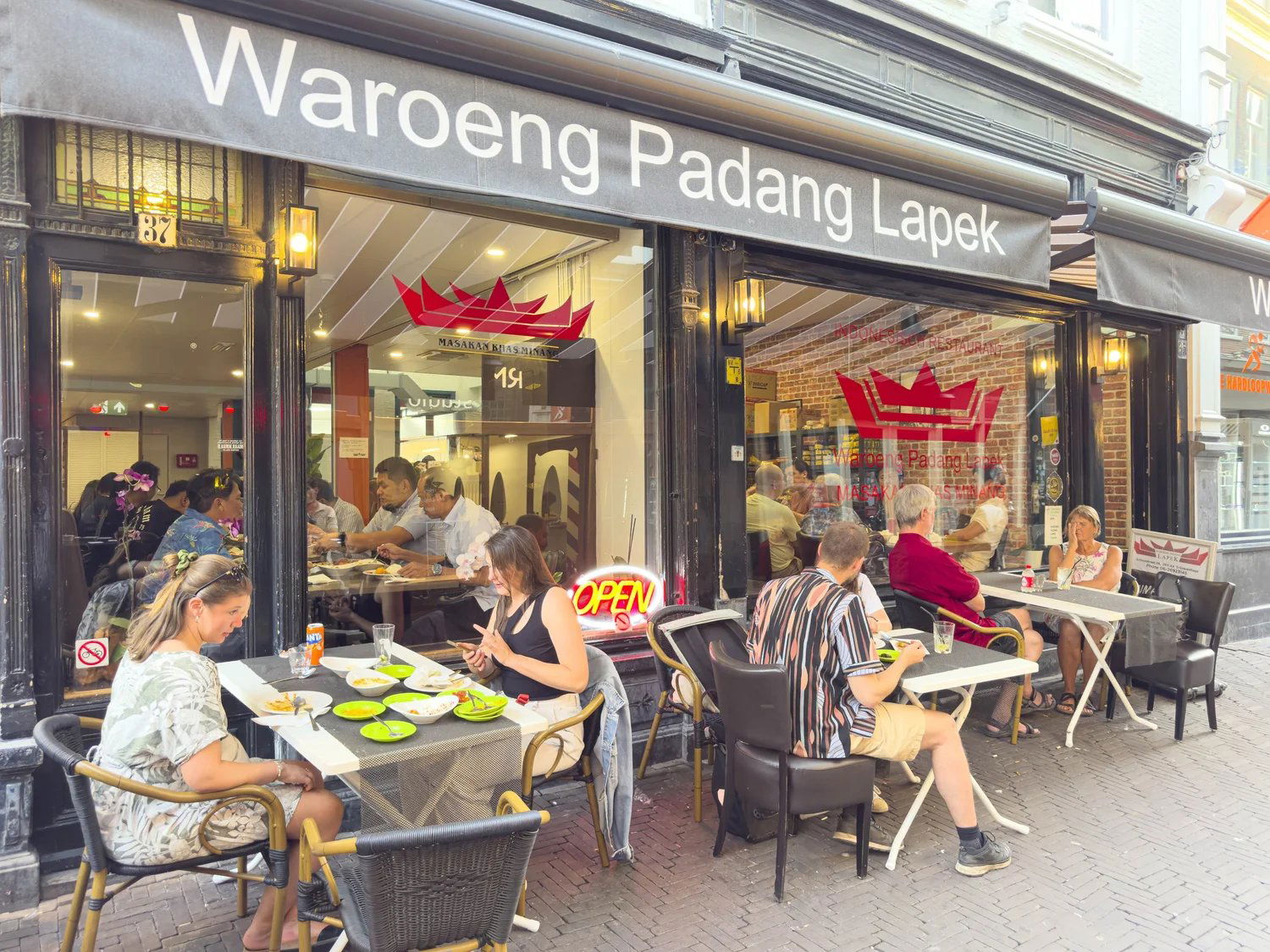
About Waroeng Padang Lapek
Den Haag's Padang restaurant scene draws on one of the most ingredient-driven cooking traditions in the Indonesian archipelago, and Waroeng Padang Lapek on Schoolstraat sits within that lineage. The Minangkabau kitchen it represents is built around slow-cooked proteins, hand-ground spice pastes, and coconut milk rendered to its richest reduction — a tradition that travelled to the Netherlands through decades of post-colonial migration and took root in cities like Den Haag with particular depth.
Where Minangkabau Cooking Meets the Hague
Schoolstraat is not a restaurant strip in the conventional sense. The street runs through a residential pocket of central Den Haag, and Waroeng Padang Lapek occupies a modest address at number 35 that gives little away from the outside. That restraint is consistent with the broader character of the city's Indonesian dining scene, which has historically operated at neighbourhood scale rather than tourist-facing volume. Den Haag holds more Indonesian restaurants per capita than any other Dutch city, a direct consequence of its role as the administrative centre of the former Dutch East Indies and the waves of Moluccan, Javanese, and Minangkabau migrants who settled here across the twentieth century. Lapek sits inside that tradition rather than performing it.
The Sourcing Logic Behind Padang Food
Padang cooking, which originates with the Minangkabau people of West Sumatra, is one of the most spice-dense culinary systems in Southeast Asia. The dishes that define it — rendang, gulai, sambal hijau — are not assembled quickly. Rendang alone requires a reduction process of several hours, during which coconut milk cooks down through distinct stages until the proteins caramelise in the released fat. The spice pastes that precede that process are built from fresh galangal, turmeric root, lemongrass, and multiple varieties of chilli, ground by hand or by stone in traditional kitchens. What this means in sourcing terms is that the quality of the base aromatics determines the character of everything that follows. A rendang made with dried or pre-blended spices is a different dish to one made with fresh rhizomes and whole dried chillies toasted before grinding.
In the Netherlands, Indonesian restaurants occupy a spectrum defined largely by how far down that sourcing chain they are willing to go. At one end sit the generic nasi goreng operations that cater to volume; at the other are the smaller, often family-operated Padang waroengs that maintain the labour-intensive paste-making and long-cooked protein methods that the cuisine demands. Waroeng Padang Lapek's positioning within Den Haag's Indonesian community rather than in the city's more tourist-trafficked centre suggests it operates closer to the latter. The name itself signals the register: waroeng is the Indonesianised spelling of the Dutch warung, meaning a small, informal food stall or eatery , a term that carries connotations of authentic, unembellished cooking rather than adapted presentation.
Padang Service as Cultural Form
One of the defining characteristics of traditional Padang restaurants is the hidang service format, in which multiple small dishes are placed simultaneously on the table and diners pay only for what they consume. This is not a buffet in the Western sense; the dishes are brought to the table already plated, and a good Padang kitchen will rotate them across the course of a sitting, replacing finished plates and introducing new preparations. The format rewards a slow pace and a degree of curiosity, since the breadth of a kitchen's range becomes apparent only as the meal progresses. It is also a format that depends on the kitchen producing a large number of dishes to a consistent standard simultaneously, which is why the sourcing and prep discipline described above matters so much at a systemic level, not just for individual dishes.
For diners coming from the higher end of the Dutch dining spectrum, where restaurants like Botanica and Niyom Thai in Den Haag operate with tasting menus and formal service, a traditional Padang waroeng represents a different kind of eating intelligence. The complexity here is lateral rather than vertical: instead of one or two dishes executed with technical precision, you encounter twelve or fifteen preparations that must cohere as a system. It is worth comparing that model to what the Michelin-facing tier of Dutch restaurants produces. Places like De Librije in Zwolle and 't Nonnetje in Harderwijk operate in the €€€€ bracket with creative modern menus; Ciel Bleu in Amsterdam, Aan de Poel in Amstelveen, and De Bokkedoorns in Overveen occupy similar territory. A Padang waroeng does not compete with those rooms , it occupies an entirely different tier of price and format , but it demonstrates a sophistication in spice architecture and long-cooking technique that those kitchens would recognise as serious craft.
Den Haag's Indonesian Quarter in Context
The neighbourhood around Schoolstraat connects to a broader pattern visible across Den Haag: Indonesian food here is not imported cuisine in the way that, say, Japanese omakase or French bistro cooking functions in a European city. It is a food tradition that has been practised locally for three generations, adapted in some places and maintained in close-to-original form in others. The distinction matters because it affects sourcing: Dutch-Indonesian kitchens that have operated for decades have established supplier relationships that allow them to access ingredients unavailable to newer restaurants. Kaffir lime leaves, fresh turmeric, and specific dried chilli varieties are available through specialist importers in cities with established Indonesian communities, and Den Haag has that infrastructure.
For wider context on where to eat across the city, the full Den Haag restaurants guide maps the range from neighbourhood waroengs to formal dining rooms. At the formal end of the Dutch spectrum nationally, restaurants such as Brut172 in Reijmerstok, De Groene Lantaarn in Staphorst, De Lindehof in Nuenen, De Lindenhof in Giethoorn, De Nieuwe Winkel in Nijmegen, De Treeswijkhoeve in Waalre, FG in Rotterdam, and Inter Scaldes in Kruiningen represent the country's Michelin-decorated tier. Internationally, kitchens built around equally labour-intensive technique , such as Le Bernardin in New York City and Atomix in New York City , demonstrate that serious craft operates at every price point and cultural register.
Planning Your Visit
Waroeng Padang Lapek is located at Schoolstraat 35, 2511 AW Den Haag, a central address accessible on foot from Den Haag Centraal in under fifteen minutes. Given that specific pricing, hours, and booking details are not published centrally, visiting in person or via a local recommendation remains the most reliable approach, which is consistent with how many established waroengs in the city operate. Lunchtime tends to be the most active period for Padang restaurants in the Netherlands generally, as the hidang format suits a midday pace and the kitchen's preparations are freshest in the first service of the day.
Frequently Asked Questions
Is Waroeng Padang Lapek good for families?
In a city where Indonesian restaurants span a wide range of price points, a neighbourhood Padang waroeng is generally among the most accessible formats for groups and families , the communal table format and range of mild and spiced dishes mean there is usually something for every level of heat tolerance.
What is the atmosphere like at Waroeng Padang Lapek?
If you arrive expecting the formal service codes of Den Haag's tasting-menu restaurants, recalibrate: a traditional Padang waroeng operates on a neighbourhood register, informal and unpretentious. The atmosphere is closer to a working canteen than a dining room, which is precisely the point , the focus sits on the food, not the setting.
What is the must-try dish at Waroeng Padang Lapek?
Across the Padang tradition, rendang is the benchmark preparation: a slow-cooked beef dry curry that takes hours to reduce properly and whose quality signals the kitchen's commitment to process. At any Padang restaurant, it is the dish against which the kitchen's sourcing and technique can be assessed most directly.
How does Waroeng Padang Lapek fit into Den Haag's broader Indonesian food tradition?
Den Haag has the deepest Indonesian food culture of any Dutch city, rooted in post-colonial migration that brought Minangkabau, Javanese, and Moluccan communities here across the twentieth century. A Padang waroeng on a residential street like Schoolstraat is less an import than a continuation of that community's domestic cooking tradition , operating for local regulars rather than visitors, which typically signals a kitchen maintaining standards for an audience that can tell the difference.
Related editorial
- Best Fine Dining Restaurants in ParisFrom three-Michelin-star icons to the next generation of Parisian chefs pushing boundaries, these are the restaurants that define fine dining in the world's culinary capital.
- Best Luxury Hotels in RomeFrom rooftop terraces overlooking ancient ruins to Michelin-starred hotel dining, these are the luxury hotels that make Rome unforgettable.
- Best Cocktail Bars in KyotoFrom sleek lounges to hidden speakeasies, Kyoto's cocktail scene blends Japanese precision with global influence in ways you won't find anywhere else.
Save or rate Waroeng Padang Lapek on Pearl
Keep this venue in your Pearl passport, rate it after you visit, and track it alongside every other place you collect.