
Restaurant in Wals Siezenheim, Austria
Walserwirt
100ptsSalzburg-Edge Gasthaus Tradition
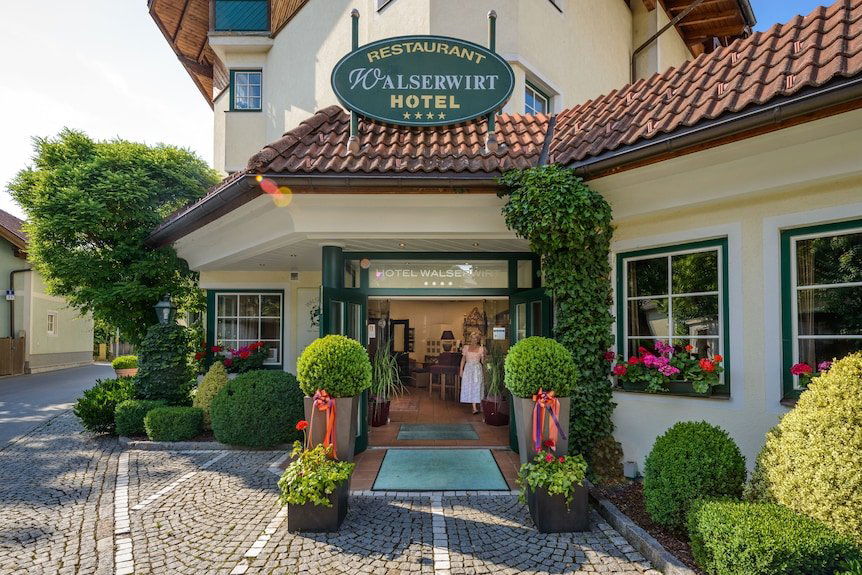
About Walserwirt
Walserwirt sits on Walserstraße in Wals-Siezenheim, a quietly residential municipality on the western edge of Salzburg's urban reach. The address places it within the broader Salzburg dining corridor, where Austrian Gasthaus tradition and contemporary regional cooking occupy the same stretch of road. Visitors travelling between Salzburg's city centre and the Bavarian border will find it a logical stop on that route.
Where the Salzburg Periphery Keeps Its Traditions
The municipalities that ring Salzburg proper tend to attract less attention than the city's historic core, yet they often preserve a more grounded version of Austrian Gasthaus culture. Wals-Siezenheim sits at that western edge, where the urban fabric of Salzburg dissolves into flatter, quieter residential streets before the Austrian-German border takes over entirely. Along Walserstraße, the architecture runs to sturdy, functional buildings rather than the baroque flourishes of the Altstadt, and the dining options here serve a local population more than a tourist itinerary. Walserwirt, at number 24 on that street, exists within this context: a neighbourhood address in a neighbourhood that does not broadcast itself.
That peripheral position matters for understanding what kind of dining experience the area sustains. The Salzburg corridor, taken as a whole, contains some of the most technically demanding restaurants in the Austrian alps. Ikarus in Salzburg operates a rotating guest-chef format that brings international reference points into the region. Döllerer in Golling an der Salzach has built a reputation around contemporary Austrian cooking that draws guests well beyond the immediate catchment area. These are destination restaurants in the full sense: people plan trips around them. Wals-Siezenheim, by contrast, is where the everyday rhythm of Austrian table culture continues with less fanfare and more consistency.
Austrian Gasthaus Culture and What It Actually Means
The Gasthaus format is one of the more misunderstood categories in European dining. Outside Austria and southern Germany, it tends to get flattened into something equivalent to a pub or a casual bistro, but the better examples operate with genuine culinary seriousness inside a deliberately unpretentious frame. The hallmarks are recognisable: a menu anchored in regional produce and technique, a room designed for lingering rather than turning tables, a wine list weighted towards Austrian and neighbouring producers, and a relationship with regulars that accumulates over years rather than seasons. The format sits in a different register from the Steirereck im Stadtpark in Vienna tier of Austrian fine dining, but it is not lesser for that; it serves a different function in the food culture.
This is the tradition that addresses like Walserstraße 24 in Wals-Siezenheim tend to sustain. The broader Austrian dining scene has seen significant pressure on mid-tier establishments over the past decade, with costs rising and younger audiences gravitating either towards casual formats or towards the occasion-dining end of the spectrum. The Gasthaus that survives that pressure typically does so through a combination of culinary consistency and genuine local anchoring, the kind of place that a family returns to for a Sunday lunch over several generations. Whether Walserwirt fits that description precisely cannot be confirmed from available data, but its address and municipality place it squarely in the territory where that model has historically operated.
The Regional Frame: Salzburg's Dining Corridor
The area around Salzburg has an unusually dense concentration of serious cooking for a region of its size. Beyond Ikarus and Döllerer, the wider alpine corridor includes Obauer in Werfen, which has maintained its position as a benchmark for regional Austrian cooking over multiple decades, and Kräuterreich by Vitus Winkler in Sankt Veit im Pongau, which applies a herb-focused approach rooted in the Pongau landscape. Extend the reference set further into the Austrian alps and you encounter Gourmetrestaurant Tannenhof in Sankt Anton am Arlberg, Griggeler Stuba in Lech, and Stüva in Ischgl, all of which operate at the formal end of alpine hospitality. At the other end of the geographic arc, Landhaus Bacher in Mautern an der Donau represents the Wachau tradition of Austrian classic cooking.
Wals-Siezenheim itself sits closest to the Salzburg city restaurants in terms of both geography and likely peer set. Cuisino and Gruenauerhof are the other addresses in the same municipality with enough profile to appear in dining references, which gives some sense of the local tier. The broader Wals Siezenheim restaurants guide maps that context in full. For visitors building a Salzburg-area dining itinerary, the municipality functions as a practical staging point rather than a dedicated dining destination: close enough to the city to fold into a broader day, distinct enough in character to offer something different from the Altstadt's tourist-oriented options.
Austrian Cooking and Its Cultural Weight
Austrian cuisine carries a set of cultural associations that can obscure its actual range. Schnitzel and Tafelspitz are the international shorthand, but the tradition spans from the refined court cooking of the Habsburg era through to the intensely regional cooking of provinces like Styria, Tyrol, and Salzburg itself. The Salzburg region specifically has a culinary identity shaped by its alpine geography: game, freshwater fish from the lakes and rivers, dairy from mountain farms, and a baking tradition that takes bread and pastry seriously as distinct disciplines. These ingredients and methods appear across the region's restaurants at every price point, from the most casual Jause through to tasting menus at destinations like Döllerer.
The Gasthaus format is where this culinary heritage tends to be most faithfully maintained, precisely because the format's economics demand cooking that respects seasonal availability and minimises waste. Austrian cuisine at this level is not fashionable in the international sense, but it has an internal coherence that rewards attention. Comparable moments of that kind of grounded, place-specific cooking in other traditions would be the neighbourhood bistro in Lyon or the trattoria in Emilia-Romagna: appreciated most readily by those who understand what they are eating within its own context rather than against an international benchmark. For a different register of that grounded regional approach, Taubenkobel in Schützen am Gebirge and Schwarzer Adler in Hall in Tirol show how the tradition gets reinterpreted at a higher price point across the country. Further afield, the precision of Le Bernardin in New York City or the structured tasting format of Atomix in New York City offer a useful counterpoint to the more rooted, less formal character of central European Gasthaus cooking. The distance between those formats is as much cultural as technical.
The broader question of what Walserwirt offers specifically, in terms of menu, format, and experience, requires current on-the-ground information that is not available in this record. The address places it in a specific and legible tradition, but the details that would allow a confident editorial recommendation, pricing, booking approach, seasonal focus, and the current cooking style, are not confirmed here. For practical planning, direct contact or a visit to the restaurant's current listings would be the appropriate starting point. Those researching the Wals-Siezenheim dining options more broadly would find Ois in Neufelden and Restaurant 141 by Joachim Jaud in Mieming useful comparisons for understanding how Austrian regional cooking operates at different price and ambition levels across the country.
Planning a Visit
Walserwirt is located at Walserstraße 24, 5071 Wals, Austria, in the municipality of Wals-Siezenheim on Salzburg's western edge. The address is accessible from Salzburg city centre by car in under fifteen minutes and sits within the commuter zone that connects the city to the Bavarian border crossing. Phone, hours, and booking details are not confirmed in available data; checking current listings or local directories before planning a visit is advisable. The municipality is not a walking destination from the Altstadt, so transport by car or local bus is the practical approach.
Frequently Asked Questions
Is Walserwirt good for families?
Wals-Siezenheim is a residential municipality rather than a tourist district, and Austrian Gasthaus addresses in this kind of setting typically serve a family clientele as a core part of their model. Without confirmed pricing or format data for Walserwirt specifically, a definitive answer isn't possible, but the neighbourhood context suggests it operates at a more accessible register than the formal destination restaurants of the Salzburg corridor.
What should I expect atmosphere-wise at Walserwirt?
If Walserwirt follows the Gasthaus pattern typical of its municipality and address type, expect a room built around comfort and regularity rather than occasion-dining formality. The Wals-Siezenheim setting, away from the Altstadt, tends to support that kind of grounded, local-facing atmosphere. Confirmed details on décor, capacity, or awards are not available in the current record, so expectations should be calibrated against the neighbourhood rather than against Salzburg's higher-profile dining addresses.
What's the must-try dish at Walserwirt?
No confirmed menu or signature dish data is available for Walserwirt. Austrian Gasthaus cooking in the Salzburg region tends to anchor around seasonal, regionally sourced ingredients, with game, freshwater fish, and dairy appearing consistently across the tradition. For specific dish recommendations, current menus from the restaurant directly would be the reliable source.
How does Walserwirt compare to other Wals-Siezenheim restaurants?
Wals-Siezenheim has a small but identifiable restaurant scene. Within the municipality, Cuisino and Gruenauerhof are the other addresses with enough profile to appear in dining references. Walserwirt's Walserstraße address anchors it in the residential fabric of the municipality, which typically signals a local-facing model rather than a destination-dining format. For a full picture of the local options, the Wals Siezenheim restaurants guide covers the broader context.
Related editorial
- Best Fine Dining Restaurants in ParisFrom three-Michelin-star icons to the next generation of Parisian chefs pushing boundaries, these are the restaurants that define fine dining in the world's culinary capital.
- Best Luxury Hotels in RomeFrom rooftop terraces overlooking ancient ruins to Michelin-starred hotel dining, these are the luxury hotels that make Rome unforgettable.
- Best Cocktail Bars in KyotoFrom sleek lounges to hidden speakeasies, Kyoto's cocktail scene blends Japanese precision with global influence in ways you won't find anywhere else.
Save or rate Walserwirt on Pearl
Keep this venue in your Pearl passport, rate it after you visit, and track it alongside every other place you collect.