
Restaurant in New York City, United States
Vong
100ptsFranco-Asian Tasting Architecture

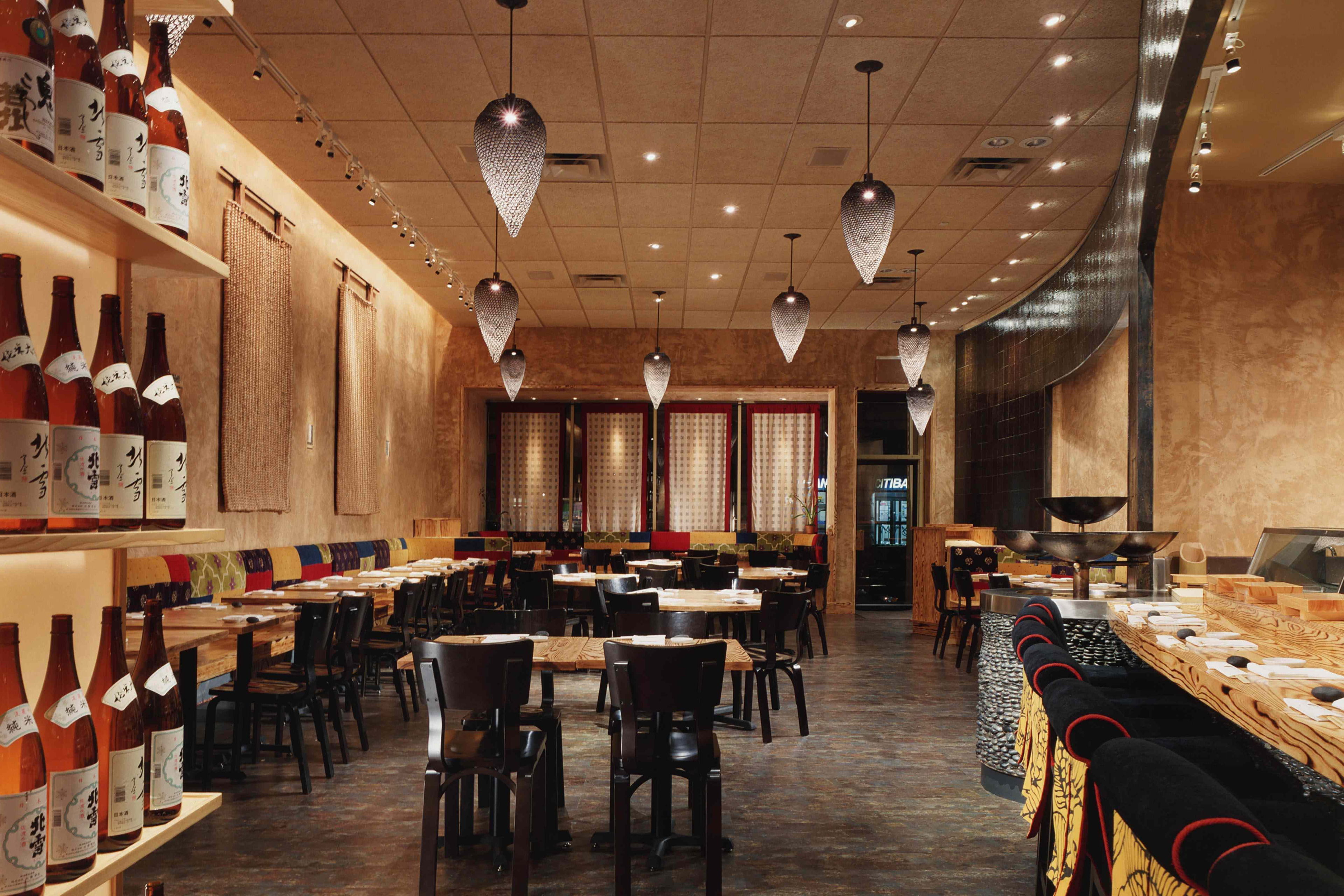
About Vong
Vong reached the World's 50 Best Restaurants list at number 15 in 2002, placing it among a small group of New York kitchens redefining what French technique could absorb from Southeast Asian cooking. The menu architecture — French structure carrying Thai and Vietnamese inflections — shaped a template that later generations of fusion kitchens still reference. Rated 4.3 across more than 3,000 Google reviews, its reputation has held well past the peak of its awards moment.
French Fusion at a Turning Point: What Vong's Menu Revealed About New York Dining
At the turn of the millennium, the more revealing measure of a New York fine dining kitchen wasn't how faithfully it executed classical French cuisine but how inventively it departed from it. A narrow cohort of restaurants in the early 2000s were stress-testing the boundaries of French technique by running Southeast Asian flavors through it — lemongrass, galangal, fish sauce, tamarind — and asking whether the architecture of a French tasting menu could hold those ingredients without collapsing into novelty. Vong was among the most visible of those experiments, and in 2002 it reached number 15 on the World's 50 Best Restaurants list, a placement that confirmed it wasn't just a trend piece but a kitchen making a serious argument about what French cooking could become in an American context.
That argument was always primarily a structural one. The interest in Vong's menu was never simply about unusual flavor combinations , plenty of restaurants were doing that , but about how the menu was organized: how many courses it moved through, which components anchored each dish to the French tradition, and where the Southeast Asian material arrived, whether as a modifier, a sauce, a protein treatment, or an entire conceptual framing for a course. French Fusion as a category had a short window before it became either absorbed into the mainstream or dismissed as dated, and what distinguished the kitchens that lasted from those that didn't was usually the coherence of the menu's internal logic. For a comparison: Le Bernardin achieved longevity through absolute commitment to a single protein category; Eleven Madison Park pivoted its menu philosophy entirely more than once. Vong's approach was less about committing to a single ingredient family and more about holding a particular tension , French precision, Asian aromatics , as the menu's governing principle.
Menu Architecture: How the Courses Were Built
In the early 2000s New York fine dining context, menus at Vong's level typically ran in formats that mirrored the French tasting structure: amuse-bouche, multiple composed courses with increasing protein weight, a cheese interval, and a dessert sequence. What French Fusion kitchens of that generation added was an ingredient translation layer , classical sauces rerouted through coconut milk or nam pla reductions, proteins marinated in Southeast Asian aromatics before being handled with French butchering precision, and garnishes that replaced the standard French herb palette with cilantro, Thai basil, kaffir lime leaf, and fresh chili.
This was menu design as a thesis statement. The fact that the kitchen maintained enough discipline to earn a place on the World's 50 Best list , a list that at that moment included kitchens like The French Laundry in Napa and would later feature places like Alinea in Chicago and Per Se in New York , indicates that the fusion was functioning at a technical level that serious critics found credible, not merely interesting as a cultural proposition.
The distinction matters because French Fusion carried real risks in that period. Done without structural discipline, it produced menus where the French and Asian elements coexisted without integrating , a beurre blanc next to a mango salsa, with neither transforming the other. The kitchens that worked were the ones where the fusion was happening at the level of technique, not just ingredient selection: French emulsion methods applied to ingredients that had never been emulsified in a Western kitchen, French roasting temperatures recalibrated for proteins that had traditionally been prepared very differently. At number 15 globally, Vong was clearly in the first category.
Positioning in New York's Fine Dining Tier
New York's top-tier restaurant market in the early 2000s was structured around a small number of multi-Michelin-starred French establishments and a growing set of kitchens experimenting with Asian integration. The latter category has since diversified considerably , Atomix now occupies a high-serious tier for Korean-inflected fine dining, and Masa operates as the most expensive Japanese counter in the country , but in 2002, the French-Asian fusion niche was less crowded and Vong's 50 Best ranking placed it in a peer set that crossed national culinary boundaries. That ranking put it alongside Emeril's in New Orleans, which was making a comparable argument about Creole-French integration, and West Coast kitchens like Providence in Los Angeles and Lazy Bear in San Francisco, which were pursuing their own versions of cuisine defined by technique meeting strong local or cultural identity.
The 4.3 rating across more than 3,300 Google reviews is a data point worth reading carefully. It suggests a restaurant that generates a high volume of engagement , most serious fine dining kitchens at this price tier accumulate far fewer reviews , and maintains a rating consistent with quality-forward expectations rather than casual dining tolerance. Reviews at this volume tend to flatten out at the mean over time, which makes sustained high scores more credible than a small sample of enthusiastic early visitors. For the full context of New York dining at this tier, see our full New York City restaurants guide.
The Broader French Fusion Tradition
French Fusion as a culinary category has always been less about geography than about which non-French tradition the French framework is absorbing. The 1980s and 1990s Californian version integrated Pacific Rim and Mexican ingredients into French-trained cooking, producing a template that eventually became California cuisine proper. The version that Vong represented was more specifically Southeast Asian in orientation , Thailand, Vietnam, and to some extent Laos and Cambodia providing the aromatic and flavor vocabulary , and it arrived in New York during a period when the city was expanding its fine dining range rapidly.
That tradition has continued in different forms. French Fusion kitchens now operate across multiple price tiers and in cities far from the American coasts , L'Atelier de Ben in Saint-Denis and STUP in Simon are examples of the format operating in contexts where the French culinary tradition meets very different local ingredients and cultural reference points. What connects these kitchens to Vong's moment is the underlying structural question: when you run a non-French flavor tradition through French technique, what survives, what transforms, and what simply disappears? The leading kitchens in this category have always been the ones with a clear answer.
For travelers building an itinerary around New York's dining scene, the city's hotels, bars, and experiences all orbit a restaurant culture that rewards planning. See our full New York City hotels guide, our full New York City bars guide, our full New York City wineries guide, and our full New York City experiences guide for a complete picture of what the city offers at this level. For kitchens with comparable ambitions around technique-led menus, Single Thread Farm in Healdsburg offers a useful West Coast counterpoint where Japanese kaiseki structure absorbs Northern California ingredient logic in a way that parallels what Vong was doing with French and Southeast Asian material two decades earlier.
Planning a Visit
Specific booking method, current hours, pricing, and seating details for Vong are not confirmed in our current dataset. Given the restaurant's 2002 World's 50 Best ranking and its sustained Google review volume, prospective visitors should treat reservations as advisable well in advance, consistent with how New York kitchens at this tier have historically operated. The address in the database lists a Tel Aviv location, which diverges from the New York context of the venue's awards history , verification of the current operating address directly with the restaurant is recommended before making travel plans.
Frequently Asked Questions
What do people recommend at Vong?
Vong built its menu around French technique applied to Southeast Asian aromatics and flavors, which means the courses most discussed tend to be those where the integration is clearest: dishes where French emulsion, roasting, or classical sauce methods are working with Thai or Vietnamese ingredients rather than alongside them. The kitchen earned its 2002 World's 50 Best ranking at number 15 in a period when that integration had to be technically credible to survive serious critical scrutiny. With a 4.3 rating across more than 3,300 Google reviews, the most consistent recommendation from guests is to approach the menu as a sequence rather than selecting around individual courses.
Do I need a reservation for Vong?
At the level of the World's 50 Best Restaurants, where Vong appeared in 2002, reservations have historically been necessary rather than optional, particularly in New York where the top tier of fine dining operates with high demand across a relatively small number of seats. Specific current booking policy is not confirmed in our dataset. Contacting the restaurant directly to verify current operating status and reservation process is the reliable approach before planning a visit around it.
What has Vong built its reputation on?
Vong's reputation rests on its placement at number 15 on the World's 50 Best Restaurants list in 2002, which positioned it as one of the most credible practitioners of French-Asian fusion at a moment when that category was being judged at the highest critical level. The kitchen's approach centered on French menu architecture carrying Southeast Asian flavor and aromatic material, a combination that requires technical discipline to function as fine dining rather than novelty. That structural seriousness, rather than any single dish or individual personality, is what the restaurant's critical record reflects.
How does Vong fit within the history of French Fusion as a serious fine dining category?
Vong's 2002 placement at number 15 on the World's 50 Best Restaurants list is one of the clearest documented instances of French-Southeast Asian fusion being assessed and validated at the highest tier of international fine dining criticism. This positions it as a reference point for the category's credibility during a period when fusion cuisine was being seriously scrutinized rather than automatically celebrated. For readers interested in how French technique has continued to absorb non-Western culinary traditions in different regional contexts, the restaurant's awards history offers a useful benchmark against which later kitchens, including contemporary French Fusion restaurants in cities outside the United States, can be measured.
Recognized By

More restaurants in New York City
- Le BernardinLe Bernardin is one of the most consistently awarded seafood restaurants in the world — three Michelin stars, 99.5 points from La Liste, and four New York Times stars held for over 30 years. At $157 for four courses at dinner ($225 for the tasting menu), it is the right call for a formal occasion or a serious seafood meal in Midtown Manhattan, provided you book well in advance.
- AtomixAtomix is the No. 1 restaurant in North America (50 Best, 2025) and one of the hardest reservations in New York: 14 seats, one seating per night, three Michelin stars. Junghyun and Ellia Park's Korean tasting menu pairs precision-sourced ingredients with Korean culinary heritage, explained course by course through hand-designed cards. Book months ahead or plan around a cancellation.
- Eleven Madison ParkEleven Madison Park is the definitive case for plant-based fine dining in New York City: three Michelin stars, a 22,000-bottle wine cellar, and an eight-to-ten course tasting menu in a landmark Art Deco room. Book it for a special occasion with a plant-forward appetite and three hours to spare. Reservations open on the 1st of each month and go within hours.
- Jungsik New YorkJungsik is the restaurant that put progressive Korean fine dining on the New York map, and over a decade in, it still holds that position. With two Michelin stars, a 2025 James Beard Award for Outstanding Chef, and a seasonally rotating nine-course tasting menu in a quietly formal Tribeca room, it earns its $$$$ price point for special occasions and serious dining. Book well in advance.
- DanielDaniel is the benchmark for classic French fine dining in New York: three Michelin stars, a 10,000-bottle cellar, and formal Upper East Side service that has stayed consistent for over 30 years. Book four to six weeks out minimum. At $$$$, it is a genuine special-occasion restaurant, but the wine program alone — 2,000 selections with particular depth in Burgundy and Bordeaux — makes it the strongest wine-and-food pairing destination in its category.
- Per SePer Se is one of New York's two or three most complete special-occasion restaurants: three Michelin stars, Central Park views, and two nine-course tasting menus that change daily at $425 per person. Book exactly one month out — the window fills fast. The salon accepts walk-ins for à la carte if you miss the main dining room.
Related editorial
- Best Fine Dining Restaurants in ParisFrom three-Michelin-star icons to the next generation of Parisian chefs pushing boundaries, these are the restaurants that define fine dining in the world's culinary capital.
- Best Luxury Hotels in RomeFrom rooftop terraces overlooking ancient ruins to Michelin-starred hotel dining, these are the luxury hotels that make Rome unforgettable.
- Best Cocktail Bars in KyotoFrom sleek lounges to hidden speakeasies, Kyoto's cocktail scene blends Japanese precision with global influence in ways you won't find anywhere else.
Save or rate Vong on Pearl
Keep this venue in your Pearl passport, rate it after you visit, and track it alongside every other place you collect.