
Restaurant in Al Mawalih, Oman
Tuk Tuk (توك توك)
100ptsMall-Format Street Food
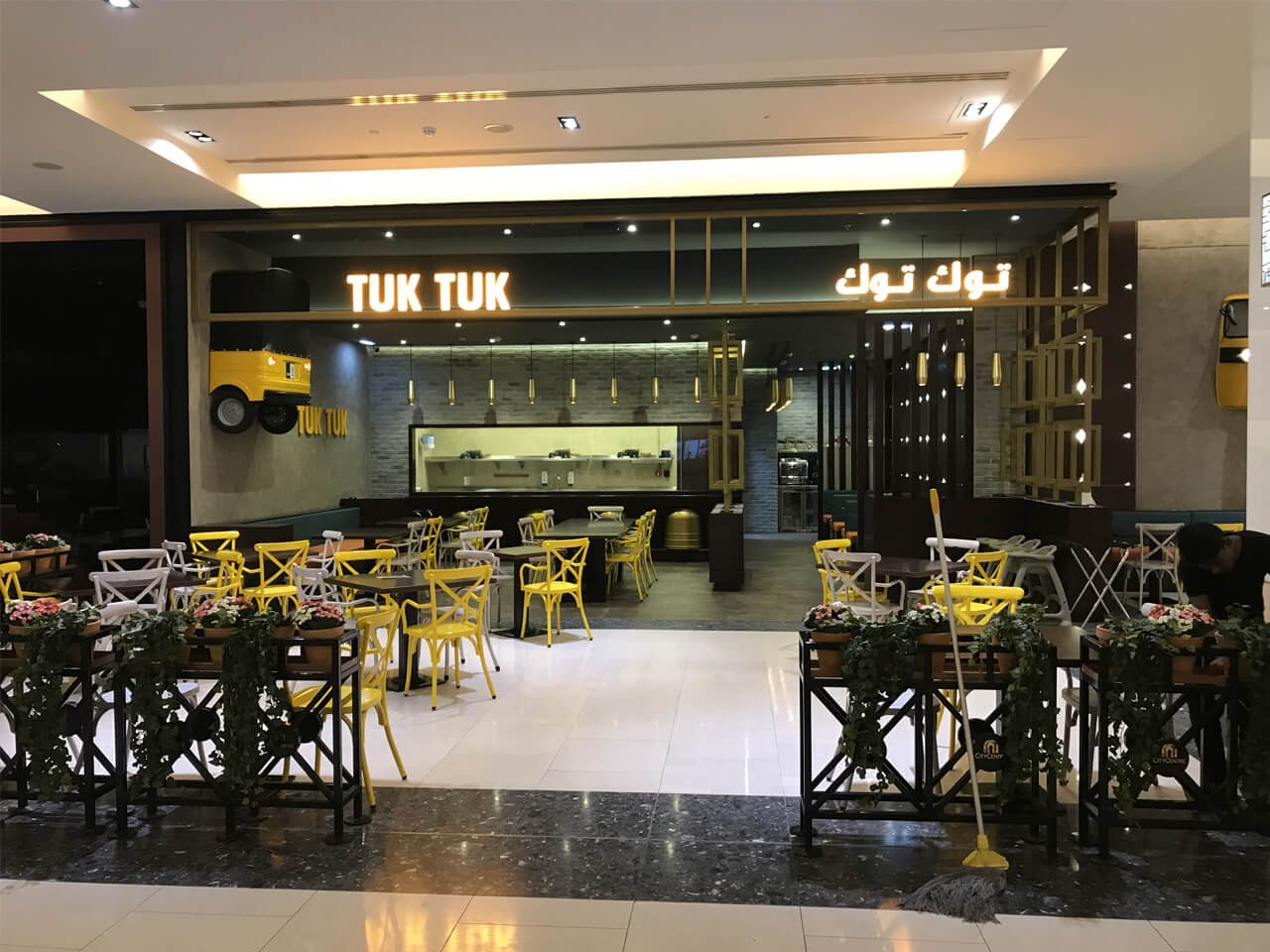
About Tuk Tuk (توك توك)
Tuk Tuk sits inside City Centre Muscat in Al Mawalih, positioned between the mall's casual dining corridor and the kind of street-food-rooted cooking that has found a permanent home in Oman's retail dining scene. The name nods to the three-wheeled vehicles synonymous with South and Southeast Asian street culture, signalling a menu oriented around accessible, ingredient-led cooking rather than formal presentation.
Street Food Logic in a Mall Setting
Oman's mid-market dining scene has split along a familiar axis over the past decade: on one side, hotel restaurants that pitch upward toward regional fine dining (the kind represented at the resort end by venues like Sense on The Edge at Six Senses Zighy Bay or Spice Market at Six Senses Zighy Bay); on the other, a growing tier of casual, accessible concepts rooted in the everyday food cultures of South Asia, Southeast Asia, and the Levant. Tuk Tuk (توك توك) operates firmly in the second camp. Located inside City Centre Muscat in Al Mawalih, next to Shake Shack, it occupies the kind of position in Oman's retail dining corridor where foot traffic and approachability matter more than reservation lists and tasting menus.
The name is a direct reference to the motorised three-wheelers that move people and provisions through the streets of Bangkok, Colombo, and Delhi. That framing matters because it sets an expectation about sourcing philosophy: street food traditions are, at their core, ingredient economies. The leading versions of these dishes succeed not through technique complexity but through the quality and specificity of what goes into them. Rice that carries the right starch, lentils cooked down to a particular consistency, spices sourced at the right point in their dryness cycle. These are the variables that separate competent casual cooking from the kind of food people return to weekly.
Where This Fits in Oman's Casual Dining Scene
Al Mawalih is a suburb of Greater Muscat, and City Centre Muscat is the retail anchor that pulls significant daily footfall from across the metropolitan area. The dining floor inside malls like this functions differently from standalone restaurant streets: the competitive set is defined by proximity and category, not neighbourhood reputation. Tuk Tuk sits alongside international fast-casual brands, which means the comparison shoppers make on arrival is immediate and visual. Concepts that survive in this format do so because they offer something the international chains do not, typically a specificity of flavour profile tied to a particular food culture.
For broader context on the Omani dining scene across formats and price points, our full Al Mawalih restaurants guide maps the options available across the area. Other Omani venues worth considering include Bait Al Luban in Muscat and Bait Al Luban in مطرح, both of which anchor themselves in traditional Omani cooking rather than the pan-Asian street food register that Tuk Tuk appears to reference. Al Mandoos in Seeb and Harvest in مسقط round out the mid-market casual tier, each with its own sourcing logic and menu orientation.
The Ingredient Argument for Street Food Formats
The global appetite for street-food-derived restaurant concepts has been building for years, and the Muscat market reflects that shift. What makes the format compelling from an ingredient standpoint is its lack of disguise: there is no cream sauce or architectural plating to compensate for produce that has sat too long or spices that have lost their edge. A tuk-tuk vendor in Chiang Mai or Mumbai earns repeat custom daily, from people who eat the same dish multiple times a week. That standard of accountability does not disappear when the concept moves indoors.
The sourcing questions that matter in this tier are practical ones. Are aromatics fresh or dried? Are proteins handled with the turnaround speed that casual dining volumes require? Is the spice blending done in-house or drawn from pre-mixed commercial inputs? These distinctions do not always appear on menus, but they manifest clearly in the food. Oman's position as a trading hub historically gave it access to spice routes that connected East Africa, the Indian subcontinent, and the Persian Gulf, a fact that still informs the flavour logic of the leading local kitchens. Concepts that understand that regional palate have an advantage over those importing a generic pan-Asian template.
At the further end of the ingredient-sourcing conversation, venues like Aponiente in El Puerto de Santa María have built entire culinary identities around hyper-local, single-origin sourcing as a conceptual framework. That level of interrogation is a different register entirely, but the underlying principle, that ingredient origin shapes flavour outcome, applies across all price points and formats, from three-Michelin-star tasting counters to mall-based street food concepts.
Planning a Visit
City Centre Muscat operates on standard mall hours, which in Oman typically extend into the late evening, making Tuk Tuk a practical option for both lunch and dinner. The location next to Shake Shack on the dining floor means it is easy to locate once inside the mall. Because this is a walk-in casual concept, advance reservations are not the norm in this format, and the queue dynamic at peak times, particularly weekend evenings, is the primary logistical variable to factor in. Families with children will find the setting appropriate: mall dining floors in Oman are designed with family groups as the primary demographic, and the casual format and accessible price positioning reflect that. For specific current hours, contact details, and menu pricing, checking directly with the venue or City Centre Muscat's directory is the reliable route, as operational details in this tier can change without notice.
Those travelling across Oman and comparing dining options at different ends of the experience spectrum might also look at Bypass Grills and Shawarma in Salalah for the southern region's casual grills tradition, which operates on a similar accessibility-first logic. The contrast between that format and destination dining at a resort property illustrates the full range that Oman's food scene now covers.
Frequently Asked Questions
- Is Tuk Tuk (توك توك) a family-friendly restaurant?
- Mall dining floors in Oman are structured around family groups as the default demographic, and Tuk Tuk's casual format and City Centre Muscat location place it squarely in that category. The setting is informal, which makes it comfortable for groups of mixed ages. That said, specific facilities like high chairs or dedicated children's menus should be confirmed directly with the venue, as these details are not publicly documented.
- Is Tuk Tuk (توك توك) formal or casual?
- The concept is casual by design. The name references street food culture, the location is inside a shopping mall, and the competitive positioning is mid-market rather than fine dining. Oman's mall dining tier generally operates without dress codes or formality requirements. For formal dining in the Muscat region, venues like Bait Al Luban in Muscat offer a more structured setting.
- What should I order at Tuk Tuk (توك توك)?
- Specific menu details and signature dishes are not documented in the available record. The street food framing and the name's South and Southeast Asian reference suggest a menu oriented around accessible, spice-led dishes rooted in those food cultures. Ordering based on the kitchen's evident specialisms, whichever dishes see the highest daily turnover, is the practical approach in this format, as freshness and volume are linked in casual street food cooking.
- Do I need a reservation for Tuk Tuk (توك توك)?
- Walk-in is the standard operating model for casual mall dining concepts in Oman. Reservations are not typically required or offered in this format. The main variable is timing: weekend evenings at City Centre Muscat attract high foot traffic, so arriving earlier in the evening or at off-peak hours reduces wait time.
- What has Tuk Tuk (توك توك) built its reputation on?
- Without documented awards, press citations, or a verified public record of the menu, the available evidence points to the concept's positioning rather than a specific credential. The street food format and mall location suggest the reputation is built on accessibility, consistency, and a flavour profile tied to South or Southeast Asian food culture, the same foundations that sustain this dining tier across the Gulf region.
- How does Tuk Tuk compare to other casual dining options inside City Centre Muscat?
- Tuk Tuk's point of differentiation inside the mall's casual dining corridor is its street food identity, a specific cultural reference that separates it from generic international fast-casual brands. In a context where the immediate comparison is a venue like Shake Shack next door, the distinction lies in the specificity of the flavour tradition being referenced. Across Greater Muscat, the casual dining tier also includes venues like Al Mandoos in Seeb, which operates in a different culinary register but at a comparable accessibility level.
Related editorial
- Best Fine Dining Restaurants in ParisFrom three-Michelin-star icons to the next generation of Parisian chefs pushing boundaries, these are the restaurants that define fine dining in the world's culinary capital.
- Best Luxury Hotels in RomeFrom rooftop terraces overlooking ancient ruins to Michelin-starred hotel dining, these are the luxury hotels that make Rome unforgettable.
- Best Cocktail Bars in KyotoFrom sleek lounges to hidden speakeasies, Kyoto's cocktail scene blends Japanese precision with global influence in ways you won't find anywhere else.
Save or rate Tuk Tuk (توك توك) on Pearl
Keep this venue in your Pearl passport, rate it after you visit, and track it alongside every other place you collect.