
Restaurant in Hull, United Kingdom
The Hispanist
100ptsIberian Regional Cooking
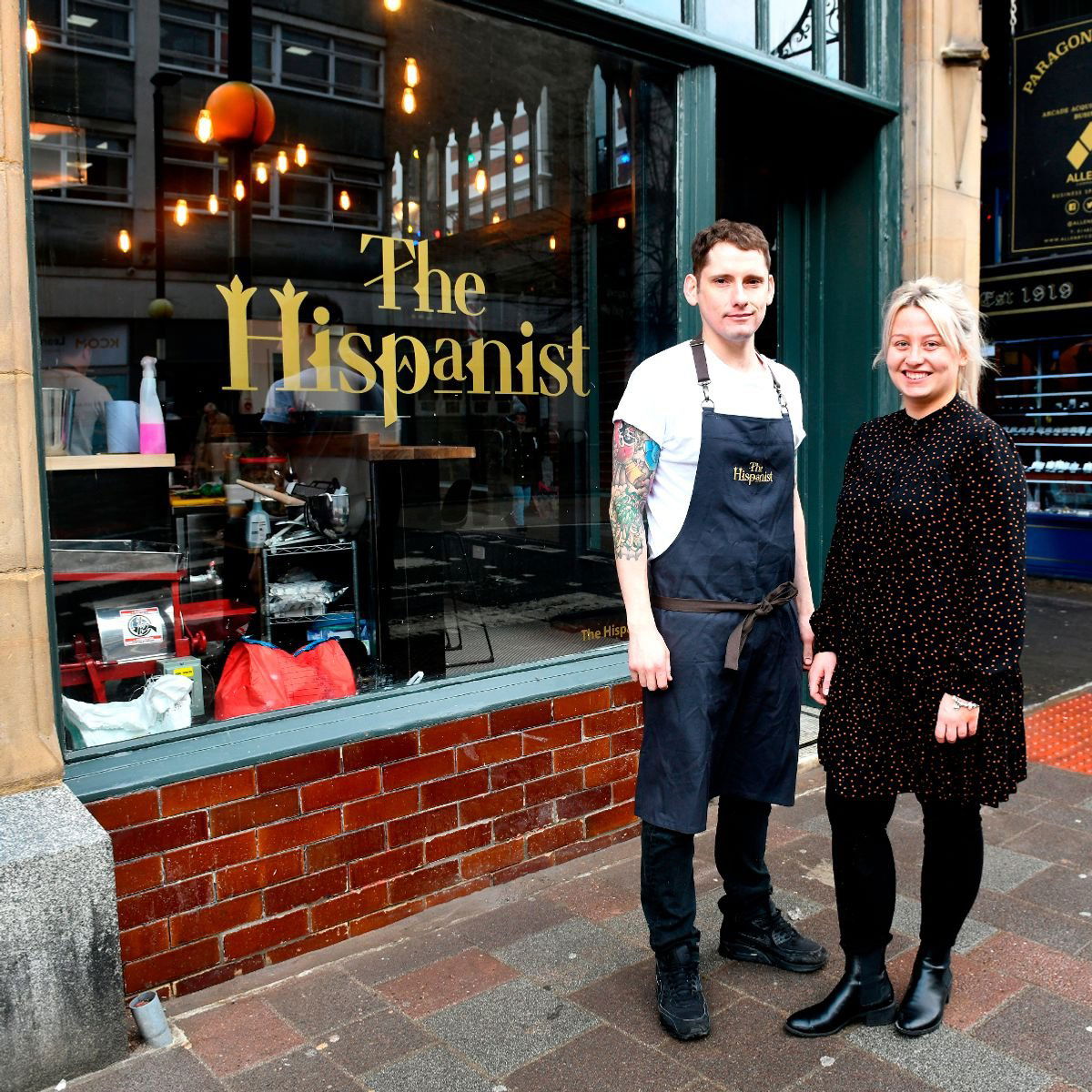
About The Hispanist
The Hispanist brings Spanish culinary tradition to the heart of Hull's Paragon Arcade, offering a focused approach to Iberian cooking in a city whose dining scene has diversified considerably in recent years. Positioned within a Victorian shopping arcade in the city centre, it represents a relatively rare commitment to Spanish cuisine in the North of England, where Italian and Asian formats have historically dominated the casual dining conversation.
Spanish Cooking in a Victorian Arcade
Paragon Arcade is one of Hull's more quietly characterful addresses. Built in the late nineteenth century and running between Carr Lane and King Edward Street, its tiled floors and iron-and-glass canopy have outlasted department stores, market stalls, and several waves of retail reinvention. It is the kind of space that accumulates meaning slowly, and it is inside this arcade that The Hispanist has taken up residence, making a case for Spanish cooking in a city that has historically looked to Italian trattorias and Asian kitchens when stepping outside pub food.
That geographic context matters. Hull sits on the Humber estuary, closer in spirit to the North Sea fishing ports and the East Riding's agricultural flatlands than to the metropolitan dining circuits that generate consistent critical coverage. The city's restaurant culture has diversified meaningfully over the past decade, and The Hispanist is part of that shift. Spanish cuisine, which in Britain has spent years being reduced to tapas chains and Rioja lists, deserves a more considered setting than it usually receives outside London or Manchester. A venue that takes Iberian cooking seriously in Hull is doing something editorially interesting, regardless of scale.
What Spanish Culinary Tradition Actually Means
The cuisine of Spain is not a single thing. It is a loose federation of deeply regional traditions: the pintxos bars of San Sebastián, the rice-led cooking of Valencia, the seafood-intensive Galician coast, the charcuterie culture of Extremadura, the sherry-soaked kitchens of Andalucía. A Spanish restaurant operating outside Spain must make choices about which version of that tradition it is representing, and those choices define everything from the wine list to the sourcing logic to the rhythm of service.
In the United Kingdom, the most commercially durable Spanish format has been informal sharing plates, a model that maps conveniently onto British dining habits and allows kitchens to keep costs manageable. But the country's serious Iberian cooking has moved beyond that. Places like Barrafina in London, which operates without reservations and builds its menu around daily-changing produce, have raised the reference point for what Spanish cooking in Britain can look like. That precedent doesn't impose a template, but it does raise the question of where any Spanish restaurant positions itself relative to that kind of seriousness.
The Hispanist's name signals intent. A hispanist is, in academic and literary tradition, a scholar of Spanish language and culture. It is a name that gestures toward depth rather than surface familiarity, suggesting the kitchen is interested in the cuisine as a subject rather than as a category. Whether that ambition is borne out in the food is what a visit tests.
Hull's Dining Context: What the City Now Offers
Hull's status as UK City of Culture in 2017 accelerated a conversation about what the city's hospitality scene could become. That year brought investment, attention, and an audience prepared to take the city seriously as a cultural destination. The dining scene has continued to develop in the years since, with independent operators making up a larger share of the interesting openings than branded chains.
Within that independent tier, the range of cuisines has broadened considerably. Beleza Rodizio Hull brings Brazilian churrasco to the city; K-BBQ Korean Barbecue Buffet Restaurant represents the Korean format that has grown rapidly across northern England; Cognac Restaurant occupies the French bistro register; and The Social Distortion works a different register entirely. Against that backdrop, The Hispanist fills a gap that the city's dining map has not otherwise addressed: a focused commitment to Spanish culinary tradition.
For a broader picture of where Hull's dining has arrived, our full Hull restaurants guide covers the city's most current options across price points and cuisine types.
Spain in the Provinces: A Pattern Worth Noting
The Hispanist is not operating in isolation. Across the United Kingdom, Spanish-led restaurants have found footholds in provincial cities where the format can thrive without competing directly against the density of London's Iberian options. The success of serious Spanish kitchens in cities like Leeds, Edinburgh, and Bristol has demonstrated that appetite for the cuisine exists well beyond the capital, provided the offer is coherent and the sourcing credible.
What provincial Spanish restaurants have typically discovered is that the informal sharing format translates well outside London, particularly when the kitchen is disciplined about provenance. Jamón ibérico, piquillo peppers, proper tinned seafood, and Spanish olive oils are now accessible to operators outside the capital in ways they were not twenty years ago. The question for any Spanish restaurant in a city like Hull is whether it is exploiting that improved supply chain or defaulting to the lowest common denominator version of the cuisine.
For context on how serious kitchens operate across the United Kingdom more broadly, it is worth knowing the reference points that define destination dining in Britain: L'Enclume in Cartmel, Moor Hall in Aughton, CORE by Clare Smyth in London, Le Manoir aux Quat'Saisons in Oxford, and Waterside Inn in Bray represent the country's most decorated tier. Further afield but relevant to the British dining conversation: Gidleigh Park in Chagford, Hand and Flowers in Marlow, hide and fox in Saltwood, Midsummer House in Cambridge, Opheem in Birmingham, and Restaurant Andrew Fairlie in Auchterarder each define what serious cooking looks like in their respective regions. Internationally, Le Bernardin in New York City and Atomix in New York City set a global benchmark for category-defining restaurants.
Planning a Visit
The Hispanist is located at Unit 11, Paragon Arcade, 52 Carr Lane, Hull HU1 3RF, making it walkable from Hull Paragon Interchange, the city's main rail and bus terminal. Paragon Arcade itself is a covered space, which means arrival on foot is direct regardless of weather. Hull city centre is compact, and the arcade sits within easy reach of the old town and the waterfront. Specific booking methods, current hours, and pricing are not published in our current database, so direct contact with the venue is advisable before making a journey, particularly for larger groups or special occasions.
Frequently Asked Questions
Would The Hispanist be comfortable with kids?
This depends on what you're after. Spanish dining culture is inherently family-oriented, particularly in the sharing-plate format that translates well to mixed-age tables: dishes arrive as they're ready, portions are communal, and the pace is rarely rigid. Hull restaurants at this end of the market tend to be informal enough that children are not out of place, though it is worth confirming the venue's current setup directly, as seating configurations and service hours can affect suitability for younger guests.
How would you describe the vibe at The Hispanist?
The setting inside Paragon Arcade gives The Hispanist a context that most Spanish restaurants in British city centres don't have: a Victorian covered arcade with architectural character that does some of the atmospheric work before you've even looked at a menu. Spanish cooking as a cultural tradition leans toward the convivial and the unhurried, and the arcade location reinforces that register. It is not a destination that signals formality or occasion dining in the way that a room with white tablecloths and awarded credentials might. Hull's independent dining scene, of which this is a part, skews toward genuine rather than performed hospitality.
What should I eat at The Hispanist?
Without confirmed menu data in our current records, it would be inaccurate to point to specific dishes. What Spanish culinary tradition suggests, however, is that the most revealing choices at any serious Iberian kitchen are usually the simplest: the quality of cured meats, the accuracy of a tortilla, the sourcing behind the seafood. These are the dishes that expose how seriously a kitchen takes its ingredients. Ask what is made in-house, and ask where the charcuterie comes from: those two questions will tell you most of what you need to know.
Is The Hispanist a good option for someone interested in regional Spanish wine?
A restaurant named The Hispanist, with its implied depth of engagement with Iberian culture, is a reasonable place to ask about wine beyond the expected Rioja and Albariño defaults. Spain's wine regions, from Galicia's Rías Baixas to the high-altitude vineyards of Bierzo and the oxidative wines of Jerez, represent some of the most interesting drinking in Europe. Whether the list reflects that range is something to establish on arrival, but the name alone suggests an operator who has thought about Spain as more than a generic category.
Related editorial
- Best Fine Dining Restaurants in ParisFrom three-Michelin-star icons to the next generation of Parisian chefs pushing boundaries, these are the restaurants that define fine dining in the world's culinary capital.
- Best Luxury Hotels in RomeFrom rooftop terraces overlooking ancient ruins to Michelin-starred hotel dining, these are the luxury hotels that make Rome unforgettable.
- Best Cocktail Bars in KyotoFrom sleek lounges to hidden speakeasies, Kyoto's cocktail scene blends Japanese precision with global influence in ways you won't find anywhere else.
Save or rate The Hispanist on Pearl
Keep this venue in your Pearl passport, rate it after you visit, and track it alongside every other place you collect.