
Restaurant in Stateline, United States
The Edge Restaurant & Lounge
100ptsSouth Shore Elevation Dining

About The Edge Restaurant & Lounge
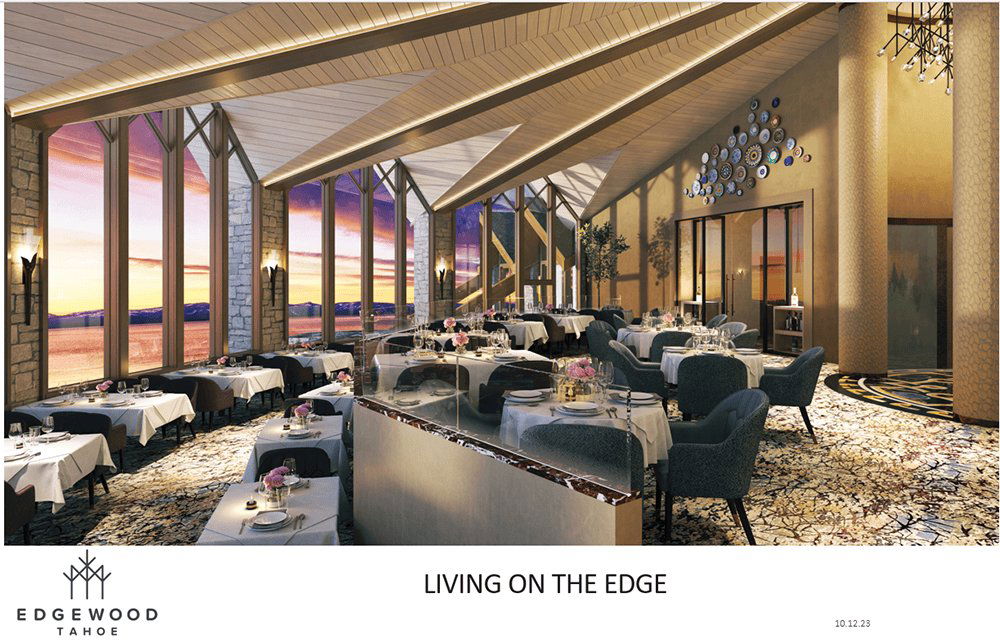
Positioned on the Nevada side of Lake Tahoe's South Shore, The Edge Restaurant & Lounge occupies a setting where the region's casino-resort dining tradition meets the altitude and alpine character of the Sierra Nevada. Forbes Travel Guide has signaled an upcoming Star Rating for the property, placing it in a tier where sourcing, format, and execution matter. Check our full Stateline guide for current context.
South Shore Dining at Elevation: What the Setting Demands
The South Shore of Lake Tahoe operates on its own dining logic. The altitude sits above 6,000 feet, the seasonal swings are pronounced, and the dominant hospitality infrastructure is casino-resort. That combination has historically produced a dining scene weighted toward scale and convenience over provenance and precision. The better restaurants along this corridor have had to work against that gravity, and the ones worth tracking are those that treat the mountain environment as an ingredient rather than a backdrop.
The Edge Restaurant & Lounge at 180 Lake Parkway West sits within that context. It occupies the Stateline strip, where Nevada's gaming properties cluster against the California border, and where a restaurant's relationship to its supply chain often tells you more about its ambitions than its menu description does. Forbes Travel Guide has flagged the property for an upcoming Star Rating expansion, which positions it among a set of venues being assessed against a structured quality framework rather than left to float on resort foot traffic alone.
For a broader orientation to what Stateline offers across categories, our full Stateline restaurants guide maps the competitive field. Drinking and overnight options are covered in our full Stateline bars guide and our full Stateline hotels guide, with our full Stateline wineries guide and our full Stateline experiences guide rounding out the picture.
Ingredient Sourcing in a High-Altitude Resort Context
The sourcing question matters more at altitude than it does in a dense urban market. In cities with deep restaurant infrastructure, like San Francisco or Los Angeles, a kitchen can pivot its supply relationships with relative ease. At Lake Tahoe, the logistics are different: growing seasons are shorter, road access in winter is weather-dependent, and the nearest major produce hubs require a meaningful supply chain commitment. Restaurants that get sourcing right in this environment have usually made deliberate decisions about relationships with regional farms and Nevada or California producers.
This is the framing that separates the farm-to-table language that appears on most menus from the operational reality of actually running that program at 6,000 feet. Properties in the Stateline resort corridor that maintain credible sourcing programs tend to do so because the hotel infrastructure backing them can absorb the logistical cost. Standalone restaurants at this elevation face a harder version of the same problem.
For comparison, the approach taken by farm-anchored properties elsewhere in the West illustrates what a genuine sourcing commitment looks like at an operational level. Single Thread Farm in Healdsburg runs an integrated farm-to-table model with its own growing operation. Blue Hill at Stone Barns in Tarrytown takes the farm-as-kitchen concept further still, with the agricultural program directly shaping what appears on the plate. These are the reference points that a serious sourcing conversation eventually reaches, and they clarify how significant the supply chain choices actually are.
Where The Edge Sits in a Wider Set
Casino-resort dining in the United States has been on a long trajectory toward credibility. The era when a hotel restaurant was understood as a convenience rather than a destination has largely passed at the upper end of the market. Properties in Las Vegas, in particular, proved that resort restaurants could compete on the same terms as freestanding fine-dining rooms, with multi-Michelin programs and serious chef talent operating inside hotel infrastructure.
The Lake Tahoe corridor is a smaller, more seasonal version of that pattern. The volume is lower, the clientele skews toward leisure travelers and weekend visitors from the Bay Area and Sacramento, and the price-tolerance brackets are narrower than in a primary dining city. That context shapes what a restaurant like The Edge can reasonably pursue in terms of format and price architecture.
At the national level, the reference set for resort-adjacent fine dining includes properties like The French Laundry in Napa and Addison in San Diego, both of which operate within leisure-destination contexts while maintaining programs that position against urban fine dining rather than against resort food-and-beverage averages. The Inn at Little Washington in Washington offers another model: a destination property in a small town that has built its identity entirely around the dining experience rather than treating it as a hotel amenity.
Further afield, the conversation about what resort dining can achieve at the highest level runs through places like Alain Ducasse's Louis XV in Monte Carlo and 8 1/2 Otto e Mezzo Bombana in Hong Kong, where the hotel or resort context has been used as a platform for serious culinary programs rather than treated as a constraint.
For domestic programs that have built strong reputations in urban markets, Le Bernardin in New York City, Lazy Bear in San Francisco, Alinea in Chicago, Providence in Los Angeles, Emeril's in New Orleans, and Albi in Washington, D.C. represent the freestanding restaurant model that resort dining increasingly benchmarks against.
Planning a Visit
Stateline's South Shore properties are most active between June and September, when lake access, outdoor dining, and the broader Tahoe leisure economy are all operating at full capacity. Winter draws a different crowd oriented around ski access, and shoulder seasons in spring and late autumn can see reduced programming across the resort corridor. Visiting during peak summer or peak ski season gives the leading chance of encountering the restaurant operating at its intended scope. The Forbes Travel Guide assessment is ongoing, so checking back on ratings status before booking is advisable for travelers whose decision-making is calibrated to that framework.
Frequently Asked Questions
- Does The Edge Restaurant & Lounge work for a family meal?
- Without current pricing data on record, the honest answer is that Stateline's resort-tier restaurants tend to run above casual dining prices, and the lounge format suggests an adult-oriented evening operation rather than a family dining room.
- What is the atmosphere like at The Edge Restaurant & Lounge?
- If the property earns a Forbes Star Rating, as signaled by the current assessment process, expect a calibrated formal-casual environment consistent with credentialed resort dining: composed rather than loud, with service standards that reflect the structured evaluation framework. That said, the Stateline casino-resort corridor has its own energy, and properties here carry some of that character regardless of their dining tier.
- What do people recommend at The Edge Restaurant & Lounge?
- No verified menu data, chef information, or sourced dish recommendations are currently available on record. For a credible picture of what to order, the Forbes Travel Guide rating, once published, will provide a structured assessment. Until then, the sourcing and format questions are the most useful filters for calibrating expectations.
Recognized By
Similar venues by awards
Related editorial
- Asia's 50 Best Restaurants 2026: The Chairman and Wing Go 1-2 from the Same BuildingThe Chairman takes No. 1 and Wing climbs to No. 2 at Asia's 50 Best Restaurants 2026. Both operate from the same Hong Kong building. Here's what it means.
- Four Seasons Yachts Debut: 95 Suites, 11 Restaurants, and a March 2026 Maiden VoyageFour Seasons I launches March 20, 2026, with 95 suites, a one-to-one staff ratio, and 11 onboard restaurants. Worth tracking if you want hotel-grade service at sea.
- LA Michelin Guide 2026: Seven New Restaurants from Tlayudas to Uzbek DumplingsMichelin's March 2026 California Guide update adds six LA restaurants and one Montecito newcomer, spanning Oaxacan tlayudas, Uzbek manti, and Korean-Italian pasta.
Save or rate The Edge Restaurant & Lounge on Pearl
Keep this venue in your Pearl passport, rate it after you visit, and track it alongside every other place you collect.