
Restaurant in Hobart, Australia
Templo
100ptsSouthern European Sourcing Precision
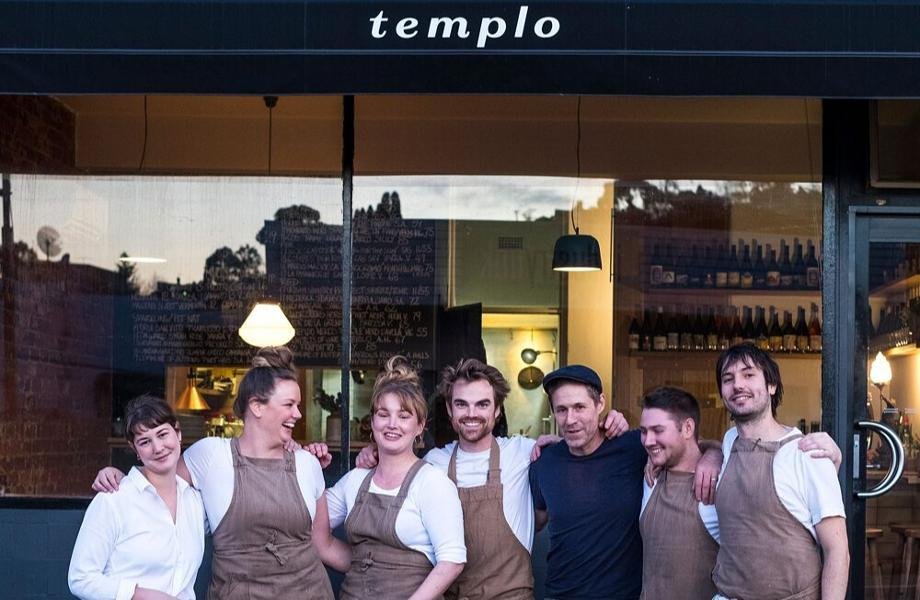
About Templo
Templo occupies a compact room on Patrick Street in Hobart's west end, where the kitchen draws heavily on Tasmania's agricultural and coastal supply chains. The cooking sits at the intersection of southern European technique and island-grown produce, placing it firmly within the state's ingredient-led dining movement. It is one of the more considered small-room restaurants operating in the city today.
Patrick Street and the Room Itself
Hobart's west end has a different cadence to Salamanca or the waterfront. The streets around Patrick Street are quieter, the buildings lower, and the dining rooms smaller. Templo, at number 98, fits that register: a compact space that signals its intentions through restraint rather than spectacle. Walking in, the room reads as deliberately considered, the kind of environment where the physical scale reinforces the cooking's focus. Small rooms in Tasmania's better restaurants tend to serve a purpose: they keep the supply chain short and the relationship between kitchen and table immediate.
That intimacy is not incidental. Across Australia's ingredient-led dining tier, from Brae in Birregurra to Pipit in Pottsville, the smaller the room, the more direct the accountability to sourcing. Templo belongs to that logic.
Why Tasmania's Supply Chain Makes This Restaurant Make Sense
The editorial argument for Templo begins not with the menu but with the island it sits on. Tasmania operates as one of Australia's most coherent agricultural ecosystems: clean water, a cool maritime climate, low-industrial farming density, and a producer culture that has consolidated over the past two decades into something genuinely traceable. The state's reputation for abalone, oysters, saffron, heritage grains, and small-lot dairy is not promotional language. It reflects a geography that makes intensive, artisan-scale production viable in ways that larger mainland states cannot replicate at the same density.
Restaurants that take that supply chain seriously, as Templo does, are working with a set of raw materials that mainland peers frequently import or substitute. That geographic advantage shows up on the plate in ways that matter: shorter time from harvest to kitchen, producer relationships that a small restaurant can actually maintain, and seasonal rhythms that are observable rather than theoretical. It is the same structural advantage that places like Agrarian Kitchen in New Norfolk have built their identity around, though Templo operates in a different register: urban, compact, and closer to a traditional restaurant format than a farm-to-table showcase.
Within Hobart specifically, ingredient-led dining has grown into a recognisable scene. Alongside Templo, Aloft and Cugini Restaurant represent different expressions of the city's appetite for produce-conscious cooking, while Don Camillo Restaurant anchors a longer-standing European tradition in the city's dining culture. The question for any visitor is where Templo sits in that field, and what it does that the others do not.
Southern European Technique Applied to Tasmanian Produce
The cooking at Templo draws on a broadly southern European framework. This matters because that culinary tradition, rooted in Italian and broader Mediterranean practice, treats ingredients as primary and technique as secondary: the quality of the oil, the age of the cheese, the freshness of the fish determine the dish, not the complexity of the preparation. Applied to Tasmanian produce, that framework is particularly well-suited. Abalone prepared with the economy of an Italian approach loses nothing and gains directness. Dairy from the island's cooler valleys needs no augmentation to carry flavour.
Across Australia's higher-end dining tier, this kind of alignment between a specific culinary tradition and a specific geography has produced some of the country's most coherent restaurant experiences. Attica in Melbourne routes indigenous and native ingredients through a fine-dining structure. Botanic in Adelaide applies tasting-menu discipline to South Australian produce. Hentley Farm in Seppeltsfield situates its cooking inside a working wine estate. In each case, the restaurant's argument rests on a clear relationship between where the food comes from and how it is handled. Templo's version of that argument is smaller in scale but coherent in its terms.
Where It Sits in the Wider Australian Conversation
Hobart has entered the national dining conversation in the past decade in a way that would have seemed improbable earlier. The combination of MONA's cultural draw, a strengthening producer community, and a generation of chefs willing to stay on the island rather than migrate to Sydney or Melbourne has created a dining scene with genuine depth. Templo is part of that generation's output.
Compared to the mainland's most serious ingredient-sourcing restaurants, including Rockpool in Sydney, Laura at Pt Leo Estate in Merricks, and Ormeggio at The Spit in Mosman, Templo operates without the infrastructure of large-city dining: no deep-pocketed backing, no sprawling group, no national profile team. What it has instead is proximity to the source material and the scale to use it without waste or compromise.
Internationally, the closest structural analogues are not the grand tasting-menu rooms of Le Bernardin in New York City or the ambitious communal format of Lazy Bear in San Francisco, but rather the small European trattoria tradition, where the room size and the sourcing radius are in direct proportion. That is a harder commercial model, and it demands that the kitchen deliver on the ingredient promise consistently rather than occasionally.
Planning a Visit
Templo is located at 98 Patrick Street, a short walk from the city centre and accessible on foot from most central Hobart accommodation. The Patrick Street corridor, also home to Callington Mill Distillery at MACq 01 Hobart, has developed into one of the quieter alternatives to the Salamanca precinct for an evening out. Given the room's size, booking in advance is advisable; small-room restaurants in Hobart's ingredient-led tier fill quickly, particularly from late spring through summer when the city's visitor numbers peak. For a broader picture of what the city offers across different price points and styles, the full Hobart restaurants guide maps the scene in detail. Visitors combining Templo with a regional excursion might consider Provenance in Beechworth or Lizard Island Resort in Lizard Island as part of a wider Australian itinerary built around serious sourcing credentials.
Frequently Asked Questions
What do regulars order at Templo?
Templo's menu draws from Tasmania's coastal and agricultural supply, so returning guests tend to orient toward whatever is in peak season. The restaurant sits within Hobart's broader ingredient-led dining scene, where the strongest plates typically reflect the island's seafood and dairy output. Specific dish recommendations from verified sources are not available, but the southern European framework means the menu favours well-sourced simplicity over complex preparations.
Should I book Templo in advance?
Yes. Hobart's small-room restaurants fill well ahead of service, and Templo's compact format means availability is limited on any given night. During summer, when the city draws significant visitor numbers following the Taste of Tasmania festival and peak tourism season, lead times extend further. Booking at least a week ahead is a reasonable baseline; two weeks or more in peak season is prudent.
What do critics highlight about Templo?
Coverage of Templo within the Australian food press consistently references the quality of its sourcing and the coherence of its Mediterranean-influenced approach applied to Tasmanian produce. The restaurant is positioned in a peer set that includes Hobart's more serious produce-driven rooms. Specific named reviews are not available in current data, but its sustained presence in a competitive small-city market is itself a signal of consistent performance.
Can Templo adjust for dietary needs?
Small European-format restaurants of this type typically accommodate dietary requirements when notified at the time of booking. Given Templo's compact room and focused kitchen, advance notice is more important here than at larger operations. Contacting the restaurant directly before your reservation is the practical approach; details are available through their booking channel.
Is Templo overpriced or worth every penny?
Templo sits in a mid-to-upper price tier for Hobart, which remains materially less expensive than comparable sourcing-led restaurants in Sydney or Melbourne. The value argument rests on ingredient quality relative to price: Tasmania's produce supply gives the kitchen access to raw materials that mainland restaurants pay a premium to import. Within the city's dining options, it prices at a level consistent with its peer set, which includes the more ambitious rooms in the Hobart restaurant scene.
How does Templo compare to other small European-format restaurants in Hobart?
Templo occupies a specific position in Hobart's dining map: a small room applying Mediterranean technique to Tasmanian produce, without the tasting-menu formality of some peers or the casual register of the city's wine bars. It is closer in spirit to a serious neighbourhood trattoria than to the showcase fine dining found at some regional Australian destinations. For visitors exploring the city's full range, pairing a meal at Templo with a visit to Agrarian Kitchen offers a useful contrast between two different expressions of the island's ingredient culture.
Related editorial
- Best Fine Dining Restaurants in ParisFrom three-Michelin-star icons to the next generation of Parisian chefs pushing boundaries, these are the restaurants that define fine dining in the world's culinary capital.
- Best Luxury Hotels in RomeFrom rooftop terraces overlooking ancient ruins to Michelin-starred hotel dining, these are the luxury hotels that make Rome unforgettable.
- Best Cocktail Bars in KyotoFrom sleek lounges to hidden speakeasies, Kyoto's cocktail scene blends Japanese precision with global influence in ways you won't find anywhere else.
Save or rate Templo on Pearl
Keep this venue in your Pearl passport, rate it after you visit, and track it alongside every other place you collect.