
Restaurant in Raleigh, United States
St. Roch Fine Oysters + Bar
100ptsSouthern Raw Bar Precision

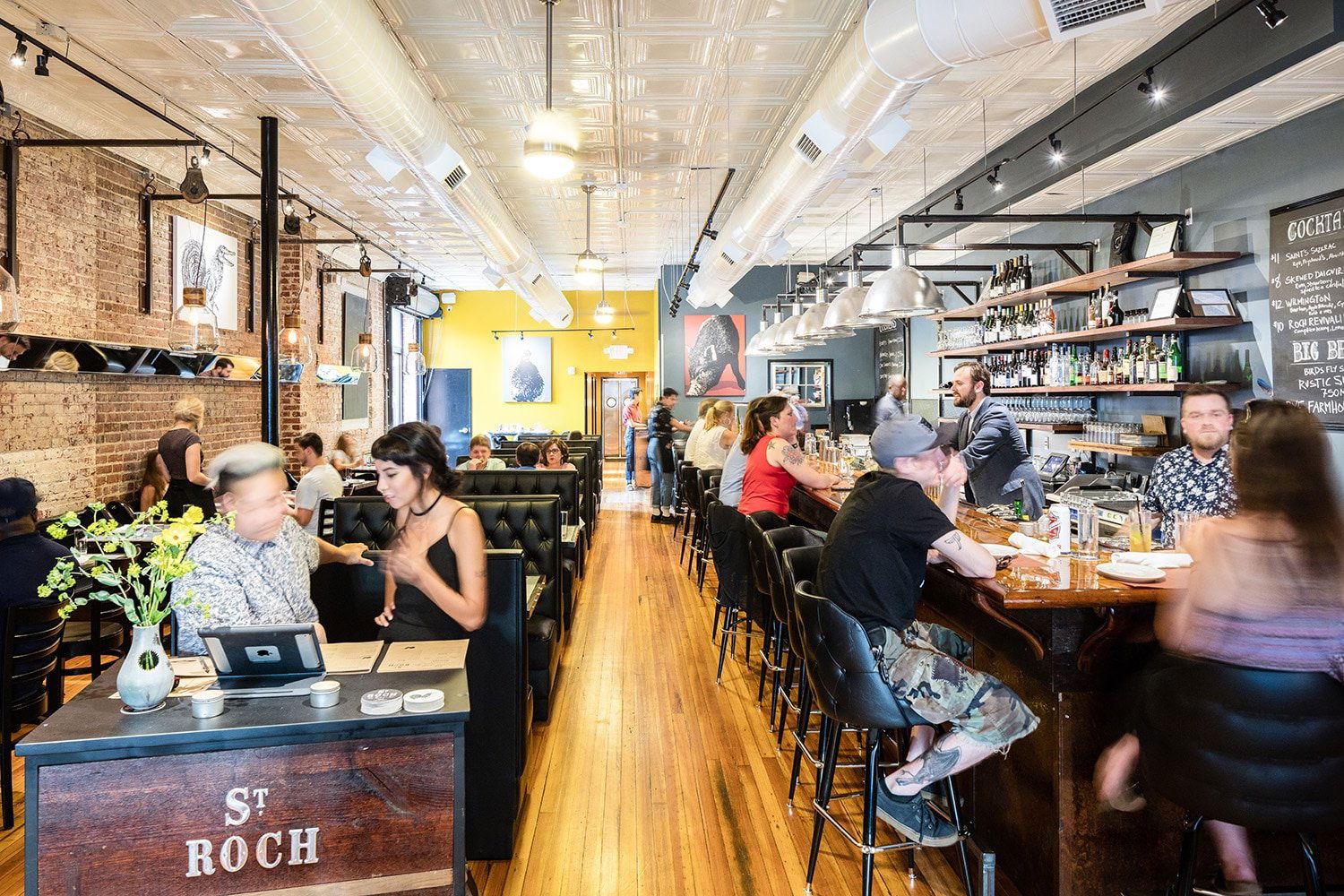
About St. Roch Fine Oysters + Bar
St. Roch Fine Oysters + Bar on South Wilmington Street holds a 2025 Michelin Plate, placing it inside Raleigh's small cohort of nationally recognized seafood addresses. The format centers on oysters and a full bar, positioning it at the more serious end of a city whose dining scene leans heavily toward Southern land-based cooking. For visitors already familiar with Gulf and East Coast raw bar culture, this is the clearest point of comparison in the Triangle.
Raw Bar Culture in a Southern City
Raleigh's dining identity has long been anchored to the land: wood-fired proteins, slow-cooked pork, cornbread, and collard greens. The city's most talked-about rooms, places like Death & Taxes and Crawford & Sons, draw their authority from Southern cooking traditions rooted in the Carolina Piedmont. Against that backdrop, a dedicated oyster bar occupying a corner of downtown carries a different kind of weight. The raw bar as a format has deep roots in coastal American dining, from the Gulf oyster houses of Louisiana and Mississippi to the briny counters of Portland and Prince Edward Island, but it travels less naturally inland. When it works far from tidewater, it usually means something deliberate is happening in sourcing and selection.
St. Roch Fine Oysters + Bar, at 223 S Wilmington Street in downtown Raleigh, holds a 2025 Michelin Plate, the guide's signal that a kitchen is operating with consistent quality even before it enters starred territory. In the context of North Carolina's dining scene, that recognition is notable. Michelin's expanded coverage of Southern and mid-Atlantic cities has surfaced a tier of technically serious restaurants that had previously operated below national critical radar, and St. Roch sits within that cohort.
The Oyster Bar as Cultural Form
To understand what an address like St. Roch is doing in Raleigh, it helps to understand what the oyster bar means as a dining institution. Unlike most restaurant formats, the raw bar demands complete transparency between kitchen and guest. There is no reduction, no sauce, no transformation that can paper over the quality of what arrives on ice. The oyster on the half shell is the ingredient, served as close to its harvested state as the logistics of delivery allow. This places enormous pressure on sourcing relationships and rotation discipline, which is why the leading raw bar operations tend to read more like produce-forward restaurants than traditional seafood houses.
The American coasts have produced distinct oyster cultures. The Gulf tradition, running from the Florida Panhandle through Louisiana and into Texas, favors large, plump, mineral-forward oysters, many of them from the eastern oyster species farmed in warm, brackish bays. New England and the mid-Atlantic corridor offer smaller, crisper varieties, with the salinity profiles shifting noticeably from Maine to the Chesapeake. Pacific Northwest and Northern California producers, supplying operations like Fanny Bay Oyster Bar in Vancouver, contribute Kumamoto and Pacific varieties with cucumber-and-melon finish notes that taste categorically different from their East Coast counterparts. A serious oyster program draws across these regions and presents them as an argument about geography, not just protein.
The name St. Roch carries a specific cultural reference. The St. Roch neighborhood in New Orleans is home to a public market and oyster tradition that connects the city's French Creole heritage to its Gulf Coast geography. That framing, whether architectural, spiritual, or simply nominal, places the Raleigh venue in conversation with a broader American oyster narrative that runs through New Orleans, Baltimore, and the Chesapeake before arriving at a landlocked capital city in the Carolina interior.
Downtown Raleigh's Current Register
South Wilmington Street sits in the zone of downtown Raleigh where older commercial buildings have absorbed a second generation of restaurant tenants. The neighborhood functions as part of the broader Fayetteville Street corridor, within walking distance of the city's most concentrated restaurant density. Raleigh's dining scene in this part of downtown has absorbed a range of formats over the past decade: the dim-sum-and-craft-beer model of Brewery Bhavana, the Mediterranean-Indian fusion of Ajja, and the precise Italian kitchen of Brodeto. These are not interchangeable restaurants. They reflect a city with enough demand to support specialist formats at the upper end of the price-tier scale.
The three-dollar-sign pricing tier at St. Roch places it in the same general spend bracket as those addresses, above casual dining but below the kind of tasting-menu pricing associated with rooms like Le Bernardin in New York City or The French Laundry in Napa. At that price point in Raleigh, the expectation is a kitchen operating with clear sourcing intention and a front-of-house that understands the product well enough to explain it. The Michelin Plate recognition in 2025 suggests the room is meeting or exceeding that bar.
Seasonal Considerations
Oyster quality shifts with water temperature, and the traditional rule that oysters should be eaten in months containing the letter R (September through April) carries real logic, even if modern aquaculture has blunted its absolute force. Farmed oysters from colder Atlantic and Pacific waters maintain consistent quality year-round more reliably than wild-harvested Gulf varieties, which spawn in summer and can become milky and soft in warmer months. For visitors timing a trip to Raleigh, the fall and winter months remain the period when raw bar programs across the country run at their most compelling. Spring is transition territory. If you are planning a visit specifically around the oyster program at St. Roch, October through March offers the widest window of peak-condition product across most East Coast and Atlantic Canada growing regions.
Raleigh's restaurant scene broadly tracks the academic calendar given the presence of NC State and the broader Research Triangle university system. Shoulder-season visits, particularly November and February, tend to offer the easiest reservation windows across the city's more popular addresses. For a broader orientation to what else is operating in the same quality tier, see our full Raleigh restaurants guide, along with the Raleigh bars guide and Raleigh hotels guide for planning the surrounding stay.
Planning Your Visit
St. Roch Fine Oysters + Bar is located at 223 S Wilmington Street in downtown Raleigh, accessible from the city center on foot if you are staying in the core hotel district. The three-dollar-sign pricing tier suggests a spend in the moderate-to-higher range for Raleigh, consistent with a seafood program that requires fresh deliveries and skilled front-of-house presentation. Current hours and booking method are leading confirmed directly via the venue before visiting, as oyster bar operations in this tier frequently adjust service schedules seasonally. The 2025 Michelin Plate makes this one of a small number of independently recognized dining addresses in the city, and it competes for the same visitor attention as the most serious rooms in the downtown corridor. For context on other Michelin-level comparisons across the US, Lazy Bear in San Francisco, Alinea in Chicago, and Atomix in New York City represent different expressions of what Michelin recognition signals at various price tiers. St. Roch occupies a more approachable position in that spectrum while maintaining the sourcing discipline the format demands. For regional Gulf Coast context, Emeril's in New Orleans sits in the broader Southern seafood tradition that informs the St. Roch name. Visitors interested in Northern California's farm-to-table seafood approach can cross-reference Single Thread Farm in Healdsburg for a different expression of ingredient-led coastal produce. The Raleigh wineries guide and Raleigh experiences guide round out the broader trip-planning picture for visitors making the city a longer stay.
Frequently Asked Questions
What's the leading thing to order at St. Roch Fine Oysters + Bar?
The program at St. Roch is built around its oyster selection, which is where the kitchen's sourcing discipline and product knowledge are most legible. The 2025 Michelin Plate recognition, awarded for consistent kitchen quality, applies across the menu, but in any serious raw bar the rotating oyster list is the clearest window into how the operation thinks. Ask the server what is freshest and where it is from: a well-trained front-of-house at this tier should be able to describe the growing region, the salinity profile, and why a given variety is on the selection that week. That conversation, not any fixed dish recommendation, is how you get the most from a format like this. The bar program also carries weight in the restaurant's positioning, making it a viable destination for a drink and a plate rather than a full sit-down meal, which is consistent with how the leading American raw bars operate across both coasts.
Recognized By

Similar venues by awards
Related editorial
- Asia's 50 Best Restaurants 2026: The Chairman and Wing Go 1-2 from the Same BuildingThe Chairman takes No. 1 and Wing climbs to No. 2 at Asia's 50 Best Restaurants 2026. Both operate from the same Hong Kong building. Here's what it means.
- Four Seasons Yachts Debut: 95 Suites, 11 Restaurants, and a March 2026 Maiden VoyageFour Seasons I launches March 20, 2026, with 95 suites, a one-to-one staff ratio, and 11 onboard restaurants. Worth tracking if you want hotel-grade service at sea.
- LA Michelin Guide 2026: Seven New Restaurants from Tlayudas to Uzbek DumplingsMichelin's March 2026 California Guide update adds six LA restaurants and one Montecito newcomer, spanning Oaxacan tlayudas, Uzbek manti, and Korean-Italian pasta.
Save or rate St. Roch Fine Oysters + Bar on Pearl
Keep this venue in your Pearl passport, rate it after you visit, and track it alongside every other place you collect.