
Restaurant in Brisbane, Australia
SK Steak & Oyster
200ptsFire, Oysters, Australian Restraint

About SK Steak & Oyster
SK Steak & Oyster, situated within The Calile Hotel on James Street, represents Brisbane's most considered take on the contemporary Australian steakhouse. The kitchen pairs wood-fired Australian beef with oysters and coastal seafood, producing a menu where restraint and produce quality do the work. Simon Gloftis's operation has drawn early recognition as a sharp new entrant to the city's upper dining tier.
Where James Street Meets the Grill
The approach to SK Steak & Oyster tells you something useful before you sit down. The Calile Hotel's James Street address puts the restaurant at the centre of Fortitude Valley's most polished retail and hospitality corridor, and the dining room carries that neighbourhood character inside: pale timber, marble surfaces, soft beige tones, and daylight that arrives generously through the architecture. This is not the dim-lit, leather-booth steakhouse of an older register. It belongs to a generation of Australian restaurants that treat brightness and ease as legitimate forms of luxury, and it wears that sensibility without apology.
James Street has become one of Brisbane's most reliable addresses for this kind of considered hospitality. Alongside Agnes, which operates its own wood-fire programme further along the strip, and nearby options such as Bar Miette and Bar Alto (Italian), the precinct has consolidated a reputation for dining that takes produce and craft seriously without tipping into formality. SK sits comfortably inside that peer set, though its focus on Australian beef and the steakhouse format gives it a distinct position within it.
Australian Beef, Seriously Handled
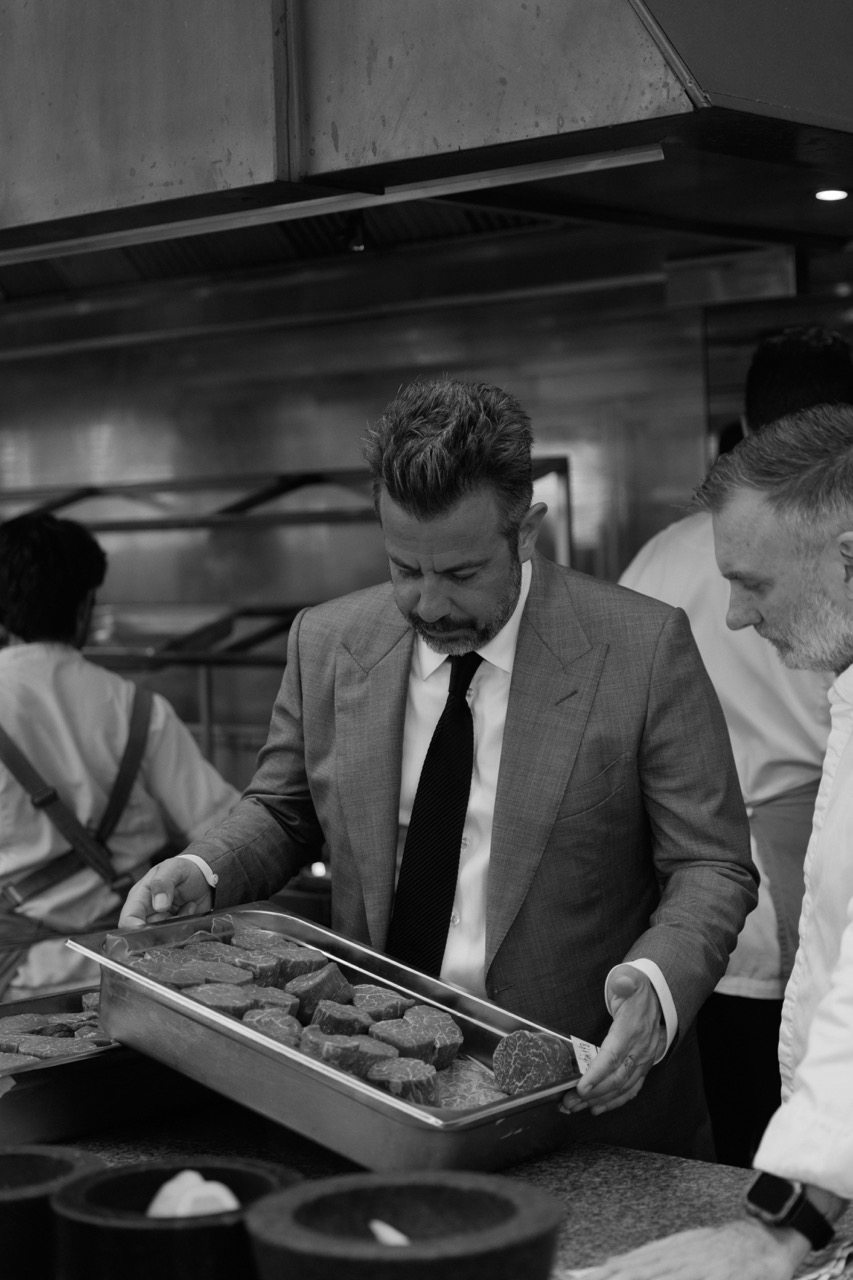
The editorial case for SK rests substantially on what its kitchen does with Australian beef, and the approach is worth understanding in context. Australia's beef industry produces cattle across a wide range of breed, finishing, and climate conditions, and the country's leading restaurants have increasingly chosen to work with that diversity rather than defaulting to a single prestige import. At SK, the meat programme combines wet and dry-ageing techniques, a dual approach that allows the kitchen to develop different flavour profiles across different cuts: wet-ageing preserving moisture and brightness, dry-ageing concentrating flavour and altering texture in ways that reward patience.
The cooking method is the wood-fired grill, handled with what the restaurant's own programme describes as quiet discipline. Fire in Australian contemporary dining has moved well beyond rustic symbolism. At places like Agnes and further afield at Brae in Birregurra, live-fire cooking has become a studied technical language with its own vocabulary of crust formation, internal temperature management, and smoke calibration. SK's kitchen positions fire as a means of definition rather than theatre: the goal is to expose the natural character of the beef rather than to impose additional flavour on leading of it. That restraint requires confidence in the source material, and it signals a kitchen that has made deliberate choices about where it wants to sit on the Australian steakhouse spectrum.
Across Australia, the upper end of the beef-focused dining category has grown more sophisticated. Rockpool in Sydney established a template for premium Australian beef dining that many subsequent kitchens have referenced. SK is working within that broader tradition while giving it a Fortitude Valley inflection: lighter, airier, and shaped by a coastal Australian confidence that the steakhouse format, on its own, does not automatically provide.
Oysters as Argument, Not Garnish
What separates SK's concept from a direct steakhouse is the weight it places on oysters and seafood. This is not a token raw bar positioned near the entrance to suggest freshness before guests move on to beef. The seafood component is described as essential to the restaurant's identity, providing contrast and a distinctly coastal character that shifts the overall menu away from the heavier conventions of the genre.
Australia's oyster-growing regions produce some of the most varied product in the Southern Hemisphere: Sydney rock oysters, Pacific varieties from South Australia and Tasmania, and regional producers whose output changes character across seasons and water temperatures. A kitchen that takes oysters seriously as a menu anchor rather than an appetiser gesture is making an argument about sourcing and about the kind of dining experience it wants to offer. The pairing of raw seafood with wood-fired beef is not a new idea internationally, but within Brisbane's dining scene it gives SK a format that few direct competitors occupy.
For context, Brisbane's strongest Italian-influenced rooms, including 1889 Enoteca and the more theatrical Bacchus, approach the question of produce and sourcing from very different angles. SK's specific combination of Australian beef provenance, dual-ageing method, live fire, and coastal seafood places it in a niche that it currently occupies with some clarity.
The Room as Editorial Statement
The dining room at SK functions as an argument for a particular kind of Australian luxury: one that draws confidence from proportion and material quality rather than volume or decoration. Marble surfaces and pale timber are not incidental choices. They reference a design language common across the better new Australian hotel restaurants, from Laura at Pt Leo Estate in Merricks to the coastal restraint visible at Pipit in Pottsville, where the setting is expected to do real work in shaping the experience rather than simply providing a backdrop.
The Calile Hotel, as a host property, is relevant here. Hotel restaurants in Australia occupy a complicated space: when the hotel is strong, the restaurant benefits from design coherence and a guest base that travels for quality; when the hotel is underdistinguished, the restaurant can feel ancillary. The Calile is a considered property, and SK's presence within it reflects a pairing where both parts of the operation appear to speak the same design and hospitality language.
Service, as described in the restaurant's programme, follows the same restraint-over-display logic: warmth and composure rather than choreographed formality. That tone is consistent with a broader shift in Australian fine dining, where restaurants such as Provenance in Beechworth and Hentley Farm in Seppeltsfield have demonstrated that hospitality can be gracious without being stiff.
Where SK Sits in the Australian Dining Picture
The contemporary Australian steakhouse, as a category, has been evolving for two decades. The country's beef quality is internationally recognised, and the question for serious kitchens has shifted from sourcing access to what they choose to do with it. Internationally, the wood-fire and premium-beef format has been refined at places like Le Bernardin in New York City and approached from very different angles at community-format restaurants like Lazy Bear in San Francisco. Within Australia, the conversation about produce-led, fire-cooked beef has been shaped by restaurants including Attica in Melbourne, Botanic in Adelaide, and the seafood-meets-landscape approach of Ormeggio at The Spit in Mosman.
SK has entered this conversation as a new entrant with a clear position. It has been assessed as one of Brisbane's most polished expressions of contemporary Australian dining, a recognition that places it in the upper tier of the city's restaurants. The qualification attached to that recognition is notable: if operational and product-handling consistency matches the culinary programme's ambition, there is room for the restaurant's standing to rise further. That is the kind of conditional praise that serious restaurant assessment issues when a room is cooking at a high level but has not yet run through enough service across enough time to confirm it as settled.
For Brisbane specifically, SK adds a format the city's dining scene was not previously covering at this level. The broader picture of the city's restaurant scene is addressed in our full Brisbane restaurants guide, but SK's contribution is specific: a light, confident steakhouse with serious sourcing principles and a wine list that moves between Australian producers and Old World references without overcomplicating the selection. Lizard Island Resort in Lizard Island offers a point of comparison for how Queensland's coastal produce can anchor premium dining in a very different register; SK's version is urban, hotel-based, and built around a daily service rhythm rather than a resort calendar.
Planning Your Visit
SK Steak & Oyster is located at G.12/48 James St in Fortitude Valley, within The Calile Hotel, placing it within walking distance of the James Street precinct's broader dining and retail options. As a hotel restaurant with a strong early profile, it draws both hotel guests and Brisbane residents making specific reservations, and demand has established it as a room worth booking in advance rather than approaching as a walk-in. For current reservation availability and hours, checking directly with The Calile Hotel is the most reliable method, as the restaurant does not publish an independent website. The wine programme supports a meal structured around both the meat and seafood sides of the menu, and the list is sized to be navigated without specialist knowledge while still offering enough depth for those who want to engage with it more seriously.
Frequently Asked Questions
What is SK Steak & Oyster known for?
SK Steak & Oyster is known for its approach to Australian beef through combined wet and dry-ageing followed by wood-fired cooking, and for treating oysters and seafood as central to the menu rather than secondary. The restaurant, conceived by Simon Gloftis within The Calile Hotel, has been recognised as one of Brisbane's most polished contemporary dining addresses, with an atmosphere and service style that place it firmly in the current generation of Australian hotel restaurants.
What's the must-try dish at SK Steak & Oyster?
The kitchen's focus on wood-fired Australian beef, prepared through dual-ageing, makes the beef programme the primary reason to visit. The oyster selection is equally central to the restaurant's identity and reflects its argument that coastal Australian seafood belongs alongside premium beef on a serious menu. Ordering across both sides of the menu gives the clearest account of what the kitchen is trying to do. Specific dishes and seasonal availability are leading confirmed at the time of booking.
How hard is it to get a table at SK Steak & Oyster?
SK has established a strong early profile as a new entrant to Brisbane's upper dining tier, and its location within The Calile Hotel means it draws from both the hotel's guest base and the city's wider dining audience. Booking ahead is advisable, particularly for weekend evenings and for groups. Contact The Calile Hotel directly for reservation availability, as the restaurant operates within the hotel's hospitality structure.
Recognized By

Related editorial
- Best Fine Dining Restaurants in ParisFrom three-Michelin-star icons to the next generation of Parisian chefs pushing boundaries, these are the restaurants that define fine dining in the world's culinary capital.
- Best Luxury Hotels in RomeFrom rooftop terraces overlooking ancient ruins to Michelin-starred hotel dining, these are the luxury hotels that make Rome unforgettable.
- Best Cocktail Bars in KyotoFrom sleek lounges to hidden speakeasies, Kyoto's cocktail scene blends Japanese precision with global influence in ways you won't find anywhere else.
Save or rate SK Steak & Oyster on Pearl
Keep this venue in your Pearl passport, rate it after you visit, and track it alongside every other place you collect.