
Restaurant in Samarqand, Uzbekistan
Shokhrukh Nur
100ptsSilk Road Table
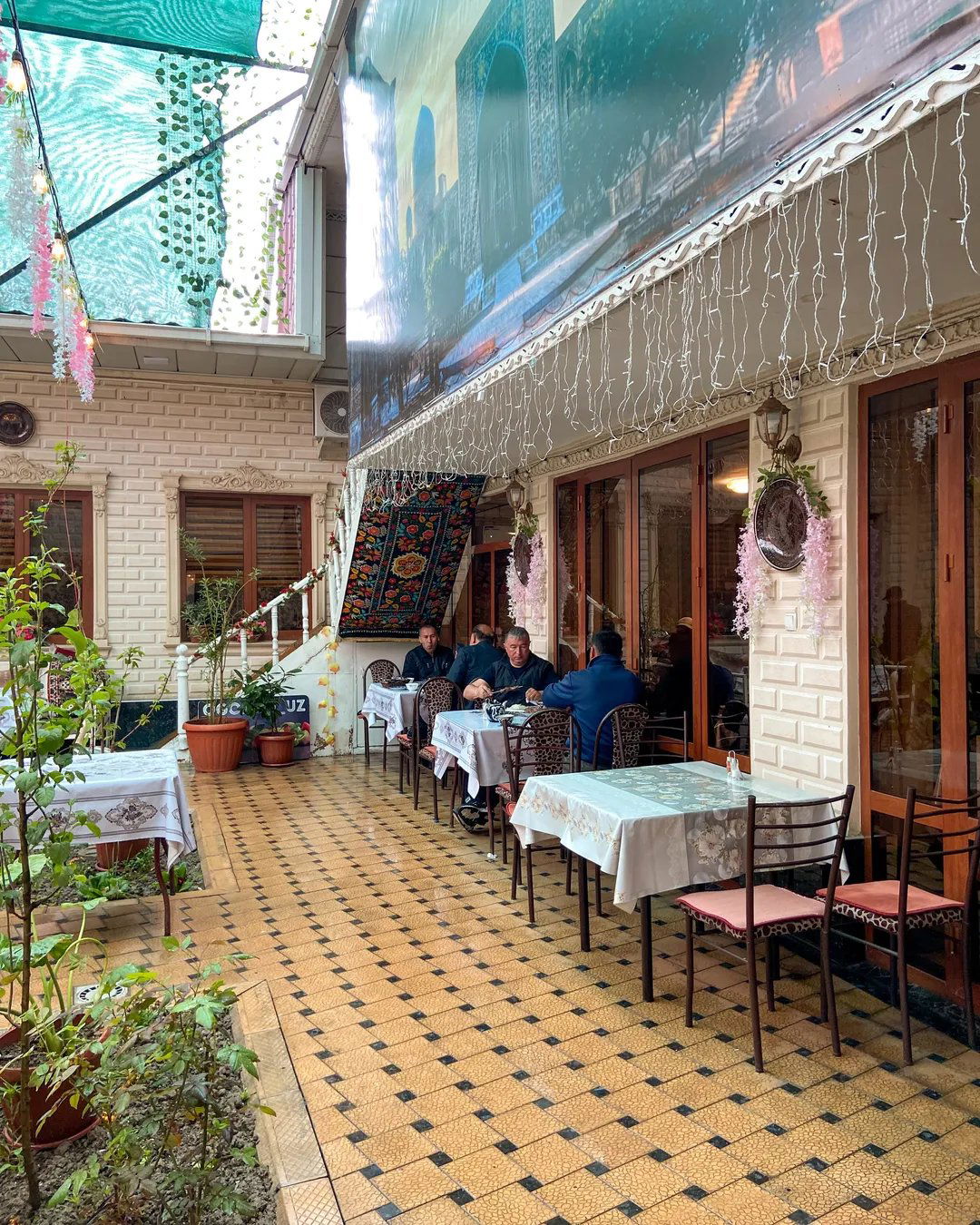
About Shokhrukh Nur
On Registon Ko'chasi, a short walk from Samarqand's defining monuments, Shokhrukh Nur sits at a crossroads that has shaped Central Asian trade and table culture for centuries. The address alone positions it within a dining scene where Silk Road history is not decorative context but daily culinary reality. Visitors exploring Samarqand's restaurant options will find it listed alongside a growing roster of establishments drawing on Uzbek tradition with varying degrees of ambition.
Eating in the Shadow of the Registan: Samarqand's Dining Scene in Context
Registon Ko'chasi, the street that carries Samarqand's most visited address, is not simply a tourist corridor. It is the axis around which the city's hospitality trade has organised itself for generations, and the restaurants that line or adjoin it occupy a position that is both commercially obvious and culturally loaded. To eat here is to sit within sight of architecture that defined the eastern terminus of the medieval world's most consequential trade network. That context shapes what kitchens in this neighbourhood feel obliged to offer, and how visitors calibrate their expectations before they even read a menu.
Shokhrukh Nur sits on that street. The venue data available to us is limited: no published awards, no confirmed chef name, no documented price range, no recorded hours. What that absence tells us is that Shokhrukh Nur operates in a tier of the Samarqand dining market that has not yet attracted the kind of systematic critical documentation that venues in Tashkent or the more internationally trafficked neighbourhoods of Bukhara have begun to accumulate. That is neither a verdict nor an endorsement. It is a useful starting point for understanding where this address fits in a city that is, by most measures, still early in developing a restaurant culture legible to international visitors.
What the Silk Road Put on the Plate
Uzbek cuisine as it exists in Samarqand is not a recent construction. The city's position as a waypoint between the Iranian plateau, the Chinese interior, and the northern steppe produced a culinary grammar built around communal eating, slow-cooked protein, and carbohydrate as ceremony rather than filler. Plov, the rice dish that UNESCO added to Uzbekistan's Intangible Cultural Heritage list in 2016, is the clearest expression of that grammar: rendered lamb fat, long-grain rice, carrot, and cumin cooked in a cast-iron kazan over open flame, served at a table where the act of sharing the dish is as structured as the cooking itself.
Any restaurant on Registon Ko'chasi is implicitly in conversation with that tradition. The question visitors should ask of any establishment in this neighbourhood is not whether it serves Uzbek food, but how it positions itself along the spectrum from ceremonial authenticity to tourist convenience. Venues like Afrosiyob Restaurant in Samarqand and 아리랑 Arirang occupy different positions on that spectrum, and the city's dining scene is broad enough to sustain both. For the full picture of what Samarqand's restaurants currently offer, our full Samarqand restaurants guide maps the range in detail.
The Broader Uzbek Table: Where Samarqand Sits Nationally
Samarqand's culinary identity is distinct from Tashkent's even within Uzbekistan's relatively compact restaurant culture. The capital has absorbed more international formats and a greater density of venues with documented credentials, places like Jumanji in Tashkent and Khiva Cafe that cater to a resident professional class alongside tourists. Samarqand, by contrast, remains more oriented toward the monument circuit, and its restaurant economy reflects that: higher seasonal variance, a stronger reliance on group dining formats, and menus that tend to anchor around the dishes a visitor expects to encounter rather than those a local returns for.
Bukhara presents the closest parallel. Its old-city dining scene, represented in part by venues like Old Bukhara and Ayvan Restaurant, has similarly built around heritage architecture and heritage dishes, with the tension between ceremonial cooking and tourist throughput running through most of the better-known addresses. Mirza Bashi in Xiva operates in an analogous setting further west. The pattern across Uzbekistan's historic cities is consistent: restaurants positioned near major monuments earn their authority from location and tradition, not from the kind of chef-driven innovation or awards recognition that drives coverage in Western food media.
For comparison, the distance between this dining culture and the starred-restaurant world represented by venues like Le Bernardin in New York City, Atomix, or Alinea in Chicago is not simply one of geography. It is a difference in the entire framework through which a meal is assigned value. In Samarqand, the kazan, the communal table, and the proximity to a UNESCO World Heritage site carry weight that a Michelin inspector's rubric is not designed to measure.
Planning a Visit: What Limited Data Requires of the Traveller
Because Shokhrukh Nur has no published hours, phone number, or booking platform in the record available to us, the practical guidance that applies is the kind that applies to any under-documented address in Uzbekistan's heritage cities: arrive in person, visit during conventional meal service windows (midday and early evening are standard across the region), and carry cash, since card acceptance at smaller establishments on the monument circuit is inconsistent. The address on Registon Ko'chasi is the most reliable navigational anchor; the street is well-known and walkable from the main square.
Visitors planning a broader Uzbekistan itinerary should note that the pattern of limited documentation extends to several venues in similar positions across the country. Shayxana Nayman in Kegeyli and Yi Palace in Konigil are other examples of addresses that function within local dining networks without the infrastructure of online booking or published critical coverage. That is not unusual in Central Asia, and it should not be read as a signal of quality in either direction.
For travellers accustomed to the kind of pre-visit research that works for, say, Lazy Bear in San Francisco or Alléno Paris au Pavillon Ledoyen, Samarqand's dining scene asks for a different posture: more openness to the walk-in, more tolerance for the untranslated menu, and a willingness to let the setting carry some of the interpretive weight that, in more documented dining cultures, a chef's biography or a critic's score would provide.
Frequently Asked Questions
- Is Shokhrukh Nur child-friendly?
- No specific family policy is documented, but Samarqand's monument-adjacent restaurants generally operate in a relaxed, group-dining format that accommodates families without difficulty.
- How would you describe the vibe at Shokhrukh Nur?
- Samarqand's Registon-area dining scene skews toward the communal and the unhurried rather than toward formal service or destination-restaurant theatrics. Without published awards or a documented price tier, Shokhrukh Nur reads as a neighbourhood-anchored address in one of the world's most historically charged dining corridors, where the surroundings set the tone more than any interior design decision could.
- What's the leading thing to order at Shokhrukh Nur?
- No confirmed menu or signature dishes appear in the available record. Across Samarqand's restaurant scene, plov remains the dish most directly connected to the city's culinary identity, and any table in this neighbourhood that takes its cooking seriously will treat that dish as the measure of the kitchen. Ordering it is a reasonable first test of any Samarqand address.
- Do I need a reservation for Shokhrukh Nur?
- No booking platform or phone number is published for this address. Walk-in is the working assumption for any visit, and arriving at off-peak hours — mid-afternoon or early evening outside the main tourist season — reduces the risk of finding the dining room at capacity.
- What makes Shokhrukh Nur worth visiting specifically in Samarqand, rather than dining in Tashkent or Bukhara?
- The case for eating on Registon Ko'chasi is primarily positional: no other city in Uzbekistan places you within walking distance of Timurid-era monuments of this scale while you eat. Samarqand's restaurant scene is less documented than Tashkent's and less internationally polished than Bukhara's old-city circuit, but for travellers whose itinerary centres on the historic core, venues like Shokhrukh Nur offer proximity to the city's defining architectural and cultural context that an address in either of those cities cannot replicate.
Related editorial
- How travel will be redefined by 2040By 2040, Travel Won't Be a Trip — It Will Be a Stack My thesis is simple and, I think, uncomfortable: by 2040, "travel" will no longer describe a discrete journey from point A to point B.
- How travel will be redefined by 2040The Death of Tourism as We Know It: Why 2040 Will Demand a Completely Different Kind of Traveler Let me be direct: the version of travel most of us grew up dreaming about — cheap flights, crowded lan
- Asia's 50 Best Restaurants 2026: The Chairman and Wing Go 1-2 from the Same BuildingThe Chairman takes No. 1 and Wing climbs to No. 2 at Asia's 50 Best Restaurants 2026. Both operate from the same Hong Kong building. Here's what it means.
Save or rate Shokhrukh Nur on Pearl
Keep this venue in your Pearl passport, rate it after you visit, and track it alongside every other place you collect.