
Restaurant in Nevsehir, Turkey
Saklı Konak Cappadocia
100ptsClay-Pot Anatolian Tradition

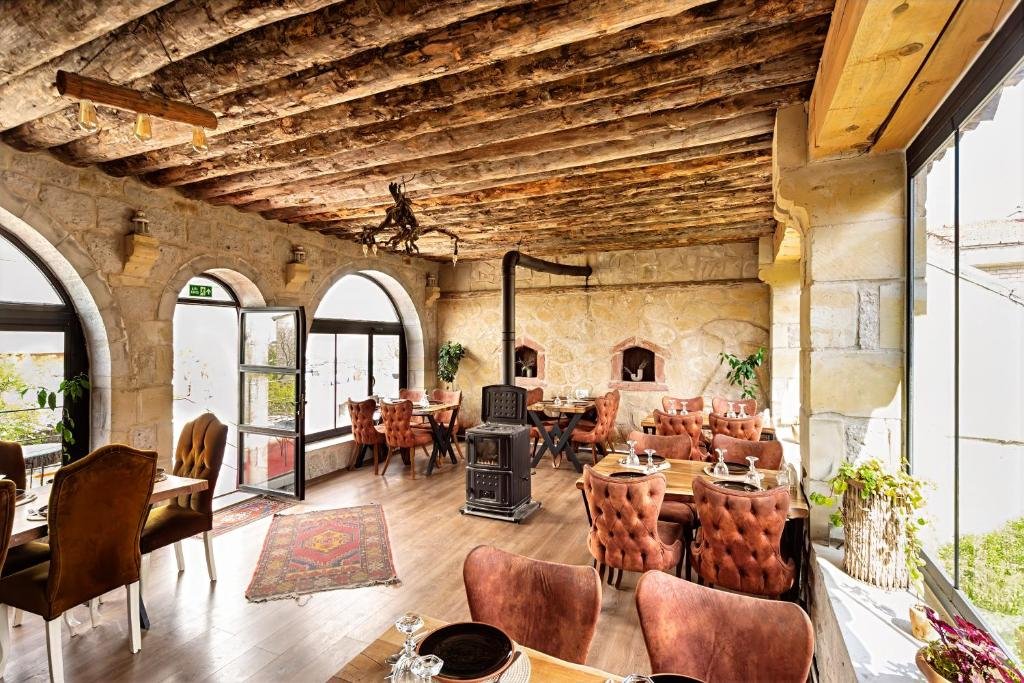
About Saklı Konak Cappadocia
Set in the Tekelli quarter of Uçhisar, Saklı Konak Cappadocia draws on the volcanic valley's larder to produce Anatolian dishes anchored in regional technique. Testi kebab cooked in sealed clay pots and manti dressed with grilled aubergine, butter, and yoghurt represent the kitchen's commitment to local tradition. Guestrooms are available for those who want to extend the stay.
Where Uçhisar's backstreets meet Anatolian cooking
Uçhisar sits at the western edge of Cappadocia's volcanic plateau, higher than the coach-tour crowds that concentrate around Göreme's fairy chimneys. The village's Tekelli quarter, where the lanes narrow and the tufa stone takes on a darker hue, operates at a remove from the region's main tourist corridor. Saklı Konak Cappadocia is addressed to that quieter geography, at 2. Karlık Sokak No:3, which places it within walking distance of Uçhisar Castle but well outside the circuit most day-trippers cover. The name itself translates roughly as "hidden mansion," and the address supports the framing: you arrive by choice, not by accident.
That physical positioning matters to how the kitchen is understood. Restaurants that sit on Nevşehir's main tourist routes tend to calibrate menus toward accessibility — a broad international sweep with a handful of Turkish dishes as decoration. What the Tekelli quarter allows, and what Saklı Konak has apparently pursued, is a narrower, more regionally committed approach. The dishes on record here, testi kebab, kofta, and manti, are not decorative nods to Anatolian cooking; they are its structural load-bearing elements.
The food: clay, aubergine, and the logic of the valley
Cappadocian cuisine draws its distinctiveness from two sources: the volcanic soil that shapes local produce, and the clay-pot tradition that shaped local technique. Testi kebab, in which meat and vegetables are sealed inside a terracotta vessel and cooked slowly until the pot is cracked open tableside, is the most theatrically visible expression of that tradition. It requires a specific regional craft — both the making of the vessels and the management of the heat , which is why the dish appears across Cappadocia's better kitchens as a marker of seriousness rather than a novelty item. Saklı Konak is noted for its testi kebabs, and in this region that signals a kitchen that has calibrated its timing and sourcing around the dish rather than offering it as an afterthought.
The manti here represents a more telling departure from the standard regional template. Manti, Turkey's answer to stuffed pasta, typically arrives with a meat filling and a direct yoghurt-garlic sauce. The version documented at Saklı Konak uses grilled aubergine, butter, and tomato sauce as a base, then layers yoghurt dressing and dried herbs on leading. The substitution of aubergine for meat is not a modern flourish; it reflects the vegetable-forward logic of Anatolian mountain cooking, where the intensity of the produce does the work that protein might elsewhere. Grilling the aubergine before it enters the pasta suggests a kitchen attentive to depth of flavour rather than quick assembly. Restaurants operating at this level of specificity with a dish as codified as manti are signalling a broader disposition toward accuracy. For context on how this compares to high-register Turkish cooking elsewhere, consider the Michelin-starred approach at Turk Fatih Tutak in Istanbul, which pursues Anatolian traditions through a very different, fine-dining lens.
The kofta, also cited as a kitchen strength, is less structurally unusual but no less telling. Kofta variations across Turkey are highly regional, and the claim of "unique versions" at Saklı Konak points toward recipe specificity rather than a standardised formula. Without confirmed dish details it would be wrong to describe the preparation precisely, but the emphasis across all three signature items points consistently in one direction: a kitchen working from regional source material rather than generalised Turkish restaurant cooking.
The place among its peers
Nevşehir's restaurant scene divides, broadly, between properties that rely on the region's tourism infrastructure for their audience and those that have developed a local following independent of it. Among Uçhisar and the wider Nevşehir area, a number of kitchens are worth tracking. Happena, Moniq Restaurant, Reserved Restaurant, and Uzundere Kapadokya Mutfağı each occupy different positions in the regional offer. Saklı Konak's distinction within that set is its address in the Tekelli quarter and its consistent focus on the clay-pot and stuffed-pasta traditions that are most specific to this volcanic plateau.
Across Turkey more broadly, the tension between regional specificity and cosmopolitan accessibility plays out differently by city and cuisine type. Maçakızı in Bodrum works the Aegean seafood register; Narımor in Izmir occupies a different coastal tradition; 7 Mehmet in Antalya has built its reputation on the Taurus mountain kitchen. Aravan Evi in Ürgüp, the closest geographic peer, operates within the same Cappadocian tradition. What distinguishes the approaches between Ürgüp and Uçhisar is partly the audience each village draws: Ürgüp carries a more established restaurant economy, while Uçhisar's quieter streets create a different dynamic for kitchens operating there. Regional dining at its most direct elsewhere in Turkey can be found in properties like Agora Pansiyon in Milas and Ahãma in Göcek, both of which demonstrate how place-specific cooking survives in lower-profile addresses.
Staying on: the guesthouse logic
Saklı Konak offers guestrooms alongside the restaurant, a combination that makes particular sense in Cappadocia. The region's most interesting sites, the underground cities, the fresco churches, the valley walks, are spread across a wide area and most rewarding early in the morning or late in the afternoon when day-trip coaches have not yet arrived or have already left. Staying in Uçhisar rather than routing through one of the larger resort concentrations allows for that timing. The option to sleep in the same building where you eat is not unusual in Cappadocia's smaller villages, but it remains a practical advantage for travellers who want to structure their days around the landscape rather than around a transfer schedule. For a broader view of accommodation options in the area, our full Nevşehir hotels guide covers the range from cave hotels to boutique properties across the plateau.
Planning your visit
Saklı Konak Cappadocia is located at Tekelli Mahallesi, 2. Karlık Sokak No:3, Uçhisar, within the Nevşehir province. No booking contact details are confirmed in current records; the most reliable approach in this part of Cappadocia is to inquire directly on arrival or through your accommodation, as smaller village restaurants in Uçhisar operate on a walk-in or locally-arranged basis. Cappadocia's shoulder seasons, April through May and September through October, offer the most reasonable temperatures for walking between sites before or after a meal; summer midday heat makes a later lunch sitting or an early evening meal the practical choice. Winter brings dramatic landscape conditions with snow on the tufa formations, and the valley is notably less crowded from December through February, though some smaller restaurants adjust their hours during that period.
For anyone building a wider Nevşehir itinerary, our full Nevşehir restaurants guide covers the breadth of the region's dining. Complementary planning resources include our Nevşehir bars guide, our Nevşehir wineries guide, and our Nevşehir experiences guide, the last of which covers the hot-air balloon operators, underground city tours, and trekking routes that give Cappadocia its particular pull among Turkey's inland destinations. For international reference points on what formal Turkish cooking can look like at its most technically refined, Le Bernardin in New York City and Emeril's in New Orleans offer a reminder of how regional culinary identity translates into long-term reputation when pursued with consistency.
Frequently asked questions
What do people recommend at Saklı Konak Cappadocia?
The dishes most associated with the kitchen are testi kebab, the region's clay-pot preparation, regional kofta variations, and manti made with grilled aubergine, butter, tomato sauce, yoghurt dressing, and dried herbs. The manti in particular represents a vegetable-forward take on a dish that most Turkish restaurants prepare with meat, and it is the item that leading signals the kitchen's engagement with local Anatolian tradition rather than a generic menu approach.
What is the leading way to book Saklı Konak Cappadocia?
No confirmed booking phone number or online reservation system appears in current records. In Uçhisar's smaller restaurant addresses, the practical approach is inquiry through your hotel or guesthouse, which will typically have working relationships with nearby restaurants, or a direct visit during opening hours. If you are staying at Saklı Konak itself, any room booking would presumably cover a dining arrangement as well. Visiting during shoulder season, April to May or September to October, reduces the pressure on tables compared to the peak summer weeks.
What has Saklı Konak Cappadocia built its reputation on?
The kitchen's reputation rests on its sustained focus on Cappadocian cooking traditions: testi kebab prepared in sealed terracotta vessels, and manti and kofta produced from local produce and regionally grounded recipes. Its location in Uçhisar's Tekelli quarter, away from the main tourist-facing restaurant circuit, positions it as a destination for travellers seeking the specificity of volcanic-plateau cooking rather than a broad Anatolian overview.
Recognized By

Similar venues by awards
Related editorial
- Best Fine Dining Restaurants in ParisFrom three-Michelin-star icons to the next generation of Parisian chefs pushing boundaries, these are the restaurants that define fine dining in the world's culinary capital.
- Best Luxury Hotels in RomeFrom rooftop terraces overlooking ancient ruins to Michelin-starred hotel dining, these are the luxury hotels that make Rome unforgettable.
- Best Cocktail Bars in KyotoFrom sleek lounges to hidden speakeasies, Kyoto's cocktail scene blends Japanese precision with global influence in ways you won't find anywhere else.
Save or rate Saklı Konak Cappadocia on Pearl
Keep this venue in your Pearl passport, rate it after you visit, and track it alongside every other place you collect.