
Restaurant in Castiglione Falletto, Italy
Ristorante Le Torri
100ptsLanghe Village Table

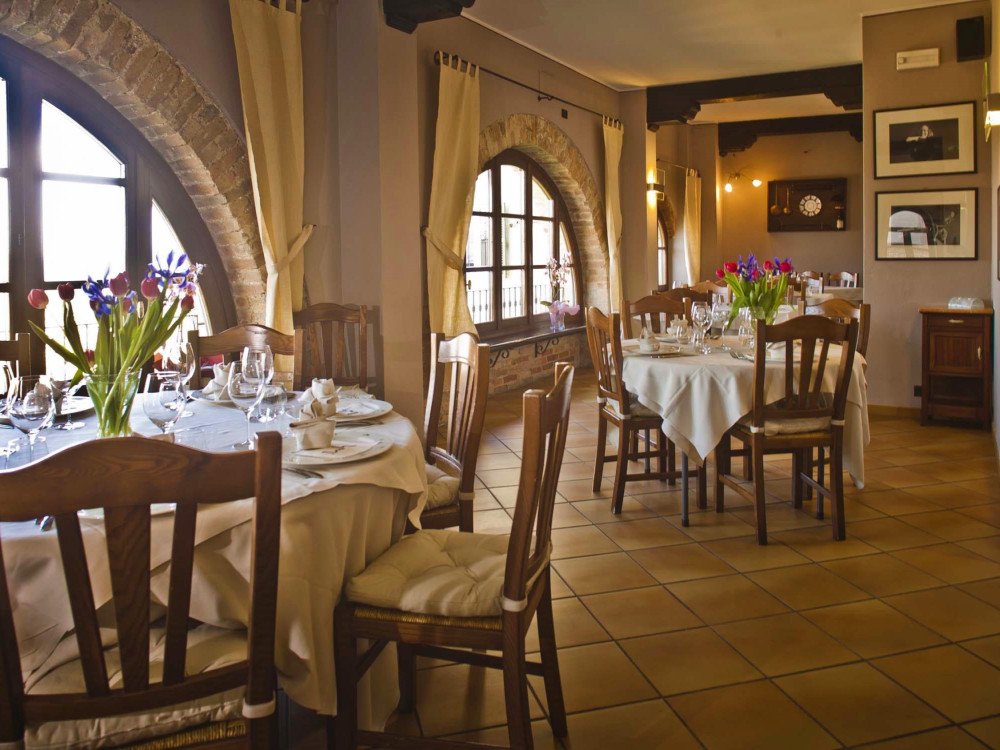
About Ristorante Le Torri
A family-run trattoria on the main square of Castiglione Falletto, Le Torri sits at the centre of Barolo wine country and serves the kind of Langhe cooking that the surrounding vineyards were built around. The menu draws directly from Piedmontese tradition, with ingredients sourced from the agricultural fabric of one of Italy's most tightly defined wine-producing zones.
Where Barolo Country Meets the Table
Castiglione Falletto is one of the smallest and most tightly bounded of the eleven Barolo communes, a medieval hilltop village where the castle tower still anchors the skyline and the streets are narrow enough that you brush the stone walls on both sides. Piazza Vittorio Veneto, the village's main square, is the kind of place where local wine producers stop to talk, where the afternoon light sits long on pale stone, and where a family-run restaurant has very little margin for the generic. Everything around it is too specific, too rooted in a particular soil and a particular tradition, for the cooking to drift far from its origins. That specificity is the context in which Ristorante Le Torri operates.
The Langhe as a region has been producing some of Italy's most discussed food and wine for decades. Piazza Duomo in Alba, roughly fifteen kilometres to the south, represents one end of the spectrum: three Michelin stars, creative Piedmontese cooking read through a contemporary lens. Le Torri sits at a different point on the same line — a trattoria format grounded in the kind of cooking that preceded and still underlies those more technically ambitious interpretations. In Barolo country, that positioning is not a step down. It is its own category.
The Sourcing Logic of the Langhe
Piedmontese cooking is unusually ingredient-driven in its traditional form. Tajarin, the region's egg-yolk-rich fresh pasta, relies on a very specific ratio of yolk to flour and is most often dressed with nothing more than butter and white truffle or a slow-cooked meat ragù. Vitello tonnato, one of the great Langhe antipasti, turns on the quality of the veal and the precision of the tuna sauce. Brasato al Barolo, braised beef cooked in the same wine that the valley is named for, is only as good as its braising liquid. In each case, the dish is almost entirely a function of its raw materials rather than technique applied on leading of them.
This is the logic that shapes a family-run restaurant in a village like Castiglione Falletto. The local producers, the seasonal rhythms of the Langhe calendar, and the proximity of the white truffle markets of Alba (the season running roughly October through December) are structural advantages that a restaurant in this position can draw on in ways that larger urban operations often cannot. The white truffle Alba produces is among the most closely tracked agricultural commodities in Italy, with auction prices that fluctuate annually and international buyers who travel to the region specifically for it. A village restaurant on Piazza Vittorio Veneto has access to that supply chain at its source.
The Langhe also produces Castelmagno, an aged cow's milk cheese from the higher elevations of the Cuneo province, as well as hazelnuts from the Langhe specifically designated under IGP protection — both ingredients with strong denominazione credentials that appear regularly in regional cooking. A restaurant committed to the Piedmontese tradition in this location has the sourcing infrastructure immediately around it in a way that requires active effort to replicate elsewhere.
Family Format and the Village Setting
The family-run trattoria in a Piedmontese village is a specific format with its own operating logic. Menus tend to be extensive by the standards of more edited urban restaurants, reflecting the expectation that a regular clientele , including local producers finishing a day in the vineyards , will return frequently and want range. The cooking is rarely minimalist. Portions are calibrated for appetite rather than for presentation, and the service register is familial rather than formal.
Le Torri's position on the main square of Castiglione Falletto places it within walking distance of several of the Barolo zone's most important estates, including producers whose vineyards cover some of the MGA (Menzione Geografica Aggiuntiva) crus that give the commune its reputation , Villero, Bricco Rocche, Monprivato among them. For visitors spending time in the wine zone, the restaurant functions as the kind of grounding experience that context requires: the food side of what the Langhe is actually about, not translated into a tasting-menu format but served in the village where the wine is made.
For those exploring the full range of Castiglione Falletto's offering, the full Castiglione Falletto restaurants guide maps the dining options across formats. The village's wineries, bars, hotels, and experiences fill out a stay that, for most visitors, is structured around the vineyards first and the table second , though in the Langhe, the distinction rarely holds for long.
Within Castiglione Falletto, the creative end of the local dining scene is covered by L'Argaj, which takes a more interpretive approach to Piedmontese ingredients. The two restaurants are not competing for the same moment in a visit , they serve different functions and different appetites.
Placing Le Torri in the Broader Italian Context
Italy's most acclaimed regional restaurants tend to occupy a different register entirely. Osteria Francescana in Modena, Dal Pescatore in Runate, and Le Calandre in Rubano each represent the Michelin-starred, tasting-menu tier of Italian regional cooking. Enoteca Pinchiorri in Florence and Enrico Bartolini in Milan extend that conversation into the Italian-French fusion and urban creative categories. Further afield, Atelier Moessmer Norbert Niederkofler in Brunico, Reale in Castel di Sangro, Uliassi in Senigallia, and Quattro Passi in Marina del Cantone each anchor regional Italian cooking in highly specific local contexts. Internationally, Le Bernardin in New York City and Emeril's in New Orleans represent the point at which regional culinary identity crosses into international recognition.
Le Torri is not in that tier, nor is it reaching for it. A village trattoria in a commune of fewer than seven hundred residents, with direct access to some of Italy's most closely defined agricultural ingredients, is already making a specific argument about what matters in a meal. The argument is about proximity and tradition rather than transformation , and in Barolo country, that is a coherent and defensible position.
Planning a Visit
Castiglione Falletto sits in the Cuneo province of Piedmont, accessible by car from Alba in under twenty minutes and from Turin in roughly ninety. The village has limited accommodation, so most visitors base themselves in Alba or one of the larger Langhe towns and make day or evening trips into the communes. White truffle season, running from mid-October through late December, draws significant visitor traffic to the region and increases competition for tables at restaurants across the Langhe. Visiting outside that window , particularly in spring, when the vineyards are accessible and the crowds are thinner , gives a more direct sense of the village's character. Given the small scale of operations in Castiglione Falletto, contacting the restaurant directly to confirm hours and availability before arriving is advisable regardless of season.
Frequently Asked Questions
What kind of setting is Ristorante Le Torri?
Le Torri is a family-run trattoria on the main square of Castiglione Falletto, a medieval hilltop village at the centre of the Barolo wine zone. The setting is village Piedmont at its most characteristic: stone architecture, a tight communal piazza, and a dining room that reflects the agricultural and viticultural community around it rather than a tourist-facing version of it.
What's the must-try dish at Ristorante Le Torri?
The Piedmontese canon is the reference point here. Dishes rooted in the Langhe tradition, including tajarin with ragù or truffle (in season), vitello tonnato, and brasato al Barolo, represent what this kind of restaurant does at its most grounded. The ingredients themselves, sourced from a region with strong denominazione protections, carry much of the work.
What's the defining dish or idea at Ristorante Le Torri?
The defining idea is proximity. The restaurant sits inside a wine-producing commune whose agricultural identity is among the most tightly defined in Italy, and the cooking draws directly from that context. The ingredient sourcing is not a marketing concept; it is a structural feature of operating in a village of this kind in this particular valley.
Do I need a reservation for Ristorante Le Torri?
During white truffle season (mid-October through December), the Langhe receives significant visitor traffic and tables at village restaurants fill quickly, particularly at weekends. Outside that period, availability is more flexible, but given the small scale of the operation, contacting the restaurant before visiting is advisable. The village square location means walk-ins are possible, but not something to rely on during peak wine-tourism periods.
Would Ristorante Le Torri be comfortable with kids?
Family-run trattatorie in Italian villages are generally among the most accommodating formats for families with children. The service register at Le Torri is familial rather than formal, the menu is extensive rather than edited, and the piazza setting means there is outdoor space and communal atmosphere rather than the hushed precision of a destination-dining room. In that context, it is a reasonable choice for families visiting the Barolo zone.
Recognized By

Similar venues by awards
Related editorial
- Best Fine Dining Restaurants in ParisFrom three-Michelin-star icons to the next generation of Parisian chefs pushing boundaries, these are the restaurants that define fine dining in the world's culinary capital.
- Best Luxury Hotels in RomeFrom rooftop terraces overlooking ancient ruins to Michelin-starred hotel dining, these are the luxury hotels that make Rome unforgettable.
- Best Cocktail Bars in KyotoFrom sleek lounges to hidden speakeasies, Kyoto's cocktail scene blends Japanese precision with global influence in ways you won't find anywhere else.
Save or rate Ristorante Le Torri on Pearl
Keep this venue in your Pearl passport, rate it after you visit, and track it alongside every other place you collect.