
Restaurant in Parque Nacional De Gorongosa, Mozambique
Restaurante Chikalango
100ptsWilderness Camp Dining
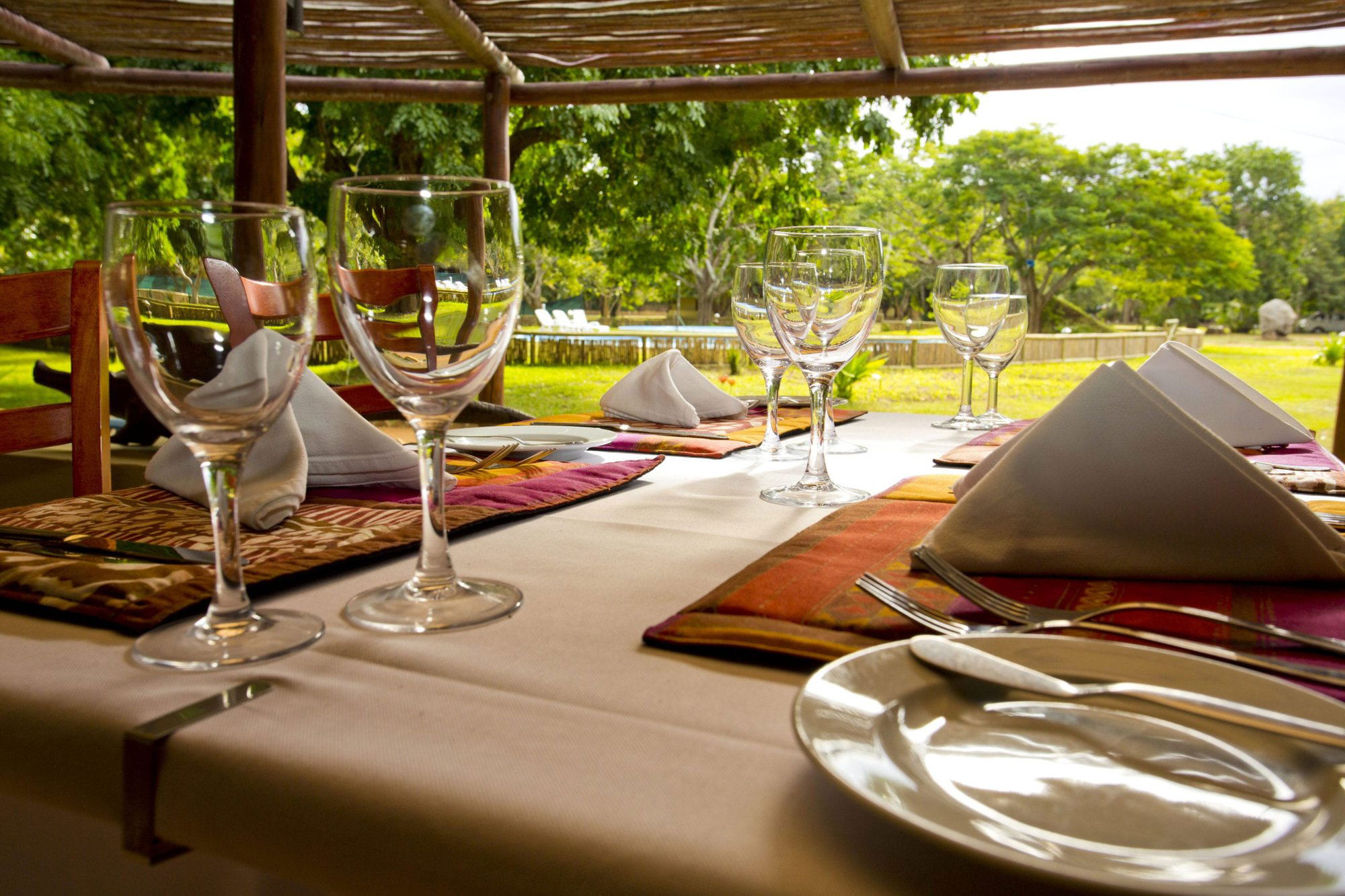
About Restaurante Chikalango
Restaurante Chikalango sits inside Chitengo Camp within Gorongosa National Park, one of Africa's most ambitious wildlife restoration projects. Dining here places you inside the park's broader story of ecological recovery, with sourcing shaped by the landscape surrounding the table. It is a rare case where the restaurant's context does more editorial work than any single dish.
Eating Inside a Rewilded Continent
There is a particular quality of silence that settles over Chitengo Camp as the light drops in Gorongosa National Park. The sounds that replace it — the low percussion of insects, the occasional distant call from the bush — are not background noise but the whole point. Restaurante Chikalango sits within that environment, operating as the primary dining option for guests staying at the camp. The physical setting does work that no urban restaurant can manufacture: you are eating at the edge of one of sub-Saharan Africa's most closely watched ecological restoration projects, and the food, whatever form it takes on a given evening, arrives inside that frame.
Gorongosa suffered catastrophic wildlife losses during Mozambique's civil war, which ended in 1992. The recovery since then, supported by a long-running partnership with the Carr Foundation, has become a reference point in conservation circles. That context is not decorative. It shapes what is available, what is logistically possible, and what the act of eating here actually means. If you have been following similar territory in global dining , the farm-provenance arguments at places like Arpège in Paris or the ecological sourcing commitments at Azurmendi in Larrabetzu , Chikalango offers a rawer, less theorized version of the same underlying question: what does it mean for food to come from exactly here?
Where the Ingredients Come From, and Why That Is the Story
In destination restaurants that operate within protected areas internationally, sourcing is rarely incidental. The logistics of supplying a remote camp inside a national park determine the menu more directly than any chef philosophy. Produce that cannot travel from Beira or Chimoio without spoiling does not appear. Local agricultural relationships , with small-scale farmers in the communities surrounding the park's buffer zones , fill the gaps. This pattern, common across remote African safari dining, means the food on the table at Chitengo has a shorter and more legible supply chain than almost anything served at a tasting-menu counter in a capital city.
Gorongosa's conservation model is explicitly linked to the welfare of communities surrounding the park. The Gorongosa Project's community development work includes agricultural programs designed to reduce pressure on park resources by improving local food production. That infrastructure, even when not formalized into a restaurant sourcing policy, tends to influence what camp kitchens can access. Fresh vegetables, local grains, and proteins sourced through park-sanctioned channels are the practical expression of that model at the table level. Contrast this with the supply chain complexity behind a restaurant like Le Bernardin in New York City, where sourcing precision is a deliberate editorial choice , at Chikalango, the constraints themselves impose the localism.
This is a different kind of ingredient story than the ones told by starred restaurants in Europe or Asia. It is not about rare varietals or named producers with cult followings. It is about what the land around a recovering ecosystem can actually yield, and what arrives on the plate as a result. That is, in some ways, a more honest version of farm-to-table than the term usually delivers in more accessible dining markets.
The Camp Setting and How Dining Fits Into It
Chitengo Camp is the operational hub of Gorongosa National Park, housing research facilities, accommodation, and the park's primary visitor infrastructure. Chikalango functions within that ecosystem, serving guests who are typically in the park for multi-day stays structured around game drives and guided walks. The dining rhythm follows that structure. Breakfast before drives, meals timed around activity schedules , the restaurant exists in service of a broader itinerary rather than as a standalone destination in the way that a Maputo fine-dining address might position itself.
That distinction matters for expectations. Guests arriving from Maputo, where a property like the Radisson Blu Hotel, Maputo anchors a more conventional urban hospitality experience, will find a different register entirely. The comparison is not a criticism , it reflects what remote national park dining is and what it is not. The value here is proximity to the park, the sourcing story embedded in that proximity, and the fact that the meal is part of a larger encounter with a genuinely significant landscape.
For readers familiar with destination formats where the setting does the heavy lifting , the kind of experience closer in spirit to Lazy Bear in San Francisco or Atelier Crenn in San Francisco in terms of context-dependent meaning, if not format , Chikalango operates on a version of that logic at a different scale and in a radically different geography.
Planning a Visit: What to Know Before You Go
Access to Gorongosa National Park involves either a drive from Beira, approximately 180 kilometres to the southeast, or small aircraft connections from Maputo. The park entrance and Chitengo Camp are reachable by road, though the condition of routes varies seasonally. The dry season, broadly May through October, is the standard window for wildlife viewing and the period when the camp operates at peak capacity. Dining at Chikalango is effectively part of a camp booking rather than a standalone reservation , guests staying at Chitengo are the primary audience, and walk-in access from outside the park is not a realistic scenario given the logistics involved.
Booking a stay at Chitengo Camp should be done in advance, particularly for the peak dry-season months when the park sees its highest visitor numbers and accommodation fills. The camp's own channels are the appropriate booking route; no third-party restaurant reservation platforms apply here. Visit our full Parque Nacional De Gorongosa restaurants guide for broader context on dining within the park and surrounding area.
Frequently Asked Questions
- Is Restaurante Chikalango good for families?
- Gorongosa National Park is an educational environment, and Chitengo Camp is set up to accommodate visitors with children who are joining safari activities. The dining format at Chikalango follows camp rhythms, which tend to be structured and family-appropriate rather than late-night or adult-oriented. Families who have built a stay around the park's conservation programming will find the dining context consistent with that framework. Parque Nacional De Gorongosa does not have an urban dining alternative nearby, so the camp restaurant functions as the default option for all guests regardless of group composition.
- Is Restaurante Chikalango better for a quiet night or a lively one?
- The camp setting at Chitengo defines the tempo. This is not a restaurant that competes with Maputo's city dining scene for energy or late-evening activity. Evenings in the bush, particularly in a park as ecologically significant as Gorongosa, tend toward the quiet end , guests return from afternoon game drives, eat, and the camp settles into the sounds of the surrounding environment. If a lively atmosphere is the priority, Maputo's restaurant circuit is the relevant comparison. If the point is eating in one of Africa's most actively managed national parks after a day in the field, Chikalango delivers exactly that.
- What do regulars order at Restaurante Chikalango?
- Verified menu specifics are not available in EP Club's current dataset for Chikalango, and fabricating dish names or tasting notes would misrepresent what is actually on offer. What the sourcing context suggests is a menu oriented around local and regional produce, with proteins and vegetables drawn from the supply chains accessible to a remote camp kitchen. Guests who have visited Gorongosa note that the food serves its function well within the safari day structure. For detailed current menu information, contacting Chitengo Camp directly before travel is the most reliable approach.
- What makes dining at Chikalango different from other Mozambican restaurant experiences?
- The distinction is geographic and contextual rather than culinary in a technical sense. Most Mozambican restaurant experiences, including those in Maputo and Beira, take place in urban settings with access to broader supply chains and a wider competitive peer set. Chikalango operates inside a national park that is itself a reference point in African conservation , Gorongosa's wildlife recovery since the end of Mozambique's civil war has been documented by international scientific and media outlets. Eating at Chitengo places the meal inside that ongoing story, which no city restaurant in the country can replicate by definition.
For wider context on destination dining across formats and geographies, EP Club covers the full range from remote ecological settings to formally awarded urban counters , including Atomix in New York City, Alinea in Chicago, Amber in Hong Kong, Aponiente in El Puerto de Santa María, Aqua in Wolfsburg, Alain Ducasse at Louis XV in Monte Carlo, Alléno Paris au Pavillon Ledoyen, Arzak in San Sebastián, Atelier Moessmer Norbert Niederkofler in Brunico, 8½ Otto e Mezzo Bombana in Hong Kong, and Emeril's in New Orleans.
Related editorial
- Asia's 50 Best Restaurants 2026: The Chairman and Wing Go 1-2 from the Same BuildingThe Chairman takes No. 1 and Wing climbs to No. 2 at Asia's 50 Best Restaurants 2026. Both operate from the same Hong Kong building. Here's what it means.
- Four Seasons Yachts Debut: 95 Suites, 11 Restaurants, and a March 2026 Maiden VoyageFour Seasons I launches March 20, 2026, with 95 suites, a one-to-one staff ratio, and 11 onboard restaurants. Worth tracking if you want hotel-grade service at sea.
- LA Michelin Guide 2026: Seven New Restaurants from Tlayudas to Uzbek DumplingsMichelin's March 2026 California Guide update adds six LA restaurants and one Montecito newcomer, spanning Oaxacan tlayudas, Uzbek manti, and Korean-Italian pasta.
Save or rate Restaurante Chikalango on Pearl
Keep this venue in your Pearl passport, rate it after you visit, and track it alongside every other place you collect.