
Restaurant in Kitzbühel, Austria
Restaurant Hochkitzbühel bei Tomschy
150ptsHahnenkamm Summit Dining

About Restaurant Hochkitzbühel bei Tomschy
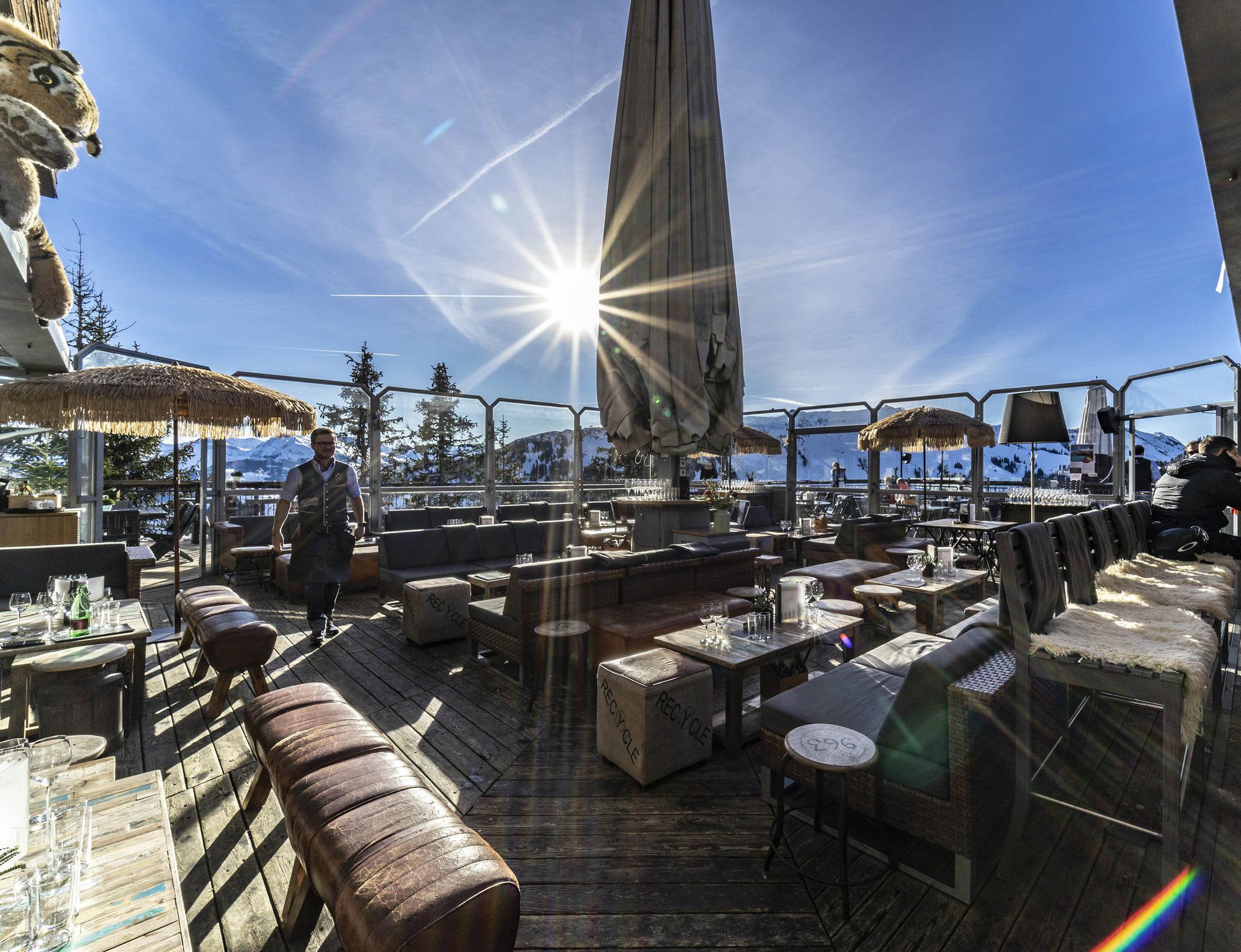
Perched at the top station of the Hahnenkammbahn cable car above Kitzbühel, Restaurant Hochkitzbühel bei Tomschy earns a White Star recognition from Star Wine List for its wine program. The setting places it squarely in the Alpine mountain-restaurant tier, where the elevation and approach are as much part of the experience as what arrives on the plate.
Above the Town, Inside the Mountain
Reaching Restaurant Hochkitzbühel bei Tomschy requires a cable car ride up the Hahnenkamm, the ridge that defines Kitzbühel's skyline and hosts the most storied downhill race on the World Cup calendar. By the time the Hahnenkammbahn deposits guests at the upper station, the town below has shrunk to a pattern of red-roofed buildings against the Inn valley. This is the physical logic of the restaurant: altitude as context, panorama as constant presence, the mountain not as backdrop but as the actual reason to be here.
Mountain-leading dining in the Austrian Alps has always occupied an unusual position in the regional food conversation. At lower elevations, a dense cluster of serious kitchens competes on classical Austrian technique, seasonal sourcing, and wine lists that draw from Burgundy, Styria, and the Wachau in equal measure. At altitude, the calculus shifts. The setting commands its own premium, and the better establishments earn their keep by sourcing with the same discipline as their valley counterparts, rather than coasting on the view. Hochkitzbühel sits in that more considered tier within the mountain-restaurant category.
The Star Wine List Recognition and What It Signals
In December 2021, Star Wine List published Restaurant Hochkitzbühel bei Tomschy and awarded it a White Star, a designation the platform assigns to venues maintaining a wine program of notable quality. For a restaurant accessed by cable car at the leading of the Hahnenkamm, that recognition is meaningful context. White Star status on Star Wine List places Hochkitzbühel alongside a peer set defined by wine curation, not just by altitude or ski-season footfall.
In the broader Austrian alpine dining circuit, wine programs at mountain restaurants have historically lagged behind their town-level counterparts. The logistics of storage at altitude, the seasonal nature of operations, and a customer base often more focused on après-ski than on cellared Grüner Veltliner have all worked against serious wine investment. A White Star recognition cuts against that pattern and positions Hochkitzbühel as a venue where the wine list carries editorial weight. Guests arriving with that expectation are unlikely to find only house pours and easy-drinking bottles designed for the ski-boot crowd.
For a comparative sense of how the Austrian mountain dining tier stacks up against the country's most celebrated kitchens, the distance between a cable-car restaurant earning wine recognition and institutions like Steirereck im Stadtpark in Vienna or Ikarus in Salzburg is measurable but not absolute. The Tyrolean alpine corridor has produced serious dining at altitude before, as Griggeler Stuba in Lech and Gourmetrestaurant Tannenhof in Sankt Anton am Arlberg demonstrate within their own competitive sets.
Where Ingredients Come From at This Elevation
The ingredient question is pointed in any Alpine mountain restaurant. The Kitzbühel area sits within a wider Tyrolean agricultural zone where dairy, mountain herbs, game, and cured meats have defined local cooking for centuries. Summer alpine pastures above the tree line produce milk that moves through regional dairies into aged cheeses of genuine distinction. Game from the surrounding Kaisergebirge and Kitzbüheler Alps follows well-established supply lines into the professional kitchens of the area. For a restaurant at the leading of the Hahnenkamm, sourcing those materials requires either direct relationships with Tyrolean producers or access to the same regional supply networks used by well-regarded valley kitchens like Mocking das Wirtshaus, which anchors its menu explicitly in regional cuisine.
The Tyrolean approach to sourcing differs from, say, the intensive foraged-ingredient programs found at herb-focused restaurants like Kräuterreich by Vitus Winkler in Sankt Veit im Pongau or the refined regional produce philosophy at Landhaus Bacher in Mautern an der Donau. Mountain restaurants in Tyrol tend to work within a tighter flavor vocabulary: dairy-rich preparations, cured and smoked proteins, root vegetables that travel well, and pastry traditions rooted in lard and rye. The altitude actually simplifies the sourcing question in some respects, concentrating the kitchen's attention on ingredients that perform at elevation and that connect to the physical environment outside the windows.
Kitzbühel's Restaurant Tier and Where Hochkitzbühel Fits
Kitzbühel's restaurant scene divides roughly along price and ambition lines. At the more casual end, venues like Lois Stern (Fusion, €€) and Mocking das Wirtshaus (Regional Cuisine, €€) offer accessible price points and menus that lean into either international influences or rooted local cooking. The mid-tier includes Neuwirt (International, €€€) and Les Deux Kitzbühel (Modern French, €€€), both operating in the international-influence zone that characterizes resort-town dining in well-traveled ski destinations. At the higher end, Berggericht (Modern Cuisine, €€€€) competes at the leading of the in-town price tier.
Hochkitzbühel operates outside that ground-level competition by virtue of its location alone. The Hahnenkamm setting creates a self-selecting guest profile: guests arrive by cable car, generally during the ski season or summer hiking season, and the decision to eat here is inseparable from the decision to make the ascent. That logistical filtering means the restaurant does not need to compete for walk-in dinner trade with the town-center kitchens. Its competitive set is more specifically the upper-station mountain restaurants spread across the Tyrolean resort corridor than it is the dinner-table battle on Kitzbühel's central streets.
Planning the Visit
Access depends on Hahnenkammbahn operating hours, which follow seasonal cable-car schedules tied to ski season and summer opening periods. Guests arriving for lunch during peak ski season, particularly in January around the Hahnenkamm race period when Kitzbühel hosts the most concentrated influx of the year, should factor in cable-car queues and the possibility that the upper station fills quickly. The race weekend in late January transforms the mountain's upper facilities into among the most crowded they will be all winter, and table availability at the restaurant reflects that demand pattern. Summer visits, when the mountain shifts to hiking traffic, offer a quieter approach to the same panoramic setting. For a fuller picture of eating and drinking options across the town and surrounding area, the Kitzbühel restaurants guide covers the full range, and separate guides exist for hotels, bars, wineries, and experiences in Kitzbühel.
Frequently Asked Questions
Can I bring kids to Restaurant Hochkitzbühel bei Tomschy?
The mountain-leading cable-car setting makes this a viable family outing in terms of the journey itself, but guests should be aware that the restaurant sits in Kitzbühel's more considered dining tier, where pricing and pacing may not align with a quick, informal meal with young children.
How would you describe the vibe at Restaurant Hochkitzbühel bei Tomschy?
If you are arriving expecting the loud, après-ski energy common to mid-mountain bars in Austrian ski resorts, recalibrate. The White Star wine recognition from Star Wine List signals a program with actual curation behind it, which tends to set a different tone at the table. The Kitzbühel context means a clientele that skews affluent and international, and the Hahnenkamm summit setting adds a specific kind of occasion-dining quality that ground-level restaurants in the same price tier cannot replicate.
What's the signature dish at Restaurant Hochkitzbühel bei Tomschy?
Specific dish details are not available in verified sources, and the menu is not documented in a way that allows a responsible answer here. What is documented is the wine program's White Star standing, which suggests the kitchen operates at a level where the food and wine are expected to hold each other up. For Alpine mountain restaurants in this tier, the broader tradition runs toward dairy-rich Tyrolean preparations, game, and cured proteins, though any specific dish claims about this restaurant would go beyond what the record supports.
Recognized By

Similar venues by awards
Related editorial
- Best Fine Dining Restaurants in ParisFrom three-Michelin-star icons to the next generation of Parisian chefs pushing boundaries, these are the restaurants that define fine dining in the world's culinary capital.
- Best Luxury Hotels in RomeFrom rooftop terraces overlooking ancient ruins to Michelin-starred hotel dining, these are the luxury hotels that make Rome unforgettable.
- Best Cocktail Bars in KyotoFrom sleek lounges to hidden speakeasies, Kyoto's cocktail scene blends Japanese precision with global influence in ways you won't find anywhere else.
Save or rate Restaurant Hochkitzbühel bei Tomschy on Pearl
Keep this venue in your Pearl passport, rate it after you visit, and track it alongside every other place you collect.