
Restaurant in Mostar, Bosnia and Herzegovina
Restaurant Goranci
100ptsHerzegovinian Village Table
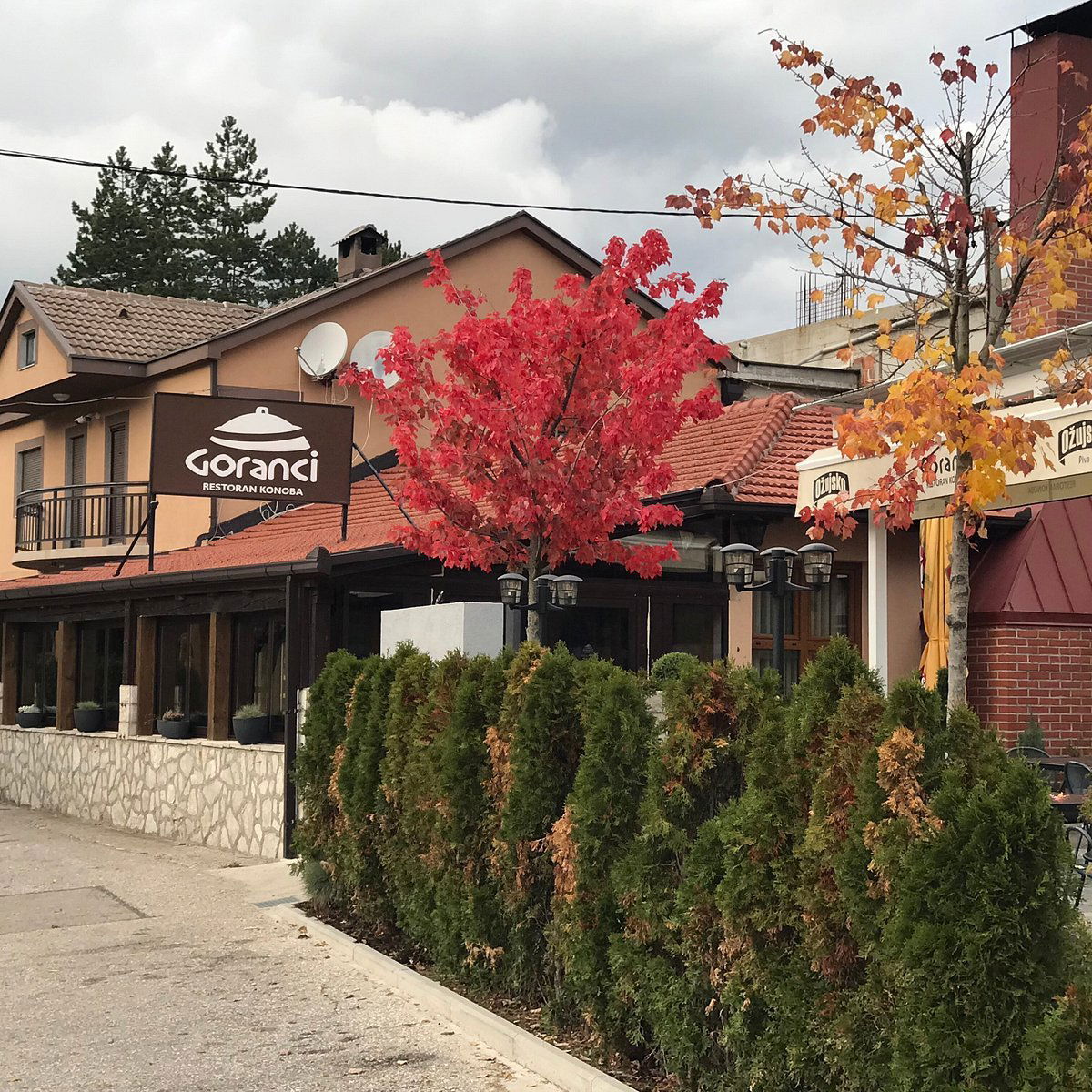
About Restaurant Goranci
Restaurant Goranci sits in the village of Goranci just outside Mostar, operating in the tradition of Herzegovinian roadside konobas where proximity to local farms and rivers defines what ends up on the table. The setting rewards those who push beyond the old town's tourist circuit, placing the emphasis squarely on ingredient provenance and the kind of unpretentious cooking that the region does particularly well.
Beyond the Old Town: What Herzegovinian Village Dining Actually Looks Like
Most visitors to Mostar spend their time within a short radius of Stari Most, eating at tables positioned for views of the bridge, in rooms decorated for the tourist gaze. The village of Goranci, a few kilometres outside the city, operates on a different register entirely. Here the reference point is not the postcard but the supply chain: what the surrounding farms grow, what the Neretva river system produces, and what the hill pastures yield. Restaurant Goranci sits inside that tradition, in a location where the address itself — Goranci 1 — signals that this is a place rooted in its geography rather than positioned for passing foot traffic.
This pattern of village dining is well established across Herzegovina. The regional cooking tradition has always been ingredient-led by necessity: remote communities cooked with what was immediately available, and the repertoire of lamb, trout, soft cheeses, and field vegetables that defines Herzegovinian tables today is a direct product of that geography. Roadside and village konobas throughout the region have preserved this logic, even as urban restaurants in Mostar and Sarajevo have drifted toward adapted menus aimed at broader audiences. Goranci the village, and by extension any kitchen operating there, works within a culinary framework where provenance is structural rather than decorative.
The Ingredient Logic of Herzegovinian Cooking
To understand what a kitchen in this part of Bosnia and Herzegovina is working with, it helps to know the agricultural character of the surrounding region. Herzegovina's limestone terrain, the Dinaric karst, produces conditions that suit specific foods unusually well. Lamb raised on karst pastures carries a mineral character that lowland-raised meat does not replicate. Trout from the cold, clear rivers , the Neretva and its tributaries run through this landscape , has a different density and flavour profile from farmed fish. Soft cow's and sheep's milk cheeses, often made at small-scale family operations, have a freshness and acidity that reflects the short supply chain between production and table.
This is the ingredient environment that Goranci-area restaurants draw from. Across Herzegovina, the leading village kitchens operate less as restaurants in the urban sense and more as intermediaries between the local food system and the plate. The cooking technique tends toward simplicity for a reason: when the raw material is good, the argument for elaborate preparation weakens. Spit-roasting, wood-fire grilling, slow braising in earthenware , these methods appear throughout the region precisely because they preserve and concentrate flavour rather than adding layers to compensate for it.
For visitors comparing options in Mostar, this village positioning places Goranci in a different tier from the old town establishments. Šadrvan and Restaurant Konoba Kod Marinka occupy the heart of the tourist quarter, with the trade-offs that position entails. A venue in the village operates with fewer walk-in customers, which typically means a kitchen cooking to a more consistent, less tourist-adapted standard. Whether that holds in every case is something each visitor assesses on the ground, but the structural incentive is clear: village restaurants earn repeat local custom, not single-visit tourist spending.
How This Fits the Wider Bosnian Dining Scene
Bosnia and Herzegovina's restaurant culture is fragmentary in the sense that it does not cohere around a single city or single culinary identity. Sarajevo supports a broader range of formats , Cakum-Pakum in Sarajevo represents the more urban, contemporary end of the spectrum , while regional towns maintain distinctly local eating cultures. Mostar sits between these poles: internationally recognised as a destination, but with a food scene that rewards investigation beyond the obvious. Further afield, kitchens like Bistro Stari Grad in Metkovic, just across the Croatian border in the Neretva Delta, reflect a related culinary tradition anchored in river fish and Dalmatian-Herzegovinian overlap cooking.
The country's village dining tradition also surfaces in places like Konoba ROGIĆ in Trn and Kazamat in Banja Luka, each operating within the logic of local sourcing that characterises the better end of Bosnian regional cooking. The through-line across all of them is an emphasis on primary ingredients over culinary complexity, a tradition that places the region's restaurants in an interesting position relative to the more elaborately technique-led kitchens found at places like Le Bernardin in New York City or Atomix in New York City. The comparison is instructive not because the price point or format is similar , they are not , but because it illustrates that ingredient primacy as a cooking philosophy is not limited to high-end Western fine dining. It runs equally through Herzegovinian village kitchens that have never sought a Michelin star.
Getting to Goranci and Planning the Visit
Goranci is a small settlement outside Mostar, and the address , Goranci 1, Goranci 88000 , places it outside the walkable old town zone. Visitors without a car will need to arrange transport, either by taxi from central Mostar or through a driver hired for a half-day. The drive is short by regional standards, and the village can be combined with broader exploration of the Neretva valley. Precise current hours, booking policy, and pricing are not confirmed through EP Club's verified data, so contacting the restaurant directly before visiting is advisable, particularly for larger groups or visits outside summer season. Our full Mostar restaurants guide covers the range of options across the city and its surroundings, from old town standbys to village-format kitchens like this one.
For those covering more of the country, the village dining format extends into other parts of the region: Grill Kostro in Posusje and Nešković in Foca each represent the locally-anchored eating culture that defines the country's most characteristic restaurants. Further west, Zeks Doner in Konjic sits along the Neretva corridor between Mostar and Sarajevo, useful for those making that drive. City-based options like Caffe Restaurant Soho in Istocno Sarajevo, Coffee Zone in Tuzla, and "Garden" Restaurant in Mokro round out the picture of how diverse the country's eating culture is across its geography. For reference points further afield, Arigato in Sarajevo, Emeril's in New Orleans, and Lazy Bear in San Francisco each demonstrate, in different ways, how strongly a restaurant's identity can be shaped by its relationship to place and ingredient source.
Frequently Asked Questions
- Is Restaurant Goranci a family-friendly restaurant?
- Village konobas in this part of Bosnia and Herzegovina are, by general character, casual and accommodating , Goranci is not a fine-dining address in a city known for formal dining, and the price environment in Mostar broadly sits at an accessible level for families.
- Is Restaurant Goranci formal or casual?
- If you are arriving from a city with no Michelin-rated restaurants and a dining culture built around village konobas and grilled meats, expect casual. Mostar has no awards-circuit fine dining to speak of, and a restaurant addressed to a village hamlet rather than a tourist strip will dress accordingly , come as you are after a day of travel.
- What is the leading thing to order at Restaurant Goranci?
- Order whatever reflects the local supply chain most directly. In a Herzegovinian village kitchen, that typically means lamb, river trout, or a grilled meat format tied to the surrounding karst agriculture , the region's cooking tradition points toward these primary ingredients as its strongest suit, regardless of the specific kitchen.
- Is Restaurant Goranci worth the detour from central Mostar for someone focused on authentic regional cooking?
- The Goranci address itself answers part of that question: a restaurant in a village settlement outside a city, rather than on a tourist strip, is structurally positioned to serve a local rather than a visitor clientele, which in Herzegovinian dining tends to correlate with more regionally grounded cooking. Bosnia and Herzegovina has no Michelin coverage, so the signal here is geographic and culinary-cultural rather than award-based , the Neretva valley corridor around Mostar is among the country's most agriculturally productive zones for the lamb, trout, and dairy that define the regional table.
Related editorial
- Best Fine Dining Restaurants in ParisFrom three-Michelin-star icons to the next generation of Parisian chefs pushing boundaries, these are the restaurants that define fine dining in the world's culinary capital.
- Best Luxury Hotels in RomeFrom rooftop terraces overlooking ancient ruins to Michelin-starred hotel dining, these are the luxury hotels that make Rome unforgettable.
- Best Cocktail Bars in KyotoFrom sleek lounges to hidden speakeasies, Kyoto's cocktail scene blends Japanese precision with global influence in ways you won't find anywhere else.
Save or rate Restaurant Goranci on Pearl
Keep this venue in your Pearl passport, rate it after you visit, and track it alongside every other place you collect.