
Restaurant in Saint Leonard, Canada
Restaurant Di Menna
100ptsRue Jarry Neighbourhood Italian
About Restaurant Di Menna
On Rue Jarry Est in Saint-Léonard, Restaurant Di Menna occupies a stretch of Montreal's East End where Italian-Canadian cooking has been a neighbourhood fixture for decades. The room draws a local crowd that returns for consistency over spectacle, placing it squarely in the tradition of family-run Italian tables that define this part of the city. For visitors curious about the district's dining character, Di Menna offers a grounded entry point into that scene.
Rue Jarry Est and the Italian-Canadian Table
Saint-Léonard's culinary identity is not constructed around destination restaurants or tasting menus priced for expense accounts. It was built, neighbourhood block by neighbourhood block, by Italian immigrant families who arrived in Montreal through the mid-twentieth century and brought with them a domestic cooking tradition rooted in southern Italy. Rue Jarry Est became one of the primary arteries for that community, and the restaurants along it reflect a particular kind of institutional loyalty: regulars who have been eating at the same tables since childhood, kitchens that measure quality by consistency rather than novelty, and a general indifference to trends playing out in the Plateau or Mile End.
Restaurant Di Menna sits on this stretch at 6313 Rue Jarry Est, and its address alone positions it within that tradition. This is a corridor where the measure of a restaurant is how well it holds up across years, not seasons. The dining rooms in this part of the city are not assembled to photograph well. They are assembled to feed people reliably, and the distinction matters for anyone arriving with the wrong set of expectations.
Ingredient Sourcing and the Southern Italian Inheritance
Italian-Canadian cooking in Montreal's East End draws on a sourcing logic that diverges sharply from the farm-to-table framing that dominates fine dining discourse elsewhere in Canada. At restaurants like Jérôme Ferrer's Europea in Montreal or Tanière³ in Quebec City, the sourcing conversation centers on hyper-local Quebec producers and foraged ingredients. The Italian-Canadian neighbourhood table operates on different terms: quality is anchored in imported pantry staples, trusted local suppliers for meat and produce, and techniques inherited rather than studied.
This means San Marzano-style tomatoes over local varieties when the flavour profile demands it, aged imported cheeses alongside domestic ones, and a kitchen philosophy that treats the recipe as the authority rather than the season. That is not a lesser approach to ingredient sourcing; it is a different one, with its own discipline and its own markers of quality. Across Canada, comparable Italian-Canadian rooms, from Biagio's Kitchen in Ottawa to Bonimi in Etobicoke, operate within this same logic, where authenticity is measured by fidelity to a culinary inheritance rather than by proximity to a farm.
The distinction is worth understanding before you arrive. Diners who prioritise origin stories on menus and chef-curated sourcing narratives will find more of that at destination restaurants like Restaurant Pearl Morissette in Lincoln or Eigensinn Farm in Singhampton. Di Menna is for a different kind of diner: one who understands that the sourcing intelligence in a neighbourhood Italian room lives in the supplier relationships built over decades, not in the provenance labels printed on the menu.
The Room and What to Expect
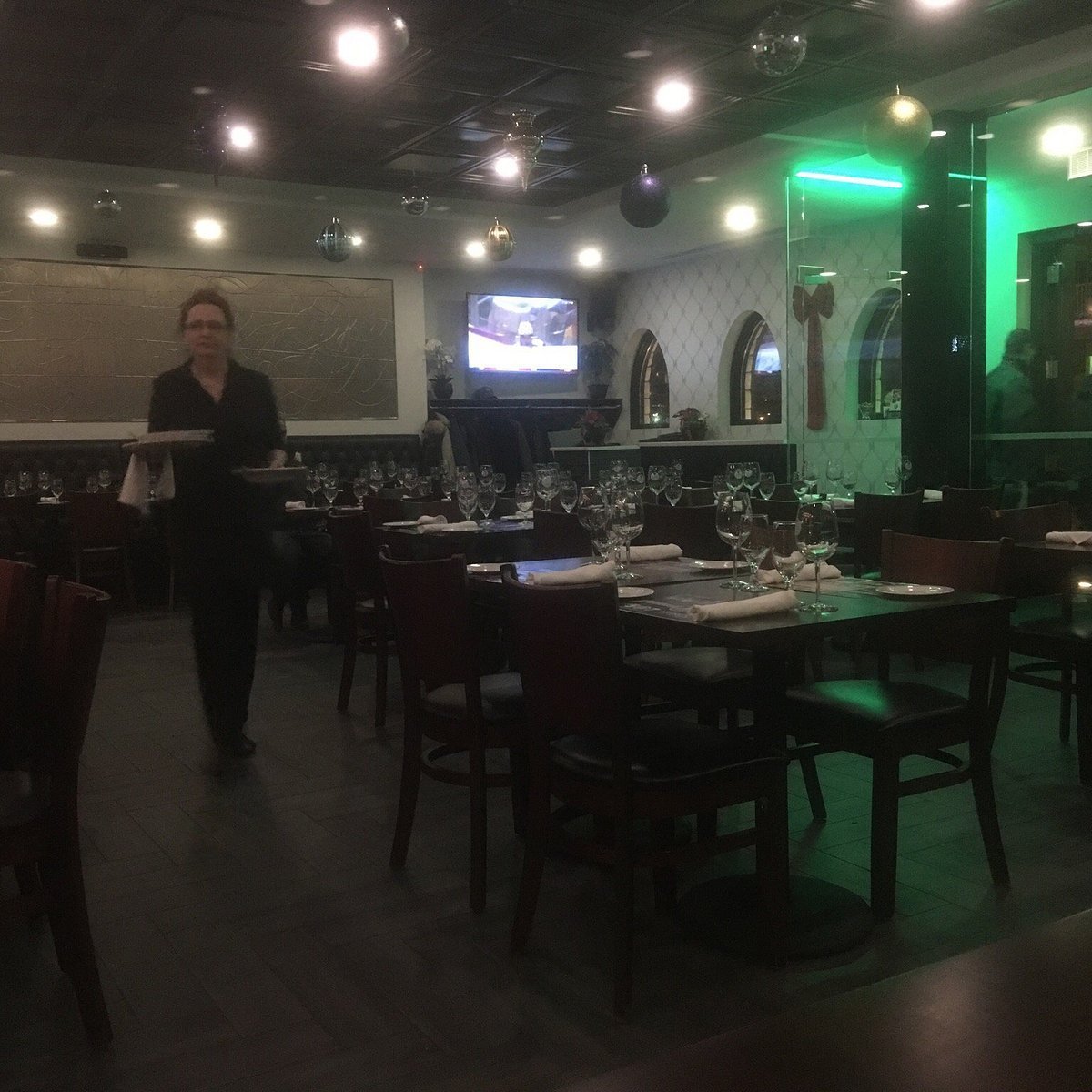
Neighbourhood Italian restaurants in Saint-Léonard occupy a consistent atmospheric register. The rooms tend toward the functional: comfortable without being designed, lit for conversation rather than Instagram, and staffed by people who recognise the regulars. This is dining as a social institution rather than an experience product, and the atmosphere at Di Menna reflects that character.
In a city where the upper tier of the restaurant market has moved decisively toward tasting-menu formats, long prix-fixe commitments, and theatrical presentation, the direct Italian-Canadian room represents a genuinely different offer. It sits in the same peer set as Carlos and Pepe's in Saint-Léonard, where the draw is the reliability of a known quantity rather than the surprise of a changing menu. These are rooms where the physical environment recedes behind the food and the company, which is precisely the point.
For a broader picture of what defines dining in this part of the city, our full Saint-Léonard restaurants guide maps the neighbourhood's Italian-Canadian corridor in more detail, including how it compares to Montreal's other dining districts.
How Di Menna Sits in the Wider Canadian Scene
Canada's restaurant market has bifurcated over the past decade into two increasingly distinct tiers. At the upper end, restaurants like Alo in Toronto and AnnaLena in Vancouver have built internationally recognised programs around precise technique and rigorous sourcing. At the neighbourhood end, Italian-Canadian rooms across Quebec and Ontario continue to serve a loyal clientele for whom the measure of quality is altogether different.
Di Menna belongs to the second category, and understanding that positioning saves the visitor from a category error. This is not a room competing with Le Bernardin or Atomix; it is a room competing with every other reliable neighbourhood Italian table within a few kilometres. In that competitive set, longevity and consistency carry more weight than any award cycle. The same logic applies to comparable rooms elsewhere in Canada: Barra Fion in Burlington, Bubi's Awesome Eats in Windsor, and Bearspaw Golf Club in Calgary each occupy specific local niches where the authority comes from the community rather than from critics.
For context on how Quebec's dining culture has developed across different registers, the contrast between a room like Di Menna and Aux Anciens Canadiens in Quebec City is instructive: both operate outside the fine-dining tier, both carry significant neighbourhood identity, but one trades in French-Canadian heritage cuisine and the other in Italian-Canadian domestic cooking. The sourcing traditions and the guest relationships look different, but the underlying logic of community trust over critical validation is shared. Narval in Rimouski offers a further point of comparison for how Quebec's regional restaurant culture develops outside the Montreal-Quebec City axis.
Planning Your Visit
Restaurant Di Menna is located at 6313 Rue Jarry Est in Saint-Léonard, accessible from central Montreal via the 141 bus along Jarry or by car from the 40 autoroute. Specific hours, pricing, and booking details are not published in current directories, which is itself characteristic of restaurants in this category: the regulars know when to show up, and first-time visitors are advised to call ahead or arrive early in the evening to confirm availability. The absence of an online booking platform is common across this neighbourhood tier and should not be read as a signal of limited operation.
The restaurant's position on Rue Jarry Est places it within easy reach of other Saint-Léonard fixtures, making it a logical stop on a broader exploration of the neighbourhood's Italian-Canadian dining corridor rather than a standalone destination requiring a cross-city trip.
Frequently Asked Questions
Is Restaurant Di Menna a family-friendly restaurant?
Saint-Léonard's Italian-Canadian neighbourhood restaurants are generally structured around family dining, and Di Menna's position in that tradition suggests a room comfortable with multi-generational tables. Without confirmed pricing data, it is not possible to assess cost relative to a family outing, but the neighbourhood context places it outside the fine-dining tier where children are less common.
What should I expect atmosphere-wise at Restaurant Di Menna?
Saint-Léonard's Rue Jarry Est corridor has no Michelin-listed rooms and no tasting-menu operations; the restaurants here are built around neighbourhood regulars rather than visiting critics. Di Menna fits that register: a room where the atmosphere is defined by familiarity and repeat custom rather than by designed environments or theatrical service. Expect a functional, comfortable room oriented toward conversation and food rather than spectacle.
What do regulars order at Restaurant Di Menna?
No verified menu data is available for Di Menna. In the Italian-Canadian neighbourhood restaurant tradition, pasta and grilled meats are the categories that drive repeat visits, with house-made or long-standing pasta preparations often serving as the anchor dishes. For confirmed menu information, contact the restaurant directly before visiting.
Should I book Restaurant Di Menna in advance?
If Di Menna operates as a conventional neighbourhood Italian room, demand will tend to concentrate on Friday and Saturday evenings, when advance contact is advisable. Weekday visits in Saint-Léonard's restaurant corridor typically allow for walk-in availability, but given the lack of a published online booking system, calling ahead is the reliable approach regardless of the day.
What has Restaurant Di Menna built its reputation on?
No awards data or critical recognition is on record for Di Menna, which places its authority firmly in the neighbourhood trust category rather than the critical validation category. In Saint-Léonard's Italian-Canadian dining corridor, that is the standard model: reputation accrues through community loyalty and consistent execution over years, not through chef profiles or award cycles. The address on Rue Jarry Est is itself a signal of that tradition.
How does Restaurant Di Menna compare to other Italian restaurants in Saint-Léonard's Rue Jarry Est corridor?
Saint-Léonard's Rue Jarry Est supports a cluster of Italian-Canadian rooms that compete primarily on consistency and local loyalty rather than on menu innovation or critical profile. Di Menna occupies that same tier, where differentiation comes from the specific supplier relationships and recipe traditions a kitchen has maintained over time rather than from seasonal menus or sourcing manifestos. For visitors comparing options in the neighbourhood, the relevant peer set is other long-standing Italian tables on the same corridor, not destination restaurants in central Montreal.
Related editorial
- Asia's 50 Best Restaurants 2026: The Chairman and Wing Go 1-2 from the Same BuildingThe Chairman takes No. 1 and Wing climbs to No. 2 at Asia's 50 Best Restaurants 2026. Both operate from the same Hong Kong building. Here's what it means.
- Four Seasons Yachts Debut: 95 Suites, 11 Restaurants, and a March 2026 Maiden VoyageFour Seasons I launches March 20, 2026, with 95 suites, a one-to-one staff ratio, and 11 onboard restaurants. Worth tracking if you want hotel-grade service at sea.
- LA Michelin Guide 2026: Seven New Restaurants from Tlayudas to Uzbek DumplingsMichelin's March 2026 California Guide update adds six LA restaurants and one Montecito newcomer, spanning Oaxacan tlayudas, Uzbek manti, and Korean-Italian pasta.
Save or rate Restaurant Di Menna on Pearl
Keep this venue in your Pearl passport, rate it after you visit, and track it alongside every other place you collect.