
Restaurant in St Davids, United Kingdom
Really Wild Emporium
125ptsCoastal Forager's Table

About Really Wild Emporium
A former bakery on St Davids' High Street, Really Wild Emporium runs a no-choice, six-course tasting menu built around foraged and wild ingredients — sugar kelp popcorn, wild sea bass, meadowsweet custard — alongside a drinks list that runs from nettle ale to birch-sap wine. It also operates as a shop, community foraging hub, and small hotel, making it one of the more considered stops in Pembrokeshire's dining scene.
Where the Larder Is Everywhere
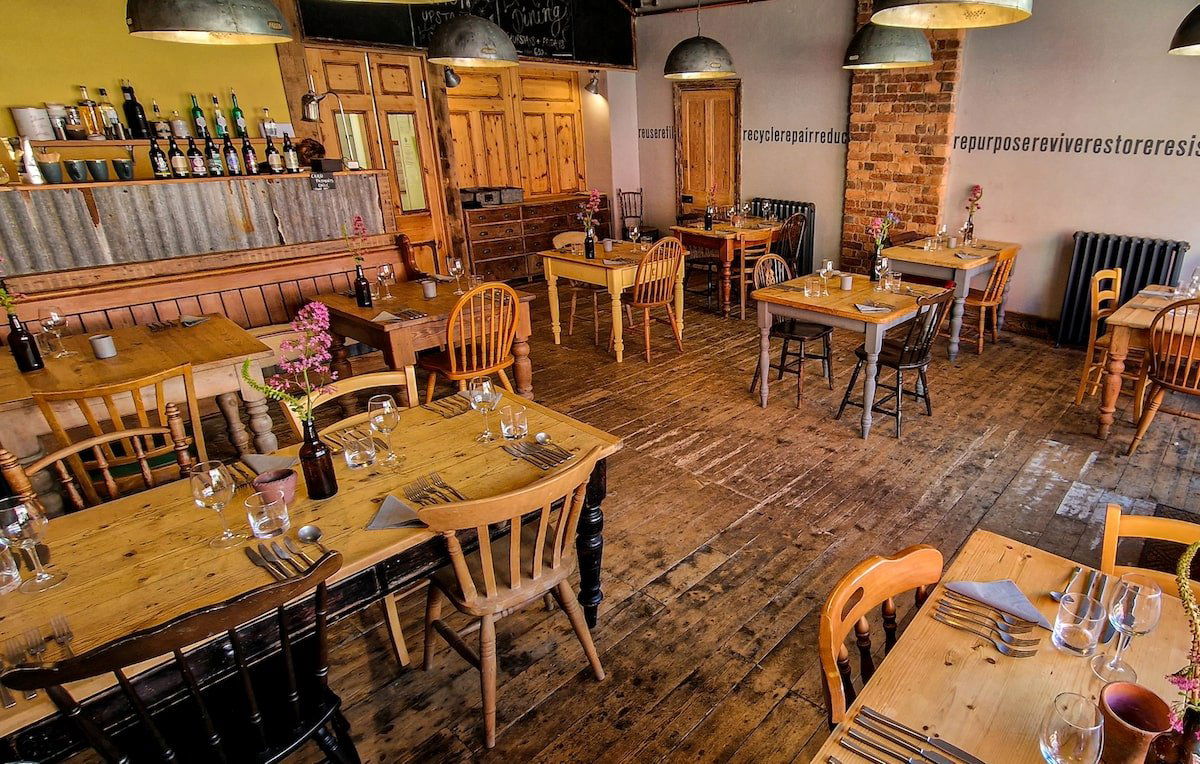
Britain's most interesting ingredient-led restaurants tend to cluster in places where the land and sea are still genuinely accessible: coastal Cumbria, rural Cornwall, the Hebrides. Pembrokeshire fits that pattern, and St Davids — a cathedral city that functions at village scale — has developed a dining character that leans into its surroundings rather than importing ideas from elsewhere. Really Wild Emporium at 24 High Street sits squarely inside that tendency. The building is a converted Art Deco former bakery, and the dining room reads as an honest reflection of its geography: exposed brickwork walls, stripped wood floors, scrubbed rustic tables, and industrial metal lighting that keeps the space grounded without tipping into self-conscious austerity. The atmosphere is warm and informal, which matters here , the format demands a certain trust from the diner, and the room earns it before a single dish arrives.
Foraging as a Kitchen Philosophy, Not a Garnish
In many British restaurants that claim a wild-ingredient ethos, foraged elements arrive as garnish , a few wood sorrel leaves, a smear of something hedgerow-adjacent. Really Wild Emporium operates differently. The kitchen builds around wild pickings as primary ingredients, using the Pembrokeshire coastline and countryside as its working larder. This is a meaningful distinction. The Welsh coast is one of the few stretches of British shoreline where coastal foraging remains genuinely productive: sea purslane, three-cornered leek, sea buckthorn, and a range of edible seaweeds grow within reach of the kitchen. The menu reflects that proximity rather than performing it.
The evidence is in the detail. Nibbles extend to sugar kelp popcorn and tempura-battered oyster mushrooms served with a red chilli and sea buckthorn dip , two preparations that treat foraged material as a structural element rather than decoration. A fish course of wild sea bass arrives with asparagus in a light sauce finished with fresh tomatoes and three-cornered leek oil, the oil providing a sharp, allium-bright note that a cultivated alternative wouldn't replicate. The contrast between that dish and a Jerusalem artichoke and beef cottage pie, enriched with pickled wild garlic and black truffle cheese, is deliberate: the kitchen can move between the delicate and the deeply satisfying without losing coherence. For dessert, an almond tart topped with peaches and Chinese lanterns comes with meadowsweet custard, pulling a hedgerow flower into a format that feels genuinely domestic rather than forced. For context, the ambition here differs considerably from what you'd encounter at a Michelin-formal tasting counter like Le Bernardin in New York City or L'Enclume in Cartmel , but the commitment to sourcing specificity is no less serious.
The Format and What It Requires of You
The menu is a no-choice six-course tasting format, with a separate vegan option available. That structure is worth noting before you book. In cities, no-choice menus sometimes signal ambition outpacing hospitality; here, the format is a practical expression of the kitchen's ingredient-led approach , you cook what the land and sea provide, not what a static menu demands. Diners who arrive expecting to pick and choose will find the format disorienting. Those who treat it as a collaboration with the season will find it cohesive.
Drinks list extends the sourcing logic. Nettle ale and birch-sap wine sit alongside presumably more conventional options, providing a through-line from kitchen to glass. This kind of drinks programming is rare at informal restaurants in West Wales, where the wine list is more commonly an afterthought. The coherence here is part of what separates Really Wild from a quirky local operation with interesting ideas and an inconsistent execution , it's a fully considered proposition.
Comparable tasting-menu experiences in the UK at the formal end of the spectrum , Moor Hall in Aughton, Midsummer House in Cambridge, or The Ledbury in London , operate in a very different price tier and with significantly more kitchen resource. Really Wild sits in a distinct register: informal, place-specific, and priced to suit a market town rather than a metropolitan dining destination. That's not a limitation; it's the point. Other ingredient-led British restaurants that have found traction in rural settings include Gidleigh Park in Chagford and hide and fox in Saltwood, each working with their own regional larder. Really Wild's Pembrokeshire context gives it a sourcing profile that's genuinely different from either.
Beyond the Dining Room
Really Wild is not only a restaurant. The ground floor operates as a shop and community foraging hub, which contextualises the kitchen's ethos as something that extends into the locality rather than existing solely for visitors. Accommodation is available on the upper floor of the Art Deco building, where bedrooms are named after seaweed varieties , a detail that either charms or amuses depending on your disposition, but confirms that the identity of the place is consistent from the front door to the leading floor. For those planning a longer stay in Pembrokeshire, see our full St Davids hotels guide for the broader accommodation picture.
For those exploring St Davids' wider food and drink offer, Blas provides a reference point in the modern cuisine category, and our full St Davids restaurants guide covers the range across price points and formats. The bars guide, wineries guide, and experiences guide round out the planning picture for a full visit to the area.
Planning Your Visit
St Davids sits at the far western edge of Pembrokeshire, roughly 16 miles from Haverfordwest, which is the nearest rail connection. Driving is the practical option for most visitors. The no-choice tasting menu format means dietary requirements should be communicated in advance; the existence of a separate vegan menu suggests the kitchen is practiced at accommodating them. Given the format and the small-city context, booking ahead is the sensible approach , walk-in availability at a six-course tasting operation in a location this size is not something to rely on, particularly across the summer season when Pembrokeshire visitor numbers peak. Really Wild Emporium is at 24 High Street, St Davids, SA62 6SD.
Frequently Asked Questions
Does Really Wild Emporium work for a family meal?
The no-choice, six-course tasting menu format makes it a less practical choice for families with young children or selective eaters , it works leading for adults willing to follow the kitchen's lead across a full evening.
What's the vibe at Really Wild Emporium?
St Davids has a relaxed, back-to-nature character that Really Wild reflects directly: the dining room is informal and warm, with exposed brick and stripped wood keeping the atmosphere grounded rather than formal. The cooking is imaginative but not precious, and the room feels like a place that belongs to the town rather than existing apart from it.
What's the leading thing to order at Really Wild Emporium?
There's no ordering involved , the kitchen runs a set six-course menu. Based on what's on record, the wild sea bass with three-cornered leek oil and the meadowsweet custard dessert represent the clearest expressions of the foraging-led approach that defines the kitchen's identity.
Can I walk in to Really Wild Emporium?
If you're visiting St Davids during peak summer months, walk-in availability at a no-choice tasting format in a city of this size is unlikely. Booking in advance is the reliable approach; if you're visiting off-season or mid-week, the chances improve, but the format doesn't lend itself to last-minute spontaneity.
What makes Really Wild Emporium worth seeking out?
Book it for the sourcing specificity: the kitchen uses Pembrokeshire's coastline and countryside as a working larder, and the menu reflects that in a way that's genuinely structural rather than decorative. Sugar kelp popcorn, sea buckthorn dip, three-cornered leek oil, meadowsweet custard , these are ingredients that arrive in dishes because they grow nearby, not because a trend called for them. In a British dining scene where wild-ingredient credentials are often overstated, that distinction carries weight.
Recognized By

Related editorial
- Best Fine Dining Restaurants in ParisFrom three-Michelin-star icons to the next generation of Parisian chefs pushing boundaries, these are the restaurants that define fine dining in the world's culinary capital.
- Best Luxury Hotels in RomeFrom rooftop terraces overlooking ancient ruins to Michelin-starred hotel dining, these are the luxury hotels that make Rome unforgettable.
- Best Cocktail Bars in KyotoFrom sleek lounges to hidden speakeasies, Kyoto's cocktail scene blends Japanese precision with global influence in ways you won't find anywhere else.
Save or rate Really Wild Emporium on Pearl
Keep this venue in your Pearl passport, rate it after you visit, and track it alongside every other place you collect.